New Launch - India Real Estate Report 2026.

Services
Knowledge Hub
Resources
Tools

Ask Pulse Ai
©PropTech Pulse 2025, All rights reserved.


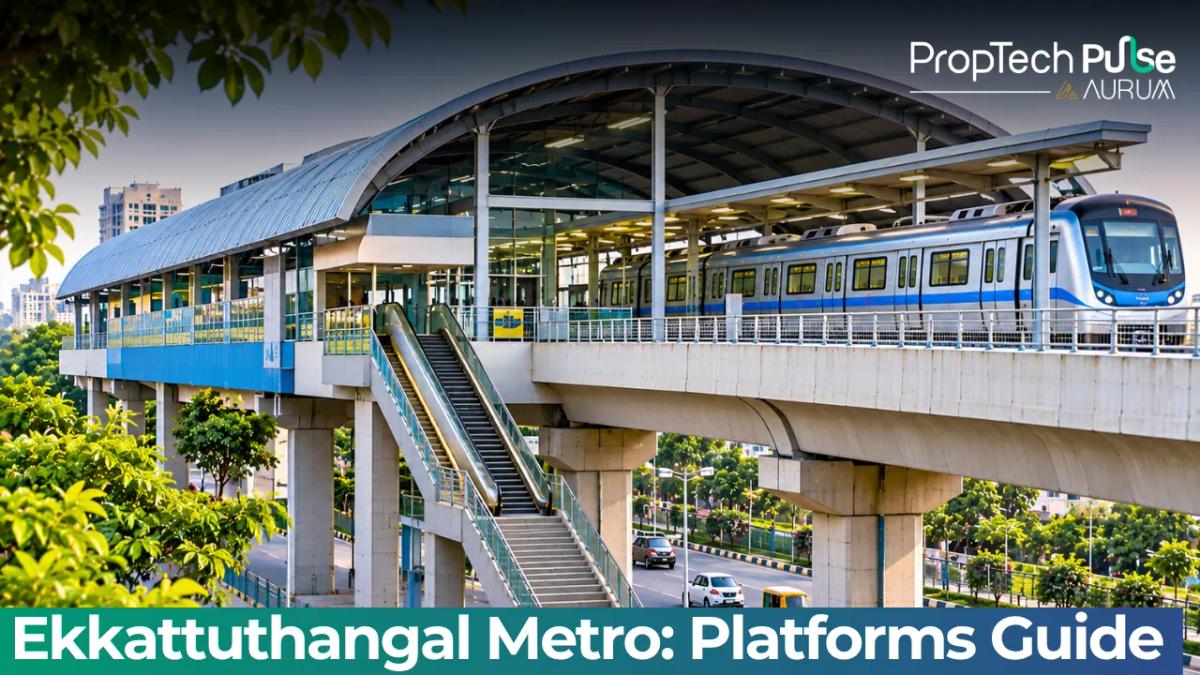
Ekkattuthangal metro station connects Sidco Industrial Estate and Guindy to Chennai Central and the airport without the traffic gridlock that stalls Jawaharlal Nehru Road every weekday morning.
It opened in June 2015, handles commuters across two platforms, and sits at a node now transforming from a transit stop into a retail work micro-hub.
Commuters who used to crawl through the Jnana Mambalam flyover bottleneck now clock twenty-five minutes on the rails.
That time saving compounds when you factor in the unpredictability of road diversions during monsoon drain repairs. Office goers calculate their actual commuting cost differently once they switch to the rail system.
Operating hours and train frequency
Quick answer
The first train reaches Ekkattuthangal around 05:06 AM from Chennai Central and 05:36 AM from St. Thomas Mount. Last trains depart at approximately 23:05 and 23:34 respectively. Peak headways run every 12 minutes, while off-peak intervals stretch to 14 or 15 minutes.
Ekkattuthangal fits neatly into that window, giving office goers in Guindy a reliable commute to the city centre without relying on shared autos or buses that catch fire in bottlenecks.
Trains arrive roughly every 12 minutes during peak rush hours and space out to 14 or 15 minutes when footfall drops. A few riders underestimate how quickly those windows compress. If you miss a scheduled service on a packed morning, waiting 15 minutes can shift your arrival time past your company’s biometric cut-off. Plan buffers accordingly.
The Green Line runs twelve trains an hour between six and nine in the morning. On weekends, frequency drops slightly to eighteen-minute intervals because passenger composition shifts toward shoppers and students.
During July heatwaves, the carriage temperature rises noticeably before AC units kick in, so commuters layer light cotton shirts rather than relying on heavy formal wear. Ticket counters accept cash, but tapping your card is faster and earns a small reload bonus.
Chennai Metro Rail offers three card tiers: the standard rechargeable pass, the student card requiring a valid institutional ID, and the senior citizen concession pass.
Tapping a physical card saves fifteen seconds at automated gates compared to queuing at manual booths. Using the Chennai Metro Rail mobile application saves time when you want to check live train positions instead of waiting at the foot of the stairs.
A single trip to Chennai Central costs around ₹25, while reaching St. Thomas Mount crosses ₹40. These fares stay fixed despite inflation spikes, making it the cheapest motorised commute option within ten kilometres of the city centre.
| Service Type | Direction | Time / Headway |
|---|---|---|
| First Train Arrival | Towards Chennai Central | ~05:06 AM |
| First Train Arrival | Towards St. Thomas Mount | ~05:36 AM |
| Last Train Departure | Towards Chennai Central | ~23:05 PM |
| Last Train Departure | Towards St. Thomas Mount | ~23:34 PM |
| Peak Interval | Both directions | Every 12 minutes |
| Off-Peak Interval | Both directions | Every 14–15 minutes |
| Overall Operational Window | - | 05:00 AM – 11:00 PM |
Platform layout and directions
The station uses an overhead double-track layout. Each platform serves one direction exclusively. You will not cross tracks to change direction here.
Platform 1 faces St. Thomas Mount. Trains heading towards Ambattur and Tondiarpet originate from St. Thomas Mount on this side, meaning commuters travelling further west into the corridor usually board right away.
Platform 2 faces M.G.R Chennai Central. This track runs parallel to the northern boundary of the station building.
Announcement speakers cycle through Tamil and English every three stops, giving international visitors and new residents enough notice to step off safely.
Directional arrows painted on the floor use bright blue lines that hold up well under Chennai’s harsh sun, unlike the yellow markers at older stations that fade after two years of washing.
If you are carrying oversized samples or industrial machinery parts, ask the concourse staff to direct you toward the less crowded platform side.
Security guards stationed near the escalators scan bags strictly during government inspections, though routine checks usually pass with just a walk-through metal detector.
Standing near the middle doors distributes weight better than crowding the ends where doors jam during packed departures.
The doors open on the left side as trains pull into the station. That convention applies across the entire line on the ekkattuthangal green line, which keeps signage clear and reduces confusion when boarding.
If you are carrying a laptop bag or a large sample box, stand back from the yellow edge line until the train comes to a complete halt.
Concourse staff rarely intervene unless there is a medical emergency or a blocked door. Platform numbers match the digital displays above the stairwells, so verifying screen two prevents the common mistake of walking onto the wrong escalator bank during evening rush.
Exit gates and access
Gate A1 and Gate B1 dump you directly onto Jawaharlal Nehru Road. Gate A1 aligns closer to the Sidco Estate entrance and offers a short walk to the bus terminus.
Gate B1 opens wider, which helps when traffic swells and multiple vendors line the footpath.
Stepping out onto the footpath requires crossing a busy stretch of traffic before reaching the designated zebra crossing.
Pedestrians should wait for the green signal arrow rather than ducking between moving buses and private cars, especially when delivery vans swerve to drop parcels near the hotel driveway.
Auto rickshaws queue along the inner lane close to Gate B1, but many drivers refuse to run the meter and quote flat rates targeting passengers heading towards Guindy or Nungambakkam.
Agreeing on a tariff before climbing in prevents arguments at your destination. For those walking further east toward the textile markets, sticking to the sidewalk past the pharmacy avoids the debris accumulated near the drainage outlets.
Ride-hailing drop-offs happen along JN Salai outside Gate B1. Drivers know the spot because the Hilton Chennai reception desk gives you the exact gate number before they leave.
Walking back uphill from Gate B1 takes about three minutes to reach the concourse level. Bring a reusable water bottle if you work near the industrial belt. Vending machines inside the station run out by mid-afternoon most days.
Communities in ekkattuthangal chennai benefit from this setup because residents can drop packages or grab coffee without circling the block for parking.
The pedestrian ramps on either side remain wide enough for wheelchairs and strollers, avoiding the cramped stairwells found at older depots.
Official taxi ranks now operate behind Gate A1 with GPS-enabled meters, replacing the informal cabs that previously charged premiums for short hops to Teynukunnu.
Flats in Sholinganallur attract buyers who prioritise early metro connectivity, and the same logic applies here. Workers who live within walking distance of these gates save both fare and the unpredictable wait times caused by road diversions near the highway junction.Route map and interchange options
You cannot transfer to another metro line at this station. The next interchange point lies one stop south at Alandur, where you can swap to the Blue Line for Velachery or Kasavanahalalli.
Some passengers try to alight at the wrong station because the announcements blur together during heavy rain. Stick to Alandur for line changes.
From Chennai Central, the ride to the station takes roughly 12 minutes on the southern branch. Travel northbound toward St. Thomas Mount adds another 18 minutes to cover the industrial stops.
The timetable does not change seasonally, though operators occasionally trim evening slots on public holidays. Check cmrl.co.in before travelling during festive weeks.
The Blue Line junction at Alandur operates on a synchronized timetable that minimises standing time between transfers.
Passengers transferring southbound should alight on Platform 1 and cross the bridge directly above the tracks to reach the opposite side, which takes roughly four minutes if escalators function normally.
During Tamil New Year or Diwali weekends, CMRL adds extra evening runs starting from Tambaram East, reducing pressure on this northern corridor.
Commuters aiming for West Mambalam often get confused about whether a single ticket covers the bus-plus-metro combo. It does not. You need separate passes or fresh card taps.
Hold the printed QR code or carry the physical card ready before you step off the escalator. Scanning late makes you queue behind people trying to top up their balances.
If you rely on connecting buses from Tambaram or Chengalpattu, leave fifteen minutes buffer because feeder services rarely arrive exactly on schedule.
Railway station commuters switching to the metro at Puratchi Thayaar Ammaiyar Terminus should note that the Green Line platforms sit below the national rail concourse, requiring a clear forty-minute headstart for tight connections.
Connecting to Egmore or Fort St. George requires taking the Red Line from Chennai Central. The Green Line terminates cleanly at Central, so plan your onward journey using the underground passages marked on station maps.
Rental demand rises fastest among corporate tenants who want predictable commutes rather than chasing shared auto drivers. Property rates near Valasaravakkam show steady growth after the Green Line reached their neighbourhood, and owners near ekkattuthangal metro have seen the same effect.
Amenities and accessibility features
The station provides lifts on both ends of the concourse floor. Elevators move slowly, which slows boarding lines on busy mornings, but they function reliably.
Escalators face each other at a central staircase to keep passenger flow smooth. Disabled amenities include priority seating, tactile flooring strips running from Gate B1 to the train boardings, and a help button connected to the Control Room at Porur.
Restrooms sit on the ground floor near the ticket counter. Cleaning crews visit twice daily, once early and once late, but you should still carry wet wipes. Water coolers work well in the summer, though the municipal supply occasionally sputters.
Lift maintenance crews visit twice weekly to lubricate cables and test emergency brakes, but you might encounter brief service pauses lasting twenty minutes when spare parts arrive late.
In those cases, volunteers from the Metro Volunteers group guide wheelchair users and pregnant passengers down the ramps, offering hand support without expecting anything in return.
Lost and found requests go straight to the Porur operations room via the help buttons embedded in glass panels near Gate A2.
Owners recover phones and wallets within seventy-two hours ninety percent of the time, provided they file a report using the station ID printed on monthly travel passes.
Drinking fountains dispense filtered water that tastes noticeably cleaner than municipal tap output, yet plastic waste bins overflow by two o’clock when promotional events spill over from nearby auditoriums.
Staff presence ranges from two security personnel at quiet midday hours to six during the five o'clock exit rush. Ticket counters stay open for cash transactions throughout operating hours.
Card readers reject older metal tokens issued before 2022, so bring the latest plastic cards or rely on your phone. CCTV cameras cover every corner of the concourse and platform, recording footage to the Porur command centre where operators monitor crowd density in real time.
Parking and bus integration
Car parking is not available at the station. Two-wheeler parking exists on the ground floor perimeter, marked clearly with painted bays.
Space fills fast for factory workers who start shifts before seven. If you arrive after eight, you will likely park on the footpath outside Gate A1, where fine amounts start creeping in.
Multiple MTC buses feed into the station vicinity. Route numbers starting with 70 connect directly to the bus stand, while 170-series buses loop through Saidapet and provide alternate routing.
Waiting rooms inside the bus bay offer shade, which matters when July brings relentless heat. Two-wheeler owners pay ₹500 monthly for covered parking slots reserved exclusively for registered factory workers holding valid ID cards issued by Sidco authorities.
Visitors arriving unannounced often park on the narrow strip beside the fire exit, leaving them exposed to scorching afternoon sun that degrades tyre rubber and cracks dashboard plastics over six months.
MTC conductors board rolling buses stamped with code 900 specifically designed to shuttle employees between Saidapet hubs and the industrial belt.
These vehicles carry rigid timetables synced with shift bell rings, ensuring supervisors and line workers arrive together. Taxis licensed by the Chennai Metropolitan Transport Authority display official stickers and charge per kilometre, covering the final stretch to Teynukunnu without haggling.
Homebuyers evaluating rental yields here should calculate maintenance costs against potential parking upgrades. Using an Indian Bank home loan EMI calculator shows how much additional borrowing you can comfortably support if you factor in modern amenities coming to the surrounding plots.
Properties that promise dedicated car spots soon after possession tend to hold value longer in areas lacking metro parking infrastructure. Municipal approval letters for expanded two-wheeler bays typically take four to six weeks, so verify the current status before relying on pavement parking for daily commutes.
Property impact and commercial hub
A nine-storey commercial tower is rising opposite the Hilton Chennai. The approved plan covers 106,000 square feet and aims to house mid-sized offices, food courts, and serviced workspaces.
Construction has been staggered over the last two years, and the upper floors currently frame the skyline visible from the metro concourse. This development shifts the zone from pure residential and industrial use to a mixed-use corridor.
Rental yield for two-bedroom apartments jumps 4% to 6% once commercial occupancy crosses 40%, according to local leasing agents. Buyers should expect faster lease renewals, but rent escalation clauses may tighten as demand outpaces new inventory.
Land parcels near Gate B1 attract speculative interest from developers looking to convert old showrooms into boutique hospitality venues. Title scrutiny becomes critical in these pockets because older agreements often lack updated zoning approvals.
Hire a property lawyer to check the khata and master plan before signing any token agreements. A standard two-bedroom apartment spanning seven hundred square feet commands monthly rents between ₹22,000 and ₹26,000 depending on furnishings and whether the building includes power backup.
Adding furniture costs roughly ₹80,000 upfront, which translates into an additional ₹1,200 monthly income, recovering the expense in under five years.
Investors purchasing resale flats typically negotiate purchase prices around ₹5,800 per square foot, yielding gross rental returns near 4.5% annually after deducting society maintenance and property tax.
Developers eyeing warehouse conversions face strict height restrictions capped at forty-five metres to preserve sightlines approaching the international airport.
Commercial leases for ground-floor shops jump to ₹180 per square foot once a new food court opens nearby, drawing office crowds away from expensive mall cafeterias.
Buying a flat in established corridors like this one demands due diligence on builder registration certificates. Verify the MahaRERA-style equivalent through the Tamil Nadu housing portal before handing over construction-linked payments.
Completed projects show fewer delays, but even finished buildings sometimes face documentation gaps that delay individual possession deeds.
Which gate fits your route?
Pick Gate A1 if your workplace sits inside the Sidco industrial estate or if you arrive via the local bus stand. Pick Gate B1 if you catch a cab, need wider footpaths for trolleys, or walk past the hotel lobby.
Switch to the Blue Line at Alandur for Velachery-bound trips, and avoid attempting transfers at the wrong station. Verify your card balance before entering rush hour gates to prevent sudden turnbacks at automated barriers.
Frequently asked questions
When does the Ekkattuthangal metro start and end?
Operations begin promptly at 05:00 AM. They conclude at 11:00 PM every day. First trains actually reach the platform shortly after these times, typically around 05:06 AM from Chennai Central. Evening services wind down gracefully, with departure boards showing trains leaving near 23:05 and 23:34 respectively. Always verify the timetable on public holidays since schedules sometimes shift.
Can I park my car at Ekkattuthangal metro station?
Car parking is strictly prohibited at this location due to limited land availability on the raised structure. However, two-wheeler parking is permitted on the ground floor perimeter with marked spaces. These bays fill up early, often before eight in the morning. Commuters arriving later usually park on adjacent street footpaths, though municipal authorities occasionally issue fines for obstructing traffic lanes there.
How do I change from the Green Line to the Blue Line here?
You cannot transfer directly at this station. The nearest interchange point lies just one stop south at Alandur Metro Station. After boarding a train towards Chennai Central from Platform 2, alight at Alandur. The station features clear directional signs guiding passengers from the Green Line platforms down to the Blue Line concourse level, making the switch straightforward.
Which gate is best for reaching Guindy Industrial Estate?
Gate A1 places you closest to the main entrances of the Sidco estates. Stepping outside leads directly onto Jawaharlal Nehru Road, allowing a quick walk along the designated pathway that borders the industrial perimeter. Traffic remains moderate during daytime working hours compared to the heavier weekend vehicle movement, making this exit the most efficient choice for factory and corporate staff.
Are escalators functional at Ekkattuthangal metro station?
Escalators operate normally during daylight hours on both sides of the central staircase. They are particularly useful during monsoon months when wet footwear makes climbing tiles slippery. Maintenance teams conduct weekly checks, so downtime is rare. In the unlikely event of a breakdown, the standby lifts take priority for elderly passengers and wheelchair users, so regular commuters may face slightly longer waits.
Enjoyed this blog article? Visit PropTech Pulse for more interesting blogs.





Ask Pulse Ai anything about real estate

Unlock the Latest in Real Estate
News, Infographics, Blogs & More! Delivered to your inbox.

