New Launch - India Real Estate Report 2026.

Services
Knowledge Hub
Resources
Tools

Ask Pulse Ai
©PropTech Pulse 2025, All rights reserved.


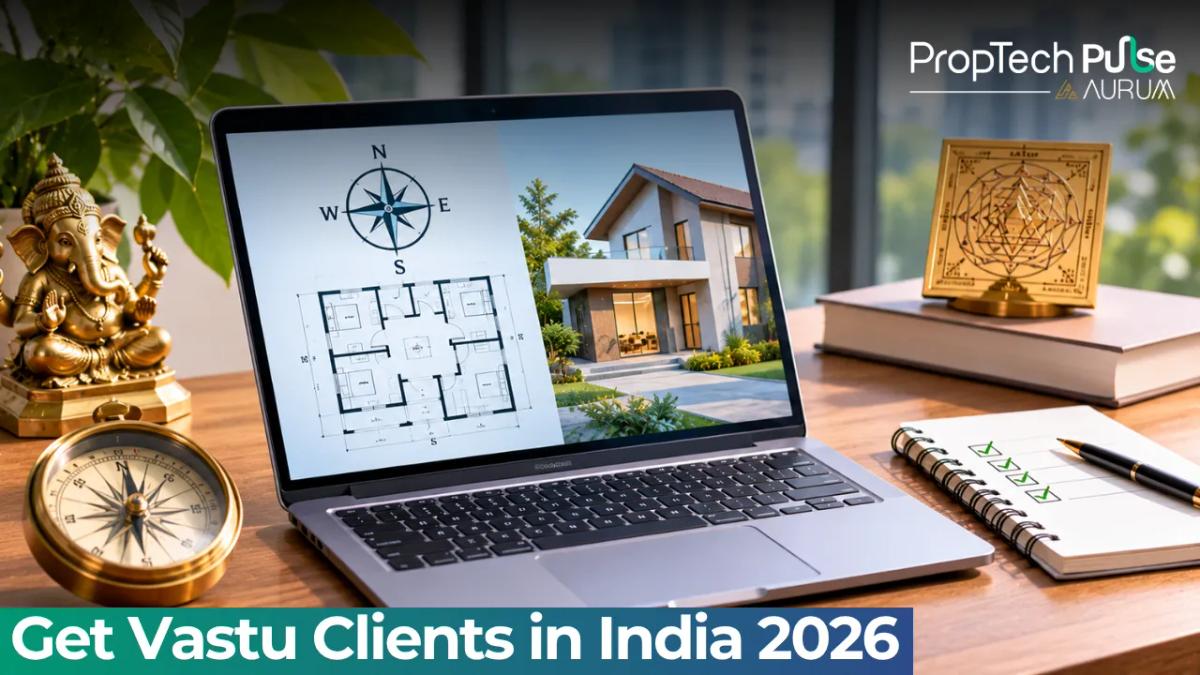
If you are wondering how to get vastu clients who actually pay for site visits, the answer starts by separating viral social media attention from direct sales. Most consultants fall into the same trap: filling calendars with free advice seekers, then panicking when rent is due.
Building a sustainable practice requires more than posting daily tips or trusting word of mouth to survive the lean months.
You need a structured system where high intent searches meet local outreach, filtered through a simple checklist that protects your time. This approach keeps bookings steady without draining your budget on untargeted ads or low commitment queries.
Why Most Consultants Struggle to Grow Their Practice
Quick answer
Getting qualified Vastu prospects requires separating viral social media traffic from direct sales. Build a hybrid system combining high intent search pages with structured local outreach. Filter every inquiry through a short pre call checklist to protect your time and convert genuine interest into paid site visits.
Many consultants treat social media reels and direct sales calls as the same activity. One builds an audience. The other closes a booking. When you mix them, you attract people who want quick fixes instead of paid site visits.
Narrowing Your Offer Before You Start Marketing
A generalist Vastu consultant competes with every astrologer in the neighbourhood. Specialists charge premium rates because they solve specific problems. Decide whether your focus is new plot selection, renovation corrections, commercial space alignment, or NRI advisory.
When you specialise, your outreach becomes precise. Instead of hoping homeowners see your post, you message architects working on independent villa projects in Gurugram or property managers handling multiplexes in Mumbai.
Specialisation also makes it easier to partner with local networks because architects know exactly which expertise fits their current blueprint phase.
Choosing Between a Vastu Consultation Platform and Going Independent
Every growing consultant eventually weighs two paths. Joining a third party directory brings immediate visibility but shares your fees and limits your data. Building an independent website takes longer to rank but gives you full control over pricing and client relationships.
| Feature | Third Party Directory | Independent Website / SEO |
|---|---|---|
| Initial effort | Low. Upload profile and wait. | High. Build landing pages and educational content. |
| Cost structure | Commission per booking or monthly subscription. | Hosting, domain and ad spend. No revenue share. |
| Client data | Owned by the platform. Hard to retarget. | Stored in your own CRM. Easy to follow up. |
| Pricing flexibility | Fixed by the marketplace algorithm. | Set freely by the consultant. |
| Long term value | Drops if the platform changes commission rates. | Builds brand equity and direct repeat business. |
| Best suited for | Early runway and instant bookings. | Established consultants protecting margins. |
Tip Use aggregators for the first six months to stabilise cash flow, but keep building your direct email list and Google Business Profile simultaneously.
The Hybrid Channel Mix for Steady Vastu Consultant Leads
Relying solely on either inbound content or outbound cold calling creates uneven months. A sustainable model uses both, tied together with a qualification filter.
High Intent Search Pages and Educational Content
Create dedicated pages for your core services. A landing page focused on Vastu consultation for new flats, for example, targets users actively comparing options rather than scrolling past entertainment reels.
Pair it with a separate guide for commercial space alignment aimed at business owners preparing office fit-outs.
Publish detailed walkthroughs on frequent layout errors, like misplaced kitchens or bedroom orientations against cardinal axes. This content captures organic search traffic and establishes your authority months before the visitor decides to book. Embed digital marketing funnel principles inside these posts to guide casual readers toward filling out a contact form.
Educational assets also reduce the burden on your sales team. When prospects understand terms like east facing benefits or southwest weightage before your first meeting, they arrive prepared to discuss budgets rather than basic concepts.
Local Partnerships and Referral Networks
Architects and interior designers hold the earliest access to property owners. They design layouts before the client even knows Vastu compliance matters.
Partner with three to five local firms and offer a straightforward referral arrangement. Provide them with simple checklists so their junior draftsmen flag Vastu gaps during the sketch phase.
This method produces steady warm leads because the designer vouches for your assessment before you ever speak to the client.
The WhatsApp Qualification Filter
Indian prospects prefer chatting over calling. You must control the transition from casual chat to a paid session.
Send a brief message immediately after they reply. Ask for the bare minimum details: current project stage, approximate square footage, and whether the architect shared a layout plan.
If they cannot share a basic floor plan, they likely want a free chat on location instead of a paid analysis.
Keep your responses contextual. Replace generic broadcast messages like Book your slot today with Since you mentioned the plot faces northeast, we can adjust the entrance placement before the foundation is cast.
This shows you read their problem and shifts the conversation away from price haggling toward solution value.
Set a clear boundary around unpaid work. State your fee upfront in the welcome message. Offer a fixed rate site visit or a flat fee virtual review. Do not provide personalised recommendations during the initial exchange.
Once the booking lands, you gain trust faster because the client knows exactly what they are paying for.
Add this pre consultation checklist to your intake form:
1. Property type (plot, apartment, villa, office)
2. Current construction stage (foundation, flooring, interiors)
3. Architect contact or layout file availability
4. Specific problem areas (main door alignment, master bedroom position)
5. Expected timeline for finalising the recommendation
Pricing Transparency and Compliance
Professional service providers operate under standard business licensing rather than direct sector specific mandates. However, financial compliance remains non negotiable.
If your annual turnover crosses the mandatory threshold, register for Goods and Services Tax under the CGST Act and issue proper invoices for every transaction. Charging GST at the standard 18 per cent rate ensures clarity and avoids penalty risks later. Reference the Central Board of Indirect Taxes and Customs portal for accurate billing procedures on professional services.
Setting Boundaries Around Free Advice
Every consultant encounters someone who asks for minor corrections over voice notes. Politely decline these requests.
Explain that a valid assessment requires reviewing the complete site map and understanding directional dependencies across all rooms. Direct them to a paid micro booking option instead. Protecting your time prevents burnout and signals that your expertise carries a market rate.
Making the Right Choice for Your Growth Path
Solo practitioners should start with a hybrid approach: maintain one active aggregation account for quick wins while publishing two detailed local guides monthly.
Established consultants with strong directories can safely reduce platform dependency by investing in search engine optimisation and direct outreach campaigns. Focus your energy wherever the lead volume meets healthy profit margins.
Find qualified Vastu clients by aligning your technical comfort level with your immediate revenue goals. This method solves the age-old question of how to get Vastu clients without relying on speculative ad spend.
If you want early visibility among serious homebuyers without managing complex lead funnels alone, look for platforms built to handle discovery and vetting efficiently.
Check the Pulse Vastu consultant waitlist to join a network designed to connect established experts with genuine inquiries.
Frequently asked questions
What is the average fee for a Vastu consultant in India?
Fees typically range between five thousand and twenty five thousand rupees depending on the property size and complexity. Plot assessments cost less than multi story villa audits because they require fewer measurements. Many consultants also offer virtual reviews at the lower end of the spectrum for quick layout checks. Always confirm whether travel expenses are added separately before finalising the agreement.
Are online Vastu consultations effective compared to on site visits?
Virtual reviews work well for apartments and small plots where satellite imagery and uploaded floor plans provide sufficient detail. Site visits remain necessary for large land holdings or complex corner plots where terrain variation affects directional calculations. Assessors rely on a magnetic compass and measured diagrams regardless of the medium used. Choose whichever option aligns best with your urgency and budget constraints.
Should I hire a Vastu consultant for a rented apartment?
Renting a home rarely requires formal Vastu intervention since tenants lack authority to alter walls or structural alignments. Leaseholders should focus on reversible adjustments like furniture placement and colour schemes within their assigned rooms. Landlords bear responsibility for foundational corrections, making tenant led renovations unnecessary unless the owner explicitly grants permission.
How do I verify if a Vastu expert is genuine?
Genuine specialists prioritise logical spatial arrangements over superstitious claims and avoid promising guaranteed financial gains. Check for verifiable client testimonials and confirm they hold proper GST registration or business licensing. Reputed consultants provide written reports outlining specific remedies rather than relying solely on verbal suggestions. Trust practitioners who respect architectural realities alongside traditional principles.
Sources
- Central Board of Indirect Taxes and Customs (CBIC): GST norms for professional services and invoicing requirements (accessed October 2026).
Enjoyed this blog article? Visit PropTech Pulse for more interesting blogs.


Ask Pulse Ai anything about real estate

Unlock the Latest in Real Estate
News, Infographics, Blogs & More! Delivered to your inbox.

