New Launch - India Real Estate Report 2026.

Services
Knowledge Hub
Resources
Tools

Ask Pulse Ai
©PropTech Pulse 2025, All rights reserved.


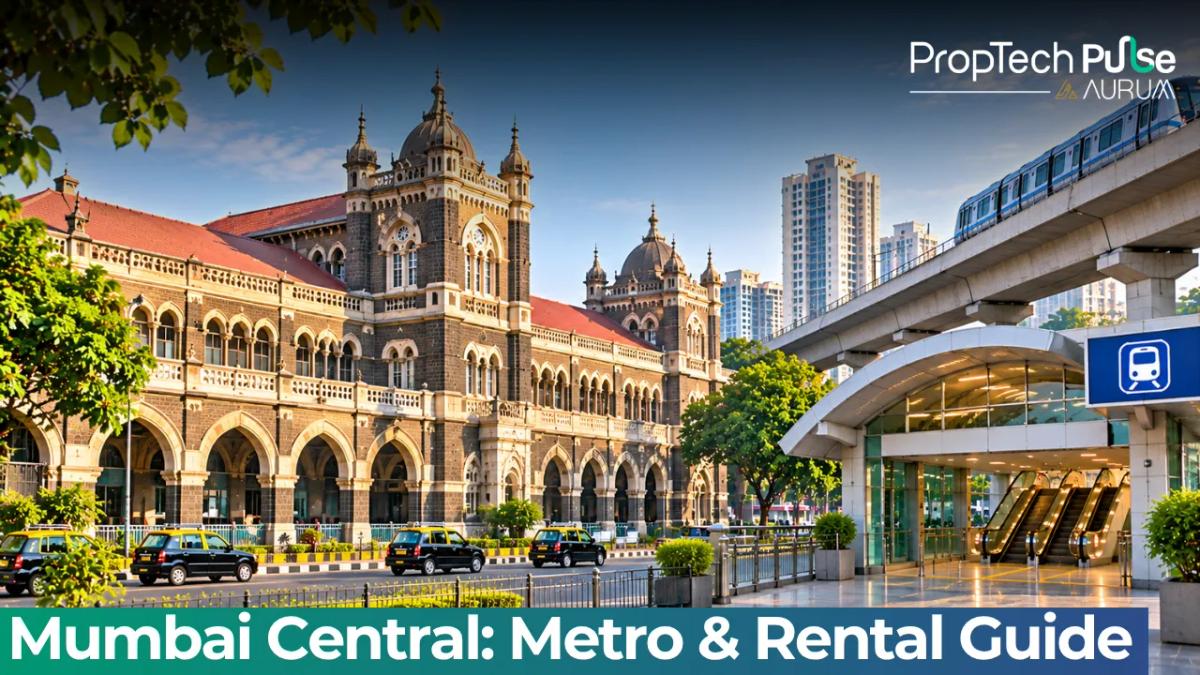
Mumbai Central Railway Station sits at the intersection of daily commuting pain and long-term property logic. For first-time buyers and investors mapping South Mumbai and West Central neighbourhoods, it is no longer just a stopping point.
It functions as a hard transit node that rewrites commute mathematics, shifts BMC zoning pressure, and dictates ground-floor exposure risks in Grant Road, Mazgaon, and Girgaon.
Location & Station Layout
Quick answer
The mumbai central station code is MMCT. Located on Anandrao Nair Marg, it serves the Western Line suburban corridor and carries major national trunk routes. The station features Claude Batley’s Indo-Saracenic design, opened on 18 December 1930, and currently operates nine platforms across mainline and suburban functions.
The terminal anchors the lower western seaboard. Two kilometres separates it from Marine Drive. Westbound commuters rely on it constantly.
Bandra, Andheri, Borivali these are pressure valves handled daily. The station also terminates Konkan route trains and key AC sleeper services.
Ask for the station code. You get MMCT. This four-letter tag controls ticket counters and departure boards nationwide.
Read the layout before buying an apartment. Two functional zones split the platforms entirely.
Suburban trains pull into dedicated tracks. Long-distance coaches use separate laybys instead. Gridlock vanishes during evening rushes when they stay apart.
| Zone | Platform count | Primary function |
|---|---|---|
| Mainline terminal | 5 | Long-distance and premium intercity trains |
| Suburban bay | 4 | Western Line local EMU services |
| Total platforms | 9 | - |
Platform breakdown: Mainline vs suburban split
Five platforms take scheduled coach arrivals. Move past the street-level plaza and you see why. A wider buffer zone keeps frontage buildings safe from queue spillage.
Western Line locals use the other four. They cluster tight against the main exit concourse.
Tight ticket barriers separate suburban platforms from the street. Watch how escalator stacks choke movement during peak hours.
Retail units right outside these exits trade quiet visibility for relentless footfall. Climb higher though. Cross-ventilation improves. Street noise fades completely.
Architectural background & heritage status
Claude Batley drafted the original design. You see his footprint across British-era Bombay infrastructure. Flat concrete roofs sit above Mughal arches and jali screening. Builders finished construction circa 1930. Opening day landed on 18 December.
Historical records put initial construction costs near ₹1.56 crore. Municipal heritage guidelines now protect its cultural value. Those rules dictate every renovation restriction for abutting commercial plazas today.
Connectivity Matrix & Transit Flow
Entry and exit routes dictate street density here. The main drop-off lane runs parallel to the station plaza. Carter Road meets it to the north. Madhavbaug Lane cuts across to the south.
Know exactly which side of the road your target building faces. The service lane behind the bus terminus handles delivery trucks and school buses.
Main arterial roads swallow commuter taxis and ride-hail queues instead. Avoid the back street entirely if you hate diesel fumes.
Western Line routing & exit logistics
Local trains terminate or originate in both directions. Morning services shove westward toward Borivali. Evening trains pull the flow back toward Churchgate. Depot allocations now push most Western Line services straight to Virar or Boisar.
Seven or eight trains roll through per hour off-peak. Push that number to ten or twelve during morning rushes.
Exit gates dump passengers straight into the forecourt. Auto ranks line up methodically. Taxi queues wait their turn. Short-stay parking near the suburban exit stays cramped.
Bus terminals, auto ranks & parking norms
Eastern and northern perimeters host BEST bus branches. Routes 312, 313, 319, 431, and V30 fan out to Grant Road, Chinchpokli, Dadar, Wadala, and Kurla. The bus bay sits clearly outside the main station boundary.
Walkers cutting toward eastern neighbourhoods bypass the perimeter entirely. Mid-block shortcuts save time.
Auto ranks enforce a city-aligned fare meter. Drivers still hike fixed rates during monsoon weeks or strikes. Traffic police ward limits control parking enforcement. Keep a vehicle within 300 metres? Check visitor slot policies immediately.
Metro Integration & Commute Math
Aqua Line direct transfer & mapped stations
Forget Delhi-Mumbai Expressway connector logic. Metro Line 3 buries a direct transfer corridor beneath the railway premises.
Alight from suburban trains. One escalator bank drops you straight onto waiting Aqua Line coaches.
Colaba connects straight to Versova. Employment nodes cluster heavily along the route. Mapped stops include Hutatma Chowk, Mandvi, Grant Road, Kalbadevi, Crawford Market, MG Road, Mahim, Saki Naka, Bandra, and Versova.
Grant Road sits beneath the traditional market zone. Office workers abandon road congestion thanks to this second pedestrian spine.
Underground switches kill surface loops for CST travel. Tap your card. Descend to the metro concourse. Board Line 3. Three stops deliver you to Chhatrapati Shivaji Maharaj Terminus. Road tolls disappear. Signal delays vanish entirely.
Tenants targeting SEEPZ, Lower Parel, or Nariman Point trust this underground seam. Peak-hour uncertainty evaporates. Road trips drag to forty-five minutes. Steady metro runs finish in twenty-two minutes flat.
Peak commute windows to employment hubs
Physical distance means nothing. Commuters track travel minutes obsessively. Road networks trap instantly during heavy rain or signal failures. The metro overlay delivers schedule predictability instead.
| Destination zone | Road network duration | Metro/suburban hybrid duration |
|---|---|---|
| BKC (Bandra Kurla Complex) | 35–45 mins | 18–22 mins |
| Lower Parel / SEEPZ | 25–35 mins | 12–15 mins |
| Chhatrapati Shivaji Maharaj Terminus | 20–25 mins | 10–12 mins |
| Nariman Point / Financial District | 15–20 mins | 14–16 mins |
| Average reduction with metro linkage | - | ~40% faster |
Weather events and VIP convoy permits skew road times. Underground legs strip those surface variables away entirely.
Rent premiums hit 12 to 18 percent for 1BHK or 2BHK flats near the Grant Road metro interchange. Arterial-facing units lag behind that figure consistently.
Transit-node properties move faster in secondary markets. Buyers tolerate tighter floor plates without blinking. Commute certainty outweighs raw square footage. Period.
The ₹1,500 Crore Redevelopment Plan
Current rollout status & accessibility upgrades
Railway modernisation funnels near ₹1,500 crore into station-wide upgrades.
Multi-level car parks anchor the plan. Skywalk connectors follow closely. Static signage yields to digital wayfinding. Ventilation shafts undergo comprehensive overhauls.
Wheelchair ramps roll out across all nine platforms. Phased commissioning arrives via rolling announcements.
Structural expansion waits on concourse digitisation. Rights of Persons with Disabilities Act mandates drive these accessibility improvements. Dedicated staff assistance desks and tactile flooring paths complete the cycle.
Previously vacant shell spaces now house digital lounges and expanded food courts. Footfall volume explodes beyond normal commuter spikes.
Retail operators feast on predictable dwell time. Adjacent residential towers endure heavier delivery traffic. Cleaning vans shift operations to late-night slots exclusively.
Management societies tighten gate protocols overnight. Unregistered vendors lose nighttime access immediately.
Noise mitigation & BMC compliance for adjacent plots
Dust, vibration, and temporary road closures erupt alongside redevelopment machinery. Environmental clearance becomes mandatory for tower construction or renovation within 200 metres.
The Maharashtra Pollution Control Board polices permissible working hours strictly. Particulate control measures stay non-negotiable.
Setback requirements for structures abutting railway rights-of-way fall under strict BMC enforcement.
Active lines usually demand extra fire safety provisions for floor space index calculations. Excavation triggers reinforced retaining walls to stop soil settlement dead cold.
Request recent noise measurement reports before signing deals on ground-floor flats or retail shops. Municipal inspectors track decibel readings relentlessly.
Courts routinely uphold nuisance claims when thresholds breach night curfew limits.
Upper floors escape most of this trouble. Lower mid-rise units still endure windborne debris from nearby cranes.
Floor selection tip Avoid booking a ground-floor unit within fifty metres of the auto rank or bus bay without verifying drainage slope and flood barrier history. Monsoon pooling along service lanes frequently pushes stagnant water toward ground entrances in adjacent blocks.
Rental & Resale Impact for Grant Road, Mazgaon & Girgaon
Transit proximity inflates demand instantly. Station building age and railway belt legacy titles muddle pricing transparency.
Older tenements rest on leasehold plots granted to erstwhile port trusts. Railway authorities allocated those deeds originally. Loan tenures shrink. Resale liquidity tightens accordingly.
Standard mortgage pipelines process freehold apartments far more cleanly. Verify title type before starting price negotiations.
Builders conflate leasehold square footage with freehold comparables regularly. Expect inflated maintenance charges. Upfront verification prevents ownership clarity from fracturing.
Rental demand concentrates heavily along three corridors. Corporate interns flock to Grant Road for Lower Parel and Nariman Point roles.
Defence personnel and hospital staff anchor Mazgaon. Shipyard and military cantonment adjacency fuels those flows. Students, small traders, and legacy families populate Girgaon entirely.
Yield mechanics shift sharply. Leasehold stocks push higher gross rental percentages reliably.
Base purchase prices stay depressed compared to freehold benchmarks. Banks cap loan-to-value ratios tighter on those assets regardless.
Consider the yield math plainly. A 550 square feet carpet-area apartment in Grant Road commands ₹28,000 monthly. Annual income hits ₹3,36,000.
Match that against an ₹85 lakh purchase price. Gross yield settles near 3.95 percent.
Maintenance recovery clauses squeeze the margin. Tenant vacancy buffers and property tax adjustments drag net yield down to 3.1–3.4 percent.
Investors demanding returns above 5 percent settle for older stock inevitably. Visible moisture seepage, narrow stairwells, and delayed lift installations become standard trade-offs. Run a precise comparison using a rental yield calculator before locking capital. Area definitions require scrutiny too. Brochure marketing confuses built up area vs carpet area frequently. Lock carpet area contractually. Always.
Eastward employment hub expansion compresses resale timelines rapidly. Update kitchens and fit modular wardrobes. Faster turnover follows automatically. Secure power backup speeds up buyer decisions instantly.
Banks funding these flips prefer MahaRERA-registered projects absolutely. Verify maharera registered projects status early in the process. Unregistered towers still trade hands. Loan approval velocity plummets for secondary market transactions though. Communities surrounding the Mumbai Central Railway Station adapt to new transit habits remarkably fast.
Before You Commit Your Deposit
Transit upgrades inflate prices. They expose structural compromises simultaneously. Walk the locality on a weekday evening.
Listen for generator horns, diesel pump rumble, and idle auto-engines overlapping. Map the nearest fire hydrant. Plot the emergency stairwell route.
Confirm validity for occupancy certificates and fire NOCs. Verify leasehold versus freehold status through sub-registrar offices or MHADA archives. Model cash flow against realistic vacancy rates instead of aspirational rent ceilings. Conservative assumptions make property finance work.
Run affordability checks with a reliable home loan emi calculator before signing token agreements. Your purchase path needs cross-referencing against a property due diligence india checklist. Title disputes vanish when baseline verifications happen first. Properties near the mumbai central railway station thrive under this framework.
Frequently asked questions
What is the station code for Mumbai Central?
The official railway code is MMCT. You will see this displayed on ticket counters, automated departure boards, and mobile concession apps. It distinguishes the terminal from other central stations in Maharashtra and helps reservation systems allocate platform slots correctly during coach cancellations or schedule revisions.
How many platforms does Mumbai Central have?
Nine platforms serve the precinct today. Five handle mainline long-distance coaches and premium trains. Four cater to Western Line suburban EMUs. The split prevents local trains from delaying intercity arrivals and keeps commuter frequency stable during weekend festival rushes.
Does Mumbai Central have metro connectivity?
Yes. Line 3, known as the Aqua Line, runs an underground transfer corridor directly beneath the station premises. Suburban passengers descend a single escalator bank and board metro coaches without crossing busy roads. The linkage connects Colaba to Versova in roughly forty-five minutes.
Distance between Mumbai Central and CST?
Surface roads typically require twenty to twenty-five minutes during moderate traffic, extending to thirty-five minutes during monsoon downpours. The metro alternative covers three stations in ten to twelve minutes with minimal signal dependency. Physical distance sits around three kilometres along the coastal highway corridor.
How far is Mumbai Central from Chhatrapati Shivaji Maharaj International Airport?
Road distance spans approximately twenty kilometres. Peak-hour travel takes forty to fifty minutes via the J B Nagar flyover and Eastern Freeway transition zones. Off-peak runs drop to thirty minutes. The airport expressway alignment remains under phased completion, so current durations rely on surface arterials and bridge crossings.
Sources
- MahaMetro: Line 3 Aqua Line alignment, station mapping, and transfer connectivity specifications (accessed October 2026)
Enjoyed this blog article? Visit PropTech Pulse for more interesting blogs.




Ask Pulse Ai anything about real estate

Unlock the Latest in Real Estate
News, Infographics, Blogs & More! Delivered to your inbox.

