New Launch - India Real Estate Report 2026.

Services
Knowledge Hub
Resources
Tools

Ask Pulse Ai
©PropTech Pulse 2025, All rights reserved.


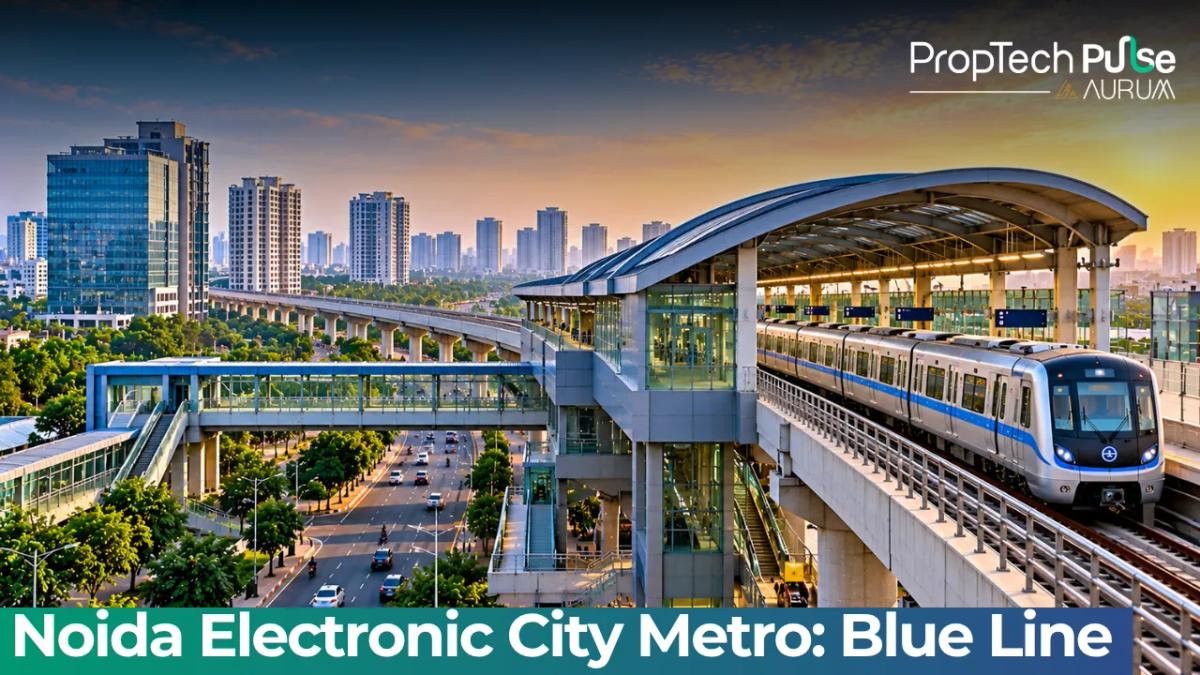
Your commute from Sectors 62, 63, or 64 funnels through one exact stop: the noida electronic city metro station. Living near Highway Tower or I-Thumb means relying heavily on this Blue Line terminal.
It connects your IT workplace directly to Vaishali and eventually New Delhi's central hubs like Rajiv Chowk and Dwarka. Getting the station layout right saves time during peak hours, while knowing the fare structure and upcoming Phase 5 changes protects both your commute budget and your property value.
Station Layout and Blue Line Connectivity
This station marks the end of the line heading toward Vaishali. Because it is a terminus, the track layout requires three separate platforms under one raised structure. This terminal opened in 2019 and continues to handle thousands of daily riders.
Platform 1 handles inbound trains moving toward Vaishali and Delhi Cantonment. Platforms 2 and 3 handle outbound trains bound for Dwarka.
Trains arrive here frequently, pause briefly for crew swaps, and depart almost continuously during the morning rush. Finding an empty seat depends less on the printed schedule and more on which platform you enter first.
| Platform | Direction / Destination |
|---|---|
| Platform 1 | Inbound: Vaishali, Delhi Cantonment, Kashmere Gate |
| Platform 2 | Outbound: Dwarka, Dwarka Sector 21 |
| Platform 3 | Outbound: Dwarka, Dwarka Sector 21 |
Noida Electronic City Metro Station Timings
Quick answer
The first train at Noida Electronic City metro station departs around 05:30 AM towards Vaishali and 05:45 AM towards Dwarka. The last trains leave between 11:00 PM and 11:12 PM depending on the direction. During peak office hours, trains run every 4 to 6 minutes.
Morning headways tighten as the shift change begins at 8 AM. Standing room only kicks in if you miss two consecutive arrivals. Evening crowds swell sharply after 6:30 PM as staff spill out of the tech parks. If your office finishes late, check the daily timetable because Sunday and holiday schedules sometimes adjust the final departure by 15 minutes.
Timing tip: Arrive 10 minutes before the posted last train time. Once the doors close, they rarely reopen, even for staff who are already waiting on the escalator.
Exit Gates Mapped to Landmarks and Offices
Commuters waste time wandering outside if they step out on the wrong gate. Three exit points dump passengers within comfortable walking distance of specific corporate buildings and residential clusters.
Cutting through the crowded lanes between the IT towers and the residential blocks demands knowing where foot traffic piles up so you can sidestep the bottlenecks on the service road.
| Exit Gate | Best For / Nearby Buildings |
|---|---|
| Gate 1 | Parking lot access, Divyang-friendly ramps, nearest bus routes |
| Gate 2 | Highway Tower, Graphics Tower, I-Thumb Tower, HDFC Bank, Ginger Hotel |
| Gate 3 | H-Block business district, Sector 63 residential towers, retail plaza |
Residents of Sectors 62 usually pick Gate 3. The pedestrian bridge cuts straight across to avoid the noisy service road.
Gate 2 works better if your office sits inside Highway Tower or I-Thumb. Those buildings pack in large multinational teams on every floor. For newer blocks in Sector 63, just cut through the local market off Gate 3. The walk clocks in at eight minutes flat.
Metro Fares, Smart Cards and Off-Peak Savings
Daily commuters pay different rates depending on whether they tap a plastic Smart Card or buy cashless UPI tickets. The base fares stretch from ₹11 for the shortest hop inside the zone up to ₹64 for longer rides beyond thirty-two kilometers.
| Distance | Regular Cash/UPI | Smart Card Discounted |
|---|---|---|
| Up to 2 km | ₹11 | ₹10 |
| 2 to 8 km | ₹15 | ₹13 |
| 8 to 16 km | ₹24 | ₹21 |
| 16 to 32 km | ₹36 | ₹33 |
| Above 32 km | ₹64 | ₹58 |
The Smart Card takes an automatic ten percent off every trip. Many office-goers miss a trick worth twenty percent more savings: travel outside the standard 8 AM to 10 AM and 5 PM to 7:30 PM rush windows. This off-peak window exists specifically to spread crowd pressure across the day.
You ride from NECC to Rajiv Chowk (roughly 28 km) every working day. A standard monthly pass costs around ₹3,600 using cash-based tickets. Switching to a Smart Card brings that down to ₹3,240.
Take the 10:15 AM or 2:00 PM shifts to avoid queues, and the off-peak bonus cuts your bill further to roughly ₹2,592. That is nearly ₹1,000 saved every month just by shifting your clock.
To understand how transit projects shape long-term rental demand across the capital region, see our breakdown of transit-led neighborhood growth here.
Park & Ride and Accessibility Features
Dedicated parking sits right at the station for drivers who prefer to cover part of the route by car. You get space for 150 cars, 300 two-wheelers, and ten bicycle slots. Lines form early for those spaces. Gate 1 feeds straight onto the Expressway service roads, making it the fastest entry point.
The full raised platform handles heavy foot traffic while keeping access simple. Escalators run alongside every staircase. Elevators cater to wheelchairs, prams, and passengers carrying heavy luggage.
Signage for Divyang-friendly routes sits clearly above the entrance turnstiles, guiding users smoothly through the automated ticket barriers.
Delhi Metro Phase 5: The Sahibabad Extension Roadmap
DMRC plans a major network overhaul over the next ten years. One extension changes the game for western Noida buyers: a 5.1 km track running from this Blue Line terminus straight to Sahibabad.
The line cuts through Indirapuram and Shakti Khand, stitching the eastern suburbs back into the same rail spine serving Western Noida today.
Property takeaway: When Phase 5 opens, the SECC bubble becomes the middle ring of a much larger commuter circle. Investors buying near Sector 62 should expect stronger appreciation as cross-town journeys become viable without relying on crowded bus shuttles.
Traffic bottlenecks on the Noida-Greater Noida Expressway force many employers to fund their own bus fleets right now. A direct rail connection eliminates that dependency completely.
Watch funding announcements from the Uttar Pradesh government when tracking long-term asset growth. Construction timelines lock in the moment the allocated budget appears in public records.
| Planned Stop Name | Nearest Local Hub |
|---|---|
| Noida Electronic City (Existing Terminus) | Sectors 62–64, IT Parks |
| New Industrial Area Station | F-Block / G-Block warehouses |
| Kasna / Crossroads Junction | Residential clusters in Eastern Noida |
| Indirapuram / Agwal Colony | Shopping malls, educational institutes |
| Shakti Khand | Sector 1, Ghaziabad (Transit hub) |
| Vasundhara Sector 7 | Local commercial market |
| Sahibabad Railway Station | Inter-city rail connection point |
See how metro expansion historically reshaped housing prices in surrounding micro-markets here, and explore the analytics behind transit-driven valuation spikes here.
What to decide next
If you are renting, prioritize flats within a seven-minute walk of Gate 2 or Gate 3 so the daily trek stays bearable during monsoon showers. Proximity to the noida electronic city metro station keeps rent premiums manageable when travel costs spike.
Owners holding property should wait until Phase 5 breaks ground publicly. Property premiums often jump twelve to fifteen percent between tender issuance and pile driving. Check the latest UP government notifications or contact your local municipal office for precise update tracking.
Frequently asked questions
What is the last metro timing at Noida Electronic City?
Departure times shift slightly, but the final train leaves around 23:00 for Vaishali and 23:12 for Dwarka. These times apply on regular weekdays, though Sunday services sometimes trim the last slot to 22:45. Always verify the exact closing hour on the day you travel, because special events or maintenance work can trigger overnight closures.
Which metro line connects to Noida Electronic City?
Located on the Blue Line of the Delhi Metro system, it acts as the western terminus. From here, trains run eastward past Vaishali and Kashmere Gate all the way to New Delhi's center, and westward along the branch tracks toward Dwarka. Passengers switching from the Aqua Line or Noida Metro transfer at Noida Civic Center or Sector 18 rather than here.
How to reach Noida Sector 62 from Noida Electronic City metro?
Walk straight through Gate 3 and cross the designated footpath bridge that leads directly into the Sector 62 residential grid. The walk takes roughly eight minutes and skips the noisy service road entirely. If you prefer stepping off at Gate 2, board one of the frequent feeder buses that circle the H-Block district before dropping you near your building.
Is Noida Electronic City metro station accessible by wheelchair?
Yes, the entire elevated structure features multiple elevators positioned beside every staircase and escalator bank. Tactile flooring guides visually impaired travelers from the street entrance directly to the ticket vending machines. Staff at the customer control cabin assist with boarding onto trains when needed, making the commute fully compliant with Divyang accessibility standards.
When will the Noida Electronic City metro extension open?
Construction is currently in the planning and funding stages for the 5.1 km link stretching from SECC to Sahibabad. While official groundbreaking dates depend on state budget allocations and land acquisition progress, industry estimates place initial activity sometime in late 2027. Track the Department of Urban Development press releases for confirmed tenders and contractor handovers.
Sources
- Delhi Metro Rail Corporation (DMRC): Station details and platform layout: Accessed October 2026
- DMRC: Current fare matrix and Smart Card discount policies: Accessed October 2026
Enjoyed this blog article? Visit PropTech Pulse for more interesting blogs.





Ask Pulse Ai anything about real estate

Unlock the Latest in Real Estate
News, Infographics, Blogs & More! Delivered to your inbox.

