New Launch - India Real Estate Report 2026.

Services
Knowledge Hub
Resources
Tools

Ask Pulse Ai
©PropTech Pulse 2025, All rights reserved.


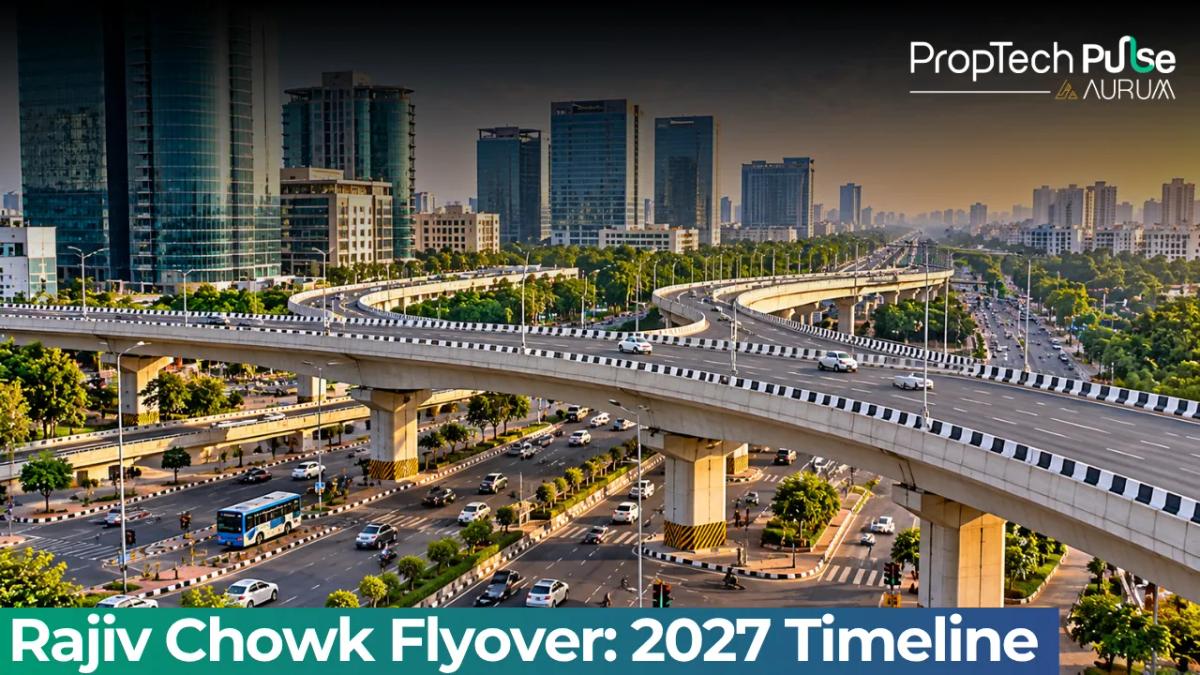
For anyone waiting for the new Rajiv Chowk flyover to finally break the gridlock, the wait is over. The National Highways Authority of India (NHAI) secured formal alignment approval during the recent District Coordination Committee meeting in Gurugram.
Tenders for the Gurugram elevated corridor drop in March 2027. The structure stacks directly above the existing choke point, clearing steady movement onto the highway.
It is not a recycled 2020 promise. A confirmed engineering blueprint replaces vague timelines. We track exactly how the Sohna Road interchange functions, when construction starts, and why south-facing Gurugram prices shift.
Why the old Rajiv Chowk underpass could no longer handle the volume
Quick answer
NHAI approval for the dual-Rajiv Chowk flyover project paves the way for tenders in March 2027. The Gurgaon overpass adds a 1.8 km three-lane passage stacked above the congested surface junction. It solves cross-traffic bottlenecks for Delhi-Gurgaon Expressway and Sohna Road commuters.
Current underpass capacity peaked in the early 2010s. Traffic density has more than tripled since then.
Vehicles spill back toward the Expressway toll gate.
Property buyers targeting Sector 54 or Dwarka Expressway extensions often overlook this junction.
Every trip across this intersection currently eats into working hours until a permanent solution arrives.
Original underpass geometry makes things worse.
That braking action creates shockwave congestion far behind the intersection.
Inside the new Rajiv Chowk to Sohna overhead road design
A stacked layout allows NHAI to widen capacity without demolishing nearby commercial blocks.
Traffic flow splits into two separate bridges sitting roughly ten metres above the old ramp.
1.8-kilometre right-turn corridor over the existing flyover
Right turns dominate the delay profile.
Southbound drivers face the worst standstalls.
The new eighteen-hundred-metre deck carries them straight over.
Drivers skip the choke point entirely, sidestepping both surface lights and the older underpass ramps.
The 2-lane left-turn bridge and 25-metre pillars
Left-moving traffic gets its own dedicated span.
To clear the interchange deck above, engineers drove support piles to a depth requiring twenty-five-metre tall columns.
The resulting clearance gives large transport a safe five-and-a-half metres beneath the upper decks.
| Parameter | Specification |
|---|---|
| Total span length | Approximately 1.8 km per directional bridge |
| Lane configuration | Two lanes (left turn) and three lanes (right turn) |
| Pillar height | 25 metres from ground level |
| Clearance height | 5.5 metres beneath the decks |
| Vertical offset | Stacked roughly ten metres above the existing underpass |
Height costs money, though. Pouring over an active artery forces night shifts and temporary steel scaffolding.
Dampeners sit under the pile drives to stop vibrations from shaking adjacent Metro tracks. Material delivery schedules cause most delays, not capital shortfalls.
Waiting until March 2027 to release bids simply gives contractors time to schedule those heavy lifts.
Phase 2 execution: Land acquisition and the March 2027 deadline
Engineering challenges pale next to land acquisition in Gurugram.
Fighting through those title disputes explains the long gap between early sketches and today's signed approval.
The Department of Telecommunications originally blocked 0.89 hectares needed for approach ramps. Finalising transfer papers took back-and-forth between New Delhi ministries and the Haryana UD department.
The District Coordination Committee only authorised the route after securing the BSNL relocation strategy. Three hectares of contiguous government land must formally change ownership before surveyors hit the soil.
Land transfer reality: Government plot transfers in Haryana often face bureaucratic lag. Contractors bidding for the March 2027 tender must factor in potential site-access delays even after winning the contract. Do not assume immediate excavation starts upon agreement signing.
Winning the contract demands immediate mobilisation. Steel prices stay volatile, cement queues stretch out, and crane availability across the NCR remains tight.
Any hesitation after contract signing guarantees delayed milestones. Temporary detours will clog local sectors while foundations cure, meaning municipal teams must reroute buses through Sector 47 and 48 to keep local commerce alive.
Real estate and commuter outlook for the affected corridors
Traffic upgrades in Gurugram trigger immediate pricing ripples. Residential societies sitting one to two kilometres from the new viaduct feel buyer interest spike within months.
Direct relief for the daily Sohna Road run
Current Sohna Road flyovers handle thousands, yet connecting them cleanly to the main expressway frees up daily commute reliability. Residents commuting to Sushant Lok now reclaim thirty to forty weekday mornings.
Reliable commute times boost home values near exit ramps. Bargain listings previously dragged down by morning crawls suddenly attract cash offers again.
Property demand drivers along the new alignment
Properties facing south see valuation jumps first. Investors who skipped Sector 52, 54, and 55 earlier revisit price targets once traffic eases, giving builders room to hike base rates.
Current residents enjoy instant resale leverage.
Your affordability model shifts here. Larger ticket sizes demand heavier upfront capital. Run a home loan EMI calculator to see if stretching tenure for a prime location actually works.
Compare prime locations against lingering bottleneck zones. Always verify builder credentials first. Checking Haryana RERA project registration stops you from paying upfront for unverified connectivity claims.
Long-term holds demand tracking of local comparables. Mastering standard market valuation methods shields investors from emotional bidding during peak construction announcements. Knowing how to calculate property value keeps your numbers grounded.
Actual capital appreciation arrives post-handover, not during groundbreaking rallies. Rental premiums usually jump twelve to eighteen months after the Rajiv Chowk overpass opens, as corporate tenants finally accept shorter commutes.
Before you update your property portfolio
Capitalising on rapid appreciation requires patience. Hold off on major investments until the March 2027 tender releases and cranes arrive on-site.
Documented completion certificates move transaction needles. Scout ready-to-move inventory lining exit ramps as soon as concrete foundations emerge, ensuring you see actual road widths before committing funds.
Watch the official Gurgaon elevated corridor tracker for precise possession windows.
Frequently asked questions
When will the Rajiv Chowk flyover construction begin?
The official tender announcement drops in March 2027, following alignment approval by the District Coordination Committee. Contractors take four to six months after bidding to arrange heavy machinery and secure night-work permits before digging the twenty-five metre pillars.
Is the new Rajiv Chowk flyover replacing the existing underpass?
The project keeps the old underpass and builds right on top of it. Stacking the new lanes vertically saves ground space, letting local traffic and footpaths keep running smoothly underneath the wide highway decks.
What is the total length and height of the proposed flyover?
Each bridge covers roughly 1.8 kilometres. The support columns rise twenty-five metres from the asphalt, clearing five-and-a-half metres above for buses and trucks to pass safely through the intersection below.
Why has the Rajiv Chowk flyover project been delayed for so long?
Land rights held up the process for years. The alignment crosses government plots, including a key spot managed by the Department of Telecommunications. Moving the BSNL towers finally cleared the administrative logjam ahead of the March 2027 tender window.
How will the elevated road improve traffic towards Sohna?
Right-turning cars currently get stuck in the slow moving service lanes. The eighteen-hundred-metre raised corridor skips the whole intersection and joins straight onto the Gurgaon Sohna Road network. Morning drives to Sushant Lok should shrink by nearly forty percent once drivers use the slip ramps.
Enjoyed this blog article? Visit PropTech Pulse for more interesting blogs.


Ask Pulse Ai anything about real estate

Unlock the Latest in Real Estate
News, Infographics, Blogs & More! Delivered to your inbox.

