New Launch - India Real Estate Report 2026.

Services
Knowledge Hub
Resources
Tools

Ask Pulse Ai
©PropTech Pulse 2025, All rights reserved.


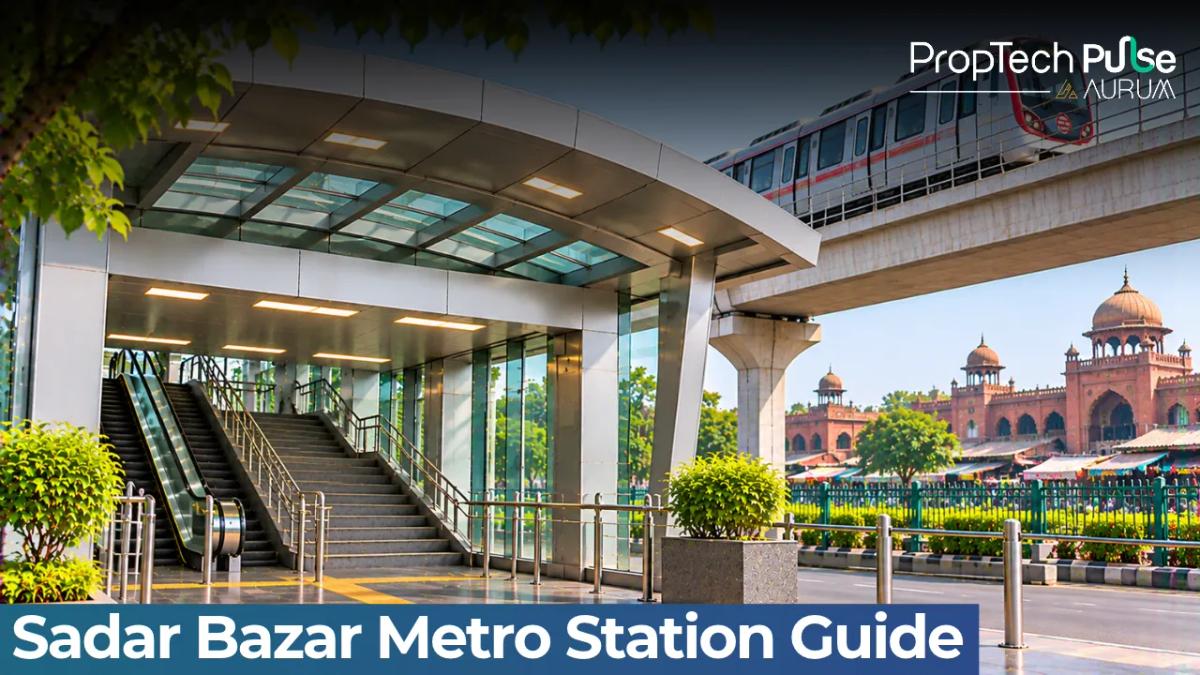
Search for a sadar bazar metro station and you get two entirely different results. One drop you straight into India's largest textile and cosmetics wholesale market.
The other places you at a quiet residential enclave surrounded by defence service quarters. Pick the wrong stop, and you waste an hour crossing central Delhi with your luggage or stock samples.
This guide splits the confusion immediately. Read the decision matrix below to identify your actual destination, then follow the precise transit blueprint built for commuters, traders, and property seekers moving through the capital.
Old Delhi vs Delhi Cantonment: Avoiding the Most Common Mistake
Quick answer
The nearest metro station sadar bazar depends entirely on whether you are visiting the historic wholesale markets or staying in the defence cantonment. Tis Hazari (Red Line) serves the commercial belt. Sadar Bazar Cantonment (Magenta Line) serves the residential and office zone. Choose based on your final destination, not the station name.
Delhi carries two locations sharing this historic name. A quirk of colonial urban planning trips up tourists and daily commuters alike.
The Old Delhi version refers to a sprawling commercial district dating back centuries. Meanwhile, the Delhi Cantonment version marks a planned residential and administrative area established under British military guidelines.
They sit roughly six kilometres apart. Railway yards and high-density urban fabric keep the zones separated.
Navigation apps default to the Cantonment stop. They see an exact name match.
That trips up wholesale buyers instantly. You get dumped miles from your client meeting.
Residents booking taxis at Tis Hazari face the reverse problem. Short rides turn into crowded market trams carrying heavy sample cases.
Pick the correct stop first. It saves both hours and dead-haulage charges.
| Destination Type | Nearest Metro Station | Serving Line | Distance to Final Stop | Best Last-Mile Option |
|---|---|---|---|---|
| Old Delhi Wholesale Market | Tis Hazari | Red Line | 1.8 km | E-rickshaw queue behind Exit 3 |
| Delhi Cantonment Residences | Sadar Bazar Cantonment | Magenta Line | 400 m | Walk or shared auto |
| Cotton & Textile Traders | Chawri Bazar | Yellow Line | 1.2 km | Shared auto from Block B |
| Average Round-Trip Cost Per Person | ₹80 to ₹120 (metro fare + e-rickshaw) | |||
Reaching the Famous Old Delhi Wholesale Market
The Old Delhi market zone operates on early mornings. Crowds surge before 09:00 AM as shopkeepers haul inventory carts out of narrow lanes. Picking the correct station exit requires attention. Bypass the main thoroughfare before lunchtime heat sets in.
Tis Hazari Station (Red Line): The Closest Gateway
Tis Hazari sits directly on the National Railways line that bisects the commercial district. Trains arrive every four minutes during weekday peaks.
Stand far back from the yellow tactile paving. The platform edge drops sharply three metres into the track trench.
Once on the stairs, follow signs marked Exit 3. Exit 1 forces pedestrians across four busy lanes. Exit 3 places you at the start of the paved ramp. Cut straight down toward the textile wholesalers.
At ground level, the e-rickshaw bundh forms immediately to your left. Rates stay fixed for standard routes, usually ₹60 to ₹90.
Keep sample boxes ready. Metered autos wait further ahead. City tariffs push fares up by ten or fifteen rupees.
If you are scouting premises for a trading unit, check local zoning laws first. Then read our guide on what to buy before committing capital to physical stalls in the dense cotton corridors.
Chawri Bazar and R.K. Ashram Marg: Strategic Alternatives
Chawri Bazar anchors the southern entrance of the wholesale belt. Located on the Yellow Line, it catches heavy footfall from south Delhi suburbs and Dwarka.
The station feeds straight into Chandni Chowk, placing you within a ten-minute walk of the smaller wholesale clusters.
R.K. Ashram Marg sits slightly further east. It offers a quieter disembarkation point.
Trains arrive more frequently here during peak school hours. Both stops demand crossing active railway lines. Pedestrian jams spike past 11:00 AM. Delivery vans clog the streets.
Travelers from Noida or Ghaziabad skip Kashmere Gate entirely. Alight at either Yellow Line stop instead.
That routing saves twenty minutes. Morning rush hour spills are avoided completely.
Reaching Delhi Cantonment Residents and Employees
This address belongs to a fundamentally different ecosystem. British-era barracks and government housing boards line the streets.
A residential sanctuary doubles as an administrative node. Roads stretch wider. Traffic stays light. Commerce gives way to routine logistics.
Sadar Bazar Cantonment Station (Magenta Line) Setup and Facilities
The Magenta Line terminal opened in May 2018. Phase II linked Rohini to Botanical Garden.
Hindi and English announcements play automatically. Elevator banks anchor the concourse centre, running straight from street level to the retail mezzanine.
The layout rewards quick orientation. Four exits align perfectly with the Defence Colony grid.
Aim for the western gate if you target Shekhawati Lines bungalows. East exits dump you straight into perimeter markets.
Picking the correct door cuts walking time in half.
DTC feeder buses handle local transit. Internal shuttles remain strictly for defence staff.
Outsiders without valid ID cards occasionally trigger checkpoint screenings. Bring printed lease agreements when visiting commercial contacts.
Homebuyers evaluating rental yields in this pocket should verify the builder credentials upfront. Cross-check every development against RERA registered projects to avoid unapproved floor-space index violations that plague older conversion buildings near the canal edges.
Step-by-Step Transit Guide from Major City Hubs
Most commutes start outside easy walking range. Journeys branch off central railheads, airport terminals, or outer ring intersections.
Mapping optimal transfer points prevents circular routing. It also stops boarding passes from triggering inter-terminal scanning penalties.
| Origin Point | Recommended Route | Total Trip Time | Interchange Advantage |
|---|---|---|---|
| IGI Airport Terminal 3 | Blue Line → Central Secretariat → Yellow Line → Tis Hazari | 55 minutes | Avoid Kashmere Gate transfer; save 15 minutes |
| New Delhi Railway Station | Walk to Rajiv Chowk → Yellow Line → Tis Hazari | 35 minutes | Direct platform alignment; minimal escalator dependency |
| Noida Sector 18 | Yellow Line direct → Tis Hazari | 45 minutes | No interchanges required; seat availability guaranteed |
| Dwarka Sector 21 | Blue Line → Central Secretariat → Yellow Line → Tis Hazari | 50 minutes | Same tunnel transfer benefit as airport route |
The Central Secretariat tunnel runs parallel between the Blue and Yellow platforms. Carrying heavy goods proves faster here than fighting queues at Kashmere Gate bridges.
Weekday afternoon waits rarely stretch past four minutes. Peak junction nodes drag thirty-minute delays instead.
Practical Travel Information: Timings, Fares & Safety
DMRC schedules stay strict across all corridors. First trains roll out at 05:50 AM. Final departures leave at 09:48 PM.
Morning frequencies compress to four-minute intervals. Evening stretches drag to twelve minutes. Cancellations trigger rapid SMS alerts to registered accounts.
Fares scale linearly with distance. Single-zone hops start at ₹10. Cross-city routes max out around ₹60.
Children under five bypass turnstiles alone. Accompanying adults grab free tokens at customer care counters.
Security protocols flip between zones. Old Delhi demands constant situational awareness.
Pickpockets exploit cart congestion and narrow stairs. Keep zipped bags forward-facing.
Cantonment enforcement runs tighter. Police patrols rotate hourly along boundary rings. Show IDs quickly to avoid delays.
Travelers relying on digital payments should preload value onto their Delhi Metro Card or NFC-enabled bank cards. Ticket vending machines occasionally reject foreign-issued chips. Offline cash reserves covering at least ₹150 remain essential for spontaneous last-mile adjustments.
Before You Step Out: A Simple Decision Rule
Your choice boils down to one question. Are you carrying stock or meeting a resident?
Wholesale invoices point straight to Tis Hazari. Defence Colony meetings head toward the Magenta Line.
Check the sadar bazar metro station map on the DMRC app for dual-day plans. Hitting both areas back-to-back burns cash and traps you in transit bottlenecks.
Footwear beats packing capacity here. Pavement gradients demand durability over speed.
Review the routes through Old Delhi first. Civic utility repairs force regular detours.
Validate property listings against locality guides before booking site visits. Reliable navigation preserves capital that vanishes on wasted trips.
Frequently asked questions
Which Delhi Metro line connects to Sadar Bazar?
Two separate lines serve destinations with this name. Tis Hazari on the Red Line handles the massive Old Delhi wholesale trade hub. The Magenta Line terminates at Sadar Bazar Cantonment, catering strictly to Defence Colony residents and defence service staff. Verify your exact destination on a map before swiping your card.
Is there a metro station right at the Sadar Bazar market?
Tis Hazari sits exactly on the railway tracks running between Sadar Bazar and Jama Masjid. The station exit dumps passengers onto a pedestrian bridge. You walk roughly two hundred metres down the ramp to reach the main gate. It is the closest possible rail link, though you still pay an auto or e-rickshaw fee for the final stretch.
How to reach Sadar Bazar from Indira Gandhi International Airport by metro?
Board the blue airport express branch at Terminal 3 and ride to Central Secretariat. Change trains on the same platform heading toward Samaypur Badli. Ride twelve stops to Tis Hazari and step out carrying heavy merchandise. The entire trip costs around forty-five rupees and takes fifty-five minutes outside peak traffic windows.
What is the first and last metro timing for Sadar Bazar station?
Trains begin service at 05:50 AM daily. The final departure runs at 09:48 PM, consistent across most northern corridors. Weekend holidays see identical schedules unless a special train roster applies. Plan your return journey to avoid missing the cutoff, especially when leaving the market after dusk when street vendors close their shutters.
Does the Magenta Line station have parking facilities?
Limited space exists outside the Cantonment exit. Dedicated two-wheeler slots fill up by 08:00 AM. Four-wheel vehicle parking remains sparse because the neighbourhood prioritises pedestrian and shuttle routes. Commuters usually park at Shahdara or Okhla and switch to the metro for reliable daily entry.
Sources
- New Delhi Metro Rail Corporation (NDMRC): Operating hours, frequency intervals, base fare tables, and emergency cancellation notices (accessed November 2026)
Enjoyed this blog article? Visit PropTech Pulse for more interesting blogs.




Ask Pulse Ai anything about real estate

Unlock the Latest in Real Estate
News, Infographics, Blogs & More! Delivered to your inbox.

