New Launch - India Real Estate Report 2026.

Services
Knowledge Hub
Resources
Tools

Ask Pulse Ai
©PropTech Pulse 2025, All rights reserved.


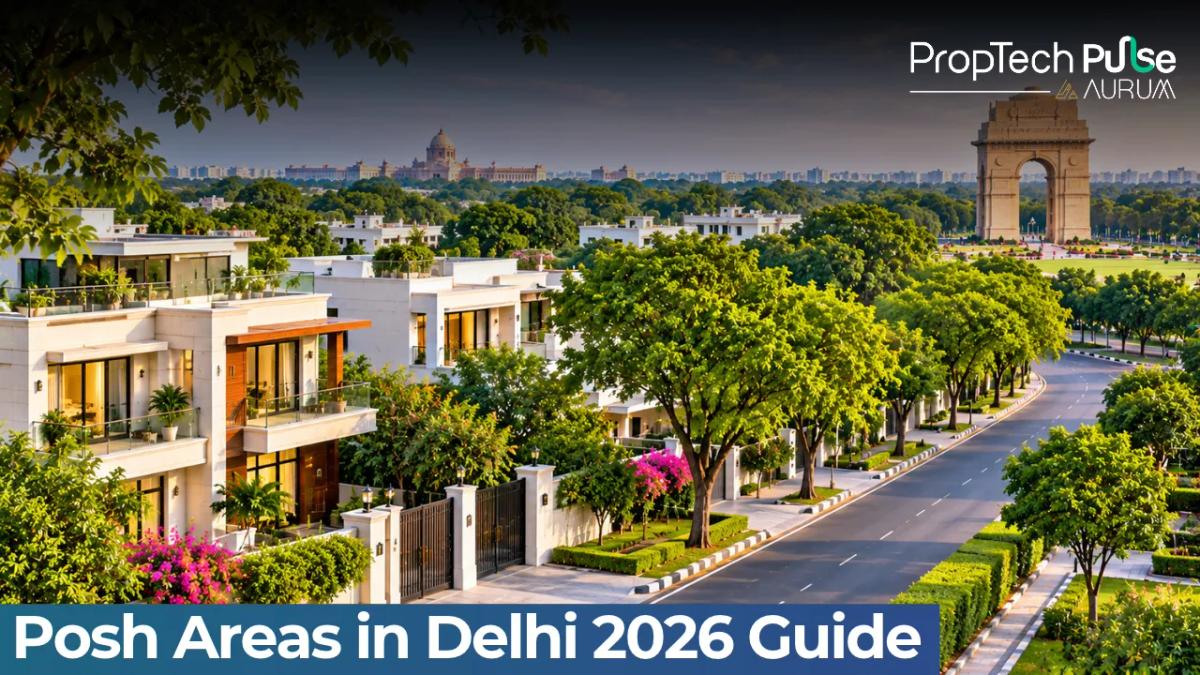
If you are searching for the most exclusive posh areas in Delhi, the market points straight to the Lutyens’ Bungalow Zone (LBZ).
Standalone plots in the core envelope routinely trade between ₹30 crore and well above ₹500 crore. Location, size, and architectural heritage dictate the final number.
Chanakyapuri sits just behind it as the diplomatic corridor. Established residential pockets like Golf Links, Greater Kailash, Defence Colony, and Vasant Vihar form the next tier of elite address space.
You do not pay these premiums for imported marble or empty swimming pools. Legal scarcity drives the valuation.
Strict zoning envelopes limit new construction. Height restrictions cap the floor space index. Large plots rarely surface for sale.
Regulatory walls stand near Central Vista, major hospitals, and international schools. The resulting asset class functions more like a wealth preservation vault than a standard purchase.
For NRIs or salaried executives relocating to India, the choice is not which developer has the flashiest brochure.
It is which colony meets strict privacy requirements, offers reliable rental yields during vacancies, and holds title clarity that survives multi-generational scrutiny.
The Richest Areas in Delhi: Top Localities and Prices
Quick answer
Lutyens’ Bungalow Zone commands the highest prices among posh areas in Delhi. Plots exceed ₹30 crore and reach beyond ₹500 crore. Chanakyapuri follows for diplomatic status. Established suburbs like Greater Kailash, Defence Colony, and Vasant Vihar trade between ₹4 crore and ₹25 crore for quality freehold units.
Lutyens’ Bungalow Zone and Golf Links
LBZ covers several concentric blocks radiating from Rashtrapati Bhavan. W-Block, E-Block, and A-Block represent the oldest reserves. They feature mature foliage, wider setbacks, and uninterrupted sightlines. Plot sizes span 1,000 to over 5,000 square metres.
Transactions here operate on pure freehold deeds. Golf Links borders LBZ and South Delhi. It offers slightly smaller footprints but identical prestige. Both zones trade in absolute rupee ceilings that dwarf every other residential corridor in North India.
Chanakyapuri – The Diplomatic Enclave
Chanakyapuri exists under a distinct legal framework. Embassy compounds, high-security quarters, and restricted movement zones create an environment where standard property mechanics break down. Pricing typically lands between ₹10 crore and ₹80 crore.
The pool of eligible buyers shrinks quickly though. Foreign nationals cannot freely purchase land under normal FEMA rules.
Most transactions involve long-term leases assigned to diplomatic staff. Domestic ultra-HNIs also acquire properties seeking proximity to policy centres.
| Locality | Typical Buy Range (₹ Cr) | Typical Rent (₹ Lakh/month) | Key Lifestyle Anchors | Nearest Metro Station | |
|---|---|---|---|---|---|
| Lutyens’ Bungalow Zone | 30 – 500+ | 5 – 25+ | Central Vista, Shanti Niketan Bhawan | Hailey Road / INA | |
| Golf Links | 25 – 80 | 4 – 15 | Dilli Haat, JLN Stadium | IIT / INA | |
| Chanakyapuri | 10 – 80 | 3 – 10 | Embassy Complexes, Shantipath | Patel Chowk / Patiala House | |
| Greater Kailash (GK1 & GK2) | 4 – 12 | 1.2 – 4 | Khan Market, APSS Hospital | Greater Kailash | |
| Defence Colony | 5 – 15 | 1.5 – 5 | Ansal Apna Hospital, DDU Nagar | Defence Colony | |
| Vasant Vihar | 6 – 25 | 1.5 – 6 | Safdarjung Enclave border, Select Citywalk access | Mandir Marg / Hauz Khas | |
| Total comparison rows | 6 distinct zones mapped | ||||
Why Supply is Stuck: The Rules Driving Delhi’s Luxury Prices
The architecture of scarcity starts with the Delhi Master Plan 2021. Zoning codes carved out decades ago locked vast swaths of South and Central Delhi into low-density residential envelopes. Ground coverage limits in LBZ typically cap at 30%.
A 2,000 square metre plot allows only 600 square metres on the ground floor. Mandatory front, rear, and side setbacks shrink the buildable area further. Floor Space Index restrictions prevent vertical stacking beyond set heights.
Unlike Gurugram or Noida, developers cannot easily assemble massive tracts here. South Centre contains thousands of micro-plots. Legacy families, religious trusts, and government departments hold most titles.
Converting agricultural or institutional land inside the municipal boundary requires grueling Change of Land Use approvals. Site assembly takes years. Financing costs compound. The result is a natural production brake.
New launches appear sparingly. Builders absorb longer approval cycles and higher capital costs. Base prices reflect that friction.
Every new high-rise or apartment complex in these postcode rings faces intense municipal scrutiny. Building bye-laws leave little margin for error. Buyers looking under-construction schemes must verify project approvals via Delhi RERA. Confirm that sanctioned layouts match exactly what gets delivered on site. Deviations in floor plans or common area allocations often trigger payment freezes until corrections pass inspection.
Diplomatic vs. Freehold Assets Chanakyapuri properties face unique foreign exchange restrictions. Under FEMA guidelines, non-resident Indians can lease residential premises for up to five years.
The lease is renewable. Outright purchase is heavily restricted unless tied to special diplomatic allotments. Freehold parcels in LBZ or Golf Links remain fully transferable across resident and NRI buyers. Liquidity stays sharper.
Infrastructure and Future Yield in Posh Colonies
When comparing posh areas in Delhi, transit proximity dictates resale velocity in premium corridors. The Delhi Metro Network expanded Blue Line coverage through INA and Hailey Road.
Commute times to Connaught Place and Rajiv Chowk shrank significantly.
The Magenta Line slices directly through Defence Colony and Greater Kailash. Those colonies tie to commercial hubs and tech parks without forcing cross-city detours. Peripheral Ring Road completion improves perimeter mobility. Truck movement eases.
Capital appreciation in these colonies tracks differently than in nascent submarkets. Prices rise gradually. Speculative bursts stay absent.
Rental demand remains anchored by multinational headquarters, embassies, hospital networks, and elite educational institutions. Calculating monthly cash flow against holding costs requires accurate baseline data.
Run current asking rents through a rental yield calculator. Premium rates stagnate only when daily convenience drops or maintenance societies fail to fund basic upgrades.
Due Diligence for Buying in Prime Delhi
Buying anywhere in South Centre demands tighter scrutiny than emerging corridors. Legacy conveyances sometimes rely on oral family arrangements passed down decades ago. Ensure the seller produces a clean parent deed.
Trace it back at least thirty years. Order an updated Encumbrance Certificate covering that entire window. Verify building bylaws compliance so future renovations do not trigger municipal penalties.
Review society NOCs if the purchase involves a converted independent floor inside a larger estate.
Title searches become non-negotiable. Litigation history on boundary disputes or inheritance partitions surfaces frequently in older transactions.
Map every document requirement before the agreement for sale reaches the registrar. Follow a structured property due diligence checklist to catch gaps early.
Rushing signatures on high-value deals guarantees discovery of missing NOCs or unpaid society dues after possession.
Before you commit capital to elite real estate
Stick to freehold parcels over leasehold assignments unless the pricing discount completely offsets exit complexity. Prefer colonies where daily essentials sit within walking distance.
Validate construction certificates against municipal digital records before transferring funds. Premium locations protect wealth better than speculative ones. The legal paperwork must match the physical asset.
Run rental projections. Inspect maintenance track records. Treat every handshake deal as unverified until paperwork clears.
Frequently asked questions
Which is the most expensive area in Delhi?
The Lutyens’ Bungalow Zone tops the list as the most expensive area in Delhi. Standalone plots within its boundary routinely trade between ₹30 crore and well above ₹500 crore, depending on exact positioning, plot dimensions, and heritage value. Golf Links follows closely for similar freehold advantages and comparable pricing ceilings.
Is Chanakyapuri good for investment?
Chanakyapuri works best for long-holding institutional or diplomatic investments rather than quick resale flips. Strict leasing regulations restrict outright ownership for most foreign nationals. Pricing typically ranges from ₹10 crore to ₹80 crore, but liquidity depends entirely on buyer eligibility categories approved under foreign exchange norms and available lease tenures.
What is the cost of a 4 BHK flat in Lutyens Delhi?
Expectations vary sharply because Lutyens comprises mostly standalone bungalows rather than standardized apartment complexes. Where premium apartment layouts exist, transaction values usually sit between ₹15 crore and ₹40 crore for spacious four-bedroom configurations. Smaller layouts rarely appear outside society conversions inside protected envelopes.
Where do diplomats and ultra-HNIs live in Delhi?
Diplomats cluster in the designated embassy precincts surrounding Chanakyapuri and Shantipath, operating under bilateral agreements. Ultra-high-net-worth individuals frequently choose Golf Links, central Lutyens, or exclusive pockets in Defence Colony where security protocols align with global standards while maintaining access to premium healthcare and international schools.
How does metro connectivity affect property values in rich localities?
Transit proximity directly influences resale speed and rental demand. Stations on the Magenta Line servicing Greater Kailash and Defence Colony keep mid-range luxury assets highly liquid. Blue Line extensions improve access to central business districts for LBZ residents, reducing commute friction and supporting stronger rental multiples near station exits.
Enjoyed this blog article? Visit PropTech Pulse for more interesting blogs.



Ask Pulse Ai anything about real estate

Unlock the Latest in Real Estate
News, Infographics, Blogs & More! Delivered to your inbox.

