New Launch - India Real Estate Report 2026.

Services
Knowledge Hub
Resources
Tools

Ask Pulse Ai
Services
FOR BUYERS & RENTERS
FOR REAL ESTATE DEVELOPERS








Refer other Connectors &
Multiply IncomeRefer other Connectors
& Multiply Income
Refer KuberX & earn
commission on every
loan they get
disbursed.


Scan & Download
©PropTech Pulse 2025, All rights reserved.


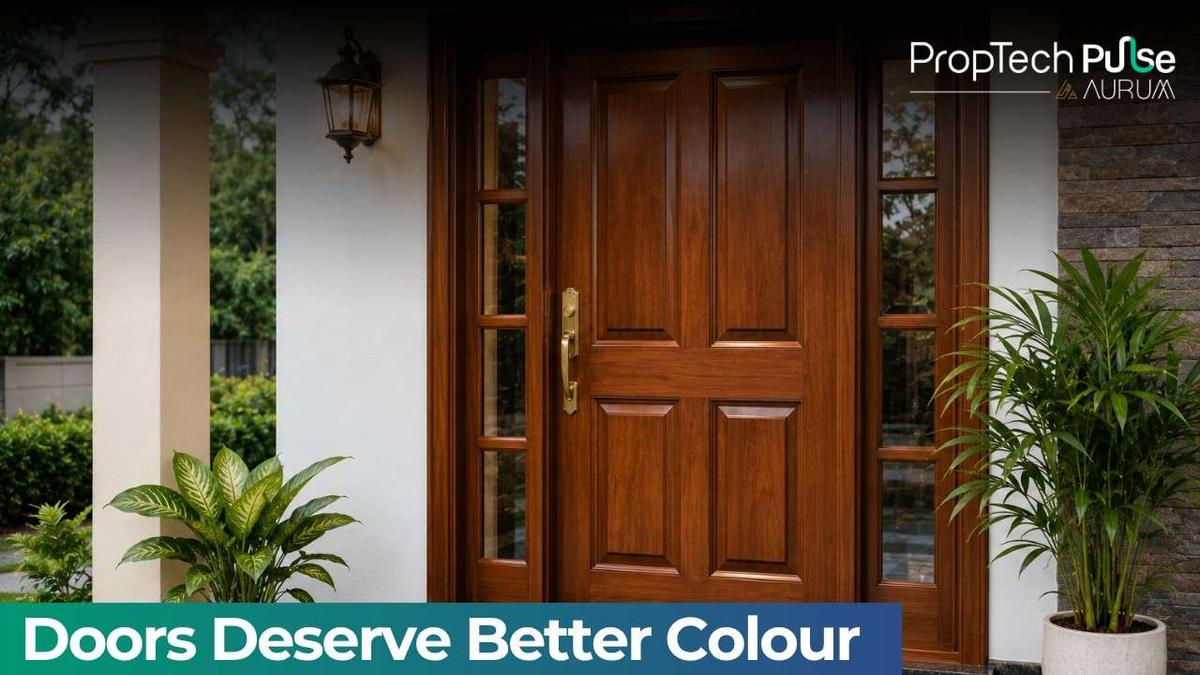
Your front door does more work than people give it credit for. It's the first thing anyone notices before they even step inside your home, and a tired, chipped, sun-faded door can make an otherwise well-kept house look neglected. The good news is that repainting a wooden door is one of the cheapest, highest-impact upgrades you can make, provided you actually pick the right paint type and colour for the job.
Here's what actually matters when you're choosing wooden colour paint for doors, without the usual fluff.
First, Understand What Kind of Paint You're Actually Buying
Not all wood paint is the same, and the difference shows up fast if you pick the wrong one.
Enamel paint is the go-to for most Indian homes, especially for exterior and high-traffic doors. It dries into a glossy, polished finish, resists stains and scratches well, and holds up in humid conditions like bathrooms and kitchens. If you want a door that looks sharp for years without constant touch-ups, this is usually the safe bet.
Polyurethane (PU) paint sits a step above enamel in almost every way. It's extremely scratch- and water-resistant, handles harsh weather better than most other options, and gives that deep, luxurious shine you see on premium front doors. It costs more, but for a door that takes a beating from sun and rain, it earns that cost back in fewer repaints.
Oil-based paint is the old-school durable option. Tougher to apply and slower to dry than water-based paints, but it lasts a genuinely long time once it's on, which is why it's still popular for doors that see heavy daily use.
Water-based and acrylic paints are your budget-friendly, low-fuss choice for interior doors that don't take much abuse. Quick to apply, easy to clean, dries faster; just don't expect the same lifespan as enamel or PU.
What It'll Actually Cost You in 2026
Pricing depends heavily on the type and brand, but here's a realistic breakdown:
- Basic (water-based, acrylic): ₹250 to ₹400 per litre
- Mid-range (enamel, oil-based): ₹400 to ₹700 per litre
- Premium (PU, luxury finishes): ₹700 to ₹1,200+ per litre
For context, a single standard-sized door usually needs somewhere between half a litre and a litre for two coats, so even the premium options aren't as steep as they sound once you do the math for one door.
Colour Combinations That Actually Work
Two-tone door painting, where the panels are one colour, and the frame or trim is another, has become the standard look for a reason: it adds depth and dimension that a single flat colour just can't. Here are combinations that consistently look good in Indian homes:
- Teak brown with off-white. Warm, natural, and timeless. This pairing lets the wood grain feel like it's still breathing through the paint rather than being buried under it.
- Classic white with walnut. Bright and elegant, and the contrast does a nice job of highlighting panel detailing on carved or moulded doors.
- Dark teak with cream. A cosier, more intimate combination that works particularly well for main entrance doors where you want warmth over brightness.
- Royal blue with brown. If you want your door to actually stand out on the street rather than blend in, this is the one. It's bold without tipping into garish.
- Black with honey pine. A modern pairing that works surprisingly well with both contemporary homes and warmer, earthy interiors. The black grounds the lighter tone nicely.
- Olive green with oak. Calm, nature-inspired, and a good pick if the rest of your exterior leans toward greenery or a garden-facing entrance.
- Soft grey with chestnut. Understated and sophisticated. Grey has quietly become one of the most requested exterior colours for a reason, it goes with almost anything.
If you want exact shade codes to hand to your painter, Asian Paints, Berger, and Nerolac all publish colour-code catalogues online, worth checking before you finalise so your painter mixes the exact tone you had in mind rather than something "close enough."
Matching the Paint to the Door's Actual Job
Interior doors that don't get much sun or moisture exposure can get away with acrylic or latex paint. Save your money here.
Exterior and front doors need enamel or PU, full stop. They're dealing with sun, rain, and general wear that interior doors never see.
Bathroom and kitchen doors specifically benefit from enamel's moisture resistance, since these are the spots where humidity does the most damage over time.
High-traffic doors, anything your family opens and closes dozens of times a day, should lean toward enamel or PU regardless of location, since a softer paint will show wear at the handle and edges within a year.
If You're Painting It Yourself
- Take the door off its hinges and clean off dust and grease thoroughly before you start
- Lightly sand the surface to remove old paint and rough patches; this step gets skipped constantly, and it's the reason a lot of DIY paint jobs peel early
- Apply a proper primer before the colour coat, it seals the wood and makes the final paint last considerably longer
- Go with thin, even coats rather than one thick layer, and let each coat dry fully before the next
- Reattach the door and hardware only once it's completely dry, not just dry to the touch
Mistakes That Ruin an Otherwise Good Paint Job
Skipping prep work. Cleaning, sanding, and priming feel like the boring, skippable steps, but they're the actual difference between a paint job that lasts five years and one that starts peeling in five months.
Painting on thick. More paint in one coat doesn't mean better coverage; it usually just means drips, an uneven finish, and a much longer drying time.
Not waiting for full drying between coats. Painting over a coat that's still tacky ruins the finish and often shows up as streaks later.
Is Repainting Actually Worth It?
Yes, and not just for looks. A well-painted door protects the wood from moisture, sun damage, and termites, which genuinely extends how long the door itself lasts. It also improves your home's insulation slightly by sealing gaps in the wood, and if you're ever selling the property, a fresh, well-chosen door colour is one of those small details that noticeably lifts a buyer's first impression.
The Bottom Line
Picking wooden colour paint for doors isn't just about grabbing whatever shade catches your eye in a catalogue. Match the paint type to where the door actually sits (interior versus exterior, high traffic versus low), budget for the type that suits that job rather than the cheapest option available, and take the prep work seriously. Get those three things right, and your door will look good for years, not just for the first few months after the painter leaves.
If you're unsure which shade will actually work, ask your paint brand for a small sample tin before committing to a full litre. Wood tone, door orientation, and even the direction your door faces can all change how a colour reads once it's actually on, not just on a colour card.





Ask Pulse Ai anything about real estate

Unlock the Latest in Real Estate
News, Infographics, Blogs & More! Delivered to your inbox.