New Launch - India Real Estate Report 2026.

Services
Knowledge Hub
Resources
Tools

Ask Pulse Ai
©PropTech Pulse 2025, All rights reserved.


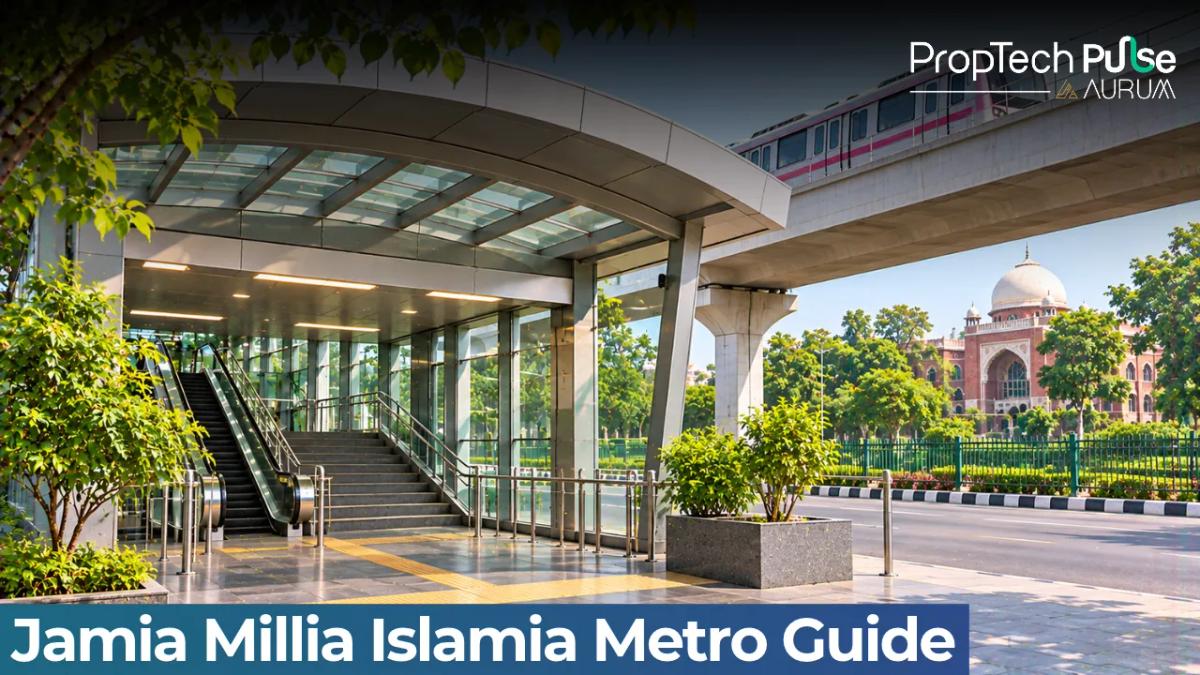
If you commute daily to the University of Delhi's south campus or live in Okhla, the Jamia Millia Islamia metro station code JANR is your main artery.
Situated on the Magenta Line between Sukhdev Vihar and Okhla Vihar, this station handles heavy foot traffic from students, faculty, and surrounding residential pockets like Batla House and Tikona Park. Getting lost on the platforms or stepping out of the wrong gate wastes ten minutes of your morning rush. This guide cuts through the noise.
It tells you which platform takes you where. You will learn where to find parking, how to save on tickets with a Delhi NCR Mobility Card, and the fastest routes for your destination.
About Jamia Millia Islamia Metro Station
Quick answer
Jamia Millia Islamia metro station (code JANR) sits on the Magenta Line between Sukhdev Vihar and Okhla Vihar. Platform 1 heads east to Botanical Garden, while Platform 2 heads west to Krishna Park Extension. Three main exits serve the university, Batla House, and Tikona Park. Trains run from 06:05 until 23:15 on weekdays.
The station opened on 25 December 2017 during Phase III of the Delhi Metro expansion. It serves a dense mix of academic institutions, government offices in Batla House, and sprawling residential layouts across Okhla.
Because so many different commuter groups cross paths here, the platform design separates eastbound and westbound flows clearly. Surface exits direct people to distinct neighbourhoods.
Magenta Line Platforms & Direction Guide
Platform 1 vs Platform 2: Which Train Do You Need?
Magenta Line trains switch tracks immediately after passing this station, making clear platform orientation essential during peak hours when the crowd thickens fast.
Platform 1 (Eastbound): Board here if you are heading towards Okhla Vihar, Jangpura, Hauz Khas, and eventually Botanical Garden in Noida. Trains bound for Botanical Garden run directly from this platform.
Ensure your coach indicator shows BOTANICAL GARDEN before entering the train. The next immediate stop after Jamia Millia Islamia is Okhla Vihar.
Platform 2 (Westbound): Face west and board trains moving toward Saket, Greater Kailash, Barakhamba Road, Central Secretariat, and finally Krishna Park Extension in Dwarka.
Look for coaches marked DWARKA SECTOR 21 or KRISHNA PARK EXTENSION. Your next stop exiting onto the street is Sukhdev Vihar.
Jamia Metro Station Gate Map and Landmarks
Your destination dictates which stairwell or escalator you take underground. The station spreads over a wide footprint, and exiting via the wrong gate means doubling back past security checkpoints.
- Gate 1: The primary exit for JMI University staff, faculty, and students. This gate opens directly onto the driveway leading to the central administrative block and hostels. It features Divyang-friendly lifts and ramps, making it the smoothest route for those carrying luggage or requiring assisted access.
- Gate 2: Designed specifically for residents and visitors moving towards the Batla House enclave. This exit drops you closer to the local market clusters and community halls that serve the wider Okhla district.
- Gate 3: Provides access towards Tikona Park and the larger surface road network. If you are driving or plan to catch an auto, this is the only gate worth looking at. It also connects directly to the multi-storey parking structure.
DMRC Timings, Frequency, and Operating Hours
First and Last Trains at Jamia Milia Islamia Metro
Many commuters rely on cached schedules from older apps. Here are the precise weekday departure windows sourced from the active DMRC journey planner.
| Direction | First Train Departure | Last Train Departure |
|---|---|---|
| Krishna Park Extension (Westbound) | 06:05 AM | 23:15 PM |
| Botanical Garden (Eastbound) | 06:47 AM | 23:47 PM |
On weekends, frequency shifts slightly later in the morning, usually adding five to seven minutes to the initial run times. Night owl commuters relying on the last trains must arrive fifteen minutes before the posted departure to navigate turnstiles safely.
Train Intervals During Peak and Off-Peak Hours
Headways tighten considerably when the sun comes up over Sarita Vihar. During morning peaks between 08:00 and 10:00, trains roll in roughly every 5 minutes and 20 seconds.
Evening peaks see similar compression as office workers filter back into the city center.
Mid-day service stretches to about 6 minutes and 5 seconds between runs. While this sounds generous, crowded conditions mean boarding takes longer and dwell time increases naturally on the platform.
Fares, NCMC Discounts, and Commute Costs
Single Journey Fares (Worked Example)
Passengers traveling through Janr are either heading to corporate hubs in Central Secretariat or catching local buses for connections elsewhere. Calculating exact ticket prices manually used to be common before digital planners took over.
A single trip from Jamia Millia Islamia to Rajiv Chowk illustrates the current rate structure perfectly.
| Ticket Type | Cost (Monday–Saturday) | Cost (Sunday/Holidays) |
|---|---|---|
| Cash Token Purchase | ₹43 | ₹32 |
| NCMC / Smart Card | ₹38.70 (10% discount applied) | ₹28.80 (10% discount applied) |
Paying cash at the booth incurs the full base fare plus any surcharges linked to printed tokens. Swiping a Delhi NCR Mobility Card triggers an automatic ten percent reduction across all zones.
If you ride three times a week, the monthly savings easily cover the cost of reloading the card balance twice.
QR-based mobile tickets currently carry processing fees that erase this benefit. Physical smart cards remain the mathematically superior choice for regular users.
Parking Capacity and Rules
Vehicle owners converging on Gate 3 face strict space limits. Delhi Metro enforces daily turnover policies to prevent long-term street parking, especially near dense academic campuses.
| Vehicle Category | Total Spaces Available |
|---|---|
| Four-wheelers | 46 |
| Two-wheelers | 476 |
| Bicycles | 50 |
The tight allocation for cars makes driving to Janr impractical unless you arrive early. Two-wheeler parking dominates the layout, reflecting actual usage patterns among students and daily wage earners.
Bicycle racks sit right beside the lift lobby. Overflow vehicles frequently block adjacent service roads, inviting municipal fines if you choose to park illegally nearby.
Last-Mile Connectivity: Bus, E-Rickshaws, and Local Links
No metro station exists entirely in isolation. Surface transport bridges the final kilometers to your doorstep.
- ETO e-rickshaws: GPS-enabled electric autos wait at dedicated bays outside Gates 1 and 3. These are regulated vehicles offering faster, cheaper trips than traditional petrol autos, particularly useful for covering the stretch between Batla House and the nearest major arterial road.
- Delhi Transport Corporation buses: Bus stops cluster heavily along the Outer Ring Road and Main Satputa Road arteries visible from Gate 2. Buses connect towards Anand Vihar, Kashmere Gate, and Nehru Place within fifteen to twenty minutes depending on traffic volume.
- Local auto stands: Standalone petrol-run autos operate near all gates but require firm negotiation. Stick to prepaid counters or metered rides where available to avoid disputes during monsoon delays.
Before You Commute or Buy Near JANR
If you are leasing an apartment, decide whether walkability or car access matters more. Students picking rooms near Gate 1 enjoy shorter walks to lecture halls and libraries. Those choices trade convenience for heavier foot traffic and louder streets.
Homebuyers valuing vehicle parking should scan listings explicitly noting proximity to Gate 3 and its multi-storey facility. Finding legal off-street parking elsewhere in Okhla becomes extremely difficult.
For deeper context on how transit nodes shape local rental markets, review our analysis on how proximity to a metro station affects apartment pricing.
The Magenta Line remains the safest bet for reaching the heart of Delhi quickly. Boarding the correct coach early saves significant commute time. Knowing the station layout means you spend less time fighting turnstiles.
Like the Kalindi Kunj metro depot station Magenta line guide, Janr sees continuous passenger movement throughout the day. Efficient navigation strategies help operators and passengers alike.
Use Gate 1 whenever possible for direct university entry, but shift to Gate 3 if you drive or rely on e-rickshaws. Understanding these micro-distances saves significant time compared to wandering aimlessly with heavy bags.
Search new listings strategically, prioritizing locations noted in the Sarita Vihar property guide and rents for balanced rent-to-commute ratios.
Pro Tip Download the official 'Delhi Metro' smartphone app and sync the route planner before rushing to the station on rainy mornings. Live status alerts often flag signal failures on the Magenta Line earlier than generic news channels do.
Frequently asked questions
What is the full name of the Jamia Millia Islamia metro station?
The complete registered name is Jamia Millia Islamia metro station. Search for timetable updates using its station code JANR. The Delhi Metro rail network tags every interchange and halt by these four-letter combinations rather than full names. The station operates under Zone 4 of the Delhi Metro network, which determines its base fare calculation and applies standard fare matrix rules set by the Delhi Metro Rail Corporation.
How many gates are there at Jamia Millia Islamia metro station?
Three designated exit gates manage passenger flow across diverse neighbourhoods. Gate 1 serves university students and staff heading toward the main administrative block. Gate 2 directs foot traffic straight into the Batla House residential area. Gate 3 provides access for motorists arriving at Tikona Park and connects directly to the designated vehicle parking structures located slightly away from the university core.
What is the first and last metro time at Jamia Millia Islamia station?
Weekday services begin at 06:05 AM when trains depart towards Krishna Park Extension on the western side. The eastern bound trains heading to Botanical Garden leave slightly later at 06:47 AM. Late-night commuters can catch the final westbound departure at 23:15 PM. The last eastbound service leaves at 23:47 PM. You retain plenty of margin for evening lab work or library sessions.
How much is the metro fare from Jamia Millia Islamia to Rajiv Chowk?
A cash ticket purchased at the counter costs approximately forty-three rupees during working days and thirty-two rupees on Sundays. Loading your Delhi NCR Mobility Card saves roughly ten percent automatically, bringing the price down to thirty-eight seventy on weekdays. Traveling on public holidays yields the same discounted rate regardless of the card type used, making smart payment methods financially superior for regular office goers.
Where can I park my bike or car at Jamia Millia Islamia metro station?
All vehicular parking concentrates exclusively near Gate 3, where officials manage a compact multi-storey structure alongside surface lanes. The facility holds forty-six spaces for four-wheelers, offers extensive coverage for nearly five hundred two-wheelers, and reserves fifty racks strictly for bicycle storage. Cars fill up rapidly before eight in the morning, forcing late arrivals to rely on paid roadside vendors further down the service road.
Sources
- delhimetrorail.com: Official station facilities, gate routing, parking capacities, and live journey planner timing data (accessed November 2026)
Enjoyed this blog article? Visit PropTech Pulse for more interesting blogs.




Ask Pulse Ai anything about real estate

Unlock the Latest in Real Estate
News, Infographics, Blogs & More! Delivered to your inbox.

