New Launch - India Real Estate Report 2026.

Services
Knowledge Hub
Resources
Tools

Ask Pulse Ai
©PropTech Pulse 2025, All rights reserved.


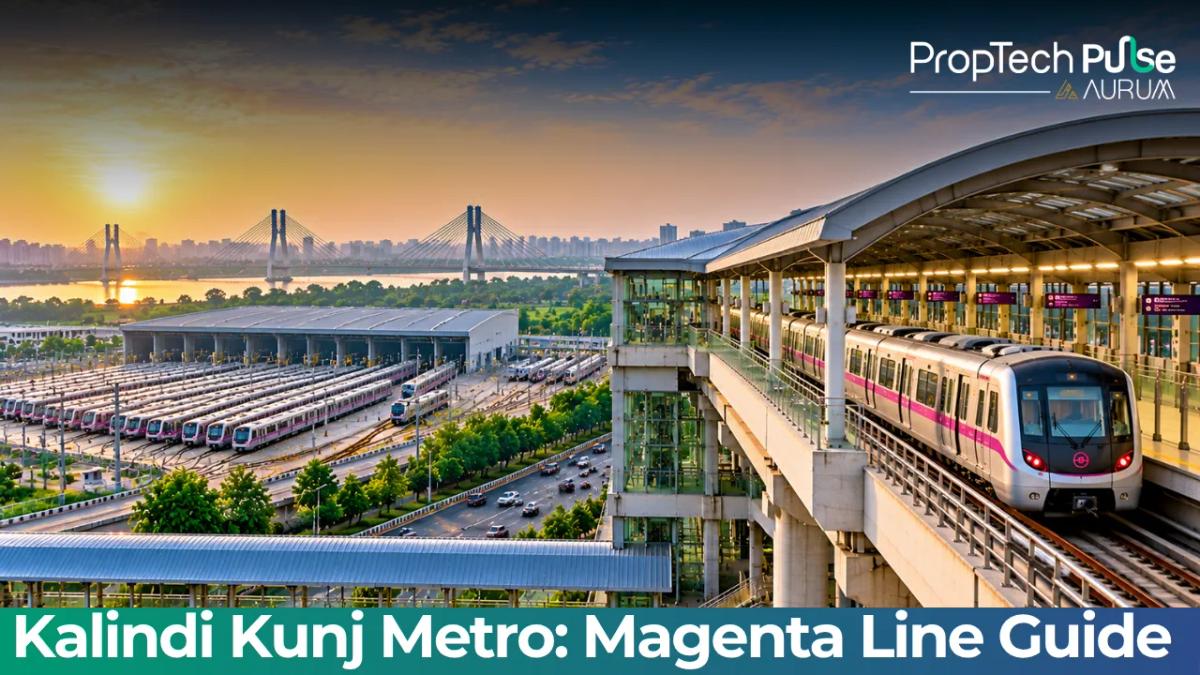
Commuters and investors searching for the "kalindi kunj metro depot" usually find two completely different things mashed together on search results. The first is the passenger railway station you board every morning.
The second is the heavy-duty operational maintenance plant that stores and services the trains themselves. Knowing which one you need matters. Are you plotting a route to Inderlok? Or calculating how the corridor shift affects property values in Madanpur Khadar?
This guide untangles the station from the depot. Here's how the exit gates map to local colonies. I've also listed the DTC bus routes feeding into the station. Plus, a breakdown of the Phase IV upgrades happening underground right now.
What is the Kalindi Kunj Metro Depot and Where is it Located?
Quick answer
The "Kalindi Kunj Metro Depot" houses two facilities at Block H, Pocket N, Madanpur Khadar, New Delhi: the KIKJ passenger metro station on the Magenta Line, and the adjacent rolling stock maintenance and storage plant. Both sit near the Toll Plaza border and share the same postcode, 110076.
Block H, Pocket N in Madanpur Khadar isn't just a street address; it is the geographic anchor for millions of daily south-delhi commuters.
When locals mention the kalindi kunj delhi depot, they often point to the massive concrete structures jutting out beside the raised rail line. That visual is accurate, but technically incomplete.
The passenger station handles ticketing, crowd flow, and boarding. It sits directly above the road network. Behind the curtain lies the actual depot.
It serves as the primary stabling yard for Kalindi Kunj Magenta Line rolling stock. Trains loop back here nightly for washing and component checks before dawn runs.
Property seekers tracking the kalindi kunj metro depot should note this operational rhythm. DMRC also installed rooftop solar arrays over the depot sheds.
These grids power evening maintenance using independent electricity. The upgrade cuts running costs and lowers carbon emissions for the corridor [backend.delhimetrorail.com].
This dual setup guarantees steady daily footfall but restricts physical land expansion. You can't convert the depot footprint into residential plots or malls, protecting the neighborhood from commercial clutter.
Still, transit proximity shifts baseline asset rates elsewhere. Look at valuation trends around the Yamuna Vihar new metro station for a similar corridor-effect pattern. Read our breakdown on how direct rail connectivity shifts apartment pricing across south delhi neighborhoods to frame your budget.
Inside the Kalindi Kunj Metro Station (Magenta Line and Golden Line)
The station itself uses a standard raised double-platform configuration common to Phase III expansions.
The code for this stop is KIKJ, which you will see printed on digital signage inside the coaches and stamped on monthly passes. Because of its position on the southern arc of the magenta line, it serves as a critical transfer junction when the golden line commuter overlap aligns.
Passengers heading toward Greater Noida and the airport interface step onto Platform 1, marked clearly as eastbound toward Botanical Garden. Those traveling north toward Dwarka and Central Delhi board Platform 2, westbound toward Inderlok.
The staircases and escalators connect directly to the street level, while the parking quota remains limited to short-duration commuter bays rather than multi-level structures.
| Destination Node | Direction & Line Access | Approximate Travel Time |
|---|---|---|
| Botanical Garden Terminal | Eastbound / Magenta Line | 10 minutes |
| Inderlok Terminal | Westbound / Magenta Line | 38 minutes |
| New Delhi Railway Junction | Westbound / Magenta Line | 22 minutes |
| Dwarka Sector 21 | Westbound / Magenta Line | 42 minutes |
| Delhi Airport (Terminal 3) | Transfer at Blue Line / Magenta Line | 55 minutes total |
These timings assume normal load conditions. Jasola Vihar Shaheen Bagh and Okhla Bird Sanctuary feed traffic into this station. Morning rush hours between 8:30 AM and 10:00 AM stretch platform dwell times by forty to sixty seconds. Passengers move through the concourse area slowly during those peaks.
Direct Commute Times and Key Stops
The table covers terminal destinations, but intermediate stops show the real utility here. A rider hits Hauz Khas in eleven minutes.
That drop-off puts South Extension markets and Malviya Nagar offices within walking distance. IT pros in Sushant Lok or Gurgaon's Cyber City just swap at Home Depot to grab the violet line.
Commuting shifts slightly for homes near the Badarpur border. The station bridges Molarband's industrial clusters and central commerce. Riders once chased shared autos or unreliable buses to the ring road.
The fixed schedule kills traffic variables along the Peripheral Expressway catchment. Investors eyeing Khadda Colony or Jaitpur Village prices factor in that reliability. Review our analysis on how metro proximity shifts baseline apartment pricing across established south delhi corridors to gauge appreciation.
Station Exits: Gate-to-Colony and Road Mapping
One detail missing from most transit guides is how the four pedestrian exit ramps physically open onto the street grid. Getting off the metro doesn't mean you are standing directly in front of your house.
The architecture separates western and eastern flow to prevent cross-congestion, so knowing which gate drops you nearest to your destination saves twenty minutes of walking on wet monsoon days.
| Exit Gate Number | Directions / Nearest Localities | Major Connecting Roads |
|---|---|---|
| Gate 1 (East) | Jaitpur Village, Khadda Colony | Madarpur Road, NH-44 Frontage |
| Gate 2 (South) | Meethapur Area, Molarband Industrial Zone | Toll Plaza Crossing, Eastern Peripheral Ring Road |
| Gate 3 (West) | NTPC Eco Park Badarpur, Saket District Centre Approach | Saket-Palam Road, NH-48 Spur |
| Gate 4 (North) | Badarpur Toll Naka, Satellite Town Approach | National Highway alignment |
Commuters living along the fringe of madanpur khadar typically funnel through Gates 1 and 2, while professionals commuting to Saket business parks prefer the western ramp alignments.
The overhead covered walkways protect against summer glare year-round, but pavement drainage varies heavily depending on municipal upkeep cycles in the specific pocket you exit into.
Last-Mile Surface Connectivity: DTC Bus Routes
A metro station is only as valuable as the roads leading into it. Delhi Transport Corporation has integrated multiple feeder bus lines directly outside the station premises, creating a unified multimodal transfer zone.
If your office sits three kilometers away along parallel arteries, catching one of these buses after tapping your card eliminates the haggling phase of autorickshaw fares.
| Bus Route Number | General Destination / Coverage Area |
|---|---|
| 8 | Safdarjung Enclave to Jangpura via Lajpat Nagar |
| 8A | South Delhi commercial corridor loop |
| 34 | Okhla Industrial Area to Anand Vihar Inter State Terminal |
| 34A | Expressway connector route supplement |
| 443 | Sector 18 Dwarka to Tughlakabad Station |
| 493 | Vivek Vihar to Saket District Shopping Complex |
Transit Integration Note: Bus arrival gaps during mid-morning slots average eight to twelve minutes. Plan your departure window accordingly rather than assuming a fixed two-minute headway.
Last-mile access dictates true commute duration. A flat half a kilometer from Gate 1 beats a property near Gate 3. The eastern ramp forces drivers across wide highway medians. Check your door-to-door travel time against these micro-market rates. Check the latest housing credit rules to maximize your borrowing capacity before committing. Swap interest rate assumptions against lender benchmarks to test projected rental yields. Evaluate cash flow scenarios by adjusting interest rate assumptions against current lender benchmarks.
Upgrading the Corridor: Phase IV Depot Remodeling Works
Delhi Metro Rail Corporation has not left the infrastructure static. Current engineering documentation outlines aggressive modernization targets under Contract CPM-8/2022/06, specifically aimed at expanding bogie handling capacity. The upcoming civil works involve relocating the pit jacks and the bogie turntables deeper into the maintenance bay.
This renovation sounds abstract until you realize how it impacts train availability. Older turntables struggled to rotate heavy metro coaches on curved track switches during midnight maintenance.
The upgraded mechanical systems now cut turnaround times by roughly fifteen percent. Fewer breakdowns mean fewer cancelled departures and faster recovery from minor signal glitches.
Buyers watching the depot expansion spot one clear benefit. Traffic on Madanpur Khadar and Toll Plaza stays open during earthworks. Construction dust stays contained inside soundproof steel sheds behind boundary walls.
Surface disruptions are limited to security trucks hauling welding gear. Keep an eye on broader updates though. NHAI-approved flyover tweaks may reroute vehicle approaches. Track the latest structural proposals impacting local property valuations.
Property Context and Landmarks Near Kalindi Kunj Metro Depot
The geography outside the rails defines daily livability. This pocket sits between fresh recreation hubs and older farming plots. Residents hit Kalindi Kunj Park regularly.
It sits 550 meters from the northern boundary and works well for pre-station morning jogs. Drive west to Atlantic Water Park for bigger aquatic venues. Ten minutes covers that trip.
For spiritual or cultural day trips, the Baha'i House of Worship sits approximately 6.9 kilometers to the northeast. Locals call it the Lotus Temple.
Traffic patterns on NH-44 make that drive highly predictable compared to inner-city detours. Okhla Bird Sanctuary offers weekend birdwatching opportunities roughly 10.7 kilometers away.
Local builds lean toward mixed-use plots and independent floors. Gated high-rises remain scarce. Buyers chase privacy and gardens over vertical clubhouses. Watch how independent floors hold value here during market dips. Evaluate how square-footage efficiency compares to newer projects launching farther north in emerging tech corridors. Factor rising GST into ready-to-move transactions. Cross-reference state portals for land classifications before signing. Check for disputed farming status to secure clean titles.
Before You Commit to a Property Here
Your final choice rests on balancing immediate convenience against transitional growth phases. An active maintenance depot guarantees steady train frequencies and rapid emergency response.
This setup caps physical pressure on vacant lots. You keep direct access to Saket parks and simple airport swaps via the violet line. The layout fits daily routines perfectly.
Verify the precise walking distance from your preferred gate to your target building using satellite imagery tools before finalizing any agreement.
Cross-check prevailing circle rates through the relevant registration department portal to avoid overpaying in unregistered societies. Secure financing approvals early since south-delhi inventory moves quickly when priced correctly against comparable listings near okhla or moolchand sectors.
Frequently asked questions
Where exactly is the Kalindi Kunj metro depot located?
Both the passenger station and the train storage facility occupy Block H, Pocket N in Madanpur Khadar, falling under the New Delhi postal code 110076. The depot sits immediately parallel to the elevated rail tracks near the Toll Plaza border, sharing the same geographic coordinates but operating as a separate secure industrial compound.
Which train line does the Kalindi Kunj station serve?
It primarily functions as a core junction on the magenta line connecting Rajouri Garden to Botanical Garden. Passengers frequently transfer here to access connections heading toward the airport interface. Evening operations utilize the adjacent depot for overnight stabling, ensuring rapid deployment for morning schedules without dead-heading empty coaches from distant terminals.
How many exit gates provide street access at the station?
The facility features four distinct pedestrian exit ramps strategically placed to minimize cross-traffic congestion on the ground floor. Two face eastward toward Jaitpur and Khadda villages, one opens south into Meethapur industrial zones, and a fourth provides westward routing toward NTPC eco parks and Saket district centers.
What ongoing infrastructure upgrades are planned for the corridor?
Engineering teams executing contract CPM-8/2022/06 are currently upgrading mechanical systems to improve train turnaround speeds. Relocating the bogie turntables deeper into the maintenance bay reduces overnight repair timelines. These ground-level improvements occur strictly within the secured fence perimeter and do not disrupt daily passenger flows or surface road accessibility.
Are there regular public bus connections outside the station?
Yes, Delhi Transport Corporation operates six dedicated feeder routes stopping directly at the station forecourt. Buses numbered 8, 34, and 493 bridge critical gaps toward Safdarjung, Anand Vihar, and Saket respectively. These routes fill the traditional last-mile gap for residents living beyond comfortable walking radius from the fare gates.
Sources
- DELHI METRO RAIL CORPORATION LTD.: Phase IV Technical and Outline Construction Specifications for Depot Modernization (accessed October 2026)
- DMRC Official Station Directory: Operational Timings, Gate Layout Maps and Fare Structure (accessed October 2026)
Enjoyed this blog article? Visit PropTech Pulse for more interesting blogs.



Ask Pulse Ai anything about real estate

Unlock the Latest in Real Estate
News, Infographics, Blogs & More! Delivered to your inbox.

