New Launch - India Real Estate Report 2026.

Services
Knowledge Hub
Resources
Tools

Ask Pulse Ai
©PropTech Pulse 2025, All rights reserved.


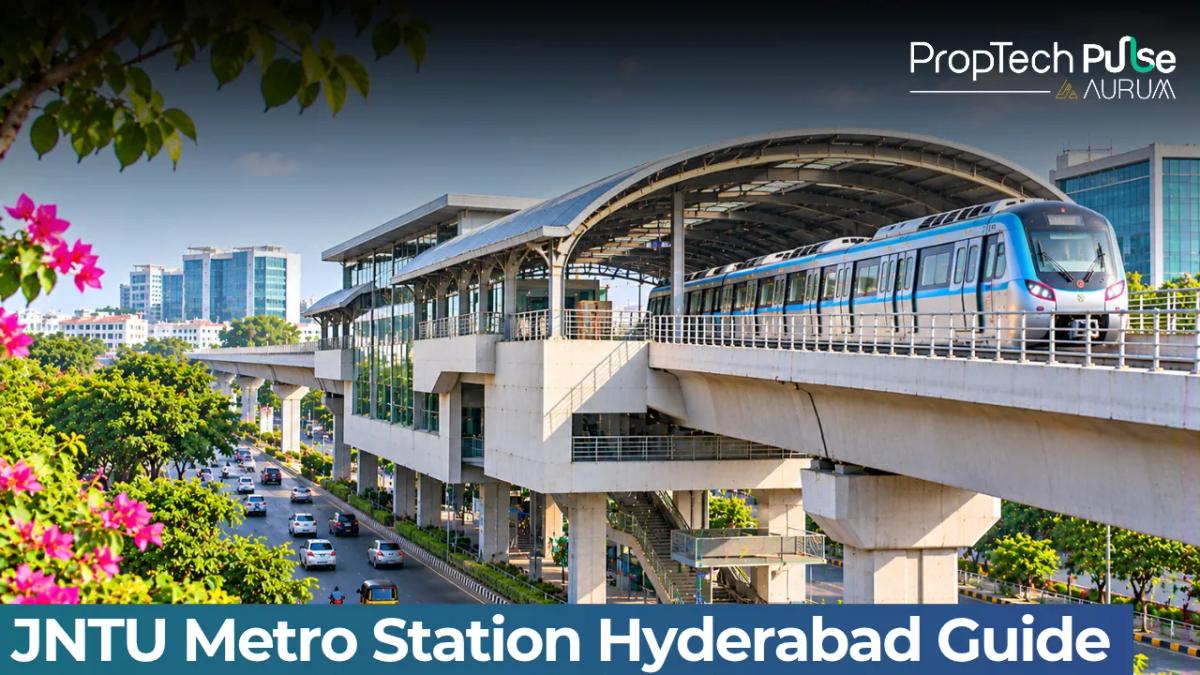
Jntu Metro Station anchors the core of Kukatpally, sitting right beside the busy crossroads that pull students, office commuters, and residents toward the city.
Locals drop the college name almost entirely, using jntu metro instead, even though official boards still read Jntu College. Opening it up alongside the wider corridor turned a twenty-minute auto ride into a quick fifteen-minute climb.
Builders know it too: properties within a ten-minute walk of this entrance consistently carry higher rents because tenants pay for reliable transit. See our breakdown of how metro proximity affects apartment pricing.
Jntu Metro Station Location & Key Details
Quick answer
Jntu Metro Station sits on the Red Line in Kukatpally. Trains run from 06:00 AM to late night, departing every four to seven minutes during peak hours. The station has four ground-level exits, a dedicated two-wheeler parking bay, and direct interchange access to the Blue and Green Lines via Ameerpet and MGBS.
The station forms a natural hinge between the older residential grids of Vasanth Nagar and the newer high-rise pockets stretching toward Nizampet.
Hyderabad Metro Rail Limited operates the corridor, and the structure includes standard concourse levels, ticket barriers, and platform screens matching all Red Line stops.
| Feature | Details |
|---|---|
| Line colour | Red |
| Operator | Hyderabad Metro Rail Limited |
| Total platforms | Two (side platforms) |
| Exit gates | Four |
| Parking type | Two-wheeler dedicated bay; limited street space for cars |
| Accessibility | Escalators, elevators, tactile tracks |
Commuters using this stop benefit from a compact footprint. The staircases and lifts connect directly to the street level without forcing anyone through wide open plazas that slow down footfall. That design matters when you are carrying bags from college or rushing to catch an afternoon shift.
Jntu Metro Station Route and Connectivity
Planning a trip along the Hyderabad Blue Line connectivity? Start west at Miyapur, ride east past Nizampet, Kukatpally, Balanagar, and Ameerpet, and watch the tracks end at LB Nagar.
Jntu metro station route planning becomes simple once you know where the track splits. At Ameerpet, trains switch between the Yellow and Blue lines.
At MGBS, you join the Green Line headed toward Nagole or the Airport. Both interchanges happen inside the paid zone, meaning you do not need to buy new tickets or exit the barriers when switching tracks.
The university itself lies barely five hundred metres from Gate 2. Students walking past the Kotak Mahindra Bank branch reach the main JNTUH boundary in under seven minutes.
Office workers head toward HITEC City or Gachibowli through the same interchange chain, riding west until Madhapur or Gachibowli stops.
Jntu Metro Station Timings: First & Last Train
Timing queries generate the most confusion around this station. Multiple passenger forums and aggregator pages quote different last-train windows: eleven o'clock, eleven fifty-three, and occasionally pushing past midnight on weekends.
The gap exists because terminal departures differ between the Miyapur and LB Nagar ends, and special holiday notices change weekend cut-offs regularly.
The reliable baseline for standard weekdays is straightforward. Trains begin running shortly after six in the morning, with the first rake leaving Kukatpally toward LB Nagar around 06:03 AM.
Evening services taper off gradually, so treating 11:30 PM as the practical cutoff prevents stranded commutes.
Always verify current departures using the Hyderabad Metro Rail mobile application or station notice boards before planning a trip past eleven forty-five. Check Hyderabad Red Line details for scheduled adjustments.
| Platform | Direction | First train | Last train (weekday) | Peak frequency |
|---|---|---|---|---|
| Platform 1 | Miyapur | 06:00 AM | 11:53 PM | 4–7 minutes |
| Platform 2 | LB Nagar | 06:03 AM | 11:00 PM | 4–7 minutes |
| Off-peak frequency (10:00 AM to 04:00 PM) | 8–12 minutes | |||
Frequency improves sharply between eight in the morning and ten in the evening. Weekends stretch the gap slightly as maintenance shuffles some rakes, so expect a minute or two longer wait unless you board immediately after a departure announcement.
Jntu Metro Station Fares and Smart Card Savings
Ticket pricing follows a distance-based slab system. Short hop rides covering one or two stations start at twelve rupees, while crossing the entire corridor toward LB Nagar or Miyapur tops out near seventy-six rupees.
The exact cost depends on your starting gate and whether you use a contactless bank card or token counter.
Smart cards cut roughly ten percent off the base fare. The calculation works cleanly for daily commuters who reload frequently. A ride from Jntu to Ameerpet costs twelve rupees normally, dropping to ten eighty with a smart card.
Round trips save almost four rupees each day. Over a working month of twenty-two days, that adds up to eighty-eight rupees saved purely from the discount rate, ignoring occasional promotional recharge bonuses.
| Destination | Stops | Normal fare | Smart card fare |
|---|---|---|---|
| Ameerpet | 1 | ₹12 | ₹10.80 |
| Balanagar | 3 | ₹22 | ₹19.80 |
| Nizampet | 2 | ₹18 | ₹16.20 |
| Miyapur | 7 | ₹42 | ₹37.80 |
| LB Nagar | 16 | ₹76 | ₹68.40 |
Contactless debit and credit cards charged directly at the gate skip the smart card queue entirely. Many commuters prefer that convenience for irregular visits, though the smart card reward scheme still edges out tap-and-go for pure cost minimisation.
Jntu Metro Station Parking Guidelines
Gachibowli rental market guide often mentions transit-friendly neighbourhoods, but commuting by two-wheeler remains the dominant pattern around Kukatpally because car traffic chokes the outer ring roads during evening peaks.
The station provides a covered two-wheeler bay positioned close to Gate 2. Fees sit at ten rupees for the initial two-hour block, followed by a low hourly increment after that period. The shed holds roughly two hundred bicycles and scooters.
That capacity feels cramped between nine and ten thirty in the morning when college shifts overlap with corporate departures. Arriving before eight forty five guarantees a visible slot without hunting perimeter roads.
Four-wheeler space stays limited elsewhere. Street parking runs along the front carriageway but fills early.
Drivers usually loop back into Vasanth Nagar lane networks or use paid private lots on the theatre side. If you park far away, account for a ten-minute walk back to the turnstiles.
Using the Gates: Exit Directions Explained
Four separate exits fan outward from the concourse. Each gate drains into a distinct street grid, so picking the correct one saves fifteen to twenty minutes of zigzag walking inside long underground passages.
The exit off Sardar Patel Nagar Road places you near Sri Chaitanya School. Commuters living in the southern housing board blocks or hopping onto shuttle buses toward Koti usually pick this side.
Step down at Gate 2 and you land straight into Vasanth Nagar. Kotak Mahindra Bank marks the corner, while the staircase drops pedestrians onto the pavement leading directly to the JNTUH main gates.
Students and coaching centre visitors default here.
Facing Landmark Hospital is Gate 3, which points travelers toward Theatre Nizampet X Road. Medical appointments, pharmacy runs, and shoppers crossing the wider junction use this passage.
For destinations beyond the railway overbridge, head straight to Gate 4 on Nizampet X Road. It sits near the Asian GPR Multiplex, where autos queue for Medchal routes, old Miyapur sectors, and western industrial zones.
GATE TIP: Check the ceiling maps above the ticket barriers before you press your card. The corridors twist, and returning to the wrong side means doubling your walk distance.
Commute Time to Major Employment Hubs
Connectivity defines why professionals weigh this station heavily. Riding west toward Madhapur takes roughly twenty-five to thirty minutes total, including the transfer at Ameerpet and the short hop along the Blue Line.
The ride remains insulated from NH 65 congestion, which turns evening returns unpredictable.
Heading north to Secunderabad requires alighting at MGBS and hopping onto the Green Line platform. Expect thirty-five to forty minutes door-to-door. Train intervals align well enough that waiting rarely exceeds five minutes, provided you board early enough in the day.
Eastbound riders bound for LB Nagar cover the full stretch in forty-five minutes flat. The ride stays steady with minimal feeder transfers, making it a comfortable option for families travelling to eastern suburbs or visiting relatives near Fatehpuri.
Before You Board
Keep a recharged smart card loaded with at least fifty rupees to avoid gate hesitations during rush hour. Follow platform announcements rather than relying solely on third-party trackers, especially when weather delays reroute maintenance crews.
Step aside on escalators and let express passengers pass; crowd management happens faster when everyone moves forward together.
Frequently asked questions
Is Jntu metro station the same as Jntu college?
Yes. The official infrastructure name reads Jntu College, matching the university sitting right beside the entrance. Locals, ride-hailing apps, and property listings drop the word college and simply call it Jntu metro. The station code, ticket displays, and announcement chimes all use the shorter version, so both terms point to the exact same facility.
What are the first and last train timings at Jntu metro station?
Service begins just after six in the morning. The first train heading toward LB Nagar leaves around 06:03 AM, while the Miyapur direction starts roughly three minutes earlier. Evening cut-offs vary by source. Treat 11:30 PM as the practical weekday limit for standard travel plans and check the HMRL app for holiday extensions or engineering shutdown notices.
How much is the parking fee at Jntu metro station?
The dedicated two-wheeler bay charges ten rupees for the initial two-hour block. After that, an incremental hourly rate applies until the vehicle departs. Four-wheeler slots remain scarce along the front road. Drivers often park further down Vasanth Nagar lanes and walk back, which adds extra time during peak morning departures.
Which line is Jntu metro station on?
It sits on the Red Line, officially called Corridor I. The track runs from Miyapur in the northwest to LB Nagar in the southeast, passing through key interchange hubs like Ameerpet and MGBS. Passengers switching to the Blue or Green Line leave the paid zone only at those major nodes, allowing smooth transitions between lines without buying fresh tokens.
How long does it take to reach HITEC City from Jntu metro station?
Plan for twenty-five to thirty minutes from curb to desk. The train reaches Ameerpet in four minutes, requiring a quick walk down the transfer corridor. The Blue Line segment to Madhapur or Gachibowli covers roughly six additional stops. Total time holds steady because the rail segment bypasses surface bottlenecks along the Outer Ring Road.
Enjoyed this blog article? Visit PropTech Pulse for more interesting blogs.



Ask Pulse Ai anything about real estate

Unlock the Latest in Real Estate
News, Infographics, Blogs & More! Delivered to your inbox.

