New Launch - India Real Estate Report 2026.

Services
Knowledge Hub
Resources
Tools

Ask Pulse Ai
©PropTech Pulse 2025, All rights reserved.


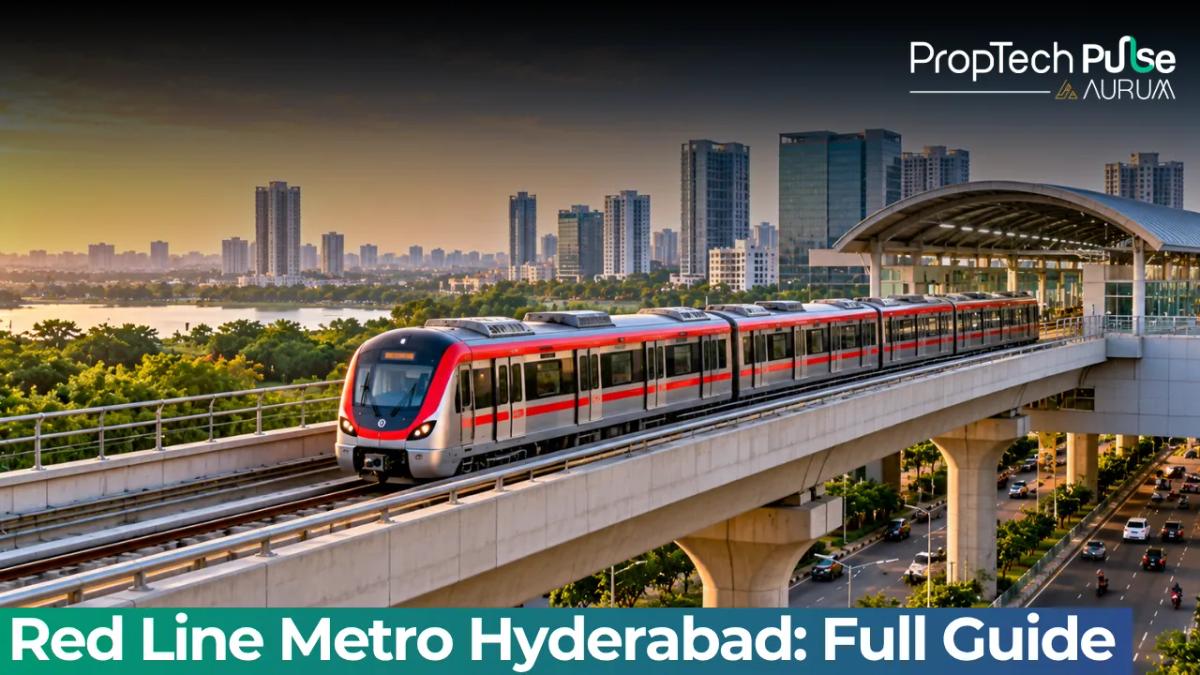
First-time users of the red line metro hyderabad often miss the best transfer points between Miyapur and LB Nagar. Reading a static diagram rarely explains how quickly crowds build at Ameerpet or where the free-air-conditioned walkways actually start.
This guide maps every station, lays out verified operating hours, breaks down 2026 distance-based fares, and explains how Phase 2 upgrades will reshape daily travel across the city.
The Hyderabad Metro Red Line Route Map and Key Stations
Quick answer
The Red Line runs from Miyapur to LB Nagar. Trains generally operate between 6:00 AM and 10:00 PM. A full trip across the entire line takes roughly 75 to 90 minutes depending on stops, and the base fare starts at ₹11.
The Red Line forms the central artery of the Hyderabad Metro network. It starts at Miyapur in the northwest and cuts straight through the city center.
The corridor terminates at LB Nagar in the southeast. This stretch crosses multiple municipal zones, moving from low-density suburbs in Shamshabad toward high-rise offices around Panjagutta and Assembly.
Riders heading toward the financial districts pass critical nodes like Secunderabad Junction and Chaitanyapuri.
These stops connect directly to TSRTC bus depots and mainline rail yards. Commuters transfer here easily for longer cross-city journeys.
Property watchers monitor these exact coordinates because apartment demand near active transit nodes consistently tracks upward during each construction wave.
Hyderabad Metro Red Line Stations: Complete List and Order
Planning a trip on the corridor requires checking the exact stop order. Some platforms feed into other lines while others exist purely for residential access. The alignment spans roughly 44 kilometers and threads through dense urban pockets.
| Station Name | Zone / Locality Context | Interchange / Connectivity |
|---|---|---|
| Miyapur | Northwest (Shamshabad outskirts) | Connectivity to western suburbs |
| Ameerpet | Central (JNTU area) | Blue Line interchange, TSRTC hub |
| Panjagutta | Central (Commercial hub) | Major office district access |
| Assembly | Central (Secretariat) | Government and legislative buildings |
| Hussain Sagar | Central (Financial district) | Bank colony and corporate offices |
| Dilsukhnagar | South Central | Direct rail connectivity |
| L.B. Nagar | Southeast (Terminus) | Yellow Line interchange, terminal facility |
Buyers seeking fresh inventory near the northwest end should check new residential developments near Miyapur metro station. New projects are already pricing in the Phase 2 upgrade.
Niches along the southern stretch see steadier capital growth. Direct rail links to IT parks keep rental yields stable.
Red Line Metro Timings and Travel Durations
HMRL designs hours around office staff and college students. Checking departure boards before you leave home prevents unexpected wait times.
Services open near 6:00 AM and wrap up after 10:00 PM. Initial departures stagger from both ends. Miyapur sees first trains shortly before LB Nagar does. Weekday frequency sits comfortably at four-minute intervals. Saturday mornings start slower and ramp up by midday.
Your stop pair dictates actual travel time. Sitting through the full run from Miyapur to LB Nagar takes about 75 minutes.
Peak friction locks at Ameerpet and Central Secretariat. The Red Line to Blue Line crossover floods Ameerpet platforms with changing passengers. Morning arrivals before 9:00 AM or evening exits after 6:00 PM guarantee heavy standouts.
Current Fares on the Hyderabad Metro
HMRL charges by distance, not flat rate. Short hops within a single zone carry the floor price. That base fare sits around ₹11 to ₹15 depending on minor periodic tweaks.
Crossing into outer rings like Shamshabad or hitting LB Nagar drives the total up steadily.
A full ride from Miyapur to LB Nagar runs ₹60 to ₹70. HMRL adjusts these distance brackets occasionally.
Senior citizens and senior women qualify for timed concessions under state programs. MetroCard holders save a small percentage versus single-use tokens.
Infrastructure Watch: Phase 2 Upgrades and New Expansions
The Red Line itself runs today. Network-wide shifts are actively altering how the corridor handles volume. Two major projects dominate the horizon.
Malakpet Station Redevelopment (On Track for June 2026)
Malakpet channels massive east-to-center foot traffic. HMRL fast-tracks a complete rebuild here. Target completion lands in June 2026. The upgraded concourse will absorb higher passenger loads. Retail outlets and wider stairwells remove current choke points.
Approved Extension Towards SR Nagar
Construction approval for the SR Nagar branch marks the biggest Phase 2 jump. The alignment strengthens southeastern coverage. Land developers factor the extended reach into valuation models immediately. Nearby plots and apartments already reflect the accessibility bump.
How to Buy Tickets and Pay Fares
Vending machines and manual counters handle all sales at Red Line stations. Cashless entry dominates now. UPI QR codes work directly at the pay gates. Tap your screen to lock in the correct fare and swipe through without queueing.
Which transit option makes sense for your daily commute?
Stick with the metro only if your final mile stays short. Employees in HITEC City, Madhapur, or Assembly beat bus delays on the red line metro hyderabad. Walking three blocks to a platform pays off instantly.
If your office hides behind lanes with no feeder roads, calculate your actual walk time against saved traffic minutes. Factor in Hyderabad stamp duty and property costs to see whether proximity to the tracks fits your wallet.
Frequently asked questions
What are the main stations on the Hyderabad Red Line metro?
The primary stations forming the Red Line corridor run continuously from Miyapur in the northwest to LB Nagar in the southeast. Major intermediate stops include Ameerpet, Secunderabad Junction, Panjagutta, Assembly, Hussain Sagar, and Dilsukhnagar. These key stations act as vital connectors for both daily commuters heading to the IT hubs and residents accessing central commercial areas.
When does the Red Line metro service start and end?
Standard operating hours for the Hyderabad Metro begin at approximately 6:00 AM and extend until 10:00 PM on regular weekdays. While last trains usually arrive at the termini just before 10:30 PM, passengers should verify exact schedules on the official HMRL portal because timing adjustments happen frequently around national holidays or during special public events in the city.
How much is the metro fare from Miyapur to LB Nagar?
The maximum fare for a full journey from Miyapur to LB Nagar typically ranges between ₹60 and ₹70, depending on the latest distance-based tariff charts released by HMRL. Shorter trips within the same zone naturally cost less, often starting around ₹11, while frequent travelers utilizing MetroCards enjoy marginal discounts over the basic single-token price.
Is there a direct metro connection from LB Nagar to Gachibowli?
No, the Red Line terminates strictly at LB Nagar, meaning there is no direct train running straight through to Gachibowli. To reach Gachibowli, you must travel westward on the Red Line to Ameerpet, transfer onto the Blue Line, and then ride the train all the way to Hitech City or the Gachibowli terminals. This requires changing platforms at the interchange station.
Why is Ameerpet station so crowded during peak hours?
Cross-platform transfers define Ameerpet because it serves as the sole structural bridge connecting the Red Line and the Blue Line. Thousands of passengers changing routes flood the common corridors simultaneously. Combined with the adjacent TSRTC bus depot dumping hundreds of travelers, the platform levels easily hit maximum capacity well before the morning rush officially hits the office parks.
Sources
- Ministry of Housing and Urban Affairs: Government approvals for Hyderabad Metro Phase II development timelines (accessed October 2026)
Enjoyed this blog article? Visit PropTech Pulse for more interesting blogs.



Ask Pulse Ai anything about real estate

Unlock the Latest in Real Estate
News, Infographics, Blogs & More! Delivered to your inbox.

