New Launch - India Real Estate Report 2026.

Services
Knowledge Hub
Resources
Tools

Ask Pulse Ai
©PropTech Pulse 2025, All rights reserved.


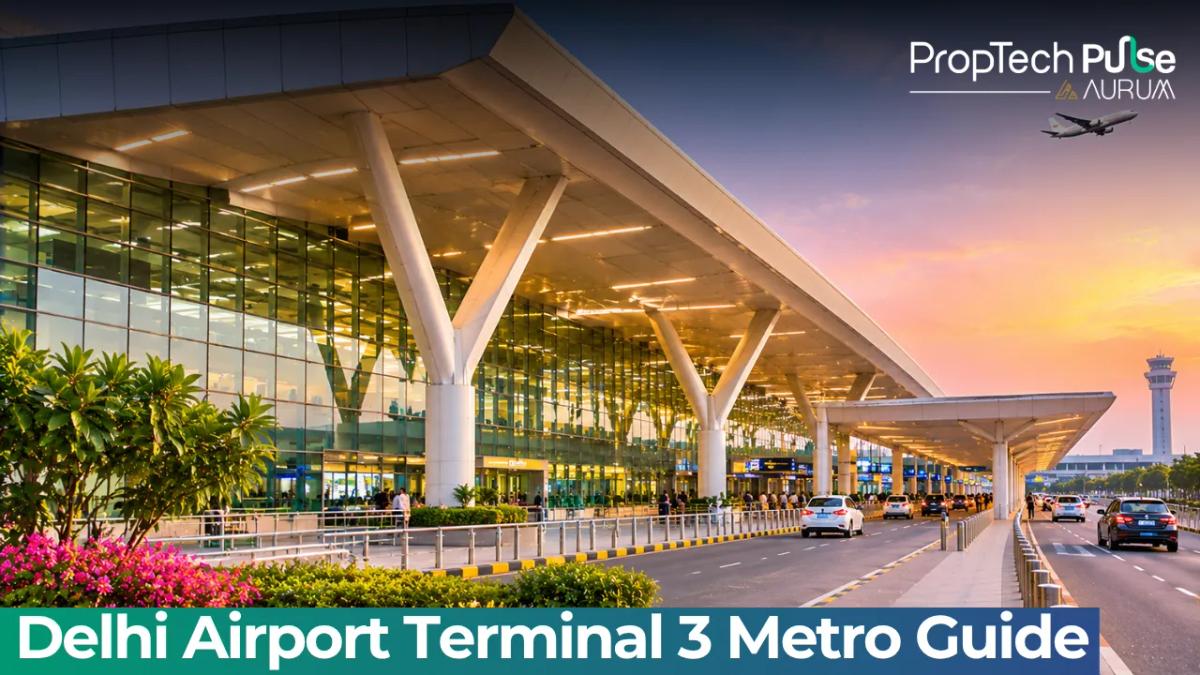
Walked past Terminal 3 when you meant to catch an Air India flight? It costs time you cannot afford. Your terminal dictates everything from metro routing to baggage claim locations.
If your boarding pass points to Terminal 3, you are navigating South Asia’s largest single terminal building.
The complex handles nearly all international carriers alongside key Air Group domestic operations. Here is the exact metro routing, schedule, and facility map you need before leaving home.
Who Flies from Delhi Airport Terminal 3
Quick answer
All foreign and international carriers operate out of Delhi Airport Terminal 3. For domestic flights, T3 serves as the primary base for the Air Group. Following the Air India-Vistara merger, most former Vistara domestic services shifted to Terminal 2, while Air India retained its major domestic hubs here.
Your terminal allocation depends on the airline and whether you are flying internationally or domestically. Delhi Airport Terminal 3 functions as the international gateway. Every foreign carrier that serves India checks passengers in here.
Beyond international routes, the complex covers major domestic duties for the Air Group. Flights bound for Bengaluru or Chennai under the Air India brand typically launch from the igi airport t3 concourse.
Consolidation efforts reshaped this layout after the Air India-Vistara deal closed in late 2024. Carriers formerly part of Vistara moved most of their operations to Terminal 2 to ease bottlenecks.
Air India kept its primary domestic hubs here, though. Budget carriers generally use Terminal 1 instead. You should double-check your boarding pass before heading out. Last-minute gate changes happen often during holiday rushes.
Knowing where you fly matters for logistics. T3 sits at the eastern end of the airport complex. If you are driving from west Delhi areas, you will approach via the outer ring roads that feed into the airport express corridor.
Checking the pin code for new delhi indira gandhi international airport helps you locate service centres and taxi stands accurately around the perimeter. See the location details and pin code for area navigation.
| Terminal | Airlines / Sectors | Key Users |
|---|---|---|
| Terminal 3 | All international flights; Air Group domestic hubs | Foreign carriers, Air India domestic sectors |
| Terminal 2 | Domestic flights (post-merger overflow) | Former Vistara routes, select domestic brands |
| Terminal 1 | Domestic low-cost operators | IndiGo, SpiceJet, Akasa Air |
Reaching Terminal 3 by Metro and Ground Transport
The fastest way to reach terminal 3 metro access from central Delhi is the Airport Express Line. The system runs on the Orange Line. Trains depart frequently from both ends.
The ride takes roughly 20 minutes from New Delhi Railway Station.
An interchange at Rajiv Chowk station connects you to the Yellow Line and Blue Line network. This makes T3 reachable from almost any major commercial hub in the National Capital Region.
| From | Route to T3 | Estimated Time | Estimated Fare |
|---|---|---|---|
| New Delhi Railway Station | Direct Orange Line platform | ~20 mins | Approx ₹60–₹80 |
| Rajiv Chowk Metro | Interchange to Orange Line | Varies by origin | Zone-based tariff |
| Hauz Khas Metro | Yellow Line to Rajiv Chowk, swap to Orange | ~50 mins total | Zone-based tariff |
| Saket / South Delhi | Yellow Line to Rajiv Chowk, swap to Orange | ~55 mins total | Zone-based tariff |
Fares depend on the distance from your starting station. The metro operates early morning until night.
Check the latest timetable on dmrc.co.in, as timings shift slightly during winter and summer adjustments. During rush hours, expect crowds. Carry your return token or reload your smart card before entering the paid area.
If you prefer road transport, app cabs and taxis are available at designated bays on the lower arrival level. Waiting times can spike during flight landings.
Negotiating with unregulated stand taxis is risky; using verified aggregator apps saves time.
Free inter-terminal shuttle buses run every 20 minutes for passengers who reach the wrong terminal. T1 to T3 by road takes about 15 to 20 minutes depending on traffic inside the complex.
Drivers approaching from the west can use the Dwarka Expressway to cut travel time significantly. Once you enter the expressway, follow the signage to the Airport Express corridor which feeds directly into t3 delhi airport drop-offs. Read our guide on the dwarka expressway route and tolls for traffic updates.
DigiYatra and Paperless Entry at T3
Terminal 3 supports DigiYatra, the paperless entry system backed by the Digital Personal Data Protection framework. Enrolment takes five minutes using your Aadhaar-linked mobile app.
At the checkpoint, you simply scan your face and present your boarding pass barcode. This bypasses the document verification queue entirely. The system works across most major airlines operating at T3.
Pro Tip Enrol in DigiYatra at least two days before your trip. Technical glitches happen occasionally, and having a digital pass ready means less panic at the security gate.
Inside Terminal 3: Layout and Key Facilities
T3 is designed in two tiers. The upper level handles all departures. The lower level manages arrivals. Understanding this split prevents unnecessary escalator rides and missed connections.
Upper Tier (Departures) Checklist
Curb-side drop-off lands you at the Departure Podium. Follow signs to your airline's check-in cluster. Counters close typically 45 minutes before international departure and 30 minutes before domestic flights. After check-in, proceed to security screening.
If you are flying international, head to immigration clearance followed by customs exit. Duty-free shopping and food courts occupy the pre-boarding concourse. Gate changes are announced on screens and via SMS. Listen for announcements even if your boarding pass shows a fixed gate.
Lower Tier (Arrivals) and Baggage Claim
The Arrival Hall processes international and domestic bags separately. Foreign arrivals move through passport control before retrieving luggage. Currency exchange desks operate throughout the hall, though rates vary.
ATMs and credit card payment points are located near the exits. Pre-paid taxi counters sit just beyond the customs barrier.
Staff there issue official receipts based on weight and destination zones. Outside the terminal, you will find the metro station entrance, bus stops, and cab parking.
Parking, Lounges and Business Centre
IGI Airport runs a seven-level automated multi-level car park at Terminal 3. The system handles thousands of vehicles with minimal staff intervention.
First-time users should note that entry requires tapping a token or card. Exit fees calculate automatically based on duration.
Lounge access depends on your ticket class or membership status.
Multiple independent lounge operators offer separate entry zones for priority passengers. A business centre with printing and workspace pods serves travelers who need a quick desk.
newdelhiairport.in publishes detailed maps and contact numbers for lost-and-found or special assistance requests.
Quick Tips for Smooth Boarding at T3
Plan your arrival four hours before an international flight and two hours before domestic. Traffic on the outer ring roads can delay you unpredictably.
Use the metro if you originate near Rajiv Chowk or New Delhi station.
Verify your terminal assignment again the night before flights sometimes get re-tagged. Print or save your boarding pass offline. Airport Wi-Fi can drop during peak loads.
Frequently asked questions
How do I reach Delhi Airport Terminal 3 by metro?
Take the Airport Express Line, which runs on the Orange Line. Trains connect T3 directly to New Delhi Railway Station in about 20 minutes. If you start from Rajiv Chowk, you can transfer from the Yellow or Blue lines to catch the Orange Line southbound towards the airport. Check dmrc.co.in for exact departure intervals, as timings shift seasonally.
Which terminal does Air India depart from in Delhi?
Air India operates primarily from Delhi Airport Terminal 3. The airline uses T3 as its main hub for both domestic and international flights. While many former Vistara routes moved to Terminal 2 after the merger, Air India kept its core domestic networks at T3. Look at your boarding pass to confirm, since gate assignments can change during busy periods.
Is there a direct walkway between T2 and T3 Delhi Airport?
Yes, a covered pedestrian link connects Terminal 2 and Terminal 3. The walkway allows passengers to transfer on foot without taking a shuttle bus. Signage guides you through the path, which stays accessible for wheelchairs and strollers. Use this route if you have extra time and want to avoid waiting for the free inter-terminal bus.
What is the metro fare from New Delhi Railway Station to IGI Airport?
Fares from New Delhi Railway Station to the airport zone typically range from approximately ₹60 to ₹80 one way, depending on current DMRC pricing structures. The metro charge adjusts periodically. Reload a smart card or keep a UPI-enabled device ready at the validator for a smooth tap-through without queuing at the counter.
Sources
- dgca.gov.in: General guidelines on check-in closure times and passenger flow management (accessed October 2026)
Enjoyed this blog article? Visit PropTech Pulse for more interesting blogs.



Ask Pulse Ai anything about real estate

Unlock the Latest in Real Estate
News, Infographics, Blogs & More! Delivered to your inbox.

