New Launch - India Real Estate Report 2026.

Services
Knowledge Hub
Resources
Tools

Ask Pulse Ai
©PropTech Pulse 2025, All rights reserved.


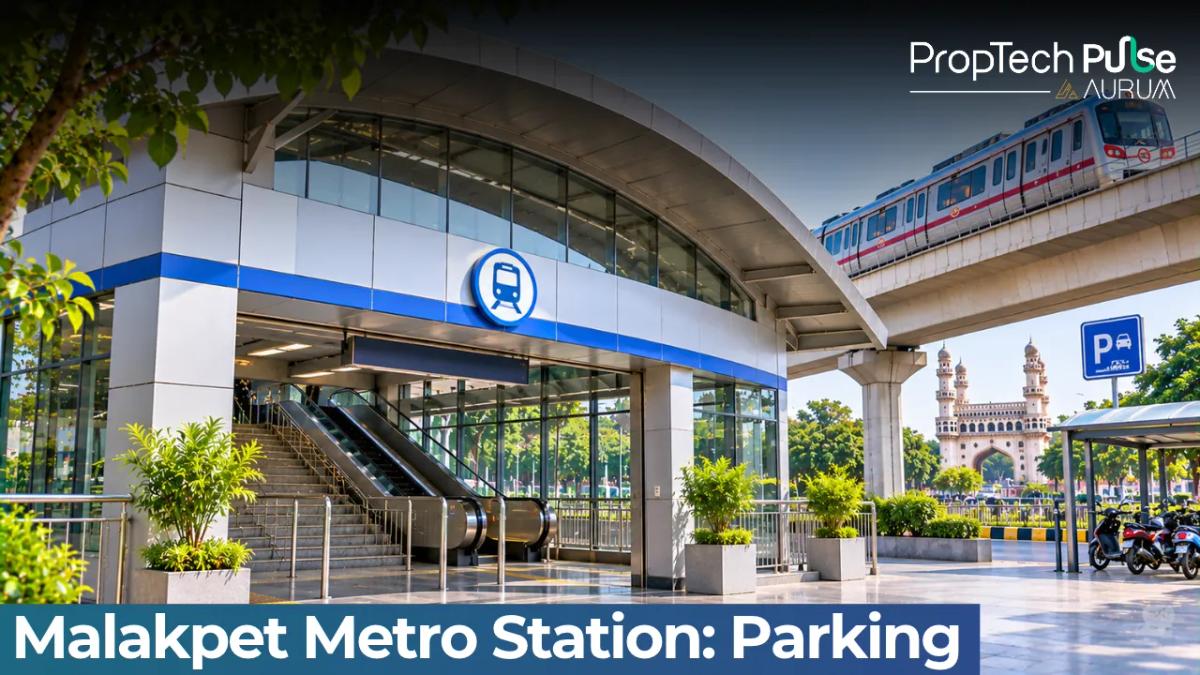
Gridlock in Old Malakpet isn't just annoying; it eats commuting hours. Weaving through the narrow lanes around the bazaar often means circling for parking or waiting through endless signal delays.
Using the Malakpet metro station as a transit hub solves this by funneling footfall away from congested roads and directly into the city's commercial core.
Understanding the Malakpet Metro Network Connectivity
Quick answer
Malakpet metro station connects the Red Line between LB Nagar and Miyapur. It features a direct foot-over-bridge to the Malakpet MMTS railway station. The layout includes four mapped exit gates facing the crowded markets, plus dedicated parking slots at Entry D for cars and Entry C for bikes. Peak frequencies run every eight minutes, making it a reliable daily commute link.
The Malakpet metro station sits firmly on the eastern stretch of the Red Line. Commuters heading west tap in to catch the Miyapur-bound train, which sweeps through Secunderabad and ends at Uppal Circle.
Those travelling east stay seated until the terminus at LB Nagar. This layout ensures Malakpet operates as an interchange node rather than a dead-end stop.
Evaluating transit hubs helps investors and tenants understand accessibility premiums in older neighborhoods.
When a locality gets a fixed-rail connection, rental demand from corporate employees shifts predictably toward the station radius, stabilizing vacancy rates for landlords.
properties located near metro stationsThe physical footprint covers both platforms on a raised concrete deck. You step off the train and move horizontally across a wide concourse before descending to street level.
Because Old Malakpet lacks broad sidewalks, this overhead movement keeps pedestrians entirely separate from autorickshaws and cargo trucks waiting in the arterial lanes.
The design minimizes the chaotic foot-traffic clashes common in heritage districts.
Most importantly, the station resolves the age-old navigation nightmare of the bazaar. Local traders complain less about delivery delays when riders exit cleanly through designated gates instead of weaving through makeshift stalls.
The infrastructure quietly unblocks an area that had been functionally isolated despite being central to the old city.
Train Timings and Peak Hours
Morning operations start early enough to catch most salaried workers before the sun heats up the asphalt. Trains bound for Miyapur begin running at roughly 06:13 AM. The first eastbound service heading to LB Nagar pulls into the platform shortly after 06:42 AM.
Although these early departures feel generous, the station fills rapidly once the first batch of college students and junior staff arrive between seven and eight o'clock.
Evening services conclude later than many residents expect, reducing the panic of missing the last train. The final departure towards Miyapur leaves at 11:15 PM. The terminal run towards LB Nagar follows at 11:43 PM.
Weekends see marginally shorter operating windows, usually cutting the night services by fifteen minutes to allow track maintenance crews safer access.
| Direction | First Train | Last Train | Typical Headway |
|---|---|---|---|
| To Miyapur | 06:13 AM | 11:15 PM | 5–8 minutes |
| To LB Nagar | 06:42 AM | 11:43 PM | 5–8 minutes |
Rush hour frequency tightens considerably. Between 08:30 AM and 10:00 AM, operators dispatch coaches back-to-back to handle the inbound volume. The gap rarely exceeds three minutes, which keeps queue lengths manageable even on packed weekdays.
Afternoon lulls between 01:00 PM and 03:00 PM see intervals widen slightly, giving passengers who prefer quieter journeys a tactical advantage.
Tip: Verify the daily roster on the official transit portal before midnight departures, as maintenance windows occasionally shift the scheduled cut-off times by a few minutes. Late travelers should never rely strictly on memory when timing their return from Secunderabad.
Navigation Map and Route Details
Knowing the exact path prevents wasted transfers and confused boarding mistakes. Most passengers arriving from the southern residential belts hop onto the Miyapur direction immediately.
From there, the Red Line delivers riders directly to the Secunderabad Junction hub in roughly forty minutes. From the junction, connecting buses, autos, and walking paths cover the remaining stretches to Laad Bazaar or Begum Bazar.
Heading East to LB Nagar
Travelers originating closer to Ghatkesar or Shyamala Nagar naturally board the LB Nagar coach. The ride stays straightforward through Madhapur and Hafeezpet before turning north towards the river crossing.
LB Nagar serves as the northern gateway to several high-density apartment clusters and the upcoming expansion corridors south of the Musi River.
Heading West to Miyapur and Secunderabad
The western corridor functions as the primary employment spine. The line threads past prominent tech parks, university campuses, and hospital complexes before terminating at Miyapur.
Commuters switching directions at Ameerpet gain direct access to the Blue Line branch that feeds the HITEC City data centers. Planning that lateral swap takes about twelve minutes of walking and waiting.
Hyderabad Metro Blue Line route informationIf your workplace sits near Film Nagar or Raidurg, alight at Ameerpet. Cross the central plaza following the directional signage for Blue Line platforms.
Board the train heading towards HITEC City. The fare remains unified across the entire network, so you only pay once regardless of how many interchanges you complete during the journey.
Using the Right Gate for Your Destination
Old Malakpet rewards precision. The market lanes twist unpredictably, and exiting through the wrong door sends you walking uphill into heavier vehicle congestion.
Station operators have mapped the four main staircases to balance pedestrian load across the surrounding streets.
| Destination | Recommended Exit | Walking Distance | Notes |
|---|---|---|---|
| Savera Hotel & Bus Stand | Gate A | Approx 100 m | Heavy morning drop-off zone |
| Muslim Graveyard & Qabristan Lane | Gate B | Approx 80 m | Narrow side lane |
| New Market & SBI ATM Hub | Gate C | Approx 60 m | Crowded retail strip |
| Malakpet Dargah | Gate D | Approx 50 m | Main thoroughfare |
Passengers exiting via Gate A arrive directly opposite the hotel forecourt and the municipal bus terminus.
This works beautifully for visitors catching long-distance coaches or dropping documents at nearby banks, but morning crowds surge quickly here.
Gate B points inward toward the cemetery grounds and older residential plots. Shopkeepers prefer this side for early inventory drops before the afternoon heat sets in.
Gate C opens onto the commercial heart where wholesale cloth merchants and electronics dealers cluster. The SBI cash counters sit just beyond the pavement edge, making this the fastest choice for quick banking runs.
Gate D faces the shrine directly. Pilgrims and weekend shoppers gravitate here, but the pedestrian flow becomes thickest between sunset and nine o'clock. Carry shoulder bags securely when exiting here during festival periods.
Parking and Driving into Old Malakpet
Trying to drive private vehicles into the inner bazaar lanes invites frustration. The roads were designed for bullock carts and cycle rickshaws, not modern sedans carrying families.
Reversing a car out of a blind alley after a failed parking attempt wastes considerable fuel and temper. The metro operation deliberately channels drivers away from the core.
The station compound at Entry D houses the primary paid parking facility. Four-wheelers queue here first, followed by motorcycles stacked neatly in tiered racks at Entry C.
Rates remain competitive compared to independent valet services that charge exorbitant fees to watch your keys in dusty lots.
Pay through the automated kiosks or scan the QR code posted at the barrier arm before clearing the gate.
| Vehicle Type | Initial Free Period | Standard Hourly Rate (>3 hrs) | Monthly Pass Rate | Entry Point |
|---|---|---|---|---|
| Two Wheeler | 60 minutes | ₹25 per hour | ₹525 | Entry C |
| Four Wheeler | 60 minutes | ₹75 per hour | ₹1,450 | Entry D |
Daily commuters benefit significantly from the monthly pass structure. Banking professionals, clinic staff, and government clerks working near Charminar or Abids find the flat fee far more economical than paying hourly fees for half-day meetings.
The pass covers unlimited entries and exits within the same calendar month, eliminating the tedious transaction at every arrival.
Delivery vendors handling lightweight parcels sometimes bypass the formal slots and attempt parallel parking on the curb. Traffic wardens fine these attempts aggressively during peak trading hours.
Stick to the sanctioned bay, drop your packages at the handoff point outside the metro lobby, and let regular walkers carry goods the final stretch.
occupancy certificate guidelinesFinal Commute Decision Rule
Choose the combined metro and railway transfer when your destination sits along the Secunderabad or Lingampally corridors. The physical link removes waiting ambiguity and cuts total travel time by nearly forty percent compared to surface traffic.
Opt for the standalone metro route when your workplace lands squarely in the HITEC City extension or Miyapur tech belt.
Book a monthly car parking slot at Entry D. Treat the drive as an exercise in convenience rather than necessity. Walk briskly to the nearest gate matching your final address.
Frequently asked questions
What are the last train timings from Malakpet metro station?
The final service heading towards Miyapur departs at 11:15 PM, while the last train bound for LB Nagar leaves at 11:43 PM. These schedules apply daily, but headways extend to twenty minutes during late night hours. Travelers reaching platform level past ten thirty should expect a longer wait before boarding, so planning your evening return around the roster reduces downtime significantly.
Does Malakpet metro station provide paid parking for private cars?
Yes, the elevated station complex at Entry D includes a dedicated multi-vehicle bay that accommodates four wheelers alongside two wheelers. You will pay an hourly slab after your initial free window, and monthly passes offer a better rate for daily commuters working in the surrounding business zones. Always clear the entry barrier before crossing the pedestrian footover bridge to avoid traffic friction.
Which exit gate leads directly to the Malakpet Dargah?
Gate D sits closest to the historic shrine and the busy New Market perimeter. After tapping your card through the automated turnstiles, take the stairs or lift down to the street level and walk roughly fifty meters west. Avoid relying on Gate A if your destination is religious; that exit funnels you straight into heavy vehicular flow near the Savera Hotel interchange.
How long does it take to switch between the Malakpet metro and MMTS trains?
The physical connection requires barely five minutes. Once you step off the metro train onto the concourse, follow the raised pathway directly across the road into the Indian Railways building. No separate security check or ticket counter visit is necessary if you already hold a valid MMTS pass or e-ticket. This direct transfer makes the node highly effective for cross-town office commutes.
Are women allowed to travel on late night metro services alone?
Safety protocols permit solo female passengers to use the system until the final roster closes. Stations employ visible security personnel and emergency help buttons attached to elevator shafts and stair landings. Female commuters report feeling secure during evening returns, particularly when utilizing well-lit platforms and avoiding poorly maintained ground-level streets after eleven pm.
Enjoyed this blog article? Visit PropTech Pulse for more interesting blogs.



Ask Pulse Ai anything about real estate

Unlock the Latest in Real Estate
News, Infographics, Blogs & More! Delivered to your inbox.

