New Launch - India Real Estate Report 2026.

Services
Knowledge Hub
Resources
Tools

Ask Pulse Ai
©PropTech Pulse 2025, All rights reserved.


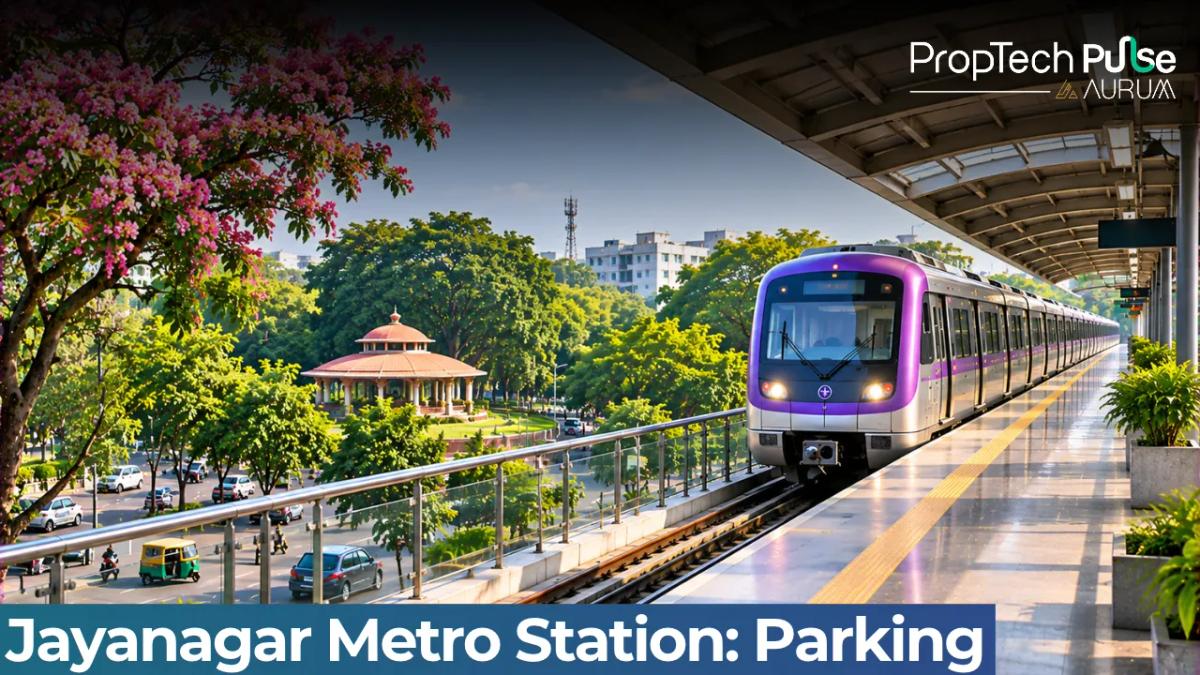
Locals in Jayanagar 4th Block know exactly which gate handles their morning rush. They also watch the real wait times and hunt for bike parking that stays off the footpath. Jayanagar metro station (JYN) sits right on Rashtreeya Vidyalaya Road, funneling thousands of commuters toward the city's commercial spine. It connects directly to business hubs like Shivajinagar via a direct interchange, making the stop one of the busiest on the entire Green Line.
Jayanagar Metro Station: Location and Quick Facts
Quick answer
Jayanagar metro station (JYN) is a raised stop on Namma Metro's Green Line, sitting squarely in Jayanagar 4th Block on Rashtreeya Vidyalaya Road. It runs extended evening services and serves as a vital connector to the Shivajinagar interchange.
The station occupies a prime stretch of land that balances heavy footfall with narrow surrounding roads. Operated by the Bangalore Metro Rail Corporation Ltd (BMRCL), the steel-and-concrete structure opened in mid-2017, bringing rapid transit to a neighbourhood that had waited decades for relief from road congestion. Locals often call it the jayanagar 4th block metro station because it anchors the commercial strip running parallel to the tracks.
Surrounding infrastructure dictates daily usage patterns. Banks, pharmacy chains, and office complexes cluster around the immediate radius, pushing platform volumes through sharp peaks at 8:30 AM and again at 6:00 PM. New residential towers along the edges of 4th and 7th Blocks now treat a seven-minute walk to this stop as a baseline requirement for modern listings.
The design maximises vertical space without swallowing the already congested road width. Staircases, escalators, and lifts move passengers from street level to the concourse, then across to the shared island platform. If you are buying or renting nearby, this layout clarifies why ground-floor units usually command less rent despite sitting closer to the entrance.
Jayanagar Metro Station Route and Platform Timings
Your direction hinges entirely on which track you enter. Jayanagar metro station sits exactly midway between Nagasandra and Silk Institute, placing it near the geographic centre of the active Green Line. Trains on Platform 1 head westward towards Madavara, while Platform 2 takes you southeast towards Kempegowda Airport before reaching Silk Institute.
Frequency depends entirely on the clock. Morning trains pack every three to four minutes. When delays hit the Shivajinagar interchange, those gaps widen slightly. Late-night services keep running until after midnight, which saves evening shift workers. Need the full route map and updated fare zones? Check our dedicated post on the namma metro green line bangalore 2026 route map timings fares.
| Time Window | Platform 1 (Madavara) | Platform 2 (Silk Institute) |
|---|---|---|
| Morning Peak (8 AM - 10 AM) | Every 3-4 mins | Every 3-4 mins |
| Daytime Off-Peak (10 AM - 4 PM) | Every 6-8 mins | Every 6-8 mins |
| Evening Rush (5 PM - 8 PM) | Every 3-4 mins | Every 3-4 mins |
| Late Night (After 10 PM) | Every 10-15 mins | Every 10-15 mins |
Line switching happens exclusively at Shivajinagar. Board your chosen platform and ride straight through for about eighteen minutes if the track is clear. A broad skybridge drops you directly into the Purple Line concourse. People headed north to Baiyappanahalli or south to Chikka Tirupathi stay inside the paid zone the whole time.
The route holds its pace unlike surface traffic. Chaotic merge points on Hosur Road and bottlenecks near Richmond Circle disappear behind station walls. The metro maintains a steady clockwork pace instead. Commuters targeting Whitefield IT hubs jump on the Blue Line extension after transferring at Shivajinagar, cutting nearly forty-five minutes off a typical drive.
Commuter tip: If you miss the Madavara train, the next one arrives quickly, but waiting too long risks getting stuck on the bound for Silk Institute. Verify your platform screen displays before stepping onto the moving walkways.
Jayanagar Metro Parking: Charges, Capacity and Strategy
Four-wheeler parking remains the biggest logistical headache here. Designated car bays sit along the eastern property edge, offering barely enough room for twenty vehicles. These slots clear before 8:15 AM, leaving early office-goers circling the block and adding unwanted congestion to an already tight junction.
Riders on two-wheelers face a smoother process. Dedicated racks extend along the southern facade, soaking up the thousands of bikes that drive daily ridership. BMRC applies a standard tariff structure after an initial grace period. Exact rupee figures shift with periodic revisions, but the daily cap stays reasonable for office commutes. We typically see properties in nearby areas such as bengaluru 4th t block east jayanagar bengaluru factoring these parking limits into their long-term value models.
| Vehicle Type | Approximate Capacity | Location Relative to Station |
|---|---|---|
| Four-Wheelers | Very Limited (~20 slots) | Eastern boundary, near Drop-off zone |
| Two-Wheelers | High (~500+ spots) | Southern perimeter, alongside main staircase |
| Drop-Off Zone | Transit Only (Max 10 mins) | Main entrance forecourt |
A practical workaround involves dropping your car at the office or home, then cycling or hailing a rickshaw to reach the station. Use the drop-off zone strictly for quick family transfers. App-cab drivers frequently hog the curb, delaying actual commuters trying to unload luggage or assist elderly parents.
Rental yields in the immediate vicinity climb when developers include private car parks inside the society compound. Senior professionals resist betting their vehicles on public lots, so basements become a selling point. Check our analysis on how transit access shifts local rates to understand the premium buyers pay for guaranteed parking beside metro convenience.
Navigating Gates A and B: Finding Your Neighbourhood
Two distinct entry and exit points operate here, spaced roughly fifty metres apart at ground level. Each gate covers a specific neighbourhood quadrant. Picking the wrong one wastes valuable minutes during rush hour.
Shoppers and office workers default to Gate A. This entrance faces the commercial spine, offering direct access to weekend markets and the main bus corridor. Queue speeds increase because this gate channels the highest passenger volume, though crowding turns uncomfortable during peak windows.
Gate B provides a cleaner route toward Yediyur and the wider 7th Block grid. Inner-lane residents prefer this exit to bypass the crowded storefronts. The pavement draining away from Gate B handles monsoon pooling better than the main road gutter near Gate A, making it the safer footing option during heavy Bangalore rains.
If you live in bengaluru jayanagar 4th block east jayanagar bengaluru, crossing between these gates requires safe street navigation. Use the marked pedestrian crossings or wait for the signal change at the traffic light adjacent to the bus stop. Stepping into traffic to jaywalk proves dangerous given the constant bus and auto flow.
Bus and Pedestrian Connectivity Around Jayanagar Metro
The BMTC bus stand sits just three minutes away on foot. Routes radiating from this hub connect Jayanagar to nearly every major employment zone across South and East Bangalore. Early departures for Electronic City and Whitefield pack completely before 8 AM, holding up later coaches behind full loads.
Pedestrian networks remain dense within the neighbourhood. Grocery stores, schools, medical centres, and recreational parks fall inside an 800-metre radius. Walkability scores stay high, though uneven footpaths near certain side streets need extra care after dark. Municipal lighting strengthens along primary roads but fades quickly in deeper residential pockets.
Property insight: Buyers prioritising quiet independent walks should insist on flats facing internal lanes rather than the main arterial road. You keep the sub-seven-minute walk to this stop, but escape the constant noise and dust from heavy buses.
Deciding How To Use The Station Daily
Map your home relative to your preferred exit gate before signing a lease. Workplace reliance on the BMTC means choosing an upstairs unit near Gate A for instant bus boarding. Driving owners should lock in a society car park first, then calculate whether the morning metro ride truly beats daily petrol and toll costs. Metro access here saves cash once parking and fuel trade-offs are clear.
Frequently asked questions
What are the exact timings of Jayanagar metro station?
First trains arrive shortly before 5:30 AM, with the last departure heading towards Silk Institute extending past midnight. During weekdays, frequency drops from every three minutes in the morning rush to ten-minute intervals late at night. Always check the station information boards or the BMRCL mobile app, as special service expansions occur on weekends and public holidays.
How much does Jayanagar metro parking cost?
BMRC follows a tiered tariff structure where the first few hours fall within a base rate, followed by an hourly charge thereafter until hitting a daily maximum cap. Four-wheelers face severe slot shortages and often force drivers to arrive very early, while two-wheeler parking remains plentiful with affordable daily rates aligned with standard metro policy across the network.
Which gate is better for Jayanagar 4th block residents?
Gate A serves the commercial spine and busiest intersections, making it ideal for shoppers and office workers. Gate B leans slightly more towards Yediyur and 7th Block residential lanes. Choose Gate B if you value quiet exits over speed, or if the main road gutters are flooding during heavy monsoon rains.
Is there an elevator at Jayanagar metro?
Yes, lifts operate at both Gate A and Gate B entrances, connecting street level to the concourse and the platform itself. They run daily but occasionally shut down for scheduled maintenance or technical faults. Elderly passengers or those managing heavy luggage should keep a stair-alternative route in mind during unexpected outages.
Can I switch to the Purple Line at Jayanagar metro?
You cannot transfer directly at Jayanagar. You must ride one stop north to Shivajinagar to access the Purple Line interchange. The skybridge at Shivajinagar connects the Green and Purple Line concourses directly. You stay inside the paid zone while moving between platforms.
Sources
- bmrc.co.in: Green Line operational timetables and peak-hour frequency adjustments (accessed November 2026)
Enjoyed this blog article? Visit PropTech Pulse for more interesting blogs.




Ask Pulse Ai anything about real estate

Unlock the Latest in Real Estate
News, Infographics, Blogs & More! Delivered to your inbox.

