





Port-led development refers to planned urban and economic growth that is strategically anchored around a port sea, inland, or dry port. In real estate, it drives demand for industrial land, logistics hubs, warehousing, residential zones, and commercial infrastructure in port-adjacent regions.
Port-led development is one of India's most powerful catalysts for large-scale real estate transformation. Investors and developers closely watch new port infrastructure announcements as early signals of long-term land value appreciation.

Digital Transformation
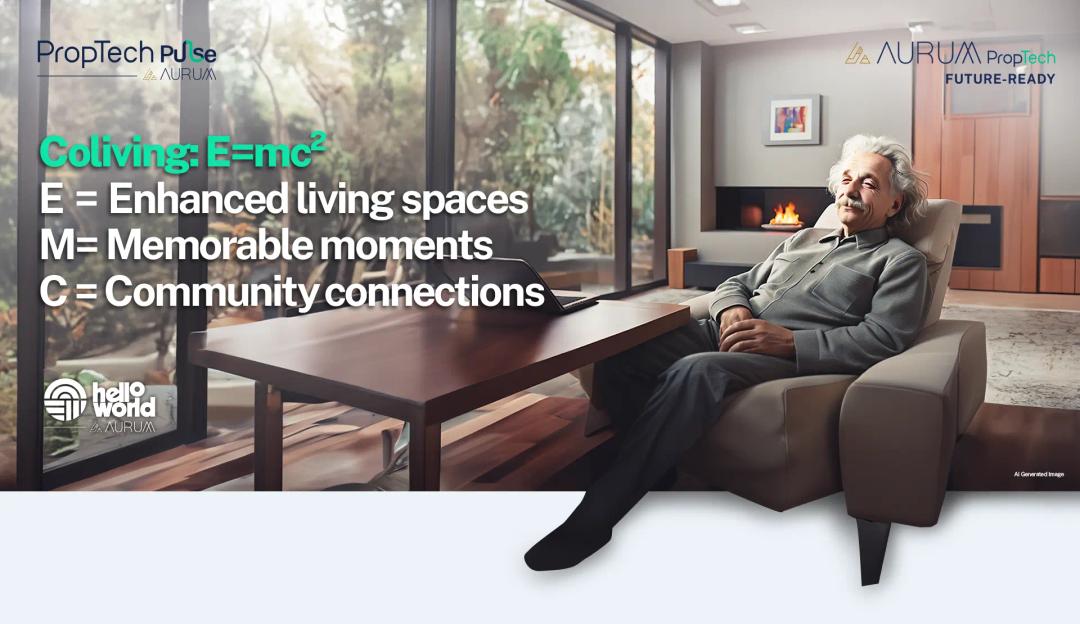
Dear Young Albert, I hope this letter finds you well, filled with the same curiosity and wonder that has always driven you. As I reflect on the world today, I can't help but think about how much has changed since my time, especially in the realm of communal living which might seem quite intriguing to you. You see, much like the principles of relativity that I delved into in my time, co-living operates on the idea of interconnectedness. Just as I discovered that the laws of physics are the same for all observers, regardless of their relative motion, co-living emphasizes the equality and inclusivity of all residents. Regardless of background or circumstance, everyone contributes to and benefits from the community space. These co-living spaces foster a sense of belonging and support that is invaluable, especially in today's fast-paced world. Just as I contemplated the effects of gravity on the motion of celestial bodies, consider the "community gravity" within a co-living space — the connections and relationships that draw residents together, enriching their lives in ways they never thought possible. Moreover, in these co-living spaces, one finds a beautiful confluence of diversity. Each resident brings their own unique perspective, skills, and passions to the table. Just as I theorized that the curvature of spacetime depends on the distribution of mass and energy, the social "space" within a co-living community is shaped by the collective presence of its members. This diversity creates an environment ripe for collaboration, innovation, and personal growth. Young Albert, Technology has altered Co-living manifold enabling students and young professionals discover, access and live in shared spaces at a touch of their fingertips. We individuals, each with their unique stories, come together to create a community unlike any other. It's not just about sharing physical space; it's about sharing ideas, dreams, and aspirations. So, my dear young Albert, as I continue to explore the wonders of the universe co-living has given me an opportunity to connect with likeminded others, to learn from them, and to grow together. Remember that just as the universe is vast and ever-expanding, so too are the opportunities for meaningful connections and shared experiences in the world around you. With warm regards, Your Future Self
15th March 2024

Growth
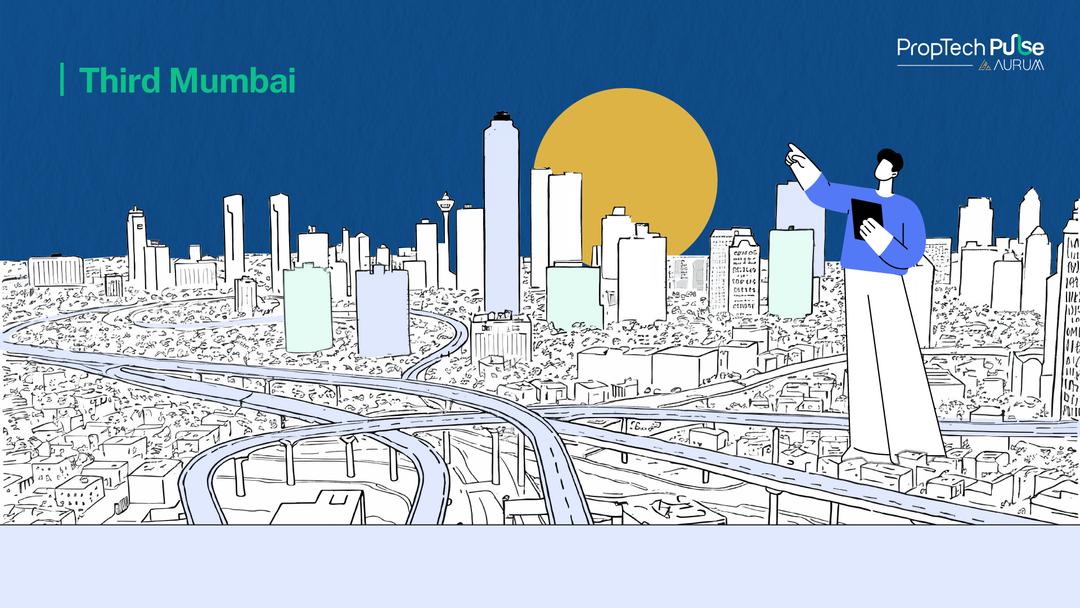
Third Mumbai: India’s Largest Planned Urban Transformation India’s urban story is one of both remarkable growth and immense pressure. Nowhere is this duality more visible than in Mumbai — the nation’s financial capital, home to over 20 million people, and the generator of 6.2% of India’s GDP. Yet, as the city continues to stretch its limits, housing has become unaffordable, and infrastructure is under constant strain. Navi Mumbai, originally planned as the relief valve, is now fast approaching saturation. So, what’s the next frontier in urban development? Welcome to Third Mumbai — officially known as the Karnala Sai Chirner (KSC) New Town — India’s most ambitious and largest planned urban development initiative. With a vision rooted in sustainability, smart infrastructure, and economic inclusion, Third Mumbai aims to reshape the future of urban living in the Mumbai Metropolitan Region (MMR). Why Third Mumbai? The urgency behind the creation of Third Mumbai stems from Mumbai's expanding population and the strain on its infrastructure. As residential spaces become prohibitively expensive and the quality of life diminishes due to congestion and pollution, planners have looked eastward to Raigad district. Third Mumbai isn’t just a spillover zone — it’s a solution. Envisioned as a self-sustaining smart city, it will ease pressure off Mumbai and Navi Mumbai, while fueling the next wave of economic growth, urban innovation, and regional connectivity. What is Third Mumbai? The Third Mumbai project is centered on three towns: Karnala, Sai, and Chirner — collectively abbreviated as KSC. This geographical triad forms the backbone of the new city. The initiative spans approximately 332 square kilometers, integrating areas from 124 villages in the Uran, Panvel, and Pen talukas of Raigad district. It also falls under the NAINA (Navi Mumbai Airport Influence Notified Area), leveraging its strategic location and potential for seamless multimodal connectivity. A Game-Changing Location What makes Third Mumbai such a game-changer is its location. The region is being built near key transit and economic hubs: Proximity to the Navi Mumbai International Airport — which is set to become operational by July 2025 Access to the Mumbai Trans Harbour Link (MTHL) — a 21.8 km sea bridge that will cut travel time between Mumbai and Navi Mumbai to just 20 minutes Planned Gold Line Metro (Line 8) — a direct metro route between CSMIA Terminal 2 and the new airport These elements will ensure that Third Mumbai isn’t just connected — it’s hyper-connected. Connectivity: The Infrastructure Backbone Third Mumbai’s infrastructural promise lies in three transformative projects: Mumbai Trans Harbour Link (MTHL) Length: 21.8 km Connects: Mumbai to Navi Mumbai Impact: Travel time reduced from 2 hours to just 20 minutes, improving both cargo movement and daily commutes. Navi Mumbai International Airport Opening: Expected by July 2025 Impact: Eases burden on Mumbai’s Chhatrapati Shivaji Maharaj International Airport while acting as an anchor for the new city. Gold Line Metro (Line 8) Route: Connects CSMIA Terminal 2 with Navi Mumbai Airport Impact: Seamless inter-airport connectivity, enhancing regional and global business travel. Together, these projects will integrate Third Mumbai with the broader MMR, unlocking unprecedented economic and logistic potential. Governance and Planning To ensure that the development remains structured, legal, and sustainable, the New Town Development Authority (NTDA) has been constituted. The NTDA operates under the Maharashtra Regional and Town Planning (MRTP) Act, 1966, which provides legal backing for: Zoning regulations Urban layout Land acquisition Infrastructure development This governance model ensures that growth doesn’t spiral into chaos — a lesson learned from the unregulated expansion in many Indian cities. What Will Third Mumbai Offer? Third Mumbai isn’t just a housing scheme or a transportation hub — it’s an ecosystem. The city is being developed with sector-specific innovation zones that make it a magnet for future-ready investments. Edu-City Home to the campuses of the top five global universities, Edu-City will be the education nucleus of the region, attracting students from across India and abroad. Medi-City A hub of world-class hospitals, medical research centers, and advanced health tech startups. Medi-City will help decentralize Mumbai’s overburdened healthcare system while making Third Mumbai a destination for medical tourism. Global Capability Centers (GCCs) Supported by ₹4 lakh crore worth of MoUs signed by MMRDA, Third Mumbai will house major GCCs, boosting employment, exports, and local GDP. SEZs and Data Centres Smart Integration of residential, commercial, and green zones. Hosting India’s largest data centres, the region is expected to hold up to 65% of India’s future data storage capacity, making it a digital powerhouse. The Economic Multiplier With an anchor investment of ₹16,700 crore for the Navi Mumbai Airport and strategic planning across multiple sectors, Third Mumbai is expected to: Attract multi-billion-dollar investments Generate lakhs of jobs across IT, manufacturing, logistics, and services Significantly boost property values and business activity in the Raigad district Furthermore, by being a Special Economic Zone (SEZ) corridor, Third Mumbai is expected to become a business-friendly jurisdiction with tax incentives and ease-of-doing-business protocols. A Template for Future Cities What makes Third Mumbai more than just another urban project is its replicability. Its model — combining connectivity, zoning, education, health, sustainability, and governance — serves as a template for future cities in India. As urbanization accelerates, India needs more cities that are planned ahead of population influx, not after. Third Mumbai demonstrates that with the right vision and framework, Indian cities can be inclusive, tech-forward, and sustainable — all at once. The Road Ahead With 2025 marking the expected operational launch of the Navi Mumbai International Airport, the countdown to Third Mumbai’s emergence has already begun. Over the next decade, the area will witness rapid transformation — from village clusters to a thriving metropolis. Of course, challenges remain — environmental sustainability, rehabilitation of existing villagers, and timely execution of infrastructure. But with a clear master plan and government backing, Third Mumbai may well be India’s most successful urban experiment. Final Thoughts As India steps into a new era of urbanization, the idea of Third Mumbai shines as a beacon of smart growth, equitable development, and forward-thinking governance. For real estate investors, entrepreneurs, educators, and city planners — this is a once-in-a-generation opportunity. Third Mumbai is not just a city. It’s India’s future — planned today. For more such insights into the world of real estate and PropTech, follow PropTech Pulse
29th September 2025

Growth
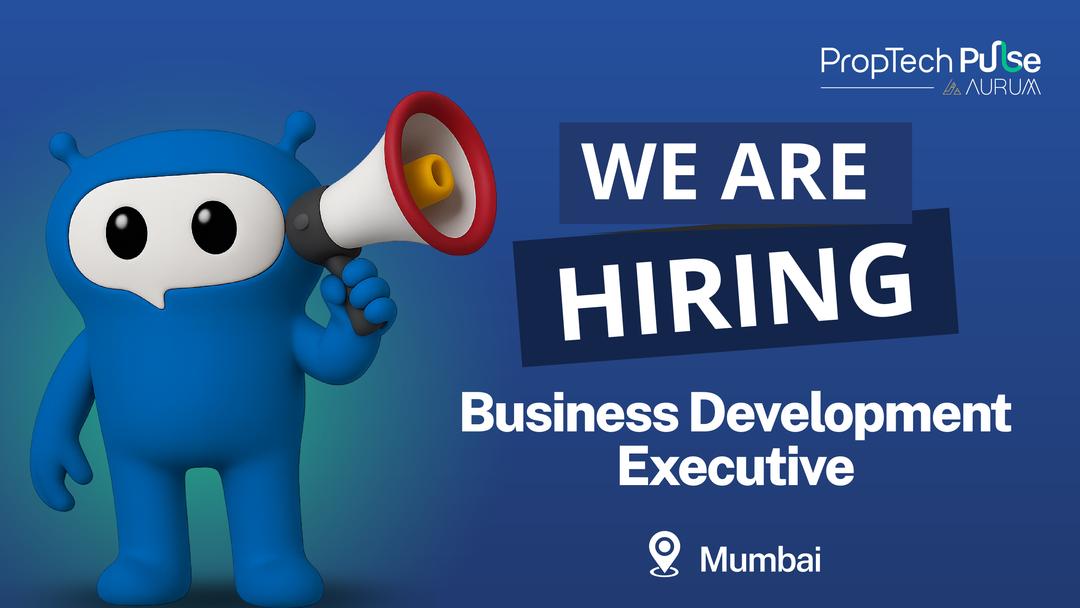
Business Development Executive – Aurum PropTech Aurum PropTech is redefining real estate by integrating technology, data intelligence, financial solutions, and brand-building services into one connected ecosystem. Our mission is to bring efficiency, transparency, and digital innovation to India’s largest industry through a unified digital platform. At the core of this ecosystem lies PropTech Pulse, India’s largest insights and services platform for the real estate and PropTech community. PropTech Pulse brings together research, content, events, PR, certifications, and business solutions—empowering developers, real estate professionals, industry leaders, BFSI players, and PropTech innovators. With a future-forward vision and robust foundation, Aurum PropTech continues to build solutions that create measurable impact across the ecosystem. Role Overview The Business Development Executive will drive growth, revenue, and client success for PropTech Pulse’s multiple verticals including Events, PR, Branding, Certification Programs, and Value-Added Services. You will ideate and implement scalable business strategies, cultivate B2B relationships, generate high-quality leads, and close partnerships across real estate, BFSI, PropTech, and allied sectors. Key Responsibilities Revenue Ownership: Drive sales and revenue across PropTech Pulse verticals—events, certifications, services, and partnerships. Client Acquisition: Identify, reach out to, and onboard B2B clients including corporates, CXOs, HR/L&D teams, and tech vendors. Pitching & Proposal Crafting: Develop compelling, customised proposals and presentations aligned with client needs. Relationship Management: Maintain strong, long-term relationships with clients, partners, and stakeholders. Market Intelligence: Stay updated on trends in procurement, SaaS, B2B events, and industry dynamics to strengthen GTM strategies. CRM & Tools: Maintain pipelines through HubSpot, Zoho, or Salesforce and use outreach tools like LinkedIn Sales Navigator, email automation, and analytics dashboards. What We're Looking For Must-Haves: • 1–3 years’ experience in business development, sales, or program/account management • Strong understanding of B2B sales cycles • Excellent communication, presentation, and negotiation skills • Self-driven, structured, and able to thrive in dynamic environments • Tech-savvy and comfortable with CRM systems, digital outreach tools, and Google Workspace Nice-to-Haves: • Experience in selling/organising events, training, or certification programs • Exposure to content creation, advertising, or PR • Bachelor’s degree in Business, Marketing, Technology, or related fields Why Join Aurum PropTech? • Influence the future of India’s real estate technology landscape • Work directly with CXOs, founders, and global partners • Thrive in a fast-growing, mission-led organisation • Enjoy ownership, autonomy, and merit-based growth opportunities • Be part of a culture rooted in collaboration, learning, and high performance Grow With Us This role offers rapid career acceleration, industry exposure, and the opportunity to work closely with leaders shaping the future of PropTech. If you're passionate, driven, and eager to make an impact, Aurum PropTech provides the platform and support to grow. Apply today and be part of this transformation. Apply Now: https://aurum1.keka.com/careers/jobdetails/117268 For any queries or to share your resume, you can email us at Hariom.Pathak@aurumproptech.in
17th December 2024

Digital Transformation
Dear Young Albert, I hope this letter finds you well, filled with the same curiosity and wonder that has always driven you. As I reflect on the world today, I can't help but think about how much has changed since my time, especially in the realm of communal living which might seem quite intriguing to you. You see, much like the principles of relativity that I delved into in my time, co-living operates on the idea of interconnectedness. Just as I discovered that the laws of physics are the same for all observers, regardless of their relative motion, co-living emphasizes the equality and inclusivity of all residents. Regardless of background or circumstance, everyone contributes to and benefits from the community space. These co-living spaces foster a sense of belonging and support that is invaluable, especially in today's fast-paced world. Just as I contemplated the effects of gravity on the motion of celestial bodies, consider the "community gravity" within a co-living space — the connections and relationships that draw residents together, enriching their lives in ways they never thought possible. Moreover, in these co-living spaces, one finds a beautiful confluence of diversity. Each resident brings their own unique perspective, skills, and passions to the table. Just as I theorized that the curvature of spacetime depends on the distribution of mass and energy, the social "space" within a co-living community is shaped by the collective presence of its members. This diversity creates an environment ripe for collaboration, innovation, and personal growth. Young Albert, Technology has altered Co-living manifold enabling students and young professionals discover, access and live in shared spaces at a touch of their fingertips. We individuals, each with their unique stories, come together to create a community unlike any other. It's not just about sharing physical space; it's about sharing ideas, dreams, and aspirations. So, my dear young Albert, as I continue to explore the wonders of the universe co-living has given me an opportunity to connect with likeminded others, to learn from them, and to grow together. Remember that just as the universe is vast and ever-expanding, so too are the opportunities for meaningful connections and shared experiences in the world around you. With warm regards, Your Future Self
15th March 2024

Growth
Third Mumbai: India’s Largest Planned Urban Transformation India’s urban story is one of both remarkable growth and immense pressure. Nowhere is this duality more visible than in Mumbai — the nation’s financial capital, home to over 20 million people, and the generator of 6.2% of India’s GDP. Yet, as the city continues to stretch its limits, housing has become unaffordable, and infrastructure is under constant strain. Navi Mumbai, originally planned as the relief valve, is now fast approaching saturation. So, what’s the next frontier in urban development? Welcome to Third Mumbai — officially known as the Karnala Sai Chirner (KSC) New Town — India’s most ambitious and largest planned urban development initiative. With a vision rooted in sustainability, smart infrastructure, and economic inclusion, Third Mumbai aims to reshape the future of urban living in the Mumbai Metropolitan Region (MMR). Why Third Mumbai? The urgency behind the creation of Third Mumbai stems from Mumbai's expanding population and the strain on its infrastructure. As residential spaces become prohibitively expensive and the quality of life diminishes due to congestion and pollution, planners have looked eastward to Raigad district. Third Mumbai isn’t just a spillover zone — it’s a solution. Envisioned as a self-sustaining smart city, it will ease pressure off Mumbai and Navi Mumbai, while fueling the next wave of economic growth, urban innovation, and regional connectivity. What is Third Mumbai? The Third Mumbai project is centered on three towns: Karnala, Sai, and Chirner — collectively abbreviated as KSC. This geographical triad forms the backbone of the new city. The initiative spans approximately 332 square kilometers, integrating areas from 124 villages in the Uran, Panvel, and Pen talukas of Raigad district. It also falls under the NAINA (Navi Mumbai Airport Influence Notified Area), leveraging its strategic location and potential for seamless multimodal connectivity. A Game-Changing Location What makes Third Mumbai such a game-changer is its location. The region is being built near key transit and economic hubs: Proximity to the Navi Mumbai International Airport — which is set to become operational by July 2025 Access to the Mumbai Trans Harbour Link (MTHL) — a 21.8 km sea bridge that will cut travel time between Mumbai and Navi Mumbai to just 20 minutes Planned Gold Line Metro (Line 8) — a direct metro route between CSMIA Terminal 2 and the new airport These elements will ensure that Third Mumbai isn’t just connected — it’s hyper-connected. Connectivity: The Infrastructure Backbone Third Mumbai’s infrastructural promise lies in three transformative projects: Mumbai Trans Harbour Link (MTHL) Length: 21.8 km Connects: Mumbai to Navi Mumbai Impact: Travel time reduced from 2 hours to just 20 minutes, improving both cargo movement and daily commutes. Navi Mumbai International Airport Opening: Expected by July 2025 Impact: Eases burden on Mumbai’s Chhatrapati Shivaji Maharaj International Airport while acting as an anchor for the new city. Gold Line Metro (Line 8) Route: Connects CSMIA Terminal 2 with Navi Mumbai Airport Impact: Seamless inter-airport connectivity, enhancing regional and global business travel. Together, these projects will integrate Third Mumbai with the broader MMR, unlocking unprecedented economic and logistic potential. Governance and Planning To ensure that the development remains structured, legal, and sustainable, the New Town Development Authority (NTDA) has been constituted. The NTDA operates under the Maharashtra Regional and Town Planning (MRTP) Act, 1966, which provides legal backing for: Zoning regulations Urban layout Land acquisition Infrastructure development This governance model ensures that growth doesn’t spiral into chaos — a lesson learned from the unregulated expansion in many Indian cities. What Will Third Mumbai Offer? Third Mumbai isn’t just a housing scheme or a transportation hub — it’s an ecosystem. The city is being developed with sector-specific innovation zones that make it a magnet for future-ready investments. Edu-City Home to the campuses of the top five global universities, Edu-City will be the education nucleus of the region, attracting students from across India and abroad. Medi-City A hub of world-class hospitals, medical research centers, and advanced health tech startups. Medi-City will help decentralize Mumbai’s overburdened healthcare system while making Third Mumbai a destination for medical tourism. Global Capability Centers (GCCs) Supported by ₹4 lakh crore worth of MoUs signed by MMRDA, Third Mumbai will house major GCCs, boosting employment, exports, and local GDP. SEZs and Data Centres Smart Integration of residential, commercial, and green zones. Hosting India’s largest data centres, the region is expected to hold up to 65% of India’s future data storage capacity, making it a digital powerhouse. The Economic Multiplier With an anchor investment of ₹16,700 crore for the Navi Mumbai Airport and strategic planning across multiple sectors, Third Mumbai is expected to: Attract multi-billion-dollar investments Generate lakhs of jobs across IT, manufacturing, logistics, and services Significantly boost property values and business activity in the Raigad district Furthermore, by being a Special Economic Zone (SEZ) corridor, Third Mumbai is expected to become a business-friendly jurisdiction with tax incentives and ease-of-doing-business protocols. A Template for Future Cities What makes Third Mumbai more than just another urban project is its replicability. Its model — combining connectivity, zoning, education, health, sustainability, and governance — serves as a template for future cities in India. As urbanization accelerates, India needs more cities that are planned ahead of population influx, not after. Third Mumbai demonstrates that with the right vision and framework, Indian cities can be inclusive, tech-forward, and sustainable — all at once. The Road Ahead With 2025 marking the expected operational launch of the Navi Mumbai International Airport, the countdown to Third Mumbai’s emergence has already begun. Over the next decade, the area will witness rapid transformation — from village clusters to a thriving metropolis. Of course, challenges remain — environmental sustainability, rehabilitation of existing villagers, and timely execution of infrastructure. But with a clear master plan and government backing, Third Mumbai may well be India’s most successful urban experiment. Final Thoughts As India steps into a new era of urbanization, the idea of Third Mumbai shines as a beacon of smart growth, equitable development, and forward-thinking governance. For real estate investors, entrepreneurs, educators, and city planners — this is a once-in-a-generation opportunity. Third Mumbai is not just a city. It’s India’s future — planned today. For more such insights into the world of real estate and PropTech, follow PropTech Pulse
29th September 2025


News, Infographics, Blogs & More! Delivered to your inbox.