






Constructive possession in real estate refers to a legal situation where a person has ownership rights or legal control over a property even if they are not physically occupying it.
A property owner living abroad still maintains legal possession of their land even though tenants are physically occupying it.
Constructive possession allows legal ownership rights to exist without physical occupation. It is an important concept in property law and ownership disputes.


Technology and Innovation
‘‘The purpose of a business is to create and keep a customer’’, Peter Drucker, a famous writer, and management consultant said prolifically. The realm of CRM scope covers customer discovery, interactions, service, care, retention, and loyalty. The term Customer Relationship Management (CRM) was coined in the early 1970s when management at business units realized it would be better to be customer emphatic rather than product emphatic. Customer relationship management tools has evolved gradually from Rolodex’s of 1950s to Generative AI in 2020. What started as a record-keeping tool gradually evolved into digital documentation, sales automation, enterprise resource planning, social marketing, to the present age hyper personalised automated communication form. 1956 - First CRM Gadget - Rolodex In 1956s, Danish engineer Hildaur Neilsen, chief engineer of Zephyr American invented Rolodex, a card index system used to store customer contact information. It was a desk gadget that stacked and stored business cards and index cards that people could spin and flip through. Digital Rolodex, Tele sales and advent of computers The 1980s saw an evolution in sales, marketing and customer retention tactics with the advent of digitisation. Tools such as direct mail, brochures, and product catalogues being sent to a database of customers to get them to buy something were prevalently used in the 1980s. Database marketing and digital Rolodex came to the fore. The late 1980s saw the advent of telesales for customer communication. Computers were also accessible for enterprises and became a means of storing information about customers. In 1987, the software programme ACT (Activity Control Technology) was created by Mike Sullivan and Mitch Muhney, officially known as the first CRM software. This was essentially a digital Rolodex that allowed storage and management of the entire customer lifecycle information on the software. With its usage of Customer Relationship Management software, Act! demonstrated the advantages of scalable software that utilized consumer information to help a firm better manage its connections. 1990 - Sales Automation and progression into CRM systems By 1990s, one saw a progression of database management into customer lifecycle management and sales force workflow automation. Tools like enterprise resource planning, and marketing were added to the software’s contact management functions. This was the emergence first CRM systems. Tom Siebel, founder of Sieble Systems, coined the term CRM (Customer Relationship Software) for the first time. The post-introduction of the same CRM took off exponentially, with other companies also providing CRM solutions. Siebel Systems was later acquired by Oracle for over USD 5 billion in 2005. Late 1900s - First Mobile CRM, SaaS business model and Salesforce Inc. Post invention of PDA (Personal Digital Assistant) devices, tasks, emails, and calendar management became mobile. It allowed sales individuals to access customer data from central databases on the go, which proved to be a game changer as one didn’t have to be on the desk to work out these tasks. Salesforce.com was launched in 1999 and offered a new business model, offering software services as subscriptions (SaaS), wherein the upfront implementation cost, effort, and maintenance would be taken care of by Salesforce. 2000 - Cloud based CRM, Open-Source CRM and Social CRM In 2007, internet boom and cloud storage led to the advent and proliferation of Cloud-based CRM. With the increased internet adoption, Salesforce’s subscription model became popular as it could be scaled up very quickly. Open-source software also came to the fore, with the most prominent one being Sugar CRM, invented by computer scientists and ex-IBM and Hewlett-Packard employees Clint Oram, John Roberts, and Jacob Taylor. With the increased proliferation, and exponential growth of social media platforms, CRMs were combined with social media tools to offer SCRM. 2010 - Artificial Intelligence and CRM Artificial intelligence (AI) has changed the CRM space substantially with automation and intelligence. AI can be used for lead scoring, identifying customer needs, and providing recommendations. With enormous data being generated across every consumer by way of their digital footprint, CRM with AI and data analytics makes it simple to extrapolate consumer behaviour and requirements in real-time. 2020 and Now - Generative AI Generative AI is a subset of AI but unique in its ability to learn from underlying patterns to create new data that mirrors the training data set. The power of creation has a multifold impact across industries, and consumer communication is only to benefit from this capability. Managing customer interactions with Gen AI has the potential to enable a better connection between brands and customers. This however requires creative ability to engage customers and ability to execute to deliver better performance results and employee experiences. A combination of Gen AI and CRM can impact functional domains of marketing, sales, commerce, service and customer success. The true potential of Gen AI can be unlocked best when used in combination with predictive AI, voice to text, experience management and workflow optimisation. The CRM journey has reached an interesting point with AI, and the future looks promising for this space. The Total Addressable Market is set to grow to USD 290 billion by 2026. Salesforce Inc, an early mover, and a global market leader grew 10x in revenue in a decade. In 2013, its revenue stood at USD 3.1 billion which stands at USD 34 billion in FY 2022. CRM, which started as a simple Rolodex, has evolved into a complex system laced with artificial intelligence that helps organisations manage customer data and engage them with it in a self-assisted automated format, bringing huge implications for cost, efficiency, and the experience of consumer communication. As we advance further into the coming decades, CRM software systems will become more intelligent, integrated and intuitive with powerful AI capabilities, greater emphasis on self-service, enhanced experience for customers, hyper-personalisation, integrated API networks and ecosystems, and a single source of truth for businesses. Peter Drucker will be smiling in his grave looking at the advancement in this space.
12th April 2024

Home Loans Consumer
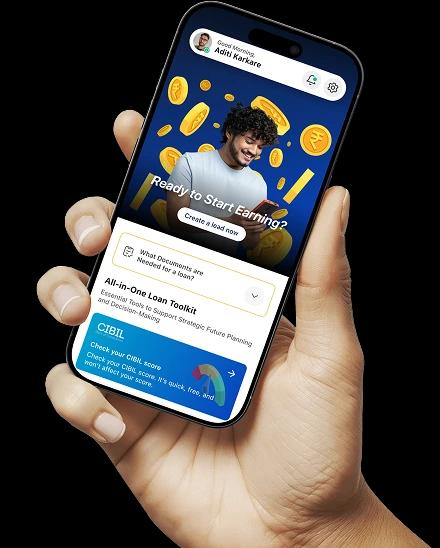
For many Indians, purchasing a ‘dream home’ tops their bucket list. Whether a modernized penthouse or a sprawling Victorian bungalow, every one of us desires a home that was crafted keeping us and our family in mind. Finding such a dream home is a difficult task. After a painstaking search, you finally find the house of your dreams, but to purchase it, you have to take out a home loan from a bank or any aggregator. Acquiring a home loan in India is an arduous and time-consuming battle itself. Currently, the home loan market in India is tremendous and has grown exponentially over the years. The home loan interests are at a 16-year low, with several banks and aggregators competing to provide the most lucrative options. Despite these developments, an average home-loan seeker has to bear a tedious loan approval process that can be demoralizing due to the number of hurdles. To overcome these hurdles, KuberX, a tech-based online loan aggregator platform, has implemented innovative solutions to turn your home loan searching process into an effortless one. What stands in the way of home loans? Long-drawn-out procedure for approval Getting to the end of the home loan process requires patience. Even with banks and aggregators offering pre-approved loans, you may find yourself with incomplete documentation, and a prolonged legal and technical verification process that stalls loan approval by weeks. Non-transparent payment process There is a lack of knowledge in most borrowers, due to which they are not vigilant enough while comparing and scrutinizing interest rates. Legal and technical costs ranging anywhere from 0.25% to 1% of the entire loan are sometimes concealed by banks in the processing charges. How does KuberX tackle these challenges? Provision of APFs An APF or approved project finance is a score significant for any project. To get an APF number, the property developer must submit all legal documentation relevant to the project like NOCs, Sale Deeds, Title Deeds, Approved Plans, etc. KuberX can help facilitate APFs from multiple finance institutions for real estate developers. This provision increases homebuyer purchasing capability and assures a minimum risk of payment on the loan. Financial consultation Since purchasing your dream home is a monumental decision, it is advantageous to have an unbiased financial advisor by your side throughout the process. KuberX provides you with sound financial advice, backed by insights, to select the right loan product. Loan disbursements KuberX is simplifying the home loan buying journey through loan disbursements. They are working as an aggregator of demand across real estate developers and individual customers for the banking system. Their expert team will coordinate with loan buyers for quicker sanctions and disbursements. End-to-end service For an individual, especially a first-time home loan seeker, the loan buying process can be intimidating. KuberX provides complete guidance and support throughout the journey. They have a complete understanding of the pain points of the customers and offer end-to-end support. From APFs to custom-made loans for your projects, they guide you through every step of the process. How KuberX works KuberX has made acquiring a loan a straightforward process through their platform. You only have to: Sign up - Sign up or register on the platform in seconds and share your loan requirements. Compare offers - Get customised opinions with their proprietary AI-enabled instant tool. Select offer - Choose one offer that best suits your home loan requirements. Relax - Just relax as they work on getting your home loan processed at the earliest. The real estate industry in India will continue its exponential growth and is projected to contribute around 18%-20% of the country’s total GDP. Since the home loan market is a part of the industry, it is also expected to boom along with the real estate industry. In a rapidly evolving landscape with complex dynamics, KuberX can be a trusted partner to help you seal the deal on your dream home. With their years of experience and expertise in the FinTech industry, KuberX wants to redefine the online loan aggregator ecosystem. Their associations with private, public banks, and NBFCs will aid them in tackling the prevalent challenges in the lending market.
24th October 2024

Home Loans Consumer
Home Loan Tax Benefits 2024: Everything You Need to Know Thinking of buying a home? Here’s some good news! Home loan rates just got cheaper. The State Bank of India (SBI) recently cut its home loan interest rates by 25 basis points to 8.25%, bringing its External Benchmark Lending Rate (EBLR) down to 8.90%. What does that mean for you? Lower borrowing costs and more affordable EMIs! But here’s where it gets even better — when you factor in the home loan tax benefits, you’re not just buying a home; you’re saving lakhs in taxes over the years. Under Sections 80C, 24(b), and 80EEA of the Income Tax Act, you can claim principal and interest payments deductions, making homeownership a smarter financial move than renting. Sounds great, right? But a lot of buyers miss out on these savings simply because they don’t know how to claim them properly. That won’t be you. This guide will break it all down — what deductions you can claim, how to maximize them, and smart strategies to save more on your home loan. Let’s dive in! Introduction to Home Loan Tax Benefits Many people go back and forth between renting and buying, often seeing a home loan as just another financial commitment. But with the tax benefits available on home loans, the numbers start to tip in favor of ownership. Understanding how these tax deductions work can help you maximize savings and make an informed decision. Not only does a home loan enable asset creation, but it also helps optimize your tax liability, allowing you to redirect savings toward long-term financial goals. Put simply: Home loan deductions → Lower tax → More savings → Smarter investments → Long-term wealth growth Here's how you can benefit under the Income Tax Act: Principal deduction: You can deduct the principal amount of your loan from your taxable income. Interest deduction: Similarly, you can also claim the interest paid on the loan as a deduction. By leveraging these deductions, you effectively reduce your tax liability, making homeownership potentially much more affordable. Want to fast-track your home loan process? Explore KuberX, a tech-driven platform that simplifies applications and streamlines approvals! Tax Deductions on Principal Repayment (Section 80C) Under Section 80C of the Income Tax Act, homebuyers can claim deductions of up to ₹1.5 lakh per year on the principal repayment of a home loan. Understanding this benefit can help you optimize your tax savings. How Section 80C works The ₹1.5 lakh deduction applies only to the principal component of your EMI — not the interest. But here’s the catch: In the initial years of the loan, most of your EMI goes toward interest, not principal. That means your deduction under 80C is much lower than expected unless you take proactive steps. If you’re in a longer tenure loan (20+ years), you may not be utilizing the full benefit early on. To make the most of Section 80C home loan benefits: Consider making prepayments to increase the principal repaid. Opt for a shorter tenure (10–15 years) if feasible, as this increases the principal component in EMIs. Don’t solely rely on your home loan for 80C benefits — combine it with other tax-saving instruments, e.g., PPF, ELSS, and NSC to maximize savings. Eligibility criteria Not all home loans qualify for Section 80C deductions. To claim benefits: Loan must be from recognized lenders like banks, NBFCs, or housing finance companies. Only residential properties qualify. No deductions for under-construction properties, only after possession. Maximum deduction limit While ₹1.5 lakh sounds generous, it’s important to know that this limit is shared with other 80C investments, such as: PF (Provident Fund) contributions. ELSS (Equity-Linked Saving Scheme). Life insurance premiums. Tuition fees for children. If your limit is already exhausted with these, your home loan may not provide additional tax savings. Conditions for claiming the deduction Keep loan statements and repayment proofs ready for tax filing. You must be paying EMIs — if you default on payments, you cannot claim a deduction. Selling the property before 5 years nullifies previous deductions, and the total amount claimed gets added back to your taxable income for that year. Tax Deductions on Interest Payment (Section 24(b)) Section 24(b) lets you claim deductions on home loan interest payments, reducing your taxable income. The deduction limit depends on whether the property is self-occupied or rented out, and there’s even a way to claim interest paid before possession, provided certain conditions are met. Interest deduction for self-occupied vs. let-out properties For self-occupied homes, you can claim up to ₹2 lakh per year on interest paid. However, if construction isn’t completed within 5 years, this limit drops to just ₹30,000. For let-out (rented) properties, there’s no cap on interest deduction, but total house property losses (from one or more loans) are capped at ₹2 lakh/year for tax adjustment. Quick Tip????: The Income Tax Act doesn't stop you from holding multiple self-occupied properties. This means you can shift deductions strategically to the loan with the highest interest. Did you know? Even if you don’t charge rent (e.g., parents live there), it’s still considered let-out, allowing unlimited interest deduction — which can offset salary income too. Pre-construction interest deduction The total pre-construction interest is divided into 5 equal installments and claimed annually after possession. This deduction falls under the ₹2 lakh limit for self-occupied properties. It applies only if construction is completed within 5 years and delays beyond this reduce the deduction to ₹30,000 per year. Only interest qualifies! Principal repayment during the pre-construction period doesn’t get any tax benefits. Additional Benefits for First-Time Homebuyers First-time homebuyers get extra tax benefits under Sections 80EE and 80EEA, helping them save even more. These deductions apply over and above Section 80C and 24(b), making home ownership more affordable. Section 80EE: For loans up to ₹35 lakh Eligibility: First-time homebuyer with a loan up to ₹35 lakh and property value ≤ ₹50 lakh, sanctioned between April 1, 2016 – March 31, 2017. Deduction limit: Claim up to ₹50,000 per year on interest, over and above Section 24(b), until full loan repayment. Conditions: Only individuals (not HUFs) can claim, and the property must be self-occupied. Section 80EEA: Extended benefits under affordable housing Eligibility: First-time homebuyer with a property stamp duty value of ₹45 lakh or less, size limit of 60 sqm (metros) or 90 sqm (other areas). Must not own another house on the loan sanction date. Deduction limit: Additional ₹1.5 lakh interest deduction per year, over and above Section 24(b). Timeframe: Applicable for loans sanctioned between April 1, 2019, and March 31, 2022. ????Quick Tip: As a first-time homebuyer, you can double your tax benefits with a joint home loan. Each co-borrower can claim deductions separately under Section 80C and 24(b), provided both are co-owners and co-borrowers with proof of EMI contributions. New vs. Old Tax Regime: What Should You Choose? With two tax regimes in place, homebuyers must decide which one offers better home loan tax benefits. [Bonus] 6 Simple Steps to Claim Home Loan Tax Benefit Ask your bank or lender for an annual interest certificate. This document shows the breakup of principal and interest paid during the financial year. Share the interest certificate with your employer to adjust your TDS (Tax Deducted at Source) on salary. This ensures you don’t pay excess tax during the year. If you’re self-employed or haven’t shared the certificate with your employer, claim the deductions directly while filing your ITR. Use the correct ITR form (ITR-1 or ITR-2). For joint home loans, make sure you’re both a co-owner and co-borrower to claim deductions individually. Deductions are proportional to your share in the loan. Claim ₹1.5 lakh on principal (80C), ₹2 lakh on interest (24(b)), and extra ₹50,000 (80EE) or ₹1.5 lakh (80EEA) for first-time buyers. If your property is under construction, claim pre-construction interest in five equal installments over five years after construction is complete. Pro Tips to Maximize Home Loan Tax Benefits Time your loan strategically: Take your loan early in the financial year to maximize interest deductions under Section 24(b). Prepay principal before March to fully utilize the ₹1.5 lakh deduction under Section 80C. Optimize EMIs and prepayments: Higher EMIs or periodic prepayments reduce total interest costs while ensuring full tax benefits. Keep proper documentation: Maintain your loan sanction letter, interest certificate, and repayment proofs for smooth tax claims. Salaried individuals should submit these to their employer for TDS adjustments. Avoid Common Mistakes ❌ Taking a loan from an unregistered lender, which disqualifies you from claiming deductions. ❌ Missing out on pre-construction interest by not claiming it in five equal installments after possession. ❌ Selling the property within five years, which reverses your Section 80C deductions. ❌ Failing to split EMIs in a joint loan, reducing the potential tax savings for co-borrowers.
28th April 2025

Technology and Innovation
‘‘The purpose of a business is to create and keep a customer’’, Peter Drucker, a famous writer, and management consultant said prolifically. The realm of CRM scope covers customer discovery, interactions, service, care, retention, and loyalty. The term Customer Relationship Management (CRM) was coined in the early 1970s when management at business units realized it would be better to be customer emphatic rather than product emphatic. Customer relationship management tools has evolved gradually from Rolodex’s of 1950s to Generative AI in 2020. What started as a record-keeping tool gradually evolved into digital documentation, sales automation, enterprise resource planning, social marketing, to the present age hyper personalised automated communication form. 1956 - First CRM Gadget - Rolodex In 1956s, Danish engineer Hildaur Neilsen, chief engineer of Zephyr American invented Rolodex, a card index system used to store customer contact information. It was a desk gadget that stacked and stored business cards and index cards that people could spin and flip through. Digital Rolodex, Tele sales and advent of computers The 1980s saw an evolution in sales, marketing and customer retention tactics with the advent of digitisation. Tools such as direct mail, brochures, and product catalogues being sent to a database of customers to get them to buy something were prevalently used in the 1980s. Database marketing and digital Rolodex came to the fore. The late 1980s saw the advent of telesales for customer communication. Computers were also accessible for enterprises and became a means of storing information about customers. In 1987, the software programme ACT (Activity Control Technology) was created by Mike Sullivan and Mitch Muhney, officially known as the first CRM software. This was essentially a digital Rolodex that allowed storage and management of the entire customer lifecycle information on the software. With its usage of Customer Relationship Management software, Act! demonstrated the advantages of scalable software that utilized consumer information to help a firm better manage its connections. 1990 - Sales Automation and progression into CRM systems By 1990s, one saw a progression of database management into customer lifecycle management and sales force workflow automation. Tools like enterprise resource planning, and marketing were added to the software’s contact management functions. This was the emergence first CRM systems. Tom Siebel, founder of Sieble Systems, coined the term CRM (Customer Relationship Software) for the first time. The post-introduction of the same CRM took off exponentially, with other companies also providing CRM solutions. Siebel Systems was later acquired by Oracle for over USD 5 billion in 2005. Late 1900s - First Mobile CRM, SaaS business model and Salesforce Inc. Post invention of PDA (Personal Digital Assistant) devices, tasks, emails, and calendar management became mobile. It allowed sales individuals to access customer data from central databases on the go, which proved to be a game changer as one didn’t have to be on the desk to work out these tasks. Salesforce.com was launched in 1999 and offered a new business model, offering software services as subscriptions (SaaS), wherein the upfront implementation cost, effort, and maintenance would be taken care of by Salesforce. 2000 - Cloud based CRM, Open-Source CRM and Social CRM In 2007, internet boom and cloud storage led to the advent and proliferation of Cloud-based CRM. With the increased internet adoption, Salesforce’s subscription model became popular as it could be scaled up very quickly. Open-source software also came to the fore, with the most prominent one being Sugar CRM, invented by computer scientists and ex-IBM and Hewlett-Packard employees Clint Oram, John Roberts, and Jacob Taylor. With the increased proliferation, and exponential growth of social media platforms, CRMs were combined with social media tools to offer SCRM. 2010 - Artificial Intelligence and CRM Artificial intelligence (AI) has changed the CRM space substantially with automation and intelligence. AI can be used for lead scoring, identifying customer needs, and providing recommendations. With enormous data being generated across every consumer by way of their digital footprint, CRM with AI and data analytics makes it simple to extrapolate consumer behaviour and requirements in real-time. 2020 and Now - Generative AI Generative AI is a subset of AI but unique in its ability to learn from underlying patterns to create new data that mirrors the training data set. The power of creation has a multifold impact across industries, and consumer communication is only to benefit from this capability. Managing customer interactions with Gen AI has the potential to enable a better connection between brands and customers. This however requires creative ability to engage customers and ability to execute to deliver better performance results and employee experiences. A combination of Gen AI and CRM can impact functional domains of marketing, sales, commerce, service and customer success. The true potential of Gen AI can be unlocked best when used in combination with predictive AI, voice to text, experience management and workflow optimisation. The CRM journey has reached an interesting point with AI, and the future looks promising for this space. The Total Addressable Market is set to grow to USD 290 billion by 2026. Salesforce Inc, an early mover, and a global market leader grew 10x in revenue in a decade. In 2013, its revenue stood at USD 3.1 billion which stands at USD 34 billion in FY 2022. CRM, which started as a simple Rolodex, has evolved into a complex system laced with artificial intelligence that helps organisations manage customer data and engage them with it in a self-assisted automated format, bringing huge implications for cost, efficiency, and the experience of consumer communication. As we advance further into the coming decades, CRM software systems will become more intelligent, integrated and intuitive with powerful AI capabilities, greater emphasis on self-service, enhanced experience for customers, hyper-personalisation, integrated API networks and ecosystems, and a single source of truth for businesses. Peter Drucker will be smiling in his grave looking at the advancement in this space.
12th April 2024

Home Loans Consumer
For many Indians, purchasing a ‘dream home’ tops their bucket list. Whether a modernized penthouse or a sprawling Victorian bungalow, every one of us desires a home that was crafted keeping us and our family in mind. Finding such a dream home is a difficult task. After a painstaking search, you finally find the house of your dreams, but to purchase it, you have to take out a home loan from a bank or any aggregator. Acquiring a home loan in India is an arduous and time-consuming battle itself. Currently, the home loan market in India is tremendous and has grown exponentially over the years. The home loan interests are at a 16-year low, with several banks and aggregators competing to provide the most lucrative options. Despite these developments, an average home-loan seeker has to bear a tedious loan approval process that can be demoralizing due to the number of hurdles. To overcome these hurdles, KuberX, a tech-based online loan aggregator platform, has implemented innovative solutions to turn your home loan searching process into an effortless one. What stands in the way of home loans? Long-drawn-out procedure for approval Getting to the end of the home loan process requires patience. Even with banks and aggregators offering pre-approved loans, you may find yourself with incomplete documentation, and a prolonged legal and technical verification process that stalls loan approval by weeks. Non-transparent payment process There is a lack of knowledge in most borrowers, due to which they are not vigilant enough while comparing and scrutinizing interest rates. Legal and technical costs ranging anywhere from 0.25% to 1% of the entire loan are sometimes concealed by banks in the processing charges. How does KuberX tackle these challenges? Provision of APFs An APF or approved project finance is a score significant for any project. To get an APF number, the property developer must submit all legal documentation relevant to the project like NOCs, Sale Deeds, Title Deeds, Approved Plans, etc. KuberX can help facilitate APFs from multiple finance institutions for real estate developers. This provision increases homebuyer purchasing capability and assures a minimum risk of payment on the loan. Financial consultation Since purchasing your dream home is a monumental decision, it is advantageous to have an unbiased financial advisor by your side throughout the process. KuberX provides you with sound financial advice, backed by insights, to select the right loan product. Loan disbursements KuberX is simplifying the home loan buying journey through loan disbursements. They are working as an aggregator of demand across real estate developers and individual customers for the banking system. Their expert team will coordinate with loan buyers for quicker sanctions and disbursements. End-to-end service For an individual, especially a first-time home loan seeker, the loan buying process can be intimidating. KuberX provides complete guidance and support throughout the journey. They have a complete understanding of the pain points of the customers and offer end-to-end support. From APFs to custom-made loans for your projects, they guide you through every step of the process. How KuberX works KuberX has made acquiring a loan a straightforward process through their platform. You only have to: Sign up - Sign up or register on the platform in seconds and share your loan requirements. Compare offers - Get customised opinions with their proprietary AI-enabled instant tool. Select offer - Choose one offer that best suits your home loan requirements. Relax - Just relax as they work on getting your home loan processed at the earliest. The real estate industry in India will continue its exponential growth and is projected to contribute around 18%-20% of the country’s total GDP. Since the home loan market is a part of the industry, it is also expected to boom along with the real estate industry. In a rapidly evolving landscape with complex dynamics, KuberX can be a trusted partner to help you seal the deal on your dream home. With their years of experience and expertise in the FinTech industry, KuberX wants to redefine the online loan aggregator ecosystem. Their associations with private, public banks, and NBFCs will aid them in tackling the prevalent challenges in the lending market.
24th October 2024


News, Infographics, Blogs & More! Delivered to your inbox.