

©PropTech Pulse 2025, All rights reserved.

What is a Commencement Certificate?
Commencement Certificate
A Commencement Certificate is an official green light from relevant authorities to begin construction, signaling the proposed plans comply with local rules. Typically following a thorough review of designs, environmental factors, and zoning constraints, this document ensures no unauthorized building starts. Without it, developments risk future penalties or forced stoppage.
Key Points
- Regulatory Approval: Confirms alignment with codes, infrastructure provisions, and city planning norms.
- Milestone: Construction can proceed lawfully once the certificate is in hand.
- Project Accountability: Minimizes structural or safety violations from unvetted expansions.
- Phased: Some projects obtain partial clearance for initial phases only.
Commencement Certificates instill discipline, guaranteeing that the blueprint’s integrity meets communal standards and safety guidelines, preventing haphazard or non-conforming developments.
Insight Pulse

Uncategorized
New Zuari Bridge Goa: Specs, Route & Latest Gallery Updates
Commuters travelling along Goa’s coastal belt know the difference the six-lane NH-66 corridor makes. Before the bypass, moving between the northern tip at Panaji and the southern industrial hub in Margao required waiting hours for ferries or navigating crowded city streets. The New Zuari Bridge resolved that bottleneck, yet property buyers and logistics planners still mix up which phase opened when, and where construction on the commercial amenities actually stands. This guide cuts through the noise. We verify the exact inauguration sequence, map the NH-66 transit improvements, detail the 640-metre structural specifications, and break down the ₹270 crore tourism towers that sit in regulatory limbo. Understanding the difference between the operational roadway and the delayed vertical development is essential before committing capital to nearby plots. In this guide New Zuari Bridge live status, route and commuter impact Engineering specs and construction timeline The Eiffel Tower-inspired observation towers and viewing gallery Frequently asked questions New Zuari Bridge live status, route and commuter impact Quick answer The New Zuari Bridge operates fully in both directions today. Phase 1 (Northbound) opened on 29 December 2022, and Phase 2 (Southbound) followed on 22 December 2023. The structure sits on the NH-66 alignment, cutting out ferry dependency between Bambolim and Verna while an ambitious ₹270 crore viewing gallery complex awaits final environmental clearances. When you cross the New Zuari Bridge Goa section of NH-66, you leave the densely populated Tiswadi district behind and enter the broader Verna industrial zone. Travelers who previously faced peak-hour gridlock in Vasco da Gama or waited ninety minutes at the Mormugao ferry terminal now cover the distance in under fifteen minutes. For intercity freight and daily migrants, the bypass saves roughly forty-five minutes each way compared to the old urban routing. Real estate valuations in the immediate catchment reacted quickly to the handover. Land banks near the Bambolim approach and the Verna flyover intersections saw price corrections immediately following the second phase inauguration. Investors who tracked the concrete pour milestones rather than the press releases avoided overpaying during the two-year COVID construction delays. Local authorities have since tightened perimeter zoning around the abutments, restricting encroachment into the mandatory ten-metre right-of-way buffer. If you are evaluating residential plots within a two-kilometre radius of the abutments, verify the latest top builders in Goa compliance standards and municipal set-back rules. Noise attenuation barriers line portions of the approach roads, but ground-level units closer to the deck still carry a measurable acoustic footprint that buyers factor into their offers. Engineering specs and construction timeline Engineering reports cap the zuari bridge length at 640 metres. The design relies on a cable-stayed configuration supported by single-point steel pylons rising 125 metres above the waterline. This single-pylon setup was chosen deliberately to keep navigation lanes wide enough for heavy cargo vessels. It avoids the need for movable bridges or grade-separated rail lines further downstream. The deck itself spans 27 metres across, delivering eight traffic lanes in total. Four lanes flow north towards Panaji and Madgaon, while four lanes handle the southbound return. Widening beyond this limit would have disrupted the existing substructure and spiked excavation costs unnecessarily. Road geometry follows straight alignment principles with minimal curvature to maintain consistent speed limits for heavy goods vehicles. Execution fell to the Dilip Buildcon and MBZ Infrastructure joint venture (DBLMBZ). The base contract valuation ranged between ₹2,530 crore and ₹2,701 crore depending on how soil remediation and marine pile-driving costs were booked at the time of tender award. S N Bhobe Associates handled the primary structural engineering on site. Trial Load Testing Prior to full opening, static and dynamic load tests ran overnight to verify deflection limits against the original British standard civil designs. Engineers monitored strain gauges embedded in the stay cables and confirmed settlement remained within safe tolerances despite aggressive monsoon conditions during early works. Phase inauguration dates and operational lane allocation Milestone Launch Date Lanes Opened Direction Foundation Laid 2016 Pre-construction N/A Phase 1 Opening 29 Dec 2022 4 Northbound Phase 2 Opening 22 Dec 2023 4 Southbound Current Status Oct 2026 8 Fully Operational Because the structure handles such high tonnage daily, routine joint sealing and bearing maintenance cycles run quarterly. The highway authority inspects expansion joints at regular intervals to prevent debris buildup that could stress the anchorage systems. Property owners renting commercial space near the toll plaza or abutment zones benefit from predictable traffic flow, though fuel consumption spikes remain concentrated at the ramp merges. The Eiffel Tower-inspired observation towers and viewing gallery A major disconnect separates today's completed roadway from tomorrow's planned vertical development. Twin commercial towers sit directly alongside the deck, housing what authorities originally dubbed the zuari bridge viewing gallery. PWD Goa drafted the initial architectural plan. The construction concession was then awarded to Zuari Observatory Towers Ltd, a DBL group subsidiary, which holds the rights to finance, operate and transfer the asset over a fifty-year term. The ₹270.07 crore allocation covers underground shaft excavation, elevator installation, hospitality fit-outs, and retail flooring. Planners mapped ground level for food courts and souvenir shops, first floors for boutique hotel rooms, and roof levels for revolving dining and outdoor sky-walks. Boat docking jetties were also integrated into the lower basements to handle tourist ferries coming directly from Mandovi and Zuari tributaries. Wind tunnel modelling finished successfully last year, proving the aerodynamic profile handles cyclonic gusts without compromising the glass curtain walls. The hold-up sits squarely in environmental compliance. Coastal Regulation Zone notifications require strict review of any vertical structure built within five hundred metres of the shoreline, pushing back final completion windows into the next fiscal quarter. Financial planning for these hospitality-heavy projects requires precise cash-flow mapping. Developers running pre-sales for suite bookings typically model repayments using a home loan EMI calculator, though commercial debt tranches here operate completely separately from consumer mortgage products. Until CRZ and EIA permits clear, you cannot book ticket slots or sign lease agreements for the upper floors. Municipal inspectors routinely patrol the perimeter fencing to keep unauthorised photography drones grounded during sensitive clearance reviews. When approvals drop, construction accelerates rapidly because the concrete shell already exists. DBFOT Explained Design-Build-Finance-Operate-Transfer means the private developer funds the entire ₹270 crore upfront, runs the towers for fifty years collecting revenue, then hands ownership back to the government rent-free. The state retains long-term asset control while the operator recovers capital plus returns through concessions, F&B margins, and accommodation fees. Commercial viability hinges on footfall volume rather than premium pricing alone. Operators projected baseline occupancy rates by analysing domestic holiday traffic peaks during winter months and school breaks. Even with conservative assumptions, the model clears hurdle rates once the elevators start cycling. Buyers tracking Verna micro-market trends note that tourism spillover lifts short-stay rental yields faster than traditional buy-to-let models. Before you commit capital to the catchment area Navigate proximity investments by separating verified transit wins from aspirational developments. The roadway delivers proven time savings today, making surrounding plots viable for end-users and logistics hubs. Hold off on betting heavily on immediate tourism spillover until the towers pass final environmental sign-off, even though funding and engineering shells stand complete. Cross-check every plot against Goa RERA registrations and consult local town planners about approved floor-space indices before signing option agreements. Frequently asked questions What is the exact length of the New Zuari Bridge? The total length measures 640 metres, anchored by a 360 metre main cable-stayed span crossing the river channel. The structure connects the northern Bambolim approach directly to the Verna flyover exit, accommodating eight lanes without narrowing the primary navigation passage below. When was the southbound and northbound corridor of the Zuari Bridge opened? Phase one carrying northbound traffic opened on 29 December 2022. Phase two delivering the southbound lanes launched eleven months later on 22 December 2023. Both corridors run concurrently today, handling bidirectional commuter flows along the NH-66 bypass. Who owns and operates the observation towers on the New Zuari Bridge? Zuari Observatory Towers Ltd manages the commercial complex under a fifty-year DBFOT concession granted by the central government. PWD Goa supplied the initial architectural blueprints while the parent infrastructure JV handled civil execution. Revenue streams fund operations until full asset transfer back to public stewardship. Is the New Zuari Bridge fully operational in 2026? Yes, all eight traffic lanes function normally throughout the calendar year. Emergency lanes carry active monitoring sensors tracking structural fatigue and vibration metrics. The associated viewing gallery suites and revolving restaurants remain closed to the public pending final Coastal Regulation Zone clearances. Sources National Highways Authority of India: Cable-stayed span configurations, eight-lane deck dimensions, and DBLMBZ contractor profiles (accessed October 2026) Enjoyed this blog article? Visit PropTech Pulse for more interesting blogs.

PropTech Pulse Editorial
20th October 2026
Uncategorized
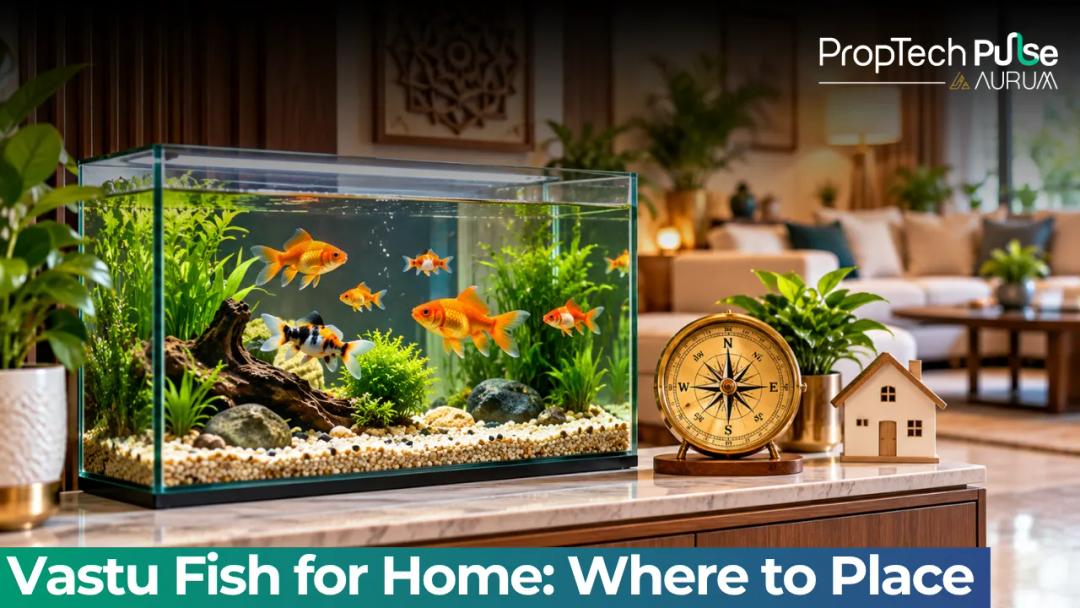
Vastu Fish for Home: Direction, Species & Placement Rules
A well-placed vastu fish tank invites calm and steady growth, but a misplaced setup defeats both tradition and livestock. In traditional Indian Vastu Shastra, water features thrive in the north, east, or the northeast corner. They drain luck if placed against the south wall, in the kitchen, or directly above the central zone. Most Indian apartments ignore ancient grids. Concrete load limits and uneven municipal water pressure make the textbook northeast corner difficult. The solution lies in merging strict directional placement with practical engineering. Pick a spot that aligns with Vastu, then verify floor capacity. This guide covers exact walls to target. It explains which vastu fish varieties survive typical indoor temperatures. It also lists maintenance steps to keep water clear. You will also learn weight loads and wiring checks to prevent leaks. In this guide Where to place a fish tank as per Vastu Choosing the right lucky fish for home Practical setup rules for modern apartments Safety checklist: electricity, load bearing, and leak prevention Before you buy your Vastu aquarium Frequently asked questions Where to place a fish tank as per Vastu Quick answer As per Vastu Shastra, place a fish tank in the north, east, or northeast corner of the living room or bedroom. Never locate water features near the southwest, kitchen, or directly over the central zone. The northeast position invites steady growth in finances and wellbeing. Auspicious directions: Ishan, East, and North The northeast corner holds strong energy in traditional architecture. Placing water here aligns with natural elements. An aquarium along the eastern wall brings morning sunlight. Northern positions work best on sturdy furniture. These walls typically bear less structural weight. True northeast corners might be occupied by balcony railings. Shift to the eastern or northern boundary of the main hall instead. Rented studios require anchoring the tank away from heavy doors. Stable positioning prevents vibration damage to the glass. Many buyers skip interior layouts entirely when signing leases. Reading understanding how Vastu shapes property design helps you spot existing alignments before committing to a new space. Zones to avoid: South, West, Kitchen, Bedroom, and Brahmasthan The southwest carries stabilising energy suited for master bedrooms. Adding moving water here disrupts the grounding principle. Tanks against western walls battle harsh afternoon glare. Hot water stresses tropical species significantly. These fish prefer steady ranges between twenty-four and twenty-eight degrees Celsius. Avoid the kitchen entirely. Heat, smoke, and moisture swings create intense stress. Do not build a tank inside the bedroom. Night-long filtration noise disrupts sleep cycles. Stay clear of the Brahmasthan, the geometric centre of your floor plan. Placing water exactly in the middle pulls stability away from the core. Positioning large units away from the centre keeps foundations stable. Developers frequently shift plumbing stacks to reduce corridor width. This trick often moves toilet drains into southeast or southwest corners. Checking original elevation drawings prevents errors. Avoid placing a water feature near hidden waste pipes that could flood during monsoons. Choosing the right lucky fish for home Colour symbolism drives every vastu fish aquarium. Gold represents wealth accumulation. Black wards off negative vibrations. Some traditions insist on keeping seven goldfish alongside two dark ones. Others prefer twelve to fifteen swift-moving species for continuous flow. Stick to one scheme once installed. Changing stock disrupts the pattern. Goldfish, Arowana, and Bettas Common goldfish remain the safest starting point. They tolerate inconsistent temperature swings. Their orange and black varieties satisfy colour requirements without expensive heaters. Betta fish offer compact alternatives. Arowanas appeal to investors seeking status symbols, but demand massive volumes. Temperate breeds rarely suit Indian interiors. Tropical varieties need ambient heat. If cross-ventilation drops room temperature below twenty-two degrees at night, choose hardier species. Native loaches and gouramis adapt quickly to local water chemistry. Evaluating why Vastu compliance matters in apartment layout clarifies why specific zones get blocked for utilities and decorations, helping you place the tank without conflicting with built-in shelves or wardrobes. The rule of nine: mixing colours and count The nine-fish configuration remains the most cited metric. Eight bright red or orange goldfish attract abundance. One deep black mollies or moor goldfish absorbs friction. Keep the odd number alive. Remove deceased stock immediately. Cleaning routines matter more than chasing perfection. Replace ten to fifteen percent of the water weekly. Full drainage shocks immune systems severely. Practical setup rules for modern apartments Textbooks assume single-family structures with wide verandahs. Apartments demand mathematical precision. Glass volume multiplied by density equals raw weight. Water weighs roughly one kilogram per litre. Add glass thickness, substrate, rocks, and pumps. A forty-gallon tank translates to approximately one hundred fifty-two litres of liquid alone. That sits at over one hundred fifty kilograms. The stand itself adds significant mass. Tank shape, height, and lighting Circular tanks rotate poorly and confuse swimming patterns. Square designs trap debris in corners. Filters cannot reach those blind spots easily. Rectangular boxes provide maximum surface area. They align neatly against walls. Choose low-profile frames if placing vastu fish tanks on lightweight cabinets. Heavy bases settle faster than suspended mounts. Direct sun triggers algae explosions within days. Diffused ambient light supports healthy plant growth safely. Rely on LED fixtures set to eight hours daily. Extend runtime during monsoon months only if the room grows noticeably darker. Deciding whether a decorative addition suits a particular room ties directly into broader questions like how a building's Vastu alignment affects resale value. Simple placements usually pass future buyer inspections without causing friction. Filtration, cycling, and water maintenance steps Cycling establishes beneficial bacteria that break down toxic ammonia. Skipping this phase kills livestock within seventy-two hours. Run empty filtration media for three weeks. Dose trace ammonia sources periodically. Test kits measure pH, nitrate, and hardness levels. Introduce new vastu fish only after stable readings. Municipal water supplies across India vary wildly. Chlorine levels kill protective biofilms instantly. Use certified dechlorinators before adding tap water. Indian groundwater tends to run alkaline. Sipping driftwood gently lowers hardness. Maintain a strict feeding schedule. Overfeeding rots quickly in unfiltered loops. Two tiny pinches daily beat one large scoop. Estimated total weight for common aquarium sizes, including water and substrate Size (approximate litres) Total weight with gravel and glass 30 litres ~40 kg 60 litres ~90 kg 100 litres ~140 kg 200 litres ~280 kg Full 400 litre unit ~580 kg Safety checklist: electricity, load bearing, and leak prevention Water conducts electricity efficiently. Any loose wire or wet outlet poses a severe risk. Route all cords through sealed conduits above the splash zone. Grounded triple-pin sockets protect pumps from surges. Purchase devices bearing certification marks. Avoid cheaper imports lacking insulation layers. Floor slabs in older buildings may crack under static loads. Distribute weight across multiple contact points on wooden floors. Massive tanks should avoid locations above bathrooms. Leakage could ruin ceilings or cause mould problems below. Electrical Safety Warning: Connect every pump, UV steriliser, and heater to a dedicated earthed circuit. Never share a single extension board with high-draw appliances like geysers or microwaves. A short circuit damages equipment instantly and risks human injury. Before you buy your Vastu aquarium Choose a size that fits the chosen corner. Verify floor strength first, then confirm the electrical path. Align the front face toward the door if possible. Keep pumps running continuously while travelling. Oxygen deprivation kills fish fast. Stick to eight bright specimens paired with one dark companion. Clean edges weekly, monitor feeding strictly, and trust steady habits. Frequently asked questions Where should I keep a fish tank at home as per Vastu? Traditional guidelines recommend the north, east, or northeast corner. These directions attract positive energy and align with natural water flows. Avoid placing tanks in kitchens, bedrooms, or near the southwestern walls, which carry heavy energy unsuited for moving water. Which lucky fishes are best for home aquariums? Goldfish remain the top choice due to their resilience and symbolic association with wealth. Black mollies or koi absorb negative vibrations. Betta fish offer compact alternatives for smaller spaces, while arowanas suit larger rooms but demand extensive feeding regimes. How many fish should I keep according to the nine-fish rule? Maintain exactly nine swimmers for optimal balance. Keep eight bright goldfish to represent accumulating fortune, paired with one black specimen to block friction. Changing the stock disrupts the arrangement, so stick to a consistent colour scheme. What steps do I take if a fish dies unexpectedly? Remove the deceased specimen immediately to stop bacterial spread. Test ammonia and nitrite levels using a standard kit. Perform a partial water replacement and check filtration mechanics. Investigate overheating, poisoning, or overcrowding before restocking. Can I place my tank near a window for natural light? Indirect sunlight benefits aquatic plants without triggering rapid algae growth. Direct beams cause cloudy water and stress livestock. Filter harsh noon rays using sheer curtains or relocate the unit to maintain stable room temperatures. Sources Bureau of Indian Standards: electrical safety and certification norms for home appliances (accessed October 2026) Enjoyed this blog article? Visit PropTech Pulse for more interesting blogs.
PropTech Pulse Editorial
20th October 2026

Uncategorized
eStamp India: Step-by-Step Process to Get e-Stamp Online
If you are preparing a property sale deed or lease today, an eStamp is likely mandatory in your state. But forget the idea that it is a standalone PDF you simply download and print. An eStamp works in two steps. First, you make a digital payment. Second, you either print the security bond on bonded paper at an authorised centre, or your bank handles the offset directly. Skip either step and the sub-registrar will reject it. This guide covers the e stamping process across major states, shows you how to generate a certificate online, and explains how to verify every UIN before signing. In this guide What Is eStamp and Why It Matters The e Stamping Process Explained How to Generate an e Stamp Certificate Online Verifying Your e Stamp Certificate Common Mistakes That Cause Registration Rejections Before You Head to the Sub-Registrar Office Frequently asked questions What Is eStamp and Why It Matters Quick answer An eStamp certificate is an official digital receipt proving stamp duty has been paid to a state government. Issued through the Central Recording Agency (SHCIL), it carries a unique UIN and a QR code. You cannot treat it like a standard PDF. Most states require you to physically print the amount on bonded paper at an Authorised Collection Centre, or route it through a linked bank account. The term sounds modern. The underlying mechanism relies on physical security features designed by the Security Printing and Minting Corporation of India. When you search for an e stamp paper online, you are accessing a payment gateway. Once you pay, the system generates a Unique Identification Number (UIN). That number is your proof of payment. It lives in a central ledger managed by SHCIL, which acts as the official Central Recording Agency for stamp duty collection across India. You might wonder how this differs from old-school physical stamp papers or franking machines. Physical stamps are pre-printed security bonds bought from vendors. Franking puts a stamped seal on your document at a bank. eStamp skips the vendor entirely and moves the duty payment upstream into a centralized database. However, the digital piece stops at the payment gateway. For legal registration, almost every jurisdiction still demands a tangible record bearing that duty amount. If you are new to the workflow, start by reading our breakdown of how an eStamp is used in property registration. It clarifies why sub-registrars insist on matching documents with the government database before moving forward. The e Stamping Process Explained Full Online States vs Authorised Collection Centres States do not follow a single playbook. Most operate through an Authorised Collection Centre model, where you pay digitally and receive a receipt. Then you visit an ACC to print the actual stamp value on secured paper. A handful of states have fully integrated their revenue portals with banks to skip the physical visit. Current State Routing Models for e-Stamping Routing Model How the Document Gets Printed Examples Authorised Collection Centre (ACC) Pay online → Print secure bond at ACC vendor location Delhi, Karnataka, Gujarat, West Bengal Bank Offset / Direct Integration Pay via net banking or UPI on state portal → Amount auto-adjusts Tamil Nadu, Telangana, parts of Uttar Pradesh Hybrid Model Online payment → Print at authorized printer OR submit soft copy during e-registration Punjab, Madhya Pradesh Data on active coverage fluctuates. Older reports list coverage across roughly 18 to 22 states, but several regional revenue departments rolled out updates by mid-2025. These updates expanded full offset capabilities. Always confirm the routing model on your state's IGR website before visiting a vendor. Documents You Can e Stamp The digital stamp covers most standard legal instruments. You are not limited to property transfers. Common use cases include: Sale deeds and conveyance deeds for residential and commercial plots Rent and lease agreements covering both commercial spaces and apartments GPA transfers and mortgage bonds Affidavits submitted during municipal building plan approvals Gift deeds for intra-family property transfers If you are executing a fresh tenancy, make sure you understand the legal requirements for your rent agreement. Many states mandate a specific minimum eStamp value regardless of the monthly rent negotiated. For a standard flat purchase, check our checklist on executing a valid sale deed. That guide covers how stamp duty aligns with local circle rates. Worked Example: Rental Agreement Costs Imagine you are signing a three-year lease for an apartment in Gurugram. The annual rent is set at ₹2.4 lakh. In some jurisdictions, stamp duty on a lease is a one-time payment based on the total contract value. Others charge a flat annual rate. We will assume a fixed rate of 0.25% per year on the total agreement value here. Calculation: ₹2.4 lakh × 3 years = ₹7.2 lakh total contract value. Stamp duty: 0.25% of ₹7.2 lakh = ₹1,800. Convenience fee charged by SHCIL or the state portal: ₹50. Total cash needed upfront: ₹1,850. Without a stamp duty calculator, estimating these figures becomes messy. Metro cess and local body taxes routinely inflate the base rate in cities like Mumbai or Pune. How to Generate an e Stamp Certificate Online Step-by-Step SHCIL E Stamp Workflow The Central Recording Agency maintains the national gateway, accessible via shcilestamp.com. Follow these steps for a clean submission. Select your state and the appropriate document type from the menu dropdown. Enter buyer, seller, and property details as prompted by the state form. Input the market value of the property or the agreement value. The system calculates the required duty automatically based on current slabs. Proceed to payment using credit card, debit card, or net banking. Note that convenience fees apply on digital transactions. Upon successful payment, a generated receipt downloads instantly. This receipt contains your Unique Identification Number. Do not treat this downloaded PDF as your final legal document. You must present the UIN to an Authorised Collection Centre printer, or feed it into your state's e-registration module if that flow is active. Maharashtra’s eSBTR Exception Maharashtra operates outside the standard SHCIL ACC grid. Instead, it uses its own electronic Sub-Treasury Bill Register system coupled with virtual treasury services. Buyers in Mumbai and Pune must access the MahaRERA/IGR Maharashtra interface to handle their stamp duty offsets. Stick strictly to the IGR Maharashtra portal for state transactions. Generic third-party gateways will not process these payments. Verifying Your e Stamp Certificate UIN and QR Code Checks Verification protects you from fake certificates sold by opportunistic vendors. Every legitimate eStamp certificate carries a 2D QR code and a long-form UIN string. To check authenticity, visit the SHCIL verification portal. Input the UIN exactly as printed. Cross-reference the date of issuance, the amount of stamp duty, and the document type. Modern versions also feature a scannable QR code for state registrar apps. Checking this against the government ledger ensures data integrity. Never accept a certificate if the portal returns "Document Not Found" or displays amounts different from your payment receipt. A mismatch here guarantees rejection at the registration desk. Common Mistakes That Cause Registration Rejections Sub-registrar offices turn away hundreds of applicants daily due to administrative errors. Avoid these pitfalls. Execution window violation: An eStamp certificate is valid for only six months from the date of issuance. Stamp regulations generally limit execution windows to half a year. If your deal drags on past the deadline, you must apply for a refund and buy a fresh stamp, losing money on the original transaction. Wrong denomination: Calculating duty on carpet area instead of super built-up area, or ignoring additional levies like metro cess or water tax surcharges, leaves your document undervalued. The sub-registrar will penalize you for the shortfall. Manual alterations: Hand-writing over a printed eStamp bond voids its legal standing. Any correction requires printing a replacement stamp on fresh paper. Missing beneficiary details: Ensure the name on the eStamp matches the official KYC documents exactly. Minor spelling differences between your Aadhaar card and the eStamp receipt delay processing. Refund Rules on Expired eStamps eStamp expiry triggers a strict refund workflow. Since the certificate cannot be transferred between parties, the original purchaser must apply for a refund. State revenue boards generally require Form C alongside the original UIN. Processing takes four to six weeks. Deductions vary; some states retain a service fee while others deduct nothing. File the application at least thirty days before your planned registration date to avoid timeline collisions. Before You Head to the Sub-Registrar Office Running back and forth to the registration center wastes hours and triggers late-filing penalties. Finalize your paperwork offline. Verify the UIN status once more on the official gateway. Confirm that the ACC printer adhered to the state's font size and margin standards. Double-check the validity window if you obtained the stamp weeks ago. Treat the eStamp process as the final checkpoint, not an afterthought. Frequently asked questions Is eStamp paper legally valid in India? Yes. Under the Indian Stamp Act, electronic stamps issued by the recognized Central Recording Agency hold full legal weight. The digital receipt linked to the UIN database serves as definitive proof of duty payment to state authorities. How to verify eStamp certificate online? Enter the Unique Identification Number (UIN) printed on your receipt into the official SHCIL verification portal. You can also use mobile apps provided by state registrars to scan the embedded 2D QR code for real-time validation against the government ledger. Difference between franking and eStamp? Franking involves a bank machine printing a security seal directly onto your existing paper. eStamp shifts the payment to a centralized online ledger first. With eStamp, you typically receive a receipt and must later print the stamped amount on secured paper at an authorized centre, or use a bank-integrated offset system. Can I download eStamp PDF directly? No. While the portal generates a PDF receipt containing the UIN instantly, treating it as a final printable document is usually a mistake. Most states require you to take that receipt to an Authorised Collection Centre to print the actual duty amount on high-security paper. How long is eStamp valid after purchase? Six months. Stamp regulations generally restrict the execution of a document using an old stamp beyond half a year. If a property deal delays past this window, the stamp expires, and you must claim a refund and repurchase a fresh certificate. Sources Ministry of Housing and Urban Affairs: Guidelines on digitisation of property documentation and stamp duty frameworks (accessed October 2026) Enjoyed this blog article? Visit PropTech Pulse for more interesting blogs.
PropTech Pulse Editorial
20th October 2026
Uncategorized
New Zuari Bridge Goa: Specs, Route & Latest Gallery Updates
Commuters travelling along Goa’s coastal belt know the difference the six-lane NH-66 corridor makes. Before the bypass, moving between the northern tip at Panaji and the southern industrial hub in Margao required waiting hours for ferries or navigating crowded city streets. The New Zuari Bridge resolved that bottleneck, yet property buyers and logistics planners still mix up which phase opened when, and where construction on the commercial amenities actually stands. This guide cuts through the noise. We verify the exact inauguration sequence, map the NH-66 transit improvements, detail the 640-metre structural specifications, and break down the ₹270 crore tourism towers that sit in regulatory limbo. Understanding the difference between the operational roadway and the delayed vertical development is essential before committing capital to nearby plots. In this guide New Zuari Bridge live status, route and commuter impact Engineering specs and construction timeline The Eiffel Tower-inspired observation towers and viewing gallery Frequently asked questions New Zuari Bridge live status, route and commuter impact Quick answer The New Zuari Bridge operates fully in both directions today. Phase 1 (Northbound) opened on 29 December 2022, and Phase 2 (Southbound) followed on 22 December 2023. The structure sits on the NH-66 alignment, cutting out ferry dependency between Bambolim and Verna while an ambitious ₹270 crore viewing gallery complex awaits final environmental clearances. When you cross the New Zuari Bridge Goa section of NH-66, you leave the densely populated Tiswadi district behind and enter the broader Verna industrial zone. Travelers who previously faced peak-hour gridlock in Vasco da Gama or waited ninety minutes at the Mormugao ferry terminal now cover the distance in under fifteen minutes. For intercity freight and daily migrants, the bypass saves roughly forty-five minutes each way compared to the old urban routing. Real estate valuations in the immediate catchment reacted quickly to the handover. Land banks near the Bambolim approach and the Verna flyover intersections saw price corrections immediately following the second phase inauguration. Investors who tracked the concrete pour milestones rather than the press releases avoided overpaying during the two-year COVID construction delays. Local authorities have since tightened perimeter zoning around the abutments, restricting encroachment into the mandatory ten-metre right-of-way buffer. If you are evaluating residential plots within a two-kilometre radius of the abutments, verify the latest top builders in Goa compliance standards and municipal set-back rules. Noise attenuation barriers line portions of the approach roads, but ground-level units closer to the deck still carry a measurable acoustic footprint that buyers factor into their offers. Engineering specs and construction timeline Engineering reports cap the zuari bridge length at 640 metres. The design relies on a cable-stayed configuration supported by single-point steel pylons rising 125 metres above the waterline. This single-pylon setup was chosen deliberately to keep navigation lanes wide enough for heavy cargo vessels. It avoids the need for movable bridges or grade-separated rail lines further downstream. The deck itself spans 27 metres across, delivering eight traffic lanes in total. Four lanes flow north towards Panaji and Madgaon, while four lanes handle the southbound return. Widening beyond this limit would have disrupted the existing substructure and spiked excavation costs unnecessarily. Road geometry follows straight alignment principles with minimal curvature to maintain consistent speed limits for heavy goods vehicles. Execution fell to the Dilip Buildcon and MBZ Infrastructure joint venture (DBLMBZ). The base contract valuation ranged between ₹2,530 crore and ₹2,701 crore depending on how soil remediation and marine pile-driving costs were booked at the time of tender award. S N Bhobe Associates handled the primary structural engineering on site. Trial Load Testing Prior to full opening, static and dynamic load tests ran overnight to verify deflection limits against the original British standard civil designs. Engineers monitored strain gauges embedded in the stay cables and confirmed settlement remained within safe tolerances despite aggressive monsoon conditions during early works. Phase inauguration dates and operational lane allocation Milestone Launch Date Lanes Opened Direction Foundation Laid 2016 Pre-construction N/A Phase 1 Opening 29 Dec 2022 4 Northbound Phase 2 Opening 22 Dec 2023 4 Southbound Current Status Oct 2026 8 Fully Operational Because the structure handles such high tonnage daily, routine joint sealing and bearing maintenance cycles run quarterly. The highway authority inspects expansion joints at regular intervals to prevent debris buildup that could stress the anchorage systems. Property owners renting commercial space near the toll plaza or abutment zones benefit from predictable traffic flow, though fuel consumption spikes remain concentrated at the ramp merges. The Eiffel Tower-inspired observation towers and viewing gallery A major disconnect separates today's completed roadway from tomorrow's planned vertical development. Twin commercial towers sit directly alongside the deck, housing what authorities originally dubbed the zuari bridge viewing gallery. PWD Goa drafted the initial architectural plan. The construction concession was then awarded to Zuari Observatory Towers Ltd, a DBL group subsidiary, which holds the rights to finance, operate and transfer the asset over a fifty-year term. The ₹270.07 crore allocation covers underground shaft excavation, elevator installation, hospitality fit-outs, and retail flooring. Planners mapped ground level for food courts and souvenir shops, first floors for boutique hotel rooms, and roof levels for revolving dining and outdoor sky-walks. Boat docking jetties were also integrated into the lower basements to handle tourist ferries coming directly from Mandovi and Zuari tributaries. Wind tunnel modelling finished successfully last year, proving the aerodynamic profile handles cyclonic gusts without compromising the glass curtain walls. The hold-up sits squarely in environmental compliance. Coastal Regulation Zone notifications require strict review of any vertical structure built within five hundred metres of the shoreline, pushing back final completion windows into the next fiscal quarter. Financial planning for these hospitality-heavy projects requires precise cash-flow mapping. Developers running pre-sales for suite bookings typically model repayments using a home loan EMI calculator, though commercial debt tranches here operate completely separately from consumer mortgage products. Until CRZ and EIA permits clear, you cannot book ticket slots or sign lease agreements for the upper floors. Municipal inspectors routinely patrol the perimeter fencing to keep unauthorised photography drones grounded during sensitive clearance reviews. When approvals drop, construction accelerates rapidly because the concrete shell already exists. DBFOT Explained Design-Build-Finance-Operate-Transfer means the private developer funds the entire ₹270 crore upfront, runs the towers for fifty years collecting revenue, then hands ownership back to the government rent-free. The state retains long-term asset control while the operator recovers capital plus returns through concessions, F&B margins, and accommodation fees. Commercial viability hinges on footfall volume rather than premium pricing alone. Operators projected baseline occupancy rates by analysing domestic holiday traffic peaks during winter months and school breaks. Even with conservative assumptions, the model clears hurdle rates once the elevators start cycling. Buyers tracking Verna micro-market trends note that tourism spillover lifts short-stay rental yields faster than traditional buy-to-let models. Before you commit capital to the catchment area Navigate proximity investments by separating verified transit wins from aspirational developments. The roadway delivers proven time savings today, making surrounding plots viable for end-users and logistics hubs. Hold off on betting heavily on immediate tourism spillover until the towers pass final environmental sign-off, even though funding and engineering shells stand complete. Cross-check every plot against Goa RERA registrations and consult local town planners about approved floor-space indices before signing option agreements. Frequently asked questions What is the exact length of the New Zuari Bridge? The total length measures 640 metres, anchored by a 360 metre main cable-stayed span crossing the river channel. The structure connects the northern Bambolim approach directly to the Verna flyover exit, accommodating eight lanes without narrowing the primary navigation passage below. When was the southbound and northbound corridor of the Zuari Bridge opened? Phase one carrying northbound traffic opened on 29 December 2022. Phase two delivering the southbound lanes launched eleven months later on 22 December 2023. Both corridors run concurrently today, handling bidirectional commuter flows along the NH-66 bypass. Who owns and operates the observation towers on the New Zuari Bridge? Zuari Observatory Towers Ltd manages the commercial complex under a fifty-year DBFOT concession granted by the central government. PWD Goa supplied the initial architectural blueprints while the parent infrastructure JV handled civil execution. Revenue streams fund operations until full asset transfer back to public stewardship. Is the New Zuari Bridge fully operational in 2026? Yes, all eight traffic lanes function normally throughout the calendar year. Emergency lanes carry active monitoring sensors tracking structural fatigue and vibration metrics. The associated viewing gallery suites and revolving restaurants remain closed to the public pending final Coastal Regulation Zone clearances. Sources National Highways Authority of India: Cable-stayed span configurations, eight-lane deck dimensions, and DBLMBZ contractor profiles (accessed October 2026) Enjoyed this blog article? Visit PropTech Pulse for more interesting blogs.
PropTech Pulse Editorial
20th October 2026
Uncategorized
Vastu Fish for Home: Direction, Species & Placement Rules
A well-placed vastu fish tank invites calm and steady growth, but a misplaced setup defeats both tradition and livestock. In traditional Indian Vastu Shastra, water features thrive in the north, east, or the northeast corner. They drain luck if placed against the south wall, in the kitchen, or directly above the central zone. Most Indian apartments ignore ancient grids. Concrete load limits and uneven municipal water pressure make the textbook northeast corner difficult. The solution lies in merging strict directional placement with practical engineering. Pick a spot that aligns with Vastu, then verify floor capacity. This guide covers exact walls to target. It explains which vastu fish varieties survive typical indoor temperatures. It also lists maintenance steps to keep water clear. You will also learn weight loads and wiring checks to prevent leaks. In this guide Where to place a fish tank as per Vastu Choosing the right lucky fish for home Practical setup rules for modern apartments Safety checklist: electricity, load bearing, and leak prevention Before you buy your Vastu aquarium Frequently asked questions Where to place a fish tank as per Vastu Quick answer As per Vastu Shastra, place a fish tank in the north, east, or northeast corner of the living room or bedroom. Never locate water features near the southwest, kitchen, or directly over the central zone. The northeast position invites steady growth in finances and wellbeing. Auspicious directions: Ishan, East, and North The northeast corner holds strong energy in traditional architecture. Placing water here aligns with natural elements. An aquarium along the eastern wall brings morning sunlight. Northern positions work best on sturdy furniture. These walls typically bear less structural weight. True northeast corners might be occupied by balcony railings. Shift to the eastern or northern boundary of the main hall instead. Rented studios require anchoring the tank away from heavy doors. Stable positioning prevents vibration damage to the glass. Many buyers skip interior layouts entirely when signing leases. Reading understanding how Vastu shapes property design helps you spot existing alignments before committing to a new space. Zones to avoid: South, West, Kitchen, Bedroom, and Brahmasthan The southwest carries stabilising energy suited for master bedrooms. Adding moving water here disrupts the grounding principle. Tanks against western walls battle harsh afternoon glare. Hot water stresses tropical species significantly. These fish prefer steady ranges between twenty-four and twenty-eight degrees Celsius. Avoid the kitchen entirely. Heat, smoke, and moisture swings create intense stress. Do not build a tank inside the bedroom. Night-long filtration noise disrupts sleep cycles. Stay clear of the Brahmasthan, the geometric centre of your floor plan. Placing water exactly in the middle pulls stability away from the core. Positioning large units away from the centre keeps foundations stable. Developers frequently shift plumbing stacks to reduce corridor width. This trick often moves toilet drains into southeast or southwest corners. Checking original elevation drawings prevents errors. Avoid placing a water feature near hidden waste pipes that could flood during monsoons. Choosing the right lucky fish for home Colour symbolism drives every vastu fish aquarium. Gold represents wealth accumulation. Black wards off negative vibrations. Some traditions insist on keeping seven goldfish alongside two dark ones. Others prefer twelve to fifteen swift-moving species for continuous flow. Stick to one scheme once installed. Changing stock disrupts the pattern. Goldfish, Arowana, and Bettas Common goldfish remain the safest starting point. They tolerate inconsistent temperature swings. Their orange and black varieties satisfy colour requirements without expensive heaters. Betta fish offer compact alternatives. Arowanas appeal to investors seeking status symbols, but demand massive volumes. Temperate breeds rarely suit Indian interiors. Tropical varieties need ambient heat. If cross-ventilation drops room temperature below twenty-two degrees at night, choose hardier species. Native loaches and gouramis adapt quickly to local water chemistry. Evaluating why Vastu compliance matters in apartment layout clarifies why specific zones get blocked for utilities and decorations, helping you place the tank without conflicting with built-in shelves or wardrobes. The rule of nine: mixing colours and count The nine-fish configuration remains the most cited metric. Eight bright red or orange goldfish attract abundance. One deep black mollies or moor goldfish absorbs friction. Keep the odd number alive. Remove deceased stock immediately. Cleaning routines matter more than chasing perfection. Replace ten to fifteen percent of the water weekly. Full drainage shocks immune systems severely. Practical setup rules for modern apartments Textbooks assume single-family structures with wide verandahs. Apartments demand mathematical precision. Glass volume multiplied by density equals raw weight. Water weighs roughly one kilogram per litre. Add glass thickness, substrate, rocks, and pumps. A forty-gallon tank translates to approximately one hundred fifty-two litres of liquid alone. That sits at over one hundred fifty kilograms. The stand itself adds significant mass. Tank shape, height, and lighting Circular tanks rotate poorly and confuse swimming patterns. Square designs trap debris in corners. Filters cannot reach those blind spots easily. Rectangular boxes provide maximum surface area. They align neatly against walls. Choose low-profile frames if placing vastu fish tanks on lightweight cabinets. Heavy bases settle faster than suspended mounts. Direct sun triggers algae explosions within days. Diffused ambient light supports healthy plant growth safely. Rely on LED fixtures set to eight hours daily. Extend runtime during monsoon months only if the room grows noticeably darker. Deciding whether a decorative addition suits a particular room ties directly into broader questions like how a building's Vastu alignment affects resale value. Simple placements usually pass future buyer inspections without causing friction. Filtration, cycling, and water maintenance steps Cycling establishes beneficial bacteria that break down toxic ammonia. Skipping this phase kills livestock within seventy-two hours. Run empty filtration media for three weeks. Dose trace ammonia sources periodically. Test kits measure pH, nitrate, and hardness levels. Introduce new vastu fish only after stable readings. Municipal water supplies across India vary wildly. Chlorine levels kill protective biofilms instantly. Use certified dechlorinators before adding tap water. Indian groundwater tends to run alkaline. Sipping driftwood gently lowers hardness. Maintain a strict feeding schedule. Overfeeding rots quickly in unfiltered loops. Two tiny pinches daily beat one large scoop. Estimated total weight for common aquarium sizes, including water and substrate Size (approximate litres) Total weight with gravel and glass 30 litres ~40 kg 60 litres ~90 kg 100 litres ~140 kg 200 litres ~280 kg Full 400 litre unit ~580 kg Safety checklist: electricity, load bearing, and leak prevention Water conducts electricity efficiently. Any loose wire or wet outlet poses a severe risk. Route all cords through sealed conduits above the splash zone. Grounded triple-pin sockets protect pumps from surges. Purchase devices bearing certification marks. Avoid cheaper imports lacking insulation layers. Floor slabs in older buildings may crack under static loads. Distribute weight across multiple contact points on wooden floors. Massive tanks should avoid locations above bathrooms. Leakage could ruin ceilings or cause mould problems below. Electrical Safety Warning: Connect every pump, UV steriliser, and heater to a dedicated earthed circuit. Never share a single extension board with high-draw appliances like geysers or microwaves. A short circuit damages equipment instantly and risks human injury. Before you buy your Vastu aquarium Choose a size that fits the chosen corner. Verify floor strength first, then confirm the electrical path. Align the front face toward the door if possible. Keep pumps running continuously while travelling. Oxygen deprivation kills fish fast. Stick to eight bright specimens paired with one dark companion. Clean edges weekly, monitor feeding strictly, and trust steady habits. Frequently asked questions Where should I keep a fish tank at home as per Vastu? Traditional guidelines recommend the north, east, or northeast corner. These directions attract positive energy and align with natural water flows. Avoid placing tanks in kitchens, bedrooms, or near the southwestern walls, which carry heavy energy unsuited for moving water. Which lucky fishes are best for home aquariums? Goldfish remain the top choice due to their resilience and symbolic association with wealth. Black mollies or koi absorb negative vibrations. Betta fish offer compact alternatives for smaller spaces, while arowanas suit larger rooms but demand extensive feeding regimes. How many fish should I keep according to the nine-fish rule? Maintain exactly nine swimmers for optimal balance. Keep eight bright goldfish to represent accumulating fortune, paired with one black specimen to block friction. Changing the stock disrupts the arrangement, so stick to a consistent colour scheme. What steps do I take if a fish dies unexpectedly? Remove the deceased specimen immediately to stop bacterial spread. Test ammonia and nitrite levels using a standard kit. Perform a partial water replacement and check filtration mechanics. Investigate overheating, poisoning, or overcrowding before restocking. Can I place my tank near a window for natural light? Indirect sunlight benefits aquatic plants without triggering rapid algae growth. Direct beams cause cloudy water and stress livestock. Filter harsh noon rays using sheer curtains or relocate the unit to maintain stable room temperatures. Sources Bureau of Indian Standards: electrical safety and certification norms for home appliances (accessed October 2026) Enjoyed this blog article? Visit PropTech Pulse for more interesting blogs.
PropTech Pulse Editorial
20th October 2026

Ask Pulse Ai anything about real estate

Unlock the Latest in Real Estate
News, Infographics, Blogs & More! Delivered to your inbox.

