

©PropTech Pulse 2025, All rights reserved.

What is a utility tunnel in smart cities?
A utility tunnel, also called a common duct, is an underground passage that carries water pipes, power and telecom cables, and sometimes gas and district cooling lines together, so repairs can be done without digging up roads, and it is used in some smart city and new township projects.
What It Is
- The tunnel is built large enough for workers to enter, with ventilation, lighting, fire protection, drainage, and monitoring sensors, and utilities are laid on brackets, while owners share the cost, and rules cover access and safety, so a fault can be fixed quickly, and new services can be added, without disturbing the surface.
- It is common in some Asian cities.
How It Works
- Benefits include fewer road cuts, easier maintenance, longer life for utilities, and neater streets, while challenges include high construction cost, the need for coordination between agencies, safety risks of confined spaces, fire and gas hazards, and difficulty in retrofitting old areas, so it works best in new districts planned from the start.
- Long-term savings can offset costs.
What to Check
- Assess the cost against lifetime savings, plan agreements between utilities, design for safety and monitoring, set rules on access and responsibility, and, for buyers in such townships, ask how utilities are organised and maintained.
- Plan at the master plan stage.
Plan early, so assess the cost against lifetime savings, agree responsibilities between utilities, design for safety and monitoring, and plan at the master plan stage.
Insight Pulse
Uncategorized
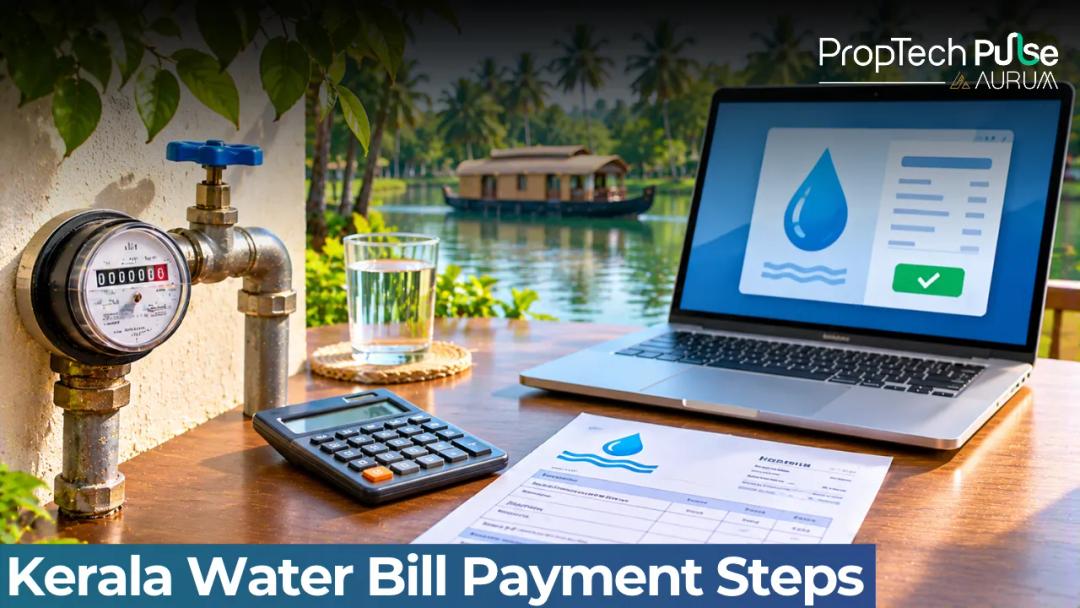
Kerala Water Bill Payment: Quick Steps & Tariffs 2026
If you own a home or flat in Kerala, settling your monthly water utility does not require visiting a local office. You can handle your Kerala water bill payment directly through the Quick Pay portal at epay.kwa.kerala.gov.in. The system accepts transactions without demanding a username or password. Enter your consumer ID, verify the amount, and clear it using UPI. Beyond clicking "Pay Now", many residents miss how late fees compound silently and what voids advance discounts. This guide walks you through the exact steps. It also breaks down the 2026 tariff slabs, showing how to dodge gateway fees while claiming your 1% cashback. In this guide How to Pay Kerala Water Bill Online Without Logging In Current Kerala Water Authority Tariff Rates (2026) Late Payment Penalties: How They Actually Compound Advance Payment Incentives and Payment Gateway Fees Retrieving Your Old KWA Bill Payment Receipt Frequently asked questions How to Pay Kerala Water Bill Online Without Logging In Quick answer To complete your Kerala water bill payment quickly without logging in, visit the official KWA portal at epay.kwa.kerala.gov.in. Select your district, enter the consumer ID found on your physical statement, and proceed to checkout. You do not need a login credential to finish the transaction. Before entering payment details, verify your identifier. Residents frequently mix up physical meter readings with official connection numbers. The authority assigns a unique alphanumeric code to every registered address. This code persists even after property transfers. Connection numbers track the specific pipe linked to the premise. Locate both strings on the top right of your latest PDF notice. Recent resale buyers should ask the seller for the active ID before initiating any transfer. Water connection transfers mirror the paperwork needed for land records. We recommend reviewing our guide on property registration and updated encumbrance certificates in kerala to sync the utility name with the new titleholder. Outdated names cause compliance issues. New owners also benefit from checking the Gruha Pravesh scheme regarding initial utility subsidies. Identifying Consumer ID vs Connection Number Consumer IDs form the longest string during initial mapping. Connection Numbers are shorter codes used when borders shift. Record both securely. One wrong digit triggers an error screen that halts your entire queue. Steps to Finalize Kerala Water Bill Payment Online Open the KWA payment window at epay.kwa.kerala.gov.in. Select the Quick Pay tab. Choose your district jurisdiction. Type the consumer ID carefully. Confirm the displayed balance. Pick UPI, net banking, or debit card. Enter the exact amount. Approve the OTP request. Save the reference number instantly. Current Kerala Water Authority Tariff Rates (2026) Household water costs rise with volumetric consumption rather than staying flat. Municipalities may tweak base prices slightly, but the tiered structure holds across the state. Domestic water consumption rates per kilolitre in Kerala (2026) Consumption Tier (Litres) Tariff Rate (₹ per KL) Up to 5,000 4.00 + Minimum fixed charge of ₹20 5,001 to 10,000 9.00 10,001 to 20,000 13.50 Above 20,000 18.00 Businesses and hotels face steep volumetric rates distinct from homes. They operate under trade usage schedules, not domestic slabs. Landlords managing hospitality units must verify if the meter shifted to commercial mode. Reverting commercial meters requires district consent. Buyers assessing mixed-use land should cross-check our list of leading real estate developers operating in kerala to catch pre-existing utility conversions. Late Payment Penalties: How They Actually Compound Deadlines trigger mathematical compounding. The authority structures fines unlike standard credit card interest. Minor delays balloon fast if ignored. The Strict 7-Day Grace Period Rules A printed date marks every bill. The system flags accounts overdue only after seven calendar days. Clearing within this window prevents all extra charges. Delays extending beyond day thirty-five often hit processing grey zones where secondary routing stalls ledgers. Aim for the first week to avoid administrative hold-ups entirely. Understanding the 1% Per 30-Day Penalty Cycle The penalty engine engages immediately after grace expires. KWA charges one percent on the total outstanding amount. This surcharge recurs automatically every thirty days. Crucially, the figure compounds. Next month's fine calculates off the original bill plus prior penalties. Ignoring a ₹5,000 statement for three months tacks on over ₹150 alone. Settle fully to halt the math. Advance Payment Incentives and Payment Gateway Fees Paying early yields financial offsets. The authority rewards prompt digital settlement. However, eligibility demands a clean past record. How to Qualify for the 1% Cashback Reward The system credits one percent toward consumption. Pay ₹2,000 digitally in week one, and the ledger registers ₹2,020. Discounts cap at ₹100 per transaction. Eligibility hinges on zero pending dues. Even a stray unpaid penny from years past locks out current cashbacks. Verify historical statements if managing rentals with delayed tenant transfers. Net Banking vs Credit Card Transaction Surprises Digital methods carry hidden bank fees independent of the KWA. Credit cards typically add one to three percent merchant costs. These fees instantly kill the cashback incentive. Direct UPI and debit card routes almost never impose surcharges. Run the numbers if chasing airline miles. Stick to net banking to protect the pure discount. Retrieving Your Old KWA Bill Payment Receipt Digital proofs prevent disputes during property sales. Electronic archives render physical mail redundant. Residents increasingly track smart home automation devices and connectivity in india alongside their Kerala water bill payment to flag consumption spikes early. Instant Digital Receipt Generation via Mobile OTP Skip emailing support. Use the direct download link: epay.kwa.kerala.gov.in/last-receipt. Submit your registered mobile number. Receive an SMS code immediately. Type it in to access your payment vault. These digital PDFs bear the official stamp banks and registrars accept as valid discharge. Decision rule: settle early and bypass surcharges Your monthly water obligation centers on a simple equation. Paying early captures guaranteed cashback and locks away penalties. Delaying shifts gains into losses through rolling interest. Utilizing net banking avoids hidden taxes. Clearing the ledger digitally takes minutes. Log in, pay exact amounts, and save confirmation. Frequently asked questions How can I pay my kerala water bill online without logging in? Visit the dedicated Quick Pay portal hosted at epay.kwa.kerala.gov.in. Select your district on the main dashboard, enter your unique consumer ID or connection number exactly as printed on your paper statement, and click the payment button. The system recognizes the identifier and pulls your exact outstanding balance without requiring you to create a new account or remember a forgotten password. What is the penalty for late payment of kerala water bill? The authority applies a one percent charge calculated on your total outstanding bill amount once the initial grace period expires. This surcharge repeats automatically every thirty days until your account reaches a zero balance. Because the system compounds the figures monthly, ignoring an overdue notice causes the debt to grow exponentially. Settle the exact amount immediately to halt the mathematical accumulation. Is there any discount for paying kwa bill in advance? Yes. The authority provides a one percent cashback added directly to the amount you pay through official digital channels. If you clear a ₹2,000 invoice, the ledger registers ₹2,020 against your consumption. The maximum discount caps at ₹100 per individual transaction. This benefit triggers only if your account shows absolutely zero pending dues from previous billing months. How do i get a copy of my old kerala water bill receipt? Navigate to the specialized history download interface at epay.kwa.kerala.gov.in/last-receipt. Enter the mobile number currently registered with your consumer account and submit the request. You will receive an automated security code via SMS. After entering the verification string, the platform displays a secure folder containing all recent transaction confirmations and settled invoices bearing the official digital stamp. Sources KWA Quick Pay Portal: Official payment gateway URL, tariff structures, and quick pay steps (accessed November 2026) Kerala Water Authority Citizen Corner: Calculator tools, tariff schedules, and official notification references (accessed November 2026) Enjoyed this blog article? Visit PropTech Pulse for more interesting blogs.

PropTech Pulse Editorial
23rd November 2026
Uncategorized
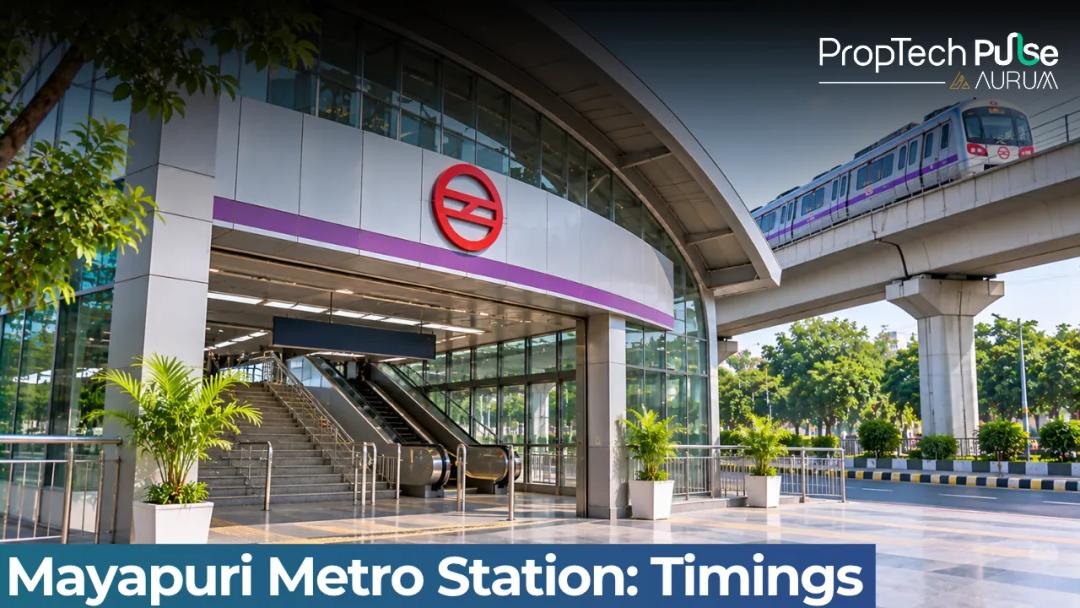
Mayapuri Metro Station: Timings, Fares, Routes & Gates
Standing outside Mayapuri metro station with a bag full of samples or paperwork, you need one quick piece of information: which gate leads where? Gate 1 covers the government press. The alternative drop-off handles the timber yard and the DTC interchange. In this guide Mayapuri Metro Route & Pink Line Connectivity Gates, Exits & Walking Distances to Key Markets Train Timings & Frequency at Mayapuri Metro Current Fares, Smart Card Discounts & Journey Planner Tips Parking, DTC Bus Connect & Station Facilities Before You Plan Your Trip Frequently asked questions Mayapuri Metro Route & Pink Line Connectivity Quick answer Mayapuri metro station (code MYPI) sits on the Pink Line between Naraina Vihar and Kirti Nagar. Gate 2 serves the bus depot, timber and marble markets. Gate 1 heads toward government presses and quieter residential lanes. Trains run from 06:11 to 23:22 IST daily. Mayapuri carries the station code MYPI and forms part of the raised stretch of the Delhi Metro Pink Line. The corridor opened in March 2018 under Phase III. Positioned at the mid-point of the eastern spur, it slots between Naraina Vihar and Kirti Nagar stations. For anyone tracing a mayapuri metro route map, the station acts as a commercial hinge point rather than a purely residential node. Traders, government employees, and factory workers all feed into its morning rush. The Pink Line runs a dual-service pattern across most of its span. From Mayapuri, you can board a train bound for the full ring connection towards Shaheed Sthal via the central segment. Alternatively, you can stay on a local semi-circle service. The critical distinction comes when heading north-east toward Shyam Park or Shiv Vihar. Those trains actually originate from earlier branches. You usually have to change direction at Maujpur-Babarpur. This routing model explains why checking mayapuri nearest metro options matters during rush hour. Catch a late morning train if your destination lies on the eastern arc. It avoids the worst transfer crowding at Maujpur-Babarpur. Gates, Exits & Walking Distances to Key Markets Unlike underground stations where the street level is just glass doors above pavement, Mayapuri is a raised concrete structure. Both exits drop you down staircases directly onto distinct ground-floor zones. Mixing up Gate 1 and Gate 2 wastes roughly fifteen minutes. The street layout wraps around the industrial zone rather than forming a continuous mall-style plaza. Gate-to-landmark routing and approximate walking times from Mayapuri Metro Station, 2026 Gate Key Landmarks & Direction Walk Time Gate 1 Priyadarshni Park, Braham Kumari Ashram, Govt of India Press Main Gate, North-Western approach toward Kirti Nagar 2–4 min Gate 2 DTC Mayapuri Bus Depot, Marble Market (Kachi Bhitti), Timber Market, Industrial Area side streets 1–3 min Practical Tip Gate 2 covers the heavy commercial footfall. Gate 1 handles government offices and quieter residential pockets. Plan accordingly Stepping out of Gate 2 places you within sight of the marble suppliers shipping stone across North India. The timber yards feeding construction firms throughout Delhi and Haryana are also right there. If you live in nearby flats and check how does proximity to a metro station affect apartment pricing, you will notice West Delhi commercial hubs command tighter rental yields. Walkability to a station like this feeds both day traders and salaried staff. Switching to Gate 1 opens toward administrative plots and calm residential lanes. Pavement widens quickly here, giving clearer signage pointing toward Kirti Nagar. Travelers arriving from Nangloi metro station guide or Uttram Nagar often prefer this exit. They head toward the western arc while avoiding the heavier goods traffic near the bus depot. Train Timings & Frequency at Mayapuri Metro The Pink Line does not run a single constant clock across all hours. Peak commutes see tight spacing, while evening and Sunday services spread out noticeably. First train windows depend on your chosen direction. First and last train departure windows from Mayapuri Metro Station, 2026 schedule Direction First Train Departure Last Train Departure Towards Shaheed Sthal (New Bus Adda) 06:11 IST 23:22 IST Towards Majlis Park 06:30 IST 00:16 IST (next day) Avg. Weekend Interval 8 minutes Weekday mornings bring tight spacing on the heavily utilized segments. Rakes arrive roughly every five to six minutes, compressing further when school and office shifts overlap near Connaught Place and Rajouri Garden interchanges. Miss a train during a peak window and you rarely wait longer than seven minutes. Sundays and public holidays stretch gaps to eight minutes. Night services slow down noticeably past 22:00 IST as the system prepares for maintenance cycles. Trains do not operate after midnight on regular schedules. Engineering work often triggers partial shutdowns on weekends. Since Mayapuri sits next to active factories and transport depots, major repairs to overhead feeder lines or track switches here ripple across the eastern branch. Check the DMRC portal for advance closure notices. Planning special deliveries around these weekend repairs requires a quick browser check beforehand. Current Fares, Smart Card Discounts & Journey Planner Tips Fare calculation follows the Delhi Metro slab system based on distance traveled. The minimum charge starts at ₹11 for short hops under three kilometers. Long-distance journeys hitting the maximum threshold cost ₹64 on normal weekdays. Holiday fares sometimes dip slightly, reflecting reduced operational loads. Vending machines automatically accept notes and coins. Carrying a rechargeable smart card saves both time and money. Reloaded cards grant a small percentage discount on every ride compared to counter tickets. The savings add up noticeably over quarterly commutes. Tourists and occasional visitors still buy paper tokens. Regular users stick to plastic cards for faster lane passage through the turnstiles. Smart card loading tiers and fare logic for Mayapuri Metro connections Card Type Min Load Amount Discount Rate Regular Adult Smart Card ₹100 Roughly 1% to 5% off base fare Student Card (Valid ID Required) ₹100 Significant slab reduction on eligible routes Trip Estimate Use the DMRC journey planner to preview exact charges before boarding Travel frequently to business districts? Pair your metro pass with a weekly auto-rickshaw subscription for the final mile. It cuts overall transport costs considerably. Many West Delhi landlords bundle transport convenience into rental negotiations. Tenants value direct line access. In the broader context of West Delhi transit, navigating the mayapuri metro station layout saves considerable commuting time for residents who weigh property choices against connectivity. Parking, DTC Bus Connect & Station Facilities The station design intentionally merges three modes of surface transit. Directly beneath the Gate 2 staircase lies the DTC Mayapuri Depot interchange, where buses from across the western arc converge. Commuters enjoy smooth transfers without crossing busy intersections, while pedestrian ramps shield walkers from heavy truck movement in the timber zone. Two-wheeler and car parking sit clustered near the Gate 2 vicinity. The combined capacity holds approximately 143 vehicles across the designated lots. Space runs tight between 08:30 and 17:30 IST. Factory supervisors, government clerks, and stone merchants compete for the same racks. Parking Note: Overflow spaces spill onto adjacent service roads during peak months. Keep registration documents handy; traffic wardens patrol regularly near the bus bay entrance. The station includes functional escalators linking the concourse to the raised platform. Elevators serve passengers with limited mobility. Security checks remain standard. Dedicated lanes help smart card holders breeze through the turnstiles. Water dispensers and basic waiting chairs populate the concourse level. Summer heat radiates off the concrete floor. Early morning rides beat midday waits. Before You Plan Your Trip Decide your destination first, then pick the gate. Gate 1 suits government offices and quiet residential crossings toward Kirti Nagar. Gate 2 drops you straight into the commercial artery serving the bus depot, marble yards, and timber warehouses. Use the online journey planner to lock in exact fare and transfer points. For anyone weighing a West Delhi address against transit perks, factoring in ground-level access explains why proximity discounts hold firm here more reliably than in newer suburban corridors. Commuters relying on mayapuri metro station daily appreciate how clearly the gates separate commercial traffic from residential flows. Frequently asked questions What time does the Mayapuri metro station open and close? The first train departing toward Shaheed Sthal leaves at 06:11 IST, while the initial rake bound for Majlis Park heads out at 06:30 IST. Last passenger trains run until roughly 23:22 IST and 00:16 IST depending on direction. Night operations cease well before midnight to allow routine track inspections and overhead wire maintenance crews to finish their work safely. Which gate of Mayapuri metro leads to the DTC depot? Gate 2 connects directly to the DTC Mayapuri Bus Depot. Stepping out of that exit places you on the ground floor alongside the bus bay, marble market entrances, and the main freight access lanes. If you need to catch a cross-city bus to West Patel Nagar or Dwarka, plan to exit here rather than crossing the industrial junction from the opposite side. How much is the fare from Mayapuri to Rajiv Chowk? A single journey covering that central stretch costs between ₹30 and ₹42 depending on exact boarding and alighting points, falling well within the standard middle-distance slab. Loading a rechargeable smart card trims the printed ticket price slightly, and reloading in bulk removes the need to queue at the counter during morning rush periods. Is there parking at Mayapuri metro station? Yes. Combined car and two-wheeler spots total around 143 spaces concentrated near the Gate 2 vicinity. The lot fills fastest between 08:30 and 17:30 IST because nearby factories and government offices draw heavy commuter traffic. Outside those windows, overflow space appears along permitted service roads, but keep vehicle papers accessible for routine traffic patrols. Do trains run after midnight at Mayapuri? No regular passenger service operates past 00:16 IST. After the final outgoing rake clears the platform, the control room locks the section for overnight switch checks, signal testing, and ballast cleaning. If you miss the last connection, alternative auto-rickshaw networks and late-night DTC buses continue operating through the commercial belt until morning hours. Sources Delhi Metro Rail Corporation official site: Station overview and platform configuration (accessed November 2026) DMRC Journey Planner: Fare slabs, timing matrices and route branching data (accessed November 2026) DMRC News & Notices: Latest schedule updates and engineering maintenance bulletins (accessed November 2026) Enjoyed this blog article? Visit PropTech Pulse for more interesting blogs.
PropTech Pulse Editorial
23rd November 2026

Uncategorized
Top Cities in Maharashtra for Real Estate Investment 2026
Choosing among the top cities in Maharashtra depends on your holding period and yield targets. Core Mumbai offers safety but caps upside at current entry prices. Tier-2 hubs like Nashik and peripheral Pune capture faster percentage gains because they are still riding early infrastructure waves. If you need a home close to existing jobs, stick to established corridors. If you are parking capital for three to five years, target pockets where metro stations, highways, or new airports are within two kilometres of unsupplied plots. Here is how the leading places in Maharashtra stack up on price movement, connectivity milestones, and actual yields right now. In this guide Quick Comparison: Top 10 Places in Maharashtra by Population, Area and Economy Where Property Prices Are Surging: The Leading Maharashtra Cities Infrastructure Delivery Dates That Will Shape Your Purchase Final Decision Rule: Which maharashtra city name fits your goals? Frequently asked questions Quick Comparison: Top 10 Places in Maharashtra by Population, Area and Economy Quick answer Mumbai leads in absolute wealth and institutional investment, but Pune, Nashik, and Aurangabad deliver higher percentage appreciation driven by manufacturing expansion and new airport corridors. For rental yield, look toward Nashik and Nagpur, where entry prices remain compressed relative to commercial job creation. Avg entry rates, population scale, and primary economic driver for leading maharashtra cities in late 2026 City Est. Population Primary Economic Driver Avg Rate Trend 2026 Mumbai 217 Lakhs Finance, Corporate HQs, Port Logistics Stable high entry; limited % gains Pune 85 Lakhs IT, Automotive, Higher Education High suburban demand; steep corridor appreciation Nashik 16 Lakhs Wine/Tourism, Pharmaceuticals, Agri-exports Fastest % gain outside metros Nagpur 25 Lakhs Central India Logistics, Diamond Processing Gentle uptick post-airport upgrades Aurangabad 13 Lakhs Auto Components, Textile Exports Fresh supply influx; buyer caution required Thane/Navi Mumbai 150+ Lakhs (MMR) Coastal Road, Industrial SEZs Bifurcated; premium sectors saturating Kolhapur 6 Lakhs Cement, Leather, Dairy Cooperatives Local wealth accumulation; steady holds Solapur 4.5 Lakhs Textiles, Sugar Mills Minimal speculative bubbles; safe for locals Sangli-Marathwada 3.5 Lakhs Agriculture, Turmeric/Marble trade Low volume trades; price discovery phase Amravati 3 Lakhs Orange exports, State govt relocation plans Early-cycle momentum from civic upgrades Pinpointing the top cities in Maharashtra requires matching your holding period with these economic drivers, because demographics alone do not guarantee returns. However, they signal where daily consumer spending and commercial lease activity will accumulate over the next decade. Where Property Prices Are Surging: The Leading Maharashtra Cities Mumbai: High Entry Barriers, Stable Appreciation Mumbai operates on a different calculus than any other place in Maharashtra. Floor space index limits, scarcity of vacant land, and aggressive redevelopment frameworks cap new inventory. You pay a premium to enter, but capital preservation remains superior. Suburban nodes along the Coastal Road and Metro Line 3 extensions see tighter vacancy rates because corporate tenants refuse to relocate outside the Western and Central corridors. Avoid chasing hype in outer reaches disconnected from the upcoming metro grid. Projects beyond the Western Railway line still face absorption delays unless they hit aggressive pricing. Always cross-reference listings against the latest RERA verified project status before booking, since builders in saturated areas sometimes delay launches to test buyer appetite. Pune: IT-Driven Density and Suburban Arbitrage Pune absorbed massive capital inflows in 2024, and the momentum has not slowed. Tech employees pushing commute tolerances to fifty minutes have pushed prices outward along the Walchand Nagar-Pimpri highway and towards Wagholi. Landlords holding near universities and IT parks enjoy back-to-back tenancies. However, older buildings lacking lift provisions face depreciation against modern ready-to-move stock. Nashik: The Fastest-Growing Tier-2 Play Nashik sits on a structural inflection point. Warehousing giants, pharmaceutical manufacturers, and export traders cluster around the city to utilize its proximity to both Mumbai and Delhi. New residential supply has been sparse until recently, creating a tight market for rented accommodation. Running the actual numbers reveals a stark contrast between Nashik and the major metros. A 1,000 sq ft carpet flat enters around ₹80,00,000 in Pune's emerging hubs like Wagholi. Typical monthly rents hover near ₹28 per sq ft. That puts annual gross income at ₹3,36,000, leaving a pre-tax yield of roughly 4.2%. Move further east to Nashik, where entry costs sit closer to ₹45,00,000 for comparable sizes. Strong logistics and warehousing workers drive rents up to ₹18 per sq ft. The math shifts to an annual gross of ₹2,16,000 on a ₹45,00,000 base, pushing the nominal yield above 4.8% before maintenance charges eat into returns. NRI interest in Nashik has also ticked upward. Families relocating from the west coast seek wider plots and reliable water infrastructure. Just verify the utility tunnel approvals and basic drainage capacity for any layout purchase outside the old walled city. Nagpur and Aurangabad: Northern Growth Engines Nagpur benefits from geographic centrality. With airport runway expansions and ring road development underway, commercial real estate is absorbing capacity, which inevitably pushes residential spillover. Prices here remain grounded, making them suitable for first-time buyers or conservative investors. Aurangabad faces a similar trajectory, though developers must prove they can execute timely handovers in a market used to delayed completions. The diamond processing sector in Surat's neighboring districts also feeds into Nagpur's commercial pipeline. Traders prefer holding working capital closer to transport hubs rather than locking it into illiquid assets. This supply-demand balance holds ground-floor commercial rents steady even when seasonal tourist footfall drops. Investors should target mixed-use projects near the proposed multi-modal transit hub to capture both commuter and cargo traffic. Infrastructure Delivery Dates That Will Shape Your Purchase Navi Mumbai International Airport (NMIA) and Thane Corridors The second international airport for the Mumbai Metropolitan Region acts as a permanent anchor for Palava, Dombivli, Ulwe, and Panvel. Construction timelines run ahead of schedule in several zones, meaning operational readiness could arrive sooner than earlier projections. When aviation capacity doubles, commercial logistics follow, and rental demand spikes across nearby townships. Buying within walking distance of a proposed transit node before the first flight lands captures the steepest appreciation curve. Thane and Kalyan-Dombivli catch a secondary wave. The upcoming infra push zone around the Trans-Harayari corridor connects directly to NMIA through upgraded arterial roads. Developers bundling retail spaces with residential blocks in these towns offer early-bird pricing that typically disappears once the terminal achieves initial operating capability. Pune-Mumbai Expressway and Peripheral Ring Roads Spanning seventy kilometres, the Pune-Mumbai Expressway carves through previously isolated stretches of the western corridor. Shirwal, Mulshi, and Lonavla transition from weekend escapes to viable satellite towns for hybrid workers. Peripheral ring roads planned around Pune Municipal Corporation boundaries effectively redraw municipal maps. These expansions pull agricultural fringe land into developable urban zones, resetting circle rates upward and triggering stamp duty increases for raw plot transfers. If you eye land parcels along the expressway alignment, secure proof of changed land use permissions before paying tokens. Agricultural-to-residential conversion rules shift frequently, and unfinished paperwork stalls clear title transfers. Don't overlook the Pune Metro Phase 2 expansions currently undergoing environmental clearances. Extensions running through Hinjewadi and Viman Nagar will lock in land values along their immediate stretch, shielding those addresses from speculative dumping. Track the tender award announcements on official municipal portals to time your entry before construction cranes dominate the skyline. Final Decision Rule: Selecting the best fit among the top cities in Maharashtra Use the following logic to select your target market rather than guessing based on sentiment. Short-term hold (3 years) or rental focus: Pick Nashik or Wagholi. Lower acquisition costs paired with rising tenant pools produce stronger gross yields. Run your own numbers through a dedicated rental yield calculator to account for vacancy buffers. Long-term wealth preservation and personal use: Mumbai suburban nodes near approved transit expansions. Capital erosion risks stay minimal, and redevelopment options keep legacy assets liquid. Strict budget limit: Focus on emerging micro-markets listed in curated guides for budget properties under ₹50 lakh, especially in Solapur or Amravati where local wealth circulation supports steady occupancies. Commercial exposure: Nagpur and Aurangabad benefit from industrial zoning shifts that increase warehouse and showroom leasing requirements. Frequently asked questions Which is the largest city in Maharashtra by area? Mumbai holds the highest population density in the state, covering roughly 603 square kilometres within the municipal corporation limits. However, if you measure total administrative jurisdiction including coastal islands and hinterlands, Thane district spans a vastly larger area. Urban sprawl means the functional metropolitan region extends far beyond any single municipal boundary. What is the fastest growing city in Maharashtra in 2026? Nashik registers the sharpest percentage rise in residential transactions this year. Warehouse expansions, pharma park approvals, and NRI relocations combine to clear inventory faster than previous years. The combination of low base prices and sudden commercial demand creates rapid capital turnover that outpaces most tier-one corridors currently. Is Nashik a good place for real estate investment? Yes, if you prioritize rental yield over quick flipping. Entry costs remain significantly lower than Pune or Mumbai, yet employment in logistics and agriculture processing drives consistent tenant demand. Verify building bylaws and wait times for property tax bills before committing, as older layouts occasionally face clearance delays. Which Maharashtra city has the highest rental yield? Nashik and parts of Nagpur lead in gross rental yields, hovering between 4.5 and 5 percent depending on locality maturity. Both cities house large working populations earning middle-management salaries who prefer renting while families relocate for extended assignments. Maintenance expenses vary widely, so net yield calculations require careful inspection of association fee structures. How do property prices compare in Mumbai vs Pune vs Nagpur? Per square foot costs in Mumbai average nearly double those in Pune, while Nagpur retains roughly half the pricing of Pune. Mumbai commands absolute premium valuations due to finite land and global corporate presence. Pune pays for technological adoption and university talent pipelines. Nagpur prices reflect central geography and ongoing civic infrastructure upgrades rather than speculative manias. Sources Government of Maharashtra Department of Statistics and Programme Implementation: Economic Survey data used for population estimates and economic rankings (accessed October 2026) Reserve Bank of India: House Price Index reports utilized for regional appreciation trend verification (accessed October 2026) Enjoyed this blog article? Visit PropTech Pulse for more interesting blogs.
PropTech Pulse Editorial
23rd November 2026
Uncategorized
Kerala Water Bill Payment: Quick Steps & Tariffs 2026
If you own a home or flat in Kerala, settling your monthly water utility does not require visiting a local office. You can handle your Kerala water bill payment directly through the Quick Pay portal at epay.kwa.kerala.gov.in. The system accepts transactions without demanding a username or password. Enter your consumer ID, verify the amount, and clear it using UPI. Beyond clicking "Pay Now", many residents miss how late fees compound silently and what voids advance discounts. This guide walks you through the exact steps. It also breaks down the 2026 tariff slabs, showing how to dodge gateway fees while claiming your 1% cashback. In this guide How to Pay Kerala Water Bill Online Without Logging In Current Kerala Water Authority Tariff Rates (2026) Late Payment Penalties: How They Actually Compound Advance Payment Incentives and Payment Gateway Fees Retrieving Your Old KWA Bill Payment Receipt Frequently asked questions How to Pay Kerala Water Bill Online Without Logging In Quick answer To complete your Kerala water bill payment quickly without logging in, visit the official KWA portal at epay.kwa.kerala.gov.in. Select your district, enter the consumer ID found on your physical statement, and proceed to checkout. You do not need a login credential to finish the transaction. Before entering payment details, verify your identifier. Residents frequently mix up physical meter readings with official connection numbers. The authority assigns a unique alphanumeric code to every registered address. This code persists even after property transfers. Connection numbers track the specific pipe linked to the premise. Locate both strings on the top right of your latest PDF notice. Recent resale buyers should ask the seller for the active ID before initiating any transfer. Water connection transfers mirror the paperwork needed for land records. We recommend reviewing our guide on property registration and updated encumbrance certificates in kerala to sync the utility name with the new titleholder. Outdated names cause compliance issues. New owners also benefit from checking the Gruha Pravesh scheme regarding initial utility subsidies. Identifying Consumer ID vs Connection Number Consumer IDs form the longest string during initial mapping. Connection Numbers are shorter codes used when borders shift. Record both securely. One wrong digit triggers an error screen that halts your entire queue. Steps to Finalize Kerala Water Bill Payment Online Open the KWA payment window at epay.kwa.kerala.gov.in. Select the Quick Pay tab. Choose your district jurisdiction. Type the consumer ID carefully. Confirm the displayed balance. Pick UPI, net banking, or debit card. Enter the exact amount. Approve the OTP request. Save the reference number instantly. Current Kerala Water Authority Tariff Rates (2026) Household water costs rise with volumetric consumption rather than staying flat. Municipalities may tweak base prices slightly, but the tiered structure holds across the state. Domestic water consumption rates per kilolitre in Kerala (2026) Consumption Tier (Litres) Tariff Rate (₹ per KL) Up to 5,000 4.00 + Minimum fixed charge of ₹20 5,001 to 10,000 9.00 10,001 to 20,000 13.50 Above 20,000 18.00 Businesses and hotels face steep volumetric rates distinct from homes. They operate under trade usage schedules, not domestic slabs. Landlords managing hospitality units must verify if the meter shifted to commercial mode. Reverting commercial meters requires district consent. Buyers assessing mixed-use land should cross-check our list of leading real estate developers operating in kerala to catch pre-existing utility conversions. Late Payment Penalties: How They Actually Compound Deadlines trigger mathematical compounding. The authority structures fines unlike standard credit card interest. Minor delays balloon fast if ignored. The Strict 7-Day Grace Period Rules A printed date marks every bill. The system flags accounts overdue only after seven calendar days. Clearing within this window prevents all extra charges. Delays extending beyond day thirty-five often hit processing grey zones where secondary routing stalls ledgers. Aim for the first week to avoid administrative hold-ups entirely. Understanding the 1% Per 30-Day Penalty Cycle The penalty engine engages immediately after grace expires. KWA charges one percent on the total outstanding amount. This surcharge recurs automatically every thirty days. Crucially, the figure compounds. Next month's fine calculates off the original bill plus prior penalties. Ignoring a ₹5,000 statement for three months tacks on over ₹150 alone. Settle fully to halt the math. Advance Payment Incentives and Payment Gateway Fees Paying early yields financial offsets. The authority rewards prompt digital settlement. However, eligibility demands a clean past record. How to Qualify for the 1% Cashback Reward The system credits one percent toward consumption. Pay ₹2,000 digitally in week one, and the ledger registers ₹2,020. Discounts cap at ₹100 per transaction. Eligibility hinges on zero pending dues. Even a stray unpaid penny from years past locks out current cashbacks. Verify historical statements if managing rentals with delayed tenant transfers. Net Banking vs Credit Card Transaction Surprises Digital methods carry hidden bank fees independent of the KWA. Credit cards typically add one to three percent merchant costs. These fees instantly kill the cashback incentive. Direct UPI and debit card routes almost never impose surcharges. Run the numbers if chasing airline miles. Stick to net banking to protect the pure discount. Retrieving Your Old KWA Bill Payment Receipt Digital proofs prevent disputes during property sales. Electronic archives render physical mail redundant. Residents increasingly track smart home automation devices and connectivity in india alongside their Kerala water bill payment to flag consumption spikes early. Instant Digital Receipt Generation via Mobile OTP Skip emailing support. Use the direct download link: epay.kwa.kerala.gov.in/last-receipt. Submit your registered mobile number. Receive an SMS code immediately. Type it in to access your payment vault. These digital PDFs bear the official stamp banks and registrars accept as valid discharge. Decision rule: settle early and bypass surcharges Your monthly water obligation centers on a simple equation. Paying early captures guaranteed cashback and locks away penalties. Delaying shifts gains into losses through rolling interest. Utilizing net banking avoids hidden taxes. Clearing the ledger digitally takes minutes. Log in, pay exact amounts, and save confirmation. Frequently asked questions How can I pay my kerala water bill online without logging in? Visit the dedicated Quick Pay portal hosted at epay.kwa.kerala.gov.in. Select your district on the main dashboard, enter your unique consumer ID or connection number exactly as printed on your paper statement, and click the payment button. The system recognizes the identifier and pulls your exact outstanding balance without requiring you to create a new account or remember a forgotten password. What is the penalty for late payment of kerala water bill? The authority applies a one percent charge calculated on your total outstanding bill amount once the initial grace period expires. This surcharge repeats automatically every thirty days until your account reaches a zero balance. Because the system compounds the figures monthly, ignoring an overdue notice causes the debt to grow exponentially. Settle the exact amount immediately to halt the mathematical accumulation. Is there any discount for paying kwa bill in advance? Yes. The authority provides a one percent cashback added directly to the amount you pay through official digital channels. If you clear a ₹2,000 invoice, the ledger registers ₹2,020 against your consumption. The maximum discount caps at ₹100 per individual transaction. This benefit triggers only if your account shows absolutely zero pending dues from previous billing months. How do i get a copy of my old kerala water bill receipt? Navigate to the specialized history download interface at epay.kwa.kerala.gov.in/last-receipt. Enter the mobile number currently registered with your consumer account and submit the request. You will receive an automated security code via SMS. After entering the verification string, the platform displays a secure folder containing all recent transaction confirmations and settled invoices bearing the official digital stamp. Sources KWA Quick Pay Portal: Official payment gateway URL, tariff structures, and quick pay steps (accessed November 2026) Kerala Water Authority Citizen Corner: Calculator tools, tariff schedules, and official notification references (accessed November 2026) Enjoyed this blog article? Visit PropTech Pulse for more interesting blogs.
PropTech Pulse Editorial
23rd November 2026
Uncategorized
Mayapuri Metro Station: Timings, Fares, Routes & Gates
Standing outside Mayapuri metro station with a bag full of samples or paperwork, you need one quick piece of information: which gate leads where? Gate 1 covers the government press. The alternative drop-off handles the timber yard and the DTC interchange. In this guide Mayapuri Metro Route & Pink Line Connectivity Gates, Exits & Walking Distances to Key Markets Train Timings & Frequency at Mayapuri Metro Current Fares, Smart Card Discounts & Journey Planner Tips Parking, DTC Bus Connect & Station Facilities Before You Plan Your Trip Frequently asked questions Mayapuri Metro Route & Pink Line Connectivity Quick answer Mayapuri metro station (code MYPI) sits on the Pink Line between Naraina Vihar and Kirti Nagar. Gate 2 serves the bus depot, timber and marble markets. Gate 1 heads toward government presses and quieter residential lanes. Trains run from 06:11 to 23:22 IST daily. Mayapuri carries the station code MYPI and forms part of the raised stretch of the Delhi Metro Pink Line. The corridor opened in March 2018 under Phase III. Positioned at the mid-point of the eastern spur, it slots between Naraina Vihar and Kirti Nagar stations. For anyone tracing a mayapuri metro route map, the station acts as a commercial hinge point rather than a purely residential node. Traders, government employees, and factory workers all feed into its morning rush. The Pink Line runs a dual-service pattern across most of its span. From Mayapuri, you can board a train bound for the full ring connection towards Shaheed Sthal via the central segment. Alternatively, you can stay on a local semi-circle service. The critical distinction comes when heading north-east toward Shyam Park or Shiv Vihar. Those trains actually originate from earlier branches. You usually have to change direction at Maujpur-Babarpur. This routing model explains why checking mayapuri nearest metro options matters during rush hour. Catch a late morning train if your destination lies on the eastern arc. It avoids the worst transfer crowding at Maujpur-Babarpur. Gates, Exits & Walking Distances to Key Markets Unlike underground stations where the street level is just glass doors above pavement, Mayapuri is a raised concrete structure. Both exits drop you down staircases directly onto distinct ground-floor zones. Mixing up Gate 1 and Gate 2 wastes roughly fifteen minutes. The street layout wraps around the industrial zone rather than forming a continuous mall-style plaza. Gate-to-landmark routing and approximate walking times from Mayapuri Metro Station, 2026 Gate Key Landmarks & Direction Walk Time Gate 1 Priyadarshni Park, Braham Kumari Ashram, Govt of India Press Main Gate, North-Western approach toward Kirti Nagar 2–4 min Gate 2 DTC Mayapuri Bus Depot, Marble Market (Kachi Bhitti), Timber Market, Industrial Area side streets 1–3 min Practical Tip Gate 2 covers the heavy commercial footfall. Gate 1 handles government offices and quieter residential pockets. Plan accordingly Stepping out of Gate 2 places you within sight of the marble suppliers shipping stone across North India. The timber yards feeding construction firms throughout Delhi and Haryana are also right there. If you live in nearby flats and check how does proximity to a metro station affect apartment pricing, you will notice West Delhi commercial hubs command tighter rental yields. Walkability to a station like this feeds both day traders and salaried staff. Switching to Gate 1 opens toward administrative plots and calm residential lanes. Pavement widens quickly here, giving clearer signage pointing toward Kirti Nagar. Travelers arriving from Nangloi metro station guide or Uttram Nagar often prefer this exit. They head toward the western arc while avoiding the heavier goods traffic near the bus depot. Train Timings & Frequency at Mayapuri Metro The Pink Line does not run a single constant clock across all hours. Peak commutes see tight spacing, while evening and Sunday services spread out noticeably. First train windows depend on your chosen direction. First and last train departure windows from Mayapuri Metro Station, 2026 schedule Direction First Train Departure Last Train Departure Towards Shaheed Sthal (New Bus Adda) 06:11 IST 23:22 IST Towards Majlis Park 06:30 IST 00:16 IST (next day) Avg. Weekend Interval 8 minutes Weekday mornings bring tight spacing on the heavily utilized segments. Rakes arrive roughly every five to six minutes, compressing further when school and office shifts overlap near Connaught Place and Rajouri Garden interchanges. Miss a train during a peak window and you rarely wait longer than seven minutes. Sundays and public holidays stretch gaps to eight minutes. Night services slow down noticeably past 22:00 IST as the system prepares for maintenance cycles. Trains do not operate after midnight on regular schedules. Engineering work often triggers partial shutdowns on weekends. Since Mayapuri sits next to active factories and transport depots, major repairs to overhead feeder lines or track switches here ripple across the eastern branch. Check the DMRC portal for advance closure notices. Planning special deliveries around these weekend repairs requires a quick browser check beforehand. Current Fares, Smart Card Discounts & Journey Planner Tips Fare calculation follows the Delhi Metro slab system based on distance traveled. The minimum charge starts at ₹11 for short hops under three kilometers. Long-distance journeys hitting the maximum threshold cost ₹64 on normal weekdays. Holiday fares sometimes dip slightly, reflecting reduced operational loads. Vending machines automatically accept notes and coins. Carrying a rechargeable smart card saves both time and money. Reloaded cards grant a small percentage discount on every ride compared to counter tickets. The savings add up noticeably over quarterly commutes. Tourists and occasional visitors still buy paper tokens. Regular users stick to plastic cards for faster lane passage through the turnstiles. Smart card loading tiers and fare logic for Mayapuri Metro connections Card Type Min Load Amount Discount Rate Regular Adult Smart Card ₹100 Roughly 1% to 5% off base fare Student Card (Valid ID Required) ₹100 Significant slab reduction on eligible routes Trip Estimate Use the DMRC journey planner to preview exact charges before boarding Travel frequently to business districts? Pair your metro pass with a weekly auto-rickshaw subscription for the final mile. It cuts overall transport costs considerably. Many West Delhi landlords bundle transport convenience into rental negotiations. Tenants value direct line access. In the broader context of West Delhi transit, navigating the mayapuri metro station layout saves considerable commuting time for residents who weigh property choices against connectivity. Parking, DTC Bus Connect & Station Facilities The station design intentionally merges three modes of surface transit. Directly beneath the Gate 2 staircase lies the DTC Mayapuri Depot interchange, where buses from across the western arc converge. Commuters enjoy smooth transfers without crossing busy intersections, while pedestrian ramps shield walkers from heavy truck movement in the timber zone. Two-wheeler and car parking sit clustered near the Gate 2 vicinity. The combined capacity holds approximately 143 vehicles across the designated lots. Space runs tight between 08:30 and 17:30 IST. Factory supervisors, government clerks, and stone merchants compete for the same racks. Parking Note: Overflow spaces spill onto adjacent service roads during peak months. Keep registration documents handy; traffic wardens patrol regularly near the bus bay entrance. The station includes functional escalators linking the concourse to the raised platform. Elevators serve passengers with limited mobility. Security checks remain standard. Dedicated lanes help smart card holders breeze through the turnstiles. Water dispensers and basic waiting chairs populate the concourse level. Summer heat radiates off the concrete floor. Early morning rides beat midday waits. Before You Plan Your Trip Decide your destination first, then pick the gate. Gate 1 suits government offices and quiet residential crossings toward Kirti Nagar. Gate 2 drops you straight into the commercial artery serving the bus depot, marble yards, and timber warehouses. Use the online journey planner to lock in exact fare and transfer points. For anyone weighing a West Delhi address against transit perks, factoring in ground-level access explains why proximity discounts hold firm here more reliably than in newer suburban corridors. Commuters relying on mayapuri metro station daily appreciate how clearly the gates separate commercial traffic from residential flows. Frequently asked questions What time does the Mayapuri metro station open and close? The first train departing toward Shaheed Sthal leaves at 06:11 IST, while the initial rake bound for Majlis Park heads out at 06:30 IST. Last passenger trains run until roughly 23:22 IST and 00:16 IST depending on direction. Night operations cease well before midnight to allow routine track inspections and overhead wire maintenance crews to finish their work safely. Which gate of Mayapuri metro leads to the DTC depot? Gate 2 connects directly to the DTC Mayapuri Bus Depot. Stepping out of that exit places you on the ground floor alongside the bus bay, marble market entrances, and the main freight access lanes. If you need to catch a cross-city bus to West Patel Nagar or Dwarka, plan to exit here rather than crossing the industrial junction from the opposite side. How much is the fare from Mayapuri to Rajiv Chowk? A single journey covering that central stretch costs between ₹30 and ₹42 depending on exact boarding and alighting points, falling well within the standard middle-distance slab. Loading a rechargeable smart card trims the printed ticket price slightly, and reloading in bulk removes the need to queue at the counter during morning rush periods. Is there parking at Mayapuri metro station? Yes. Combined car and two-wheeler spots total around 143 spaces concentrated near the Gate 2 vicinity. The lot fills fastest between 08:30 and 17:30 IST because nearby factories and government offices draw heavy commuter traffic. Outside those windows, overflow space appears along permitted service roads, but keep vehicle papers accessible for routine traffic patrols. Do trains run after midnight at Mayapuri? No regular passenger service operates past 00:16 IST. After the final outgoing rake clears the platform, the control room locks the section for overnight switch checks, signal testing, and ballast cleaning. If you miss the last connection, alternative auto-rickshaw networks and late-night DTC buses continue operating through the commercial belt until morning hours. Sources Delhi Metro Rail Corporation official site: Station overview and platform configuration (accessed November 2026) DMRC Journey Planner: Fare slabs, timing matrices and route branching data (accessed November 2026) DMRC News & Notices: Latest schedule updates and engineering maintenance bulletins (accessed November 2026) Enjoyed this blog article? Visit PropTech Pulse for more interesting blogs.
PropTech Pulse Editorial
23rd November 2026

Ask Pulse Ai anything about real estate

Unlock the Latest in Real Estate
News, Infographics, Blogs & More! Delivered to your inbox.

