

©PropTech Pulse 2025, All rights reserved.

Who is a First-Time Buyer?
A First-Time Buyer is an individual or group purchasing a particular class of property or asset for the very first time, lacking prior ownership history. Such newcomers often face steep learning curves regarding loans, asset inspections, or contract specifics. Financial institutions and sometimes governmental policies may offer incentives—like reduced fees or special interest rates—to help first-time buyers overcome entry barriers.
Key Points
- Learning Process: Guidance from friends, mentors, or experts can reduce mistakes.
- Budget & Savings: They must evaluate future costs—like maintenance—to avoid hidden burdens.
- Incentive Programs: Could include partial grants or educational sessions.
- Greater Caution: Without past experience, close scrutiny of contracts and thorough planning becomes essential.
By harnessing the right resources, first-time buyers can navigate complexities, build confidence, and secure more favorable outcomes in their initial major transaction.
Recent Glossary
What is the yield gap between offices and warehouses?
What is the YEIDA Sector 22D plot scheme?
What is Yamuna Expressway industrial city?
What is the yield spread over G-Secs for REITs?
What is the year-over-year vacancy trend in coworking?
View More...
Recent FAQs
What are the red flags to watch for in a new project brochure?
What are the processing fees and other charges on a home loan?
Can I earn while learning through Pulse University and how is it tracked?
How does age affect the eligibility result in a home loan calculator?
How does the learn and earn model at Pulse University work?
View More...
Insight Pulse

Uncategorized
What Is IGR in India? Full Form and Meaning Explained
Typing "igr" into a search bar rarely yields a dictionary definition. Users get redirected straight to state property registries instead. This happens because IGR stands for Inspector General of Registration: the chief administrative head of every state's sub-registrar network. Buyers typing "igr full form" simply want to locate their local authority, check stamp duty rates, or pull records via eSearch. This guide explains what IGR means under Indian law. We break down core operations beyond routine paperwork and show you how to perform an online IGR free search. You will learn where digitised indexes begin, which search segments carry fees, and how to navigate regional variations. Stay ahead of red tape with accurate due diligence. In this guide What Is IGR? Full Form and Meaning Explained Who Controls IGR and What Does the Department Do? How to Do an IGR Free Search Online Navigating IGR Maharashtra Free Search and Paid Tiers Understanding Index II: The Certified Property Summary Quick State Directory: Other Major IGR Portals in India When to Pull Records Yourself vs Hiring Help Frequently asked questions What Is IGR? Full Form and Meaning Explained Quick answer IGR stands for Inspector General of Registration and Controller of Stamps. It refers to the top state-level government authority responsible for recording property transfers, collecting stamp duty, and maintaining the master registers of all real estate transactions within its jurisdiction. The term seems straightforward, but the function touches nearly every residential and commercial deal in India. Under the Registration Act, 1908 and the Indian Stamp Act, 1899, the IGR office acts as the definitive proof of ownership. Builders hand over keys, NRI buyers sign papers from abroad, and families split ancestral land. The framework validates every transfer. Property laws fall under India's federal structure, so each state maintains its own dedicated IGR portal. The overarching statutes remain consistent nationwide. Digital interfaces, fee schedules and indexing logic differ enough that searching in Delhi will fail for a plot in Kerala. Buyers should always reference Mumbai stamp duty rates for their specific city and verify the local workflow before handing over any token amount. Who Controls IGR and What Does the Department Do? An IGR office handles two massive tasks simultaneously. It registers instruments that transfer property rights and ensures the correct proportionate tax gets collected. The department sits under the State Revenue Ministry or Home Ministry rather than the Planning Commission or Commerce departments. That structure reflects its strict focus on legal recording and treasury receipts. Day-to-day operations are delegated down the chain. Sub-registrars handle identity verification, thumb impressions and witnesses at local Tehsil offices. The Deputy Registrar manages supervision while the IGR sits at the apex. That leadership team audits entries, updates circulars, resolves lower-tier disputes, and oversees the entire document lifecycle. Beyond stamp collection, the IGR department maintains the country's foundational property ledger. This involves issuing encumbrance certificates that prove whether land is clear of prior loans or claims. The office also updates municipal boundaries and enforces mandatory agent appointment periods to cut down parallel brokerage networks. Many states have recently pushed e-Payment, e-Registration and electronic signing features to bring these legacy processes fully online. How to Do an IGR Free Search Online Most property seekers do not need the full certification process to start their research. A preliminary data pull reveals current owners and active bank liens. It also shows what past transaction values actually looked like. Performing an online IGR free search takes roughly ten minutes once you know which module to open. Property-Wise vs Document-Wise Search Routes The portal asks you to choose between searching by document sequence or by physical location. Picking the right route saves serious time. Document tracking uses year ranges and serial numbers to locate exact agreements. Geographic parameters like district or survey number map every associated record. Free search parameter examples by category Search Type Required Inputs Best Use Case Document-based Year, Registration Number, Book/Series Code Finding a specific past sale deed or lease Property-based District, Taluka/Village, Survey Number, House No. Pulling the complete history of a plot or flat Owner-based Name and Father's Name / Spouse Name Tracing assets held by a single seller Handling Missing Records and Year-by-Year Limits If your query returns blank lines or triggers a date error, records likely predate the state's migration to digital ledgers. The transition happened gradually across India, replacing handwritten Index I volumes and physical diaries. Always confirm the digitisation baseline for your region before checking certified copy fees. Don't rely solely on early screenshots. Screenshots circulating on forums from 2021 or earlier may show obsolete UI layouts or dead links that were patched during recent site migrations. Always use the live portal homepage rather than cached tutorials. Navigating IGR Maharashtra Free Search and Paid Tiers Maharashtra handles the highest volume of searches nationwide. Its platform remains essential reading even if you are not dealing with Mumbai or Pune assets. The state has structured its eSearch output into distinct pricing tiers based on data depth. Level 1 typically remains entirely free while boundary details yield basic owner summaries and tax dues. Going deeper costs money. Extracting detailed plough maps, high-resolution scanned pages of historical agreements or fetching stamped copies triggers a fee schedule. Investors evaluating a large batch of units must know these upfront to prevent budget blowouts. Compare this to the actual costs outlined in Mumbai property registration steps during your closing budget calculation. Understanding Index II: The Certified Property Summary Index II exports directly from the registration system. They hold maximum value when you vet a resale flat or vacant plot. Legally generated under Section 55 of the Registration Act, 1908, each index assigns a unique property code to every defined location. A farm measuring forty acres gets one code, while an apartment unit in a twelve-storey tower receives another. Wading through thousands of unrelated sale agreements wastes hours. An Index II report instead gives you a clean timeline of every instrument attached to that specific asset. Ownership transfers, lien marks, lease agreements and partition deeds sit side by side in order. Reviewing this summary highlights irregularities instantly, like overlapping dates or unauthorized assignments that signal a risky chain of title. Buyers often compare regional approaches. Some examine Kerala IGRs documents to track southern property IDs, while others check Karnataka RERA project verification to ensure new construction bypasses independent plot rules. Isolating one address reads its complete story. Secure the Index II first, then pair that knowledge with an eligibility calculator to determine your loan ceiling. Quick State Directory: Other Major IGR Portals in India Since every state manages its own archive independently, copying your Maharashtra login habits into Bihar or Tamil Nadu interfaces causes immediate friction. Here is where the primary registration authorities operate for the largest markets: Official IGR/Registration portals for key Indian states State Primary Portal Domain Key Feature Highlights Maharashtra igrmaharashtra.gov.in Advanced eSearch, QR-verified exports, Mumbai retrospective dating to 1985 Uttar Pradesh up-rera.in (also uses registration modules) Integrated RERA checks with state-level document tracking Karnataka karanadata.kar.gov.in Jamabandi integration, Aadhaar-linked biometric verification Tamil Nadu tnreginet.gov.in Geo-tagging mandates, online e-stamping combined with registry Telangana registration.telangana.gov.in Sericulture mapping, instant certificate download capabilities When to Pull Records Yourself vs Hiring Help Conduct the initial IGR free search yourself whenever you screen multiple prospects. Verifying an asking price against reality matters too. A quick digital sweep exposes inflated valuations, flags existing legal encumbrances and helps you narrow your focus. Stop wasting time touring problematic units. Switch to professional support only when the property sits outside standard formats. Agricultural conversion land, disputed inheritance shares, or joint development projects with unclear timelines demand extra care. Those cases require cross-referencing old physical ledgers and filing formal applications for certified extracts. Automated systems cannot generate those specialized records. Frequently asked questions What is the full form of IGR? IGR stands for Inspector General of Registration. In practice, the title also carries the additional designation of Controller of Stamps for the respective state. This dual role places the office at the centre of real estate documentation. It oversees legal recording of property transfers and collects applicable stamp duties as mandated by the Indian Stamp Act, 1899. How to do IGR free search online? You can execute a free property record search by visiting the official IGR website for your target state and locating the eSearch or public enquiry module. Most portals require you to enter specific identifiers such as the survey number, district, taluka, village or property boundary details along with a captcha code. The system then returns basic summary data without charging a fee. Is IGR free search available for all years? Digitised property indexes vary heavily depending on when your state migrated from physical ledgers to electronic databases. Metropolitan areas often trace back further, with Mumbai records beginning in the mid-1980s. Other districts might only offer searchable data starting from 2002 or later. Older transactions before the digitisation cutoff remain locked in physical archives at the sub-registrar office. Difference between Index I and Index II? Index I functions as a chronological register of every sale deed, gift deed, lease and mortgage ever registered within a jurisdiction, tracked strictly by serial numbers. Index II serves a different purpose altogether. It maps individual properties using unique identification codes like door numbers or survey plots to group all related registrations together for quicker title verification. How to verify scanned Index II PDF authenticity? Recent portal updates introduced QR code authentication directly onto downloaded summaries to prevent forgery. Scanning the printed QR marker with any smartphone camera redirects you straight to the hosting server page, confirming whether the document matches the original entry on file. If the scan fails or shows an outdated timestamp, cross-check the details at the physical office before relying on them. What documents does IGR registration cover? The registration department legally processes instruments transferring interest in immovable property above the prescribed monetary threshold. This includes final sale deeds, lease agreements exceeding thirty-six months, gift deeds executed between relatives, mortgage assignments and partition deeds dividing inherited family assets. Exemptions generally apply to wills, affidavits regarding unregistered agreements and court decrees. Sources Department of Registration & Stamps, Government of Maharashtra: Official functional overview of GPR roles and digitised services (accessed November 2026) Enjoyed this blog article? Visit PropTech Pulse for more interesting blogs.

PropTech Pulse Editorial
13th November 2026
Uncategorized
Rithala Metro Station Guide 2026: Timings, Fare & Route
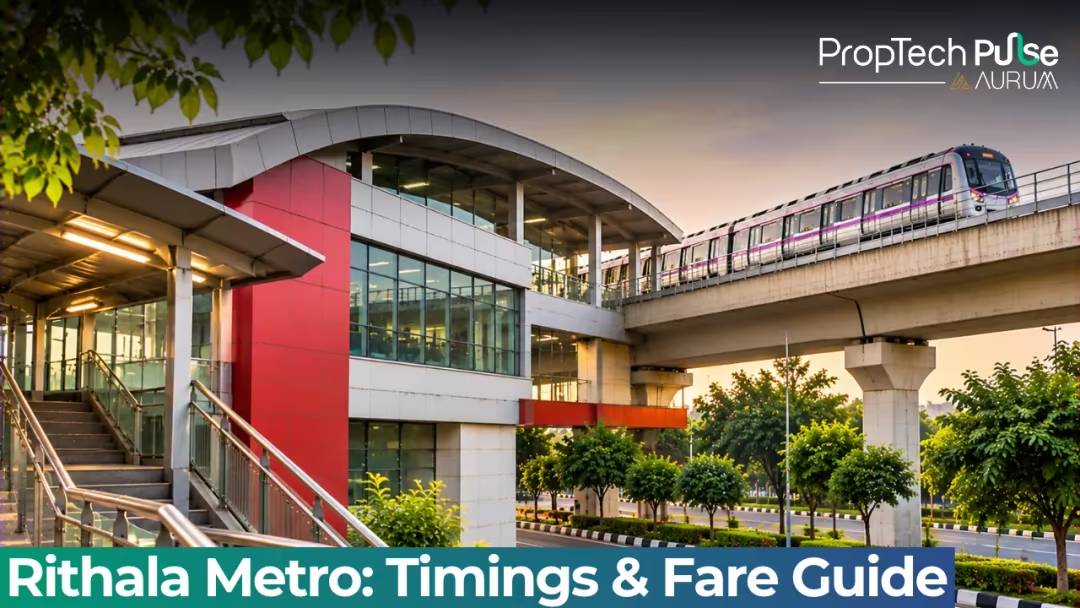
You are standing at Rithala, checking your phone against the departure board. The western end of the Red Line changes how you board and which platform holds your train. The first metro from rithala leaves at roughly 5.05 am on weekdays. The last scheduled service rolls out around 11.15 pm. Sundays shift both windows forward and back by about an hour. The rithala metro station handles daily footfall from Sectors 5, 11 and 24, plus the commercial stretch along Metro Walk. Get the timing window right, step onto the correct platform without crossing a busy road, and the run to Kashmere Gate takes under thirty minutes. Pick the wrong exit gate and you add ten minutes to your walk, usually into strong wind. In this guide Rithala Metro Timings and Frequency in 2026 Rithala Metro Route: Direct Link to Kashmere Gate Exit Gates and Nearby Landmarks Station Facilities and Accessibility Commuter Checklist for Rithal Corridor Frequently asked questions Rithala Metro Timings and Frequency in 2026 Quick answer Rithala metro station operates as a terminal with trains reversing direction. First train departs at 5.05 am on weekdays and 6.00 am on Sundays. Last train leaves Rithala at 11.15 pm on weekdays and 11.00 pm on Sundays. Peak frequency runs every 3 minutes 30 seconds between 8 am to 12 pm and 5 pm to 9 pm. Daily commuters often assume the same train runs from start to finish, but Rithala functions as an interlocking terminal. Trains pull into Platform 1, clear their passengers, change crew, and depart Platform 2 towards Shaheed Sthal and onwards to Samaypur Badli. This layout reduces delays during breakdowns because the terminal allows quick turnarounds, but it also means you must listen to the announcements before stepping through the gate. Tip Always read the electronic display above the platform entrance. A coach might show 'Terminated' even when another train follows immediately after clearing the siding. Weekday versus Sunday service DMRC shifts its weekend timetable slightly. On weekdays, the system opens early to catch the manufacturing shift workers who use the corridor alongside office goers. Sundays start at 6.00 am and shut down closer to 11.00 pm. The gap is not massive, but it knocks about forty minutes off your evening buffer when working late. Night owls returning from South Extension on connecting buses should check timings carefully. Feeder services thin out after 10 pm, often leaving riders stranded outside. You may have to walk the final six hundred metres to Dwarka Sector 21. Peak and off-peak headways Frequency is where most guides get lazy and tell you 'every three to five minutes'. The actual headway splits into two distinct blocks. Scheduled headways from Rithala metro station (effective August 2026) Time block Headway 08:00 to 12:00 (morning peak) 3 min 30 sec 17:00 to 21:00 (evening peak) 3 min 30 sec 12:00 to 17:00 (off-peak afternoon) 4 min 10 sec 21:00 to closing (off-peak night) 4 min 10 sec Total operational hours (weekday) ~18 hours 10 minutes If you work a fixed desk job, the 4 minute 10 second off-peak window is predictable enough to plan lunch breaks outside the complex. Missing a train at 2.30 pm still only costs you four minutes and twenty seconds. The squeeze comes after 5 pm, when the interval tightens and crowding spikes near the gate. Forcing a physical push into the coach is standard practice between December and March. Air conditioning struggles against the winter chill combined with human mass, making ventilation poor. Carry a light jacket rather than relying on the system, and stand two carriages back from the driver's cabin where doors remain less jammed during boarding. Rithala Metro Route: Direct Link to Kashmere Gate The kashmere gate to rithala connection is the spine of North West Delhi transit. The rithala metro route covers 13.4 kilometres across fourteen stops before hitting the interchange at Kashmere Gate. A single ticket moves you past Rohini East, Seelampur, and GTB Nagar straight into the old city loop. Fare structures use a distance-based meter. A point-to-point token ride between Rithala and Kashmere Gate costs ₹40. Smart Card holders save roughly ₹5 on the same trip. That savings adds up fast across a monthly pass. The journey clock sits at twenty-six minutes when running perfectly, but expect an extra five minutes during the evening rush due to dwell times at Azadpur and Shastri Park. DMRC applies a 20 per cent discount on Sundays and holidays too. Time your personal trips around those days to cut your weekly transport budget further. Direct stops on the Red Line Listed in order from the terminal: Rithala → Janakpuri West → Dhaula Kuan → Rajouri Garden → Patel Chowk → Kashmiri Gate → Vidhan Sabha → Secretariat → Central Secretariat → Kashmere Gate. You can check Kashmere Gate interchange hub details if you need to swap to the Violet or Grey lines. Staying on the Red Line works best if your final destination is Chandni Chowk, Jama Masjid, or Old Delhi Railway Station. The direct path skips the cross-platform shuffle. Ticket vending machines accept UPI scans now, but the app sometimes lags during heavy server loads. Print your receipt before moving past the scanner. Lost tickets trigger a manual intervention queue that adds fifteen minutes to your morning routine. When to switch at Inderlok instead If you are heading toward West Delhi, Dwarka, or IGI Airport via the Yellow Line, do not wait until Kashmere Gate to switch. Hop off at Inderlok and cross over. The walk inside Kashmere Gate during evening peaks turns into a packed corridor that eats time. Inderlok drops you closer to bus stands serving Nehru Place via the Outer Ring Road bus network. Exit Gates and Nearby Landmarks Getting out of the station requires matching your destination to the correct concourse. There are three main gates, each serving different sectors and commercial pockets. Gate mapping for Rithala metro station exits Gate Primary destinations Gate 1 Sector 5, Civil Lines approach, nearby police outpost Gate 2 Sector 24, Rajouri Garden flyover approach, residential blocks Gate 3 Sector 11, Metro Walk plaza, Crowne Plaza hotel, Japanese Park Security screening adds an extra layer to the exit process during major festivals or national holidays. Police checkpoints appear outside Gate 2 specifically, forcing you to carry ID proof within arm's reach. Skip Gate 1 if you are carrying large luggage or pushing a pram, as the pavement slope lacks ramps entirely. Your gate choice matters. Taking Gate 1 forces a twelve-minute walk along the highway stretch with no proper pavement. Heavy traffic makes crossing dangerous without a traffic guard. If your flat is in Sector 11, use Gate 3 instead. It drops you straight onto the pedestrian-friendly walkway beside the shopping plaza. Drivers heading to Sector 24 should pick Gate 2. That exit bypasses the expressway ramp and keeps you away from the constant truck movement bound for NH-48. Station Facilities and Accessibility The station runs a full set of passenger amenities, which matter more than usual at a terminal. Since passengers often linger near Rithala metro station, the waiting rooms see steady use even on quiet mornings. Parking: Two-wheelers and four-wheelers park on designated concrete slabs behind the station block. Paid slots exist; keep your entry token visible. QR payments have largely replaced paper slips, though attendants still request the old method occasionally. Lifts: Two wheelchair-accessible lifts connect the ground floor concourse to the raised decks above. They run 24/7 for emergencies but generally open during operational hours. Waiting rooms: Air-conditioned waiting lounges sit beside the ticket counter. Useful for stranded commuters or those waiting for someone whose train was cancelled. Disabled access: Braille tactile paths run from the street entrances through the security scan area. Staff at the help desk can request assistance cards for mobility-impaired users. Because Rithala terminates trains, engineering crews inspect the overhead lines every night. If you spot warning notices pasted on the gate, expect slower departures as the line warms up. These are planned maintenance windows. They rarely trigger full cancellations. Commuter Checklist for Rithal Corridor Before you commit to a lease or buy a property in this pocket, run these checks first. Transit value depends on more than just having a station at your door. Confirm peak hour capacity. Visit the station between 5.30 pm and 6.30 pm. If boarding requires physical pushing, rental demand will spike, but resale liquidity may drop as people look for alternatives. Map your exact exit gate. If your workplace falls near Gate 1 but your flat faces Gate 3, factor in the cross-road walk during rain season. Check floor elevation. Ground-floor flats here flood during heavy monsoon spells. Ask neighbours about waterlogging levels during July and August rains. Verify parking availability. If you drive, confirm whether the builder allocated covered space or left you to hunt for public slabs daily. A flat sitting within easy walking distance of Rithala metro station typically commands a 15% to 20% premium over properties half a kilometre away, driven by the reliability of the Red Line schedule. The Rithala metro station area sees consistent demand because tenants value the direct link to Old Delhi. Read more about market mechanics in our guide on how proximity to a metro station affects apartment pricing, and explore local rates in the full Rithala locality guide. Frequently asked questions What is the first metro time from Rithala? Trains begin their morning run at 5.05 am on weekdays. Saturdays and Sundays slide to 6.00 am to match lower weekend demand. Check the digital display boards at the gate anyway, since seasonal timetable tweaks sometimes move the opening slot by a handful of minutes. How many minutes does it take from Rithala to Kashmere Gate? Clocking twenty-six minutes, the ride covers 13.4 kilometres across fourteen stations. Actual board-to-board duration stretches closer to thirty minutes once you factor in extended dwell times at Azadpur and Shastri Park during the evening rush. Which gate should I use at Rithala metro station? Head to Gate 3 if your destination is Sector 11 or Metro Walk, which offers direct pedestrian links. Gate 1 points toward Sector 5 and Civil Lines, while Gate 2 caters specifically to residents living near the expressway ramp. Choosing the nearest exit saves you a dangerous shoulder walk. Is Rithala metro station a terminal station? As an interlocking terminal, Rithala forces trains to arrive on Platform 1, empty their coaches, and depart from Platform 2 toward Shaheed Sthal. This setup helps recover delays quickly but demands that you verify the coach indicator before stepping onto the platform. Can I park my bike at Rithala metro station? Paid slots exist on concrete pads behind the main building for two-wheelers. You receive an entry token upon arrival, which you present when exiting. Four-wheeler car parking occupies the same zone and fills up fast during weekday mornings. Sources Delhi Metro Rail Corporation Ltd (delhimetrorail.com): Station architecture maps, gate numbering standards, and interlocking terminal operational notes (accessed November 2026). Enjoyed this blog article? Visit PropTech Pulse for more interesting blogs.
PropTech Pulse Editorial
13th November 2026
Uncategorized
Vanaz Metro Station Pune: Timings, Route & Fares Guide
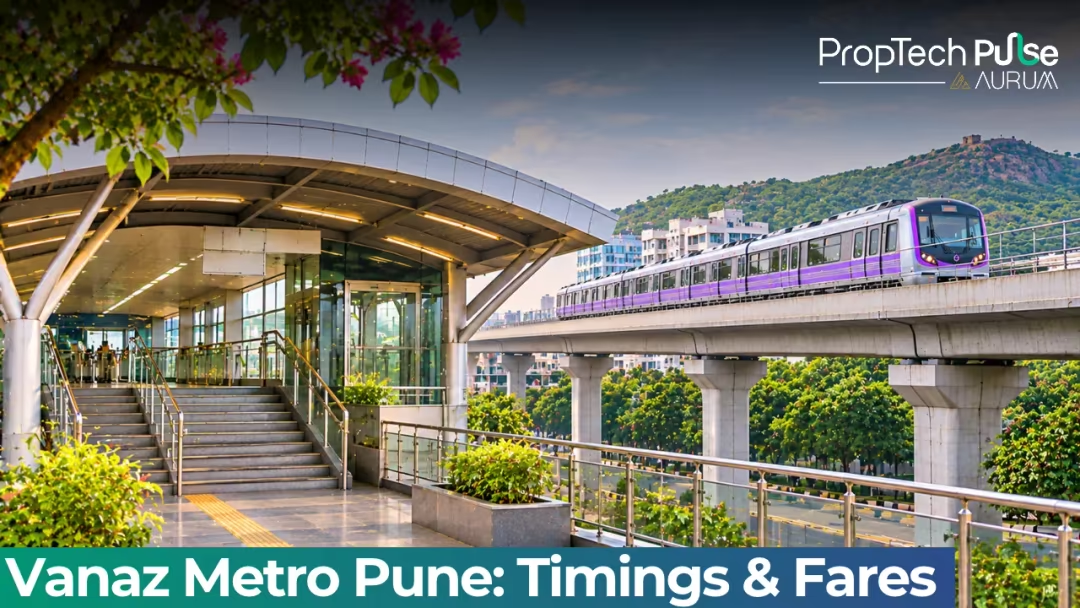
Aggregator apps list conflicting start times for Vanaz. The real test is whether the timetable fits your shift and actually connects to Pune's employment hubs. Official MahaMetro logs place the first departure at 6 AM. Third-party tools frequently show 8 AM instead, confusing late-night maintenance shutdowns with standard operating hours. Commuters should verify live status before the platform doors close. For buyers checking the vanaz metro station location, understanding how it ties into bus routes matters. Knowing ticket costs, monthly commute estimates, and the planned Chandni Chowk extension helps separate builder marketing from actual transit utility. In this guide What is Vanaz Metro Station? Vanaz Metro Station Timings and Frequency Vanaz Metro Station Route: The Complete 16-Stops Map Traveling from Vanaz to Ramwadi Metro Route Ticket Fares, Smart Cards and Student Concessions Bus Connectivity and Landmarks Near Vanaz Metro Living Near Vanaz Metro? Upcoming Expansion: The Vanaz to Chandni Chowk Link Frequently asked questions What is Vanaz Metro Station? Quick answer Vanaz Metro Station (code VNZ) sits on Pune Metro’s Aqua Line. It opened on 6 March 2022 as a western terminal stop for daily commuters heading east toward Ramwadi. The station runs from 6:00 AM to 11:00 PM every day, featuring two upper-level side platforms. A fully raised 1.12 km extension toward Chandni Chowk has been announced to extend the corridor further east. Quick facts: Vanaz Metro Station operational summary Parameter Detail Line name Aqua Line (East West Corridor) Station code VNZ Operational start date 6 March 2022 Platform type Upper-level with two side platforms First train (general) 6:00 AM Last train (general) 11:00 PM Parking availability None currently Total line length 14.66 km (Vanaz to Ramwadi stretch covers approximately 13.78 km) Terminal stop reality: Because Vanaz functions as the western starting point, you board the train facing east toward Kothrud and Pune's core. Trains returning from Ramwadi terminate here before reversing direction, so peak-hour crowding at the ticket counter is heaviest between 8:30 AM and 9:30 AM. Vanaz Metro Station Timings and Frequency Published schedules usually clash because weekly operations get mixed with holiday grids. The official window runs from 6 AM to 11 PM without breaks. Some commuter forums claim an 8 AM opening, mistaking delayed track inspections for routine launches. Check the app during festivals when maintenance crews extend overnight closures. Train frequency changes based on passenger load rather than fixed hourly blocks. During morning peak hours, roughly 8:00 AM to 11:00 AM, and evening peak 5:00 PM to 8:00 PM, trains depart every seven minutes. Off-peak intervals settle between ten and fifteen minutes. This cadence means a commuter catching the 7:25 AM express will rarely wait past four minutes on the platform, whereas the 2:00 PM slot might require a twelve-minute hold. Sunday timetables usually feature slightly longer layovers at both terminals since maintenance crews sweep the tracks earlier in the week. Expect the interval to stretch closer to fifteen minutes, and double-check the final departure window, which sometimes ends thirty minutes earlier on public holidays. Vanaz Metro Station Route: The Complete 16-Stops Map The Aqua Line cuts across Pune from west to east, bridging residential pockets along Paud Road with IT corridors and traditional commercial zones. From Vanaz heading east, the train touches nineteen stations before terminating at Ramwadi. Below is the complete sequence showing how the route threads through the city. Vanaz Kothrud Ganeshkhind Shivajinagar Bhavani Peth Swami Samarth Mandir Chhatrapati Shivaji Maharaj Terminus Shukrawar Peth Swargate Marunji Kharadi Bridge Wakad Prolund Nigdi PCMC Waghere Nagar Hinjawadi Rajiv Gandhi Infotech Park Chaturshris Ramwadi Three stops stand out for workplace connections: Shivajinagar drops you within walking distance of civic offices and older financial districts. Hinjawadi Rajiv Gandhi Infotech Park aligns directly with India's largest technology belt. Ramwadi places commuters at the edge of Phoenix Marketcity and the sprawling automotive manufacturing zone. Traveling from Vanaz to Ramwadi Metro Route The Vanaz to Ramwadi metro route bridges the most friction-heavy parts of daily Pune commuting. Residents in Kothrud, Bavdhan townships, and Anand Nagar traditionally relied on overcrowded bus fleets that struggled with Paud Road bottlenecks. The metro absorbs that pressure instantly once the train clears Kothrud and passes Shivajinagar. Covering those 13.78 kilometres takes roughly twenty-eight to thirty-two minutes at average operating speeds. Trains halt at intermediate stations briefly, adding minutes but keeping the schedule predictable. Board at Vanaz at 7:45 AM and you will generally reach Ramwadi before 8:20 AM, leaving gridlocked road traffic behind. One practical advantage of this specific route is the smooth interchange potential at Swargate and Shivajinagar. Swargate connects to suburban rail movements, while Shivajinagar anchors the legacy transport network. You do not need to exit and walk across streets during transfers; the design handles vertical movement internally. Ticket Fares, Smart Cards and Student Concessions Metro fares in Pune scale with distance. The base entry charge starts at ₹10, while the maximum capped fare sits at ₹35. Calculating the cost for a trip starting at vanaz metro station involves standard distance-based fares. A single token purchase between Vanaz and Ramwadi currently costs ₹30. Smart card holders receive automatic percentage deductions that lower the effective per-ride cost, though the exact slab refreshes periodically. Buying tokens for a standard twenty-two-day work month hits around ₹1,320. A smart card drops the monthly total to roughly ₹1,100. The cash saving looks small until you factor in the lost time standing in line at the vending machines. NFC reloading keeps the wallet topped up automatically. Students qualify for concession schemes tied to the local municipal education boards. The "One Pune Vidyarthi Pass" offers steep discounts on unlimited monthly rides, provided you carry valid ID proof and current academic enrollment documents. The pass structure prioritises school-going students, university attendees, and vocational learners who present verifiable certificates at designated metro desks. Pass reload tip: Keep at least ₹50 loaded on your smart card at all times. The validation gates reject taps below the minimum threshold, forcing you back into the manual counter line and costing three extra minutes of waiting. Bus Connectivity and Landmarks Near Vanaz Metro Vanaz metro station sits adjacent to a steep hillock that divides Paud Road from Ideal Colony proper. The geography dictates how locals actually reach the station entrance. Autoroute vehicles weave through narrow lanes behind the residential blocks, depositing passengers near the lower approach ramps. Walking up from Paud Road involves a noticeable incline that slows hurried commuters carrying backpacks or trolley bags. MahaMetro runs feeder bus networks linking nearby colonies directly to the metro concourse level. Routes 67, 67A, and 67C operate continuously during peak hours, picking up passengers from Vanaz Chowk, Old Pune-Mumbai Bypass intersections, and boundary walls along the hillside bungalows. These connectors reduce the last-mile walk to under five minutes. Landmarks anchor the immediate footprint of the station. The Vanaz Police Station stands within a three-hundred metre radius. Commercial strips along the main road host banking branches and small eateries suited for pre-commute meals. If you arrive before the 7:30 AM rush, the pavement vendors serving tea and vada pav set up outside the toll plaza archway. Living Near Vanaz Metro? Metro proximity acts as a durable support for property valuation, but it requires realistic expectations. Properties situated inside a half-kilometre walking radius enjoy higher rental demand from young professionals and compact families who prefer not to drive to work. The rent premium typically lands between eight and twelve percent compared to equivalent flats located three stops away, according to recent transaction data from central Pune brokerage firms. If you are evaluating housing options along this corridor, cross-reference the transit claim with construction quality and title documentation. Developers advertising "metro-ready" units occasionally position buildings facing distant flyovers rather than the actual station ramp. Verifying the true walkability saves time and prevents overpaying for a headline. Listing properties near vanaz metro station also requires checking local zoning rules. Explore detailed guides on pune vanaz colony kothrud to compare local street layouts against satellite imagery. Browse pune kothrud vanaz society listings to gauge builder reputation and ongoing project statuses. Understand broader trends by reading our explainer on how does proximity to a metro station affect apartment pricing before locking in an agreement for sale. Upcoming Expansion: The Vanaz to Chandni Chowk Link A 1.12 kilometre fully raised extension moving eastward from the current Vanaz terminal has entered advanced planning stages. Chandni Chowk sits on the fringe of the existing Aqua Line footprint, positioned near emerging residential developments that lack direct public transport coverage. For investors, this minor spur matters more than it appears on paper. Terminal extensions almost always trigger land-use zoning shifts and infrastructure upgrades along the corridor. Footpaths widen, bus bays multiply, and local commerce clusters establish themselves ahead of the physical rails. Buyers purchasing resale flats near the proposed Chandni Chowk node can anticipate capital appreciation once the first spade turns. Homebuyers weighing long-term holds should factor in the timeline. Above-ground metro construction follows rigorous geotechnical surveys and railway clearance protocols that routinely add eighteen to twenty-four months to initial announcement dates. Treat the extension as a medium-term asset tailwind rather than an immediate convenience upgrade. Before You Commit to a Flat Near Vanaz Use this checklist to validate the transit promise before paying the booking amount. Confirm the society's occupancy certificate matches the RERA registration. Outdated OCs delay gas and electricity connections. Check the Paud Road widening proposal status with the Pune Municipal Corporation to ensure your view isn't blocked by a future flyover or bypass ramp. Finally, inspect the stairwell and lift access personally during evening peak hours. If the platform escalators fail, stairs become the only option for everyone carrying heavy groceries. Frequently asked questions How many metro stations are there between Vanaz and Ramwadi? Counting the starting and ending points, the Aqua Line corridor includes nineteen stations in total. Commuters travelling from Vanaz will pass through seventeen intermediate stops like Kothrud, Shivajinagar, Wakad, and Hinjawadi before reaching Ramwadi. The physical distance spans approximately 13.78 kilometres, meaning the average interstation gap sits around 750 metres in urban pockets and stretches slightly longer near industrial zones. What is the timing of the first metro at Vanaz station? The official operating schedule sets the first departure at 6:00 AM daily. Occasionally, aggregator apps display an 8 AM window due to late-night track maintenance extending the overnight shutdown period, or because certain holiday timetables shift the launch later. Always verify the live status via the official metro application before attempting an early shift, especially if your employer expects you in Pune's central district by nine o'clock. Does Vanaz metro station have parking facilities? Currently, there is no dedicated vehicle parking at the Vanaz terminal. As the western endpoint, the infrastructure focuses exclusively on passenger throughput and bus feeder integration. Commuters driving to catch the train must rely on limited roadside parking spaces near Vanaz Chowk or pay for private lots a few streets away. Cycling or walking remains the most practical arrival method for those residing in Ideal Colony. Is Vanaz metro station the last stop on the Aqua Line? Yes, Vanaz functions as the absolute western terminus on the current operational grid, with Ramwadi anchoring the eastern end. A planned 1.12 km fully raised extension moving east toward Chandni Chowk remains in development, meaning Vanaz will maintain its boundary status until further municipal approvals materialise. Until that infrastructure upgrades, trains originating at Vanaz head strictly toward Ramwadi. How far is Vanaz metro station from Kothrud? Vanaz sits directly adjacent to Kothrud, separated by only a single metro hop known as Kothrud Station. The travel time between the two nodes lasts roughly two to three minutes at normal running speeds. Geographically, Kothrud Station sits beneath the historic Kothrud village area near Dhole Patil Road. This placement makes it a highly convenient transfer point for accessing older Pune institutions, colleges and medical centres. Sources Mahametro: Official line timings, fare matrices and station specifications (accessed November 2026) Enjoyed this blog article? Visit PropTech Pulse for more interesting blogs.
PropTech Pulse Editorial
13th November 2026
Uncategorized
What Is IGR in India? Full Form and Meaning Explained
Typing "igr" into a search bar rarely yields a dictionary definition. Users get redirected straight to state property registries instead. This happens because IGR stands for Inspector General of Registration: the chief administrative head of every state's sub-registrar network. Buyers typing "igr full form" simply want to locate their local authority, check stamp duty rates, or pull records via eSearch. This guide explains what IGR means under Indian law. We break down core operations beyond routine paperwork and show you how to perform an online IGR free search. You will learn where digitised indexes begin, which search segments carry fees, and how to navigate regional variations. Stay ahead of red tape with accurate due diligence. In this guide What Is IGR? Full Form and Meaning Explained Who Controls IGR and What Does the Department Do? How to Do an IGR Free Search Online Navigating IGR Maharashtra Free Search and Paid Tiers Understanding Index II: The Certified Property Summary Quick State Directory: Other Major IGR Portals in India When to Pull Records Yourself vs Hiring Help Frequently asked questions What Is IGR? Full Form and Meaning Explained Quick answer IGR stands for Inspector General of Registration and Controller of Stamps. It refers to the top state-level government authority responsible for recording property transfers, collecting stamp duty, and maintaining the master registers of all real estate transactions within its jurisdiction. The term seems straightforward, but the function touches nearly every residential and commercial deal in India. Under the Registration Act, 1908 and the Indian Stamp Act, 1899, the IGR office acts as the definitive proof of ownership. Builders hand over keys, NRI buyers sign papers from abroad, and families split ancestral land. The framework validates every transfer. Property laws fall under India's federal structure, so each state maintains its own dedicated IGR portal. The overarching statutes remain consistent nationwide. Digital interfaces, fee schedules and indexing logic differ enough that searching in Delhi will fail for a plot in Kerala. Buyers should always reference Mumbai stamp duty rates for their specific city and verify the local workflow before handing over any token amount. Who Controls IGR and What Does the Department Do? An IGR office handles two massive tasks simultaneously. It registers instruments that transfer property rights and ensures the correct proportionate tax gets collected. The department sits under the State Revenue Ministry or Home Ministry rather than the Planning Commission or Commerce departments. That structure reflects its strict focus on legal recording and treasury receipts. Day-to-day operations are delegated down the chain. Sub-registrars handle identity verification, thumb impressions and witnesses at local Tehsil offices. The Deputy Registrar manages supervision while the IGR sits at the apex. That leadership team audits entries, updates circulars, resolves lower-tier disputes, and oversees the entire document lifecycle. Beyond stamp collection, the IGR department maintains the country's foundational property ledger. This involves issuing encumbrance certificates that prove whether land is clear of prior loans or claims. The office also updates municipal boundaries and enforces mandatory agent appointment periods to cut down parallel brokerage networks. Many states have recently pushed e-Payment, e-Registration and electronic signing features to bring these legacy processes fully online. How to Do an IGR Free Search Online Most property seekers do not need the full certification process to start their research. A preliminary data pull reveals current owners and active bank liens. It also shows what past transaction values actually looked like. Performing an online IGR free search takes roughly ten minutes once you know which module to open. Property-Wise vs Document-Wise Search Routes The portal asks you to choose between searching by document sequence or by physical location. Picking the right route saves serious time. Document tracking uses year ranges and serial numbers to locate exact agreements. Geographic parameters like district or survey number map every associated record. Free search parameter examples by category Search Type Required Inputs Best Use Case Document-based Year, Registration Number, Book/Series Code Finding a specific past sale deed or lease Property-based District, Taluka/Village, Survey Number, House No. Pulling the complete history of a plot or flat Owner-based Name and Father's Name / Spouse Name Tracing assets held by a single seller Handling Missing Records and Year-by-Year Limits If your query returns blank lines or triggers a date error, records likely predate the state's migration to digital ledgers. The transition happened gradually across India, replacing handwritten Index I volumes and physical diaries. Always confirm the digitisation baseline for your region before checking certified copy fees. Don't rely solely on early screenshots. Screenshots circulating on forums from 2021 or earlier may show obsolete UI layouts or dead links that were patched during recent site migrations. Always use the live portal homepage rather than cached tutorials. Navigating IGR Maharashtra Free Search and Paid Tiers Maharashtra handles the highest volume of searches nationwide. Its platform remains essential reading even if you are not dealing with Mumbai or Pune assets. The state has structured its eSearch output into distinct pricing tiers based on data depth. Level 1 typically remains entirely free while boundary details yield basic owner summaries and tax dues. Going deeper costs money. Extracting detailed plough maps, high-resolution scanned pages of historical agreements or fetching stamped copies triggers a fee schedule. Investors evaluating a large batch of units must know these upfront to prevent budget blowouts. Compare this to the actual costs outlined in Mumbai property registration steps during your closing budget calculation. Understanding Index II: The Certified Property Summary Index II exports directly from the registration system. They hold maximum value when you vet a resale flat or vacant plot. Legally generated under Section 55 of the Registration Act, 1908, each index assigns a unique property code to every defined location. A farm measuring forty acres gets one code, while an apartment unit in a twelve-storey tower receives another. Wading through thousands of unrelated sale agreements wastes hours. An Index II report instead gives you a clean timeline of every instrument attached to that specific asset. Ownership transfers, lien marks, lease agreements and partition deeds sit side by side in order. Reviewing this summary highlights irregularities instantly, like overlapping dates or unauthorized assignments that signal a risky chain of title. Buyers often compare regional approaches. Some examine Kerala IGRs documents to track southern property IDs, while others check Karnataka RERA project verification to ensure new construction bypasses independent plot rules. Isolating one address reads its complete story. Secure the Index II first, then pair that knowledge with an eligibility calculator to determine your loan ceiling. Quick State Directory: Other Major IGR Portals in India Since every state manages its own archive independently, copying your Maharashtra login habits into Bihar or Tamil Nadu interfaces causes immediate friction. Here is where the primary registration authorities operate for the largest markets: Official IGR/Registration portals for key Indian states State Primary Portal Domain Key Feature Highlights Maharashtra igrmaharashtra.gov.in Advanced eSearch, QR-verified exports, Mumbai retrospective dating to 1985 Uttar Pradesh up-rera.in (also uses registration modules) Integrated RERA checks with state-level document tracking Karnataka karanadata.kar.gov.in Jamabandi integration, Aadhaar-linked biometric verification Tamil Nadu tnreginet.gov.in Geo-tagging mandates, online e-stamping combined with registry Telangana registration.telangana.gov.in Sericulture mapping, instant certificate download capabilities When to Pull Records Yourself vs Hiring Help Conduct the initial IGR free search yourself whenever you screen multiple prospects. Verifying an asking price against reality matters too. A quick digital sweep exposes inflated valuations, flags existing legal encumbrances and helps you narrow your focus. Stop wasting time touring problematic units. Switch to professional support only when the property sits outside standard formats. Agricultural conversion land, disputed inheritance shares, or joint development projects with unclear timelines demand extra care. Those cases require cross-referencing old physical ledgers and filing formal applications for certified extracts. Automated systems cannot generate those specialized records. Frequently asked questions What is the full form of IGR? IGR stands for Inspector General of Registration. In practice, the title also carries the additional designation of Controller of Stamps for the respective state. This dual role places the office at the centre of real estate documentation. It oversees legal recording of property transfers and collects applicable stamp duties as mandated by the Indian Stamp Act, 1899. How to do IGR free search online? You can execute a free property record search by visiting the official IGR website for your target state and locating the eSearch or public enquiry module. Most portals require you to enter specific identifiers such as the survey number, district, taluka, village or property boundary details along with a captcha code. The system then returns basic summary data without charging a fee. Is IGR free search available for all years? Digitised property indexes vary heavily depending on when your state migrated from physical ledgers to electronic databases. Metropolitan areas often trace back further, with Mumbai records beginning in the mid-1980s. Other districts might only offer searchable data starting from 2002 or later. Older transactions before the digitisation cutoff remain locked in physical archives at the sub-registrar office. Difference between Index I and Index II? Index I functions as a chronological register of every sale deed, gift deed, lease and mortgage ever registered within a jurisdiction, tracked strictly by serial numbers. Index II serves a different purpose altogether. It maps individual properties using unique identification codes like door numbers or survey plots to group all related registrations together for quicker title verification. How to verify scanned Index II PDF authenticity? Recent portal updates introduced QR code authentication directly onto downloaded summaries to prevent forgery. Scanning the printed QR marker with any smartphone camera redirects you straight to the hosting server page, confirming whether the document matches the original entry on file. If the scan fails or shows an outdated timestamp, cross-check the details at the physical office before relying on them. What documents does IGR registration cover? The registration department legally processes instruments transferring interest in immovable property above the prescribed monetary threshold. This includes final sale deeds, lease agreements exceeding thirty-six months, gift deeds executed between relatives, mortgage assignments and partition deeds dividing inherited family assets. Exemptions generally apply to wills, affidavits regarding unregistered agreements and court decrees. Sources Department of Registration & Stamps, Government of Maharashtra: Official functional overview of GPR roles and digitised services (accessed November 2026) Enjoyed this blog article? Visit PropTech Pulse for more interesting blogs.
PropTech Pulse Editorial
13th November 2026
Uncategorized
Rithala Metro Station Guide 2026: Timings, Fare & Route
You are standing at Rithala, checking your phone against the departure board. The western end of the Red Line changes how you board and which platform holds your train. The first metro from rithala leaves at roughly 5.05 am on weekdays. The last scheduled service rolls out around 11.15 pm. Sundays shift both windows forward and back by about an hour. The rithala metro station handles daily footfall from Sectors 5, 11 and 24, plus the commercial stretch along Metro Walk. Get the timing window right, step onto the correct platform without crossing a busy road, and the run to Kashmere Gate takes under thirty minutes. Pick the wrong exit gate and you add ten minutes to your walk, usually into strong wind. In this guide Rithala Metro Timings and Frequency in 2026 Rithala Metro Route: Direct Link to Kashmere Gate Exit Gates and Nearby Landmarks Station Facilities and Accessibility Commuter Checklist for Rithal Corridor Frequently asked questions Rithala Metro Timings and Frequency in 2026 Quick answer Rithala metro station operates as a terminal with trains reversing direction. First train departs at 5.05 am on weekdays and 6.00 am on Sundays. Last train leaves Rithala at 11.15 pm on weekdays and 11.00 pm on Sundays. Peak frequency runs every 3 minutes 30 seconds between 8 am to 12 pm and 5 pm to 9 pm. Daily commuters often assume the same train runs from start to finish, but Rithala functions as an interlocking terminal. Trains pull into Platform 1, clear their passengers, change crew, and depart Platform 2 towards Shaheed Sthal and onwards to Samaypur Badli. This layout reduces delays during breakdowns because the terminal allows quick turnarounds, but it also means you must listen to the announcements before stepping through the gate. Tip Always read the electronic display above the platform entrance. A coach might show 'Terminated' even when another train follows immediately after clearing the siding. Weekday versus Sunday service DMRC shifts its weekend timetable slightly. On weekdays, the system opens early to catch the manufacturing shift workers who use the corridor alongside office goers. Sundays start at 6.00 am and shut down closer to 11.00 pm. The gap is not massive, but it knocks about forty minutes off your evening buffer when working late. Night owls returning from South Extension on connecting buses should check timings carefully. Feeder services thin out after 10 pm, often leaving riders stranded outside. You may have to walk the final six hundred metres to Dwarka Sector 21. Peak and off-peak headways Frequency is where most guides get lazy and tell you 'every three to five minutes'. The actual headway splits into two distinct blocks. Scheduled headways from Rithala metro station (effective August 2026) Time block Headway 08:00 to 12:00 (morning peak) 3 min 30 sec 17:00 to 21:00 (evening peak) 3 min 30 sec 12:00 to 17:00 (off-peak afternoon) 4 min 10 sec 21:00 to closing (off-peak night) 4 min 10 sec Total operational hours (weekday) ~18 hours 10 minutes If you work a fixed desk job, the 4 minute 10 second off-peak window is predictable enough to plan lunch breaks outside the complex. Missing a train at 2.30 pm still only costs you four minutes and twenty seconds. The squeeze comes after 5 pm, when the interval tightens and crowding spikes near the gate. Forcing a physical push into the coach is standard practice between December and March. Air conditioning struggles against the winter chill combined with human mass, making ventilation poor. Carry a light jacket rather than relying on the system, and stand two carriages back from the driver's cabin where doors remain less jammed during boarding. Rithala Metro Route: Direct Link to Kashmere Gate The kashmere gate to rithala connection is the spine of North West Delhi transit. The rithala metro route covers 13.4 kilometres across fourteen stops before hitting the interchange at Kashmere Gate. A single ticket moves you past Rohini East, Seelampur, and GTB Nagar straight into the old city loop. Fare structures use a distance-based meter. A point-to-point token ride between Rithala and Kashmere Gate costs ₹40. Smart Card holders save roughly ₹5 on the same trip. That savings adds up fast across a monthly pass. The journey clock sits at twenty-six minutes when running perfectly, but expect an extra five minutes during the evening rush due to dwell times at Azadpur and Shastri Park. DMRC applies a 20 per cent discount on Sundays and holidays too. Time your personal trips around those days to cut your weekly transport budget further. Direct stops on the Red Line Listed in order from the terminal: Rithala → Janakpuri West → Dhaula Kuan → Rajouri Garden → Patel Chowk → Kashmiri Gate → Vidhan Sabha → Secretariat → Central Secretariat → Kashmere Gate. You can check Kashmere Gate interchange hub details if you need to swap to the Violet or Grey lines. Staying on the Red Line works best if your final destination is Chandni Chowk, Jama Masjid, or Old Delhi Railway Station. The direct path skips the cross-platform shuffle. Ticket vending machines accept UPI scans now, but the app sometimes lags during heavy server loads. Print your receipt before moving past the scanner. Lost tickets trigger a manual intervention queue that adds fifteen minutes to your morning routine. When to switch at Inderlok instead If you are heading toward West Delhi, Dwarka, or IGI Airport via the Yellow Line, do not wait until Kashmere Gate to switch. Hop off at Inderlok and cross over. The walk inside Kashmere Gate during evening peaks turns into a packed corridor that eats time. Inderlok drops you closer to bus stands serving Nehru Place via the Outer Ring Road bus network. Exit Gates and Nearby Landmarks Getting out of the station requires matching your destination to the correct concourse. There are three main gates, each serving different sectors and commercial pockets. Gate mapping for Rithala metro station exits Gate Primary destinations Gate 1 Sector 5, Civil Lines approach, nearby police outpost Gate 2 Sector 24, Rajouri Garden flyover approach, residential blocks Gate 3 Sector 11, Metro Walk plaza, Crowne Plaza hotel, Japanese Park Security screening adds an extra layer to the exit process during major festivals or national holidays. Police checkpoints appear outside Gate 2 specifically, forcing you to carry ID proof within arm's reach. Skip Gate 1 if you are carrying large luggage or pushing a pram, as the pavement slope lacks ramps entirely. Your gate choice matters. Taking Gate 1 forces a twelve-minute walk along the highway stretch with no proper pavement. Heavy traffic makes crossing dangerous without a traffic guard. If your flat is in Sector 11, use Gate 3 instead. It drops you straight onto the pedestrian-friendly walkway beside the shopping plaza. Drivers heading to Sector 24 should pick Gate 2. That exit bypasses the expressway ramp and keeps you away from the constant truck movement bound for NH-48. Station Facilities and Accessibility The station runs a full set of passenger amenities, which matter more than usual at a terminal. Since passengers often linger near Rithala metro station, the waiting rooms see steady use even on quiet mornings. Parking: Two-wheelers and four-wheelers park on designated concrete slabs behind the station block. Paid slots exist; keep your entry token visible. QR payments have largely replaced paper slips, though attendants still request the old method occasionally. Lifts: Two wheelchair-accessible lifts connect the ground floor concourse to the raised decks above. They run 24/7 for emergencies but generally open during operational hours. Waiting rooms: Air-conditioned waiting lounges sit beside the ticket counter. Useful for stranded commuters or those waiting for someone whose train was cancelled. Disabled access: Braille tactile paths run from the street entrances through the security scan area. Staff at the help desk can request assistance cards for mobility-impaired users. Because Rithala terminates trains, engineering crews inspect the overhead lines every night. If you spot warning notices pasted on the gate, expect slower departures as the line warms up. These are planned maintenance windows. They rarely trigger full cancellations. Commuter Checklist for Rithal Corridor Before you commit to a lease or buy a property in this pocket, run these checks first. Transit value depends on more than just having a station at your door. Confirm peak hour capacity. Visit the station between 5.30 pm and 6.30 pm. If boarding requires physical pushing, rental demand will spike, but resale liquidity may drop as people look for alternatives. Map your exact exit gate. If your workplace falls near Gate 1 but your flat faces Gate 3, factor in the cross-road walk during rain season. Check floor elevation. Ground-floor flats here flood during heavy monsoon spells. Ask neighbours about waterlogging levels during July and August rains. Verify parking availability. If you drive, confirm whether the builder allocated covered space or left you to hunt for public slabs daily. A flat sitting within easy walking distance of Rithala metro station typically commands a 15% to 20% premium over properties half a kilometre away, driven by the reliability of the Red Line schedule. The Rithala metro station area sees consistent demand because tenants value the direct link to Old Delhi. Read more about market mechanics in our guide on how proximity to a metro station affects apartment pricing, and explore local rates in the full Rithala locality guide. Frequently asked questions What is the first metro time from Rithala? Trains begin their morning run at 5.05 am on weekdays. Saturdays and Sundays slide to 6.00 am to match lower weekend demand. Check the digital display boards at the gate anyway, since seasonal timetable tweaks sometimes move the opening slot by a handful of minutes. How many minutes does it take from Rithala to Kashmere Gate? Clocking twenty-six minutes, the ride covers 13.4 kilometres across fourteen stations. Actual board-to-board duration stretches closer to thirty minutes once you factor in extended dwell times at Azadpur and Shastri Park during the evening rush. Which gate should I use at Rithala metro station? Head to Gate 3 if your destination is Sector 11 or Metro Walk, which offers direct pedestrian links. Gate 1 points toward Sector 5 and Civil Lines, while Gate 2 caters specifically to residents living near the expressway ramp. Choosing the nearest exit saves you a dangerous shoulder walk. Is Rithala metro station a terminal station? As an interlocking terminal, Rithala forces trains to arrive on Platform 1, empty their coaches, and depart from Platform 2 toward Shaheed Sthal. This setup helps recover delays quickly but demands that you verify the coach indicator before stepping onto the platform. Can I park my bike at Rithala metro station? Paid slots exist on concrete pads behind the main building for two-wheelers. You receive an entry token upon arrival, which you present when exiting. Four-wheeler car parking occupies the same zone and fills up fast during weekday mornings. Sources Delhi Metro Rail Corporation Ltd (delhimetrorail.com): Station architecture maps, gate numbering standards, and interlocking terminal operational notes (accessed November 2026). Enjoyed this blog article? Visit PropTech Pulse for more interesting blogs.
PropTech Pulse Editorial
13th November 2026

Ask Pulse Ai anything about real estate

Unlock the Latest in Real Estate
News, Infographics, Blogs & More! Delivered to your inbox.

