

©PropTech Pulse 2025, All rights reserved.

What is Hoodi in Bengaluru?
Hoodi is a neighbourhood in east Bengaluru, near Whitefield and the ITPL area, with apartments, gated communities, and shops, and it has demand from IT employees, with a metro station on the Purple Line, as I understand it, though traffic on the main roads is heavy.
What It Is
- The area lies on the Whitefield road, between Mahadevapura and Whitefield, close to tech parks, malls, and hospitals, and it has a wide range of apartments and rental homes, with the Purple Line metro extension improving access, and nearby areas such as Brookefield and Kundalahalli share the demand.
- It is a mature residential area.
How It Works
- Challenges include congestion at junctions, water supply shortages that rely on tankers in some areas, waterlogging in heavy rain, and a large supply, while rental demand is steady with IT hiring, and the metro helps, but last-mile connections are limited, so each project and street should be checked.
- Prices vary across pockets.
What to Check
- Check the project's RERA registration and approvals, the khata, the water source, the flood history, the distance to the metro station and workplaces, recent registered deals and rents, visit during peak hours and after rain, and use a local lawyer to check the title.
- Compare with Whitefield and Marathahalli.
Water and traffic decide, so check RERA registration, khata, water source, and flood history, and test the commute at peak hours.
Insight Pulse
Uncategorized
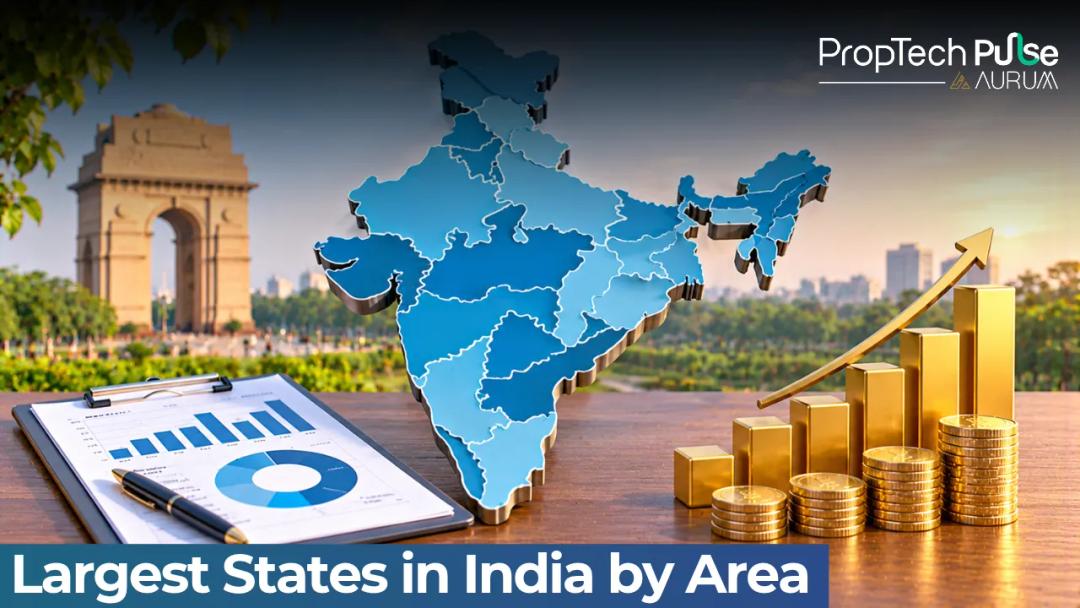
Largest States in India: Area, GDP & Where Money Flows
If you look at a flat map of India, Rajasthan dominates the western expanse while Uttar Pradesh stretches across the north. Physical size has very little to do with where property prices climb or where builders pour concrete. Serious buyers evaluating the largest states in India must look past square kilometres and focus on economic gravity. A state's landmass tells you how much empty space exists. Its gross domestic product, job creation numbers, and infrastructure budgets show where capital flows. That flow dictates housing demand, rental yields, and price appreciation. For homebuyers and developers, understanding geography is academic. Understanding economics is profitable. This guide breaks down what makes a state large by physical area, population, and financial output. We map those metrics directly onto real estate strategy. You will see why compact states like Telangana or Kerala often deliver better returns than massive regions. Learn how to align your next purchase with actual momentum instead of textbook rankings. In this guide Understanding the Largest States in India Today The GDP of Indian States Dictates Property Demand Surprising Insights: The Smallest State in India and Compact Powerhouses Translating State Wealth into Real Estate Strategy Quick Decision Rule for Choosing Your Next State Frequently asked questions Understanding the Largest States in India Today Quick answer The largest states in India vary depending on whether you measure physical space, population volume, or economic output. Geographically, Rajasthan holds the largest landmass. By population, Uttar Pradesh is dominant. However, when measuring the economic engine that actually drives property prices, Maharashtra, Tamil Nadu, and Karnataka lead the country. For real estate investors, economic footprint matters far more than physical footprint, as it correlates directly with job growth, migration, and housing demand. The word largest carries distinct meanings across different sectors. Students usually search for the biggest geographic squares on a map. Demographers focus purely on population density to understand urban congestion. Investors care about the GDP of Indian states because gross domestic product tracks money, salaries, and corporate expansion. These numbers directly justify higher property valuations. Top 10 Indian States Ranked by Physical Area (square kilometres) Rank State Capital City Area (sq km) Primary Real Estate Sector 1 Rajasthan Jaipur 342,239 Premium villas, heritage hotels 2 Madhya Pradesh Bhopal 308,245 Affordable housing, logistics parks 3 Maharashtra Mumbai 307,713 High-rise apartments, commercial offices 4 Uttar Pradesh Lucknow 243,286 Plots, gated communities, tier-2 hubs 5 Gujarat Gandhinagar 196,024 Industrial warehouses, luxury enclaves 6 West Bengal Kolkata 171,138 Metro-linked apartments, senior living 7 Odisha Bhubaneswar 155,707 Mid-segment housing, coastal tourism 8 Chhattisgarh Raipur 135,192 Mining settlements, student hostels 9 Jammu & Kashmir Srinagar / Jammu 89,480 Tourism resorts, vacation homes 10 Tamil Nadu Chennai 130,060 IT corridor townships, export housing Total Area of Top 10 States ~1,838,084 sq km The Largest State in India by Area: Geography Explained Rajasthan holds the top rank, commanding nearly ten percent of India's total landmass according to central government geographic surveys. Madhya Pradesh and Maharashtra follow behind. Ranking states by square kilometers provides a snapshot of land availability and agricultural potential. For real estate, massive area usually means dispersed populations and longer infrastructure timelines. A wide state covers lots of terrain, yet stays thin on transactions if it lacks dense employment hubs. When analysing the largest states in India for an investment portfolio, treat raw acreage as a secondary metric. Demographic Giants: Where the Highest Population Density Lies Population shifts the conversation from empty land to occupied space. Uttar Pradesh leads the nation with over twenty-four crore residents. Bihar and West Bengal follow closely. Massive populations create constant pressure on existing housing stocks. When millions of young workers enter the workforce inside a state, they require basic shelter. This triggers steady demand for entry-level flats and rental accommodations. High-density zones force architects to stack units vertically. That increases multi-family inventory compared to low-density northern plains. Checking demographic migration trends helps investors spot baseline demand regardless of macro cycles. The GDP of Indian States Dictates Property Demand Gross State Domestic Product, or GSDP, serves as the core indicator for real estate health. Wealth generates through industries, technology parks, port activities, and financial services. That wealth converts into salaries. Salaries convert into mortgage applications. Geographical giants do not automatically drive strong property markets. Maharashtra tops the national league with a GSDP exceeding ₹40 lakh crore. Mumbai's financial district and Pune's manufacturing belt fuel this number. Tamil Nadu secures second place with output surpassing ₹30 lakh crore. Automotive clusters and software exports drive Chennai's economy. Uttar Pradesh and Karnataka compete for the next spots. Both hover near or cross the ₹30 lakh crore and ₹29 lakh crore marks. Heavy industry and tech ecosystems support their growth. Tracking the economic weight of the largest states in India reveals which regions actually attract builder capital. Regulatory Reality Check: Before investing heavily in any region, verify developer credibility through official portals. Strong economies can sometimes mask aggressive marketing by smaller builders. Cross-check project approvals on sites like maharera.maharashtra.gov.in or k-rera.karnataka.gov.in before transferring funds. Why Economic Output Trumps Physical Size for Investors Economic strength drives premium property valuation. Investors often assume that buying land in an expansive state guarantees safety. Land is illiquid without nearby wage earners. Maharashtra and Karnataka command some of the highest per-square-foot prices nationwide. Their economies absorb massive domestic migration and foreign investment. High-paying jobs in finance, IT, and advanced manufacturing boost household purchasing power. Residents earning strong salaries tolerate higher ticket sizes. Developers respond by constructing amenity-rich townships instead of bare plots. This shift accelerates capital recovery for builders. Projects finish on time instead of sitting as unfinished shells for years. Capital follows opportunity, not borders. How High-GDP Regions Fuel Rental Yields and Appreciation Real estate returns split into capital appreciation over five to ten years and annual rental cash flow. High-GDP regions systematically win both metrics. Corporate hubs generate relentless rental demand from professionals who relocate temporarily or commit long-term. In metro areas within strong economies, proximity to office corridors instantly commands higher monthly rents. Developers capitalize on this by integrating co-working spaces, gyms, and smart security. These amenities justify premium asking rents. Smart buyers analyzing the best cities to invest in real estate in india 2025 prioritize locations where tenants possess the income to pay. They avoid cheaper titles in low-wage districts that suffer chronic vacancies. Focus your eye on income velocity, not land mass. Surprising Insights: The Smallest State in India and Compact Powerhouses Vast geography offers breathing room. Compact economies offer intense value concentration. Real estate thrives on scarcity. Restricted land limits expansion and pushes existing parcels to appreciate faster. Examining how different states manage constrained space reveals strategies that large states struggle to replicate. The Smallest State in India: Why Less Land Can Mean Higher ROI Goa holds the smallest footprint in India, spanning merely 3,702 square kilometres. Despite occupying almost no space, it consistently features among the highest real estate valuation indices nationwide. Its concentrated economy relies on tourism, hospitality, and specialized manufacturing. This forces rapid commercialization of available zones. Hotels, serviced apartments, and holiday homes carry valuation premiums that dwarf average residential yields elsewhere. Similarly, Telangana demonstrates how a moderately sized state can eclipse larger neighbours technologically. Hyderabad's explosive growth attracts global enterprise campuses. Talent pools compress into defined districts and inflate land values well beyond what the state's area suggests. Concentrated Economies: How Micro-Markets Outperform Vast State Lands Stop treating massive administrative boundaries as uniform investment zones. Real estate performs locally, dictated by micro-markets. A rapidly developing township outside Bangalore delivers entirely different financial outcomes compared to traditional suburbs in smaller towns within the same state. Urban agglomerations packed with economic activity experience superior transaction velocities compared to sprawling rural territories. Dense commercial cores push residential buyers toward organized apartment complexes rather than independent plotted developments. This shift raises building quality, stabilizes resale markets, and protects investor equity during broader economic slowdowns. Translating State Wealth into Real Estate Strategy Mapping economic data onto actionable property decisions requires linking three elements: job creation, infrastructure spending, and regulatory maturity. Linking Job Creation and Infrastructure to Housing Supply New employees require housing. But housing supply must scale quickly to match influx. States aggressively allocate budget toward highway extensions, metro rail networks, and airport terminals. Property demand multiplies in previously peripheral areas when transport improves. Expressway connectivity instantly resets land prices upward when remote districts gain rapid access to major economic engines. Conversely, regions experiencing stagnant hiring pipelines endure severe oversupply. Savvy purchasers review state annual budgets. Track approved infrastructure milestones. Align your purchase window with ground-breaking construction dates rather than relying on historical price growth charts. Navigating State-Specific Regulations (RERA Maturity) Every Indian state operates under the Real Estate regulation act, yet enforcement discipline varies drastically. Maharashtra, Telangana, and Karnataka utilize mature frameworks that compel builder transparency. Strict escrow monitoring and enforced completion deadlines keep projects moving. Homebuyers consulting live rates and trends in these jurisdictions benefit from quicker dispute resolution and publicly accessible project dashboards. Stricter regulatory oversight minimizes fraud risks. Safeguard buyer advances during market dips by choosing regulated states. Legal infrastructure serves as invisible property value protection. Quick Decision Rule for Choosing Your Next State Cut through the confusion between geography and economics by applying a rigid evaluation filter. Score every candidate state across three criteria: Economic output relative to its population base Confirmed infrastructure expenditure trajectory over thirty-six months Regulatory transparency regarding construction permits and title clearances If a state ranks high across all three dimensions, deploy capital confidently. Avoid regions scoring excellently on geography but failing on economics until foundational infrastructure matures. Review our detailed insights on real estate investment in india 2025 to ensure capital migrates toward productive zones. Study future of indian real estate market dynamics to anticipate which corridors transition from developmental promises into operational realities over the next five years. Frequently asked questions What is the largest state in india by area and population? Geographic size and population rank differ significantly across India. Rajasthan holds the largest landmass, covering approximately 342,239 square kilometres according to official government surveys. Uttar Pradesh dominates population metrics, hosting over twenty-four crore residents. For real estate analysis, high population creates baseline housing demand, while vast geography signals potential land availability but does not guarantee immediate property value growth or rapid transaction volumes. Which indian state has the highest gdp? Maharashtra currently leads all regions with a Gross State Domestic Product exceeding forty lakh crore rupees, driven by banking, finance, and advanced manufacturing concentrated in Mumbai and Pune. Tamil Nadu secures the second position with economic output surpassing thirty lakh crore rupees, fueled by automotive production and export-oriented industries centered around Chennai. These massive economies directly support premium property valuations, high rental yields, and sustained commercial development pipelines. Is population size a good indicator for real estate investment in india? Large populations establish necessary baseline demand for affordable and middle-segment housing, particularly in states like Uttar Pradesh and Bihar where workforce entry continuously pressures existing apartment inventories. However, raw headcount alone fails to capture purchasing power. Sustainable real estate investment requires combining population density with job creation rates and infrastructure spending. Without corresponding economic output and formal employment hubs, densely populated regions frequently suffer from stagnant property appreciation and chronic oversupply in unsold residential sectors. Does a state's area impact its property prices? Physical acreage influences how freely a region can expand outward, but it rarely dictates premium pricing. States with extremely small footprints, such as Goa or Telangana, frequently command higher per-square-foot valuations precisely because restricted land boundaries force intense competition for available plots and apartments. Economic density, technological adoption, and strict urban planning regulations drive price escalation much faster than open geography ever could, meaning investors should prioritize developed urban pockets over expansive unconnected territories. Sources Census of India: Latest population figures, density calculations, and demographic projections (accessed November 2026) Reserve Bank of India: State-wise economic indicators, GSDP estimation methodologies, and housing finance trends (accessed November 2026) MahaRERA: Project registration status, escrow fund monitoring guidelines, and developer compliance records (accessed November 2026) Ministry of Housing and Urban Affairs: National urban development policies, smart city funding allocations, and infrastructure budgets (accessed November 2026) Enjoyed this blog article? Visit PropTech Pulse for more interesting blogs.

PropTech Pulse Editorial
24th November 2026

Uncategorized
MGVCL Bill Payment Online: Vadodara Guide and Steps
If you own a home or run a business in central Gujarat, settling your MGVCL bill payment quickly matters more than ever. Delayed payments attract steep penalties within thirty days. MGVCL handles distribution across Vadodara and surrounding districts, and their digital infrastructure means you rarely need to visit an office to clear dues. This guide shows exactly how to complete mastering the property management essential skills to learn as a property manager starts with utility coordination, especially when you take ownership of a new flat or hand one over to a tenant. We cover locating your consumer number, calculating late fees, and printing your payment receipt without stepping outside. In this guide What is MGVCL and Where Does It Operate? How to Do MGVCL Bill Payment Online How to Locate Your 11-Digit Consumer Number Understanding MGVCL Tariff Bands & Monthly Costs Calculating Late Payment Charges Offline Options for Making MGVCL Bill Payment Downloading and Printing Your Payment Receipt Which Payment Method Should You Choose? Frequently asked questions What is MGVCL and Where Does It Operate? Quick answer Madhya Gujarat Vij Company Limited supplies power to Vadodara, Anand, Nadiad, Godhra, Bharuch, and Kheda districts. You can track your account and process your payment digitally through their official web portal or any Unified Business Payment System app linked to your banking credentials. Madhya Gujarat Vij Company Limited operates as the primary electricity distribution utility for central Gujarat. The company manages generation, transmission, and distribution assets for millions of consumers across urban centres and rural clusters alike. New purchases in the region carry hidden electrical risks. Always verify your top builders in vadodara 2026 project connections first. Check that the meter is active and legally transferred before occupying the premises. The utility operates under regulatory oversight from the Gujarat Electricity Regulatory Commission, which sets base tariffs and authorizes periodic fuel cost adjustments. Tip: When moving into a resale property, never pay the full market value until you have physically verified that the electricity meter carries an active, non-dues status under the seller's name. Request a recent bill printout from the previous owner as proof before finalizing the deal. How to Do MGVCL Bill Payment Online The modern approach to proptech solutions redefining property management relies on automation. Completing monthly dues now takes minutes instead of hours. MGVCL runs directly on the Bharat Bill Payment System. You can route transactions through mobile wallets, UPI apps, or direct net banking interfaces. Open your preferred banking app, such as SBI Yono, HDFC PayZapp, PhonePe, or Google Pay. Navigate to the Utilities or Bills section and select Electricity. Choose MGVCL from the dropdown list of distributors for Gujarat. Enter your 11-digit consumer number and confirm the displayed consumer name matches your records. Review the outstanding amount displayed on screen and tap Pay Now. Complete the authentication via UPI PIN or OTP from your registered mobile device. Standard interbank settlement timelines govern the workflow. Deductions reflect almost instantly. The MGVCL system updates your ledger the moment the BBPS sends a success message. Online payment fee structures compared for residential users (approximate) Payment Channel Processing Fee Settlement Speed MGVCL Web Portal (Cards/UPI) No fee (or nominal gateway charge) Instant PhonePe / GPay / Paytm (BBPS) ₹1 to ₹4 per transaction Instant to 2 hours Direct Net Banking No fee Within 30 minutes How to Locate Your 11-Digit Consumer Number Every valid request for a bill status update or transaction requires the unique consumer identifier. MGVCL uses a strictly eleven-character alphanumeric format to differentiate between high-tension commercial feeders and low-tension domestic households. You can find this number by searching for vadodara bill pin code alongside your flat or house address on the MGVCL public dashboard if you lack physical documents. Alternatively, look at any past paper bill, an SMS alert sent by the utility regarding scheduled maintenance, or a printed demand notice stuck to your main electrical distribution box. Once you enter the code on the login page, the system cross-references the geographic sector and sub-division. Verify the locality manually if the attached name matches yours but the address differs slightly. Using an incorrect identifier often routes the money to a dormant account, delaying your credit posting. Tenant Note: Landlords frequently transfer the account holder name to the new occupant. Until that formal name transfer happens at the sub-divisional office, any payment made under your name appears as a deposit held against the landlord's original account. Always clarify who holds the official connection before settling large amounts. Understanding MGVCL Tariff Bands & Monthly Costs Average monthly energy costs in Vadodara shift noticeably depending on household size and appliance load. Domestic consumers fall into consumption bands that dictate rate progression. Light users drawing less than seventy-five units usually see charges ranging from ₹400 to ₹650 inclusive of basic service charges. Medium households averaging one hundred to two hundred fifty units typically pay between ₹900 and ₹2,100. Heavy users consuming above three hundred units face higher marginal rates plus fixed monthly infrastructure levies. Tracking your consumption trend helps catch billing anomalies early. A sudden fifty percent spike usually signals either a faulty smart meter register or a newly installed high-load appliance left running continuously. Cross-check your reading against the state-wide daily average reported in municipal reports before disputing a cycle. Most discrepancies resolve within fifteen working days once the sub-divisional engineer reviews the meter calibration certificate. Calculating Late Payment Charges Both domestic and commercial accounts face uniform late payment charges, though commercial lines trigger isolation notices faster. The regulation stipulates an annual interest rate of fifteen percent applied to the total outstanding balance. Many readers wrongly assume compound interest inflates overdue bills overnight. MGVCL applies simple interest calculated on a monthly pro-rata basis. A ten-day delay generates significantly less friction than missing the cycle entirely. Example of late fee calculation on an overdue residential electricity bill Outstanding Amount Days Overdue Interest Accrued Total Payable ₹5,000 15 Days ₹31.25 ₹5,031.25 ₹5,000 30 Days ₹62.50 ₹5,062.50 ₹12,000 45 Days ₹225.00 ₹12,225.00 Clearing partial balances early remains financially sensible. Settling the principal amount stops future interest calculations from stacking on top of previous months' unpaid dues. Some older circulars mention waiver provisions during extreme weather events or widespread grid failures, but routine delays do not qualify. Offline Options for Making MGVCL Bill Payment Routine digital usage masks several offline scenarios requiring physical presence. Consumers lacking stable internet connectivity, those whose biometric verification fails during automated KYC checks, or elderly residents managing cash-based households still rely on traditional counters. Authorized collection centres spread across administrative zones handle these queues. Residents near major corridors can utilize bank branches where teller screens accept direct BBPS commands. Municipal corporation offices also host dedicated MGVCL kiosks during peak billing seasons. When visiting a centre, carry two forms of identification alongside the physical bill paper. The staff will match your consumer number against the central database before dispensing the stamped receipt. Keep this physical copy safely until the next monthly cycle confirms zero outstanding status. Downloading and Printing Your Payment Receipt Digital payments generate instant electronic acknowledgments, but maintaining a centralized archive prevents disputes during sudden meter replacements or annual inspections. Keeping proof of your MGVCL bill payment becomes mandatory when claiming tax deductions under Section 80C or proving utility expenses for rental income calculations. Home loan audits typically demand three months of settled utility bills. Banks pair these documents with salary slips to evaluate your ongoing affordability ratios. The MGVCL consumer portal allows logged-in users to pull historical transaction logs spanning several years. Visit the official MGVCL consumer dashboard on a laptop or desktop browser. Log in using your registered mobile number or email ID paired with the OTP. Select the Payment History or Transaction Report tab from the main menu. Pick the specific financial month or quarter you wish to verify. Click the PDF icon beside the desired transaction row to save the receipt locally. Which Payment Method Should You Choose? Your choice depends largely on how rapidly you need the ledger updated and whether you require a formal PDF stamp for tax filings. For immediate confirmation without paperwork, UPI applications connected to the BBPS network provide the smoothest experience and cost nearly nothing. Banks charging zero gateway fees offer identical speed with added transaction security logs accessible via statement downloads. Reserve visits to physical offices exclusively for name transfers, meter complaints, or resolving stubborn system glitches that stall automatic credits. Regular settlements belong behind a screen, not in a queue. Frequently asked questions How can I find my MGVCL consumer number? Locate the eleven-character code printed prominently near the top right corner of any past printed bill. You can also view it by logging into the MGVCL citizen dashboard using your registered mobile OTP, or by checking SMS alerts sent about localized power cuts in your specific street. What is the latest MGVCL electricity tariff rate per unit? Domestic rates generally scale from approximately two rupees for basic consumption tiers up to ten rupees per unit once cross-threshold usage begins. Verify exact bracket figures on the Gujarat Electricity Regulatory Commission website, as fuel adjustment charges modify base rates quarterly. How to check MGVCL bill payment history online? Access the secure MGVCL consumer portal via a web browser and sign in with your designated mobile number. Navigate to the transaction report section to view downloadable PDFs covering completed monthly cycles and pending ledgers spanning multiple years. What happens if I miss the MGVCL bill due date? Missed deadlines trigger a straightforward fifteen percent annual simple interest charge calculated pro-rata against your total unpaid balance. After extended delays exceeding several billing cycles, the utility reserves the right to issue physical disconnection notices requiring manual intervention. Is it safe to make MGVCL bill payment online using third-party apps? Yes, provided you select legitimate UPI platforms like Google Pay or PhonePe that explicitly display the BBPS badge. These apps route funds securely through NPCI gateways without storing sensitive banking passwords directly on merchant servers. Enjoyed this blog article? Visit PropTech Pulse for more interesting blogs.
PropTech Pulse Editorial
24th November 2026

Uncategorized
Encumbrance Certificate Telangana: Steps, Charges & Limits
Buying a property in Telangana means dealing with paperwork long before handing over the builder cheque. One document sits at the center of that entire exercise. The encumbrance certificate Telangana process might look straightforward on a government website. But missing a single jurisdictional shift can ruin your search. Like the move of agricultural sales to the Bhu Bharati portal, this disconnect leaves you holding a clear piece of paper that hides half your risk. This guide walks you through the exact Telangana EC search steps on the IGRS portal. We break down the current filing charges. You will also learn to map the blind spots a standard certificate hides. In this guide What is an encumbrance certificate in Telangana? How to check encumbrance certificate Telangana online Encumbrance certificate charges in Telangana How long should you check the EC for? What an EC does not prove Before you sign: the complete due diligence step Frequently asked questions What is an encumbrance certificate in Telangana? Quick answer An encumbrance certificate in Telangana proves that a property has no registered legal claims or transactions during a set period. You obtain it via the IGRS citizen portal using survey or site details, typically paying ₹500 for up to 30 years and ₹1,000 for longer spans. A clean or Nil EC means zero recorded encumbrances, though it does not capture unregistered deals or recent mutations. A Telangana encumbrance certificate acts as a transactional ledger for a specific parcel of land. It records every registered act, deed, sale, gift, mortgage, or lease affecting that property within the stated time window. When the registry shows zero entries for the selected period, you receive a Nil EC. Technically called Form 16 by the registrar, this form confirms that no documented financial claims exist against the plot. Banks demand it upfront because it secures their collateral. It does not confirm absolute ownership. It simply confirms that nothing was formally registered against the property. To understand the broader terminology used across Indian markets, you can review our glossary on non encumbrance certificates. How to check encumbrance certificate Telangana online You run an EC Telangana search through the main IGRS portal at registration.telangana.gov.in. The interface requires a citizen login first. You must register or authenticate using your mobile number and email before accessing the search module. Once logged in, select the Search tab and choose Encumbrance Certificate. Enter either the survey number and village name for vacant plots, or the site and building numbers for flat units. Select the appropriate sub-registrar office based on where the property falls. Input the start and end dates for your report and proceed to payment. The system generates a secure ec online Telangana document within minutes. Always download the PDF immediately. The preview link expires quickly, and the file carries a digital signature you can validate directly on the portal. Encumbrance certificate charges in Telangana The cost depends entirely on how many years you are asking the registry to scan. Under the Table of Fees notified in September 2021, you pay approximately ₹500 for searches covering up to 30 years. If you require a historical view stretching beyond three decades, the charge jumps to around ₹1,000. These rates apply uniformly across both rural tahsildar zones and urban municipal corporations. Paying for a fresh encumbrance certificate in Telangana ensures your bank accepts the title without delay. Payment happens directly through the IGRS portal using net banking, debit cards, or UPI. A receipt prints right alongside your certificate. The fee covers the administrative scanning of the manual and digitised registers held by each district sub-registrar office. State departments occasionally issue revised schedules, so keep an eye on official bulletins for the 2026 adjustment. How long should you check the EC for? Thirty years represents the standard benchmark for an ec Telangana search. Most private lenders enforce it as a hard limit before sanctioning finance. A buyer cannot realistically trace ownership back further than three generations, which roughly aligns with that timeframe. Scanning thirty years usually captures enough title history to spot major irregularities like unregistered GPAs, long-term leases, or pending mortgages. Extending the search to forty years rarely reveals new information unless you are dealing with inherited ancestral land where partition deeds were filed decades ago. The goal is balancing completeness with reasonable cost. For more context on how much history to request, see our explainer on what period an encumbrance certificate should cover when buying. What an EC does not prove Relying on a stale encumbrance certificate invites disputes later. It only reflects registered transactions. Unregistered sale agreements, family settlement deals kept off-paper, and pending civil suits filed after your search date will not appear. Municipal tax arrears stay in the local ward office database rather than the state registry. The biggest practical trap involves agricultural land. Since November 2020, following the Dharani initiative, rights related to farmland shifted significantly away from traditional SROs. Many older guides still point buyers solely to the standard sub-registrar office for soil records. This approach leaves a massive gap in your verification process. Farmers and investors: Agricultural transactions moved heavily towards the Bhu Bharati portal starting late 2020. If you are buying or verifying farmland, checking only the standard IGRS residential registry will miss active farming rights, cultivation shifts, and recent patta transfers. To bridge these two systems, treat the EC as just one layer of a broader property due diligence checklist. Cross-reference the registry output with basic physical site visits, mutation records at the local revenue desk, and zoning approvals. A buyer often assumes that because a deed exists, the deal is safe. In Telangana, especially in fast-growing satellite towns, verbal adjustments between sellers and middlemen routinely precede formal registration. Your certificate only sees the formal record. Physical verification and conversation with neighboring owners frequently uncover discrepancies that pure paperwork masks. Before you sign: the complete due diligence step Download your ec online Telangana report and verify that the names match exactly with the seller's Aadhaar or PAN. Check the survey numbers line by line. Do not hand over token amounts until you have physically walked the boundary lines and confirmed that no neighbours hold conflicting patta claims. Remember, the certificate protects you from registered encumbrances only. A thorough background check and consulting a property lawyer for unregistered elements remain essential. Factor in the actual purchase burden early by checking the latest stamp duty and registration charges in Telangana so your budget accounts for the final transfer costs. Frequently asked questions Is an encumbrance certificate mandatory for property purchase in Telangana? While no law explicitly forces every private party to exchange one, virtually every lender requires it before releasing home finance. Banks treat the certificate as proof that the collateral you are buying carries no pre-existing mortgages, long-term leases, or court-attached liens. Even if you plan to pay cash, requesting an EC remains standard practice because it establishes the documented chain of ownership going back decades. How much does an EC cost in Telangana? Charges scale strictly with the number of years you request. According to the Table of Fees issued by the state registration department in September 2021, you pay around ₹500 for a search spanning up to 30 years. Extending the request beyond three decades increases the fee to approximately ₹1,000. Payments are processed instantly online, and the rate applies equally to rural and urban jurisdictions throughout the state. What is Form 16 EC in Telangana? Form 16 is the official registry designation for a Nil Encumbrance Certificate. It appears when the sub-registrar office completes their database scan and finds zero registered transactions, sales, gifts, or mortgages attached to the submitted property identifiers during your chosen time frame. Buyers often confuse this status with a guarantee of perfect title, but it strictly confirms an absence of recorded financial claims only. Can we check EC online in Telangana? Yes, the entire workflow operates through the IGRS portal without visiting a government office. After completing a free citizen registration using your mobile and email, you can submit the SSR code, site or survey details, and date range directly in the browser. The system compiles the data from district registers, attaches a digital signature, and delivers the downloadable PDF to your registered email address within minutes of payment confirmation. How many years of EC is required for property in Telangana? Thirty years is the industry norm and the standard threshold enforced by housing financiers during loan underwriting. Tracing further back rarely yields useful information unless the land originated from inherited ancestral holdings where older partition deeds might influence current claim disputes. Most buyers cap the request at three decades to balance thoroughness with the rising tiered fees applied to longer searches. Enjoyed this blog article? Visit PropTech Pulse for more interesting blogs.
PropTech Pulse Editorial
24th November 2026
Uncategorized
Largest States in India: Area, GDP & Where Money Flows
If you look at a flat map of India, Rajasthan dominates the western expanse while Uttar Pradesh stretches across the north. Physical size has very little to do with where property prices climb or where builders pour concrete. Serious buyers evaluating the largest states in India must look past square kilometres and focus on economic gravity. A state's landmass tells you how much empty space exists. Its gross domestic product, job creation numbers, and infrastructure budgets show where capital flows. That flow dictates housing demand, rental yields, and price appreciation. For homebuyers and developers, understanding geography is academic. Understanding economics is profitable. This guide breaks down what makes a state large by physical area, population, and financial output. We map those metrics directly onto real estate strategy. You will see why compact states like Telangana or Kerala often deliver better returns than massive regions. Learn how to align your next purchase with actual momentum instead of textbook rankings. In this guide Understanding the Largest States in India Today The GDP of Indian States Dictates Property Demand Surprising Insights: The Smallest State in India and Compact Powerhouses Translating State Wealth into Real Estate Strategy Quick Decision Rule for Choosing Your Next State Frequently asked questions Understanding the Largest States in India Today Quick answer The largest states in India vary depending on whether you measure physical space, population volume, or economic output. Geographically, Rajasthan holds the largest landmass. By population, Uttar Pradesh is dominant. However, when measuring the economic engine that actually drives property prices, Maharashtra, Tamil Nadu, and Karnataka lead the country. For real estate investors, economic footprint matters far more than physical footprint, as it correlates directly with job growth, migration, and housing demand. The word largest carries distinct meanings across different sectors. Students usually search for the biggest geographic squares on a map. Demographers focus purely on population density to understand urban congestion. Investors care about the GDP of Indian states because gross domestic product tracks money, salaries, and corporate expansion. These numbers directly justify higher property valuations. Top 10 Indian States Ranked by Physical Area (square kilometres) Rank State Capital City Area (sq km) Primary Real Estate Sector 1 Rajasthan Jaipur 342,239 Premium villas, heritage hotels 2 Madhya Pradesh Bhopal 308,245 Affordable housing, logistics parks 3 Maharashtra Mumbai 307,713 High-rise apartments, commercial offices 4 Uttar Pradesh Lucknow 243,286 Plots, gated communities, tier-2 hubs 5 Gujarat Gandhinagar 196,024 Industrial warehouses, luxury enclaves 6 West Bengal Kolkata 171,138 Metro-linked apartments, senior living 7 Odisha Bhubaneswar 155,707 Mid-segment housing, coastal tourism 8 Chhattisgarh Raipur 135,192 Mining settlements, student hostels 9 Jammu & Kashmir Srinagar / Jammu 89,480 Tourism resorts, vacation homes 10 Tamil Nadu Chennai 130,060 IT corridor townships, export housing Total Area of Top 10 States ~1,838,084 sq km The Largest State in India by Area: Geography Explained Rajasthan holds the top rank, commanding nearly ten percent of India's total landmass according to central government geographic surveys. Madhya Pradesh and Maharashtra follow behind. Ranking states by square kilometers provides a snapshot of land availability and agricultural potential. For real estate, massive area usually means dispersed populations and longer infrastructure timelines. A wide state covers lots of terrain, yet stays thin on transactions if it lacks dense employment hubs. When analysing the largest states in India for an investment portfolio, treat raw acreage as a secondary metric. Demographic Giants: Where the Highest Population Density Lies Population shifts the conversation from empty land to occupied space. Uttar Pradesh leads the nation with over twenty-four crore residents. Bihar and West Bengal follow closely. Massive populations create constant pressure on existing housing stocks. When millions of young workers enter the workforce inside a state, they require basic shelter. This triggers steady demand for entry-level flats and rental accommodations. High-density zones force architects to stack units vertically. That increases multi-family inventory compared to low-density northern plains. Checking demographic migration trends helps investors spot baseline demand regardless of macro cycles. The GDP of Indian States Dictates Property Demand Gross State Domestic Product, or GSDP, serves as the core indicator for real estate health. Wealth generates through industries, technology parks, port activities, and financial services. That wealth converts into salaries. Salaries convert into mortgage applications. Geographical giants do not automatically drive strong property markets. Maharashtra tops the national league with a GSDP exceeding ₹40 lakh crore. Mumbai's financial district and Pune's manufacturing belt fuel this number. Tamil Nadu secures second place with output surpassing ₹30 lakh crore. Automotive clusters and software exports drive Chennai's economy. Uttar Pradesh and Karnataka compete for the next spots. Both hover near or cross the ₹30 lakh crore and ₹29 lakh crore marks. Heavy industry and tech ecosystems support their growth. Tracking the economic weight of the largest states in India reveals which regions actually attract builder capital. Regulatory Reality Check: Before investing heavily in any region, verify developer credibility through official portals. Strong economies can sometimes mask aggressive marketing by smaller builders. Cross-check project approvals on sites like maharera.maharashtra.gov.in or k-rera.karnataka.gov.in before transferring funds. Why Economic Output Trumps Physical Size for Investors Economic strength drives premium property valuation. Investors often assume that buying land in an expansive state guarantees safety. Land is illiquid without nearby wage earners. Maharashtra and Karnataka command some of the highest per-square-foot prices nationwide. Their economies absorb massive domestic migration and foreign investment. High-paying jobs in finance, IT, and advanced manufacturing boost household purchasing power. Residents earning strong salaries tolerate higher ticket sizes. Developers respond by constructing amenity-rich townships instead of bare plots. This shift accelerates capital recovery for builders. Projects finish on time instead of sitting as unfinished shells for years. Capital follows opportunity, not borders. How High-GDP Regions Fuel Rental Yields and Appreciation Real estate returns split into capital appreciation over five to ten years and annual rental cash flow. High-GDP regions systematically win both metrics. Corporate hubs generate relentless rental demand from professionals who relocate temporarily or commit long-term. In metro areas within strong economies, proximity to office corridors instantly commands higher monthly rents. Developers capitalize on this by integrating co-working spaces, gyms, and smart security. These amenities justify premium asking rents. Smart buyers analyzing the best cities to invest in real estate in india 2025 prioritize locations where tenants possess the income to pay. They avoid cheaper titles in low-wage districts that suffer chronic vacancies. Focus your eye on income velocity, not land mass. Surprising Insights: The Smallest State in India and Compact Powerhouses Vast geography offers breathing room. Compact economies offer intense value concentration. Real estate thrives on scarcity. Restricted land limits expansion and pushes existing parcels to appreciate faster. Examining how different states manage constrained space reveals strategies that large states struggle to replicate. The Smallest State in India: Why Less Land Can Mean Higher ROI Goa holds the smallest footprint in India, spanning merely 3,702 square kilometres. Despite occupying almost no space, it consistently features among the highest real estate valuation indices nationwide. Its concentrated economy relies on tourism, hospitality, and specialized manufacturing. This forces rapid commercialization of available zones. Hotels, serviced apartments, and holiday homes carry valuation premiums that dwarf average residential yields elsewhere. Similarly, Telangana demonstrates how a moderately sized state can eclipse larger neighbours technologically. Hyderabad's explosive growth attracts global enterprise campuses. Talent pools compress into defined districts and inflate land values well beyond what the state's area suggests. Concentrated Economies: How Micro-Markets Outperform Vast State Lands Stop treating massive administrative boundaries as uniform investment zones. Real estate performs locally, dictated by micro-markets. A rapidly developing township outside Bangalore delivers entirely different financial outcomes compared to traditional suburbs in smaller towns within the same state. Urban agglomerations packed with economic activity experience superior transaction velocities compared to sprawling rural territories. Dense commercial cores push residential buyers toward organized apartment complexes rather than independent plotted developments. This shift raises building quality, stabilizes resale markets, and protects investor equity during broader economic slowdowns. Translating State Wealth into Real Estate Strategy Mapping economic data onto actionable property decisions requires linking three elements: job creation, infrastructure spending, and regulatory maturity. Linking Job Creation and Infrastructure to Housing Supply New employees require housing. But housing supply must scale quickly to match influx. States aggressively allocate budget toward highway extensions, metro rail networks, and airport terminals. Property demand multiplies in previously peripheral areas when transport improves. Expressway connectivity instantly resets land prices upward when remote districts gain rapid access to major economic engines. Conversely, regions experiencing stagnant hiring pipelines endure severe oversupply. Savvy purchasers review state annual budgets. Track approved infrastructure milestones. Align your purchase window with ground-breaking construction dates rather than relying on historical price growth charts. Navigating State-Specific Regulations (RERA Maturity) Every Indian state operates under the Real Estate regulation act, yet enforcement discipline varies drastically. Maharashtra, Telangana, and Karnataka utilize mature frameworks that compel builder transparency. Strict escrow monitoring and enforced completion deadlines keep projects moving. Homebuyers consulting live rates and trends in these jurisdictions benefit from quicker dispute resolution and publicly accessible project dashboards. Stricter regulatory oversight minimizes fraud risks. Safeguard buyer advances during market dips by choosing regulated states. Legal infrastructure serves as invisible property value protection. Quick Decision Rule for Choosing Your Next State Cut through the confusion between geography and economics by applying a rigid evaluation filter. Score every candidate state across three criteria: Economic output relative to its population base Confirmed infrastructure expenditure trajectory over thirty-six months Regulatory transparency regarding construction permits and title clearances If a state ranks high across all three dimensions, deploy capital confidently. Avoid regions scoring excellently on geography but failing on economics until foundational infrastructure matures. Review our detailed insights on real estate investment in india 2025 to ensure capital migrates toward productive zones. Study future of indian real estate market dynamics to anticipate which corridors transition from developmental promises into operational realities over the next five years. Frequently asked questions What is the largest state in india by area and population? Geographic size and population rank differ significantly across India. Rajasthan holds the largest landmass, covering approximately 342,239 square kilometres according to official government surveys. Uttar Pradesh dominates population metrics, hosting over twenty-four crore residents. For real estate analysis, high population creates baseline housing demand, while vast geography signals potential land availability but does not guarantee immediate property value growth or rapid transaction volumes. Which indian state has the highest gdp? Maharashtra currently leads all regions with a Gross State Domestic Product exceeding forty lakh crore rupees, driven by banking, finance, and advanced manufacturing concentrated in Mumbai and Pune. Tamil Nadu secures the second position with economic output surpassing thirty lakh crore rupees, fueled by automotive production and export-oriented industries centered around Chennai. These massive economies directly support premium property valuations, high rental yields, and sustained commercial development pipelines. Is population size a good indicator for real estate investment in india? Large populations establish necessary baseline demand for affordable and middle-segment housing, particularly in states like Uttar Pradesh and Bihar where workforce entry continuously pressures existing apartment inventories. However, raw headcount alone fails to capture purchasing power. Sustainable real estate investment requires combining population density with job creation rates and infrastructure spending. Without corresponding economic output and formal employment hubs, densely populated regions frequently suffer from stagnant property appreciation and chronic oversupply in unsold residential sectors. Does a state's area impact its property prices? Physical acreage influences how freely a region can expand outward, but it rarely dictates premium pricing. States with extremely small footprints, such as Goa or Telangana, frequently command higher per-square-foot valuations precisely because restricted land boundaries force intense competition for available plots and apartments. Economic density, technological adoption, and strict urban planning regulations drive price escalation much faster than open geography ever could, meaning investors should prioritize developed urban pockets over expansive unconnected territories. Sources Census of India: Latest population figures, density calculations, and demographic projections (accessed November 2026) Reserve Bank of India: State-wise economic indicators, GSDP estimation methodologies, and housing finance trends (accessed November 2026) MahaRERA: Project registration status, escrow fund monitoring guidelines, and developer compliance records (accessed November 2026) Ministry of Housing and Urban Affairs: National urban development policies, smart city funding allocations, and infrastructure budgets (accessed November 2026) Enjoyed this blog article? Visit PropTech Pulse for more interesting blogs.
PropTech Pulse Editorial
24th November 2026
Uncategorized
MGVCL Bill Payment Online: Vadodara Guide and Steps
If you own a home or run a business in central Gujarat, settling your MGVCL bill payment quickly matters more than ever. Delayed payments attract steep penalties within thirty days. MGVCL handles distribution across Vadodara and surrounding districts, and their digital infrastructure means you rarely need to visit an office to clear dues. This guide shows exactly how to complete mastering the property management essential skills to learn as a property manager starts with utility coordination, especially when you take ownership of a new flat or hand one over to a tenant. We cover locating your consumer number, calculating late fees, and printing your payment receipt without stepping outside. In this guide What is MGVCL and Where Does It Operate? How to Do MGVCL Bill Payment Online How to Locate Your 11-Digit Consumer Number Understanding MGVCL Tariff Bands & Monthly Costs Calculating Late Payment Charges Offline Options for Making MGVCL Bill Payment Downloading and Printing Your Payment Receipt Which Payment Method Should You Choose? Frequently asked questions What is MGVCL and Where Does It Operate? Quick answer Madhya Gujarat Vij Company Limited supplies power to Vadodara, Anand, Nadiad, Godhra, Bharuch, and Kheda districts. You can track your account and process your payment digitally through their official web portal or any Unified Business Payment System app linked to your banking credentials. Madhya Gujarat Vij Company Limited operates as the primary electricity distribution utility for central Gujarat. The company manages generation, transmission, and distribution assets for millions of consumers across urban centres and rural clusters alike. New purchases in the region carry hidden electrical risks. Always verify your top builders in vadodara 2026 project connections first. Check that the meter is active and legally transferred before occupying the premises. The utility operates under regulatory oversight from the Gujarat Electricity Regulatory Commission, which sets base tariffs and authorizes periodic fuel cost adjustments. Tip: When moving into a resale property, never pay the full market value until you have physically verified that the electricity meter carries an active, non-dues status under the seller's name. Request a recent bill printout from the previous owner as proof before finalizing the deal. How to Do MGVCL Bill Payment Online The modern approach to proptech solutions redefining property management relies on automation. Completing monthly dues now takes minutes instead of hours. MGVCL runs directly on the Bharat Bill Payment System. You can route transactions through mobile wallets, UPI apps, or direct net banking interfaces. Open your preferred banking app, such as SBI Yono, HDFC PayZapp, PhonePe, or Google Pay. Navigate to the Utilities or Bills section and select Electricity. Choose MGVCL from the dropdown list of distributors for Gujarat. Enter your 11-digit consumer number and confirm the displayed consumer name matches your records. Review the outstanding amount displayed on screen and tap Pay Now. Complete the authentication via UPI PIN or OTP from your registered mobile device. Standard interbank settlement timelines govern the workflow. Deductions reflect almost instantly. The MGVCL system updates your ledger the moment the BBPS sends a success message. Online payment fee structures compared for residential users (approximate) Payment Channel Processing Fee Settlement Speed MGVCL Web Portal (Cards/UPI) No fee (or nominal gateway charge) Instant PhonePe / GPay / Paytm (BBPS) ₹1 to ₹4 per transaction Instant to 2 hours Direct Net Banking No fee Within 30 minutes How to Locate Your 11-Digit Consumer Number Every valid request for a bill status update or transaction requires the unique consumer identifier. MGVCL uses a strictly eleven-character alphanumeric format to differentiate between high-tension commercial feeders and low-tension domestic households. You can find this number by searching for vadodara bill pin code alongside your flat or house address on the MGVCL public dashboard if you lack physical documents. Alternatively, look at any past paper bill, an SMS alert sent by the utility regarding scheduled maintenance, or a printed demand notice stuck to your main electrical distribution box. Once you enter the code on the login page, the system cross-references the geographic sector and sub-division. Verify the locality manually if the attached name matches yours but the address differs slightly. Using an incorrect identifier often routes the money to a dormant account, delaying your credit posting. Tenant Note: Landlords frequently transfer the account holder name to the new occupant. Until that formal name transfer happens at the sub-divisional office, any payment made under your name appears as a deposit held against the landlord's original account. Always clarify who holds the official connection before settling large amounts. Understanding MGVCL Tariff Bands & Monthly Costs Average monthly energy costs in Vadodara shift noticeably depending on household size and appliance load. Domestic consumers fall into consumption bands that dictate rate progression. Light users drawing less than seventy-five units usually see charges ranging from ₹400 to ₹650 inclusive of basic service charges. Medium households averaging one hundred to two hundred fifty units typically pay between ₹900 and ₹2,100. Heavy users consuming above three hundred units face higher marginal rates plus fixed monthly infrastructure levies. Tracking your consumption trend helps catch billing anomalies early. A sudden fifty percent spike usually signals either a faulty smart meter register or a newly installed high-load appliance left running continuously. Cross-check your reading against the state-wide daily average reported in municipal reports before disputing a cycle. Most discrepancies resolve within fifteen working days once the sub-divisional engineer reviews the meter calibration certificate. Calculating Late Payment Charges Both domestic and commercial accounts face uniform late payment charges, though commercial lines trigger isolation notices faster. The regulation stipulates an annual interest rate of fifteen percent applied to the total outstanding balance. Many readers wrongly assume compound interest inflates overdue bills overnight. MGVCL applies simple interest calculated on a monthly pro-rata basis. A ten-day delay generates significantly less friction than missing the cycle entirely. Example of late fee calculation on an overdue residential electricity bill Outstanding Amount Days Overdue Interest Accrued Total Payable ₹5,000 15 Days ₹31.25 ₹5,031.25 ₹5,000 30 Days ₹62.50 ₹5,062.50 ₹12,000 45 Days ₹225.00 ₹12,225.00 Clearing partial balances early remains financially sensible. Settling the principal amount stops future interest calculations from stacking on top of previous months' unpaid dues. Some older circulars mention waiver provisions during extreme weather events or widespread grid failures, but routine delays do not qualify. Offline Options for Making MGVCL Bill Payment Routine digital usage masks several offline scenarios requiring physical presence. Consumers lacking stable internet connectivity, those whose biometric verification fails during automated KYC checks, or elderly residents managing cash-based households still rely on traditional counters. Authorized collection centres spread across administrative zones handle these queues. Residents near major corridors can utilize bank branches where teller screens accept direct BBPS commands. Municipal corporation offices also host dedicated MGVCL kiosks during peak billing seasons. When visiting a centre, carry two forms of identification alongside the physical bill paper. The staff will match your consumer number against the central database before dispensing the stamped receipt. Keep this physical copy safely until the next monthly cycle confirms zero outstanding status. Downloading and Printing Your Payment Receipt Digital payments generate instant electronic acknowledgments, but maintaining a centralized archive prevents disputes during sudden meter replacements or annual inspections. Keeping proof of your MGVCL bill payment becomes mandatory when claiming tax deductions under Section 80C or proving utility expenses for rental income calculations. Home loan audits typically demand three months of settled utility bills. Banks pair these documents with salary slips to evaluate your ongoing affordability ratios. The MGVCL consumer portal allows logged-in users to pull historical transaction logs spanning several years. Visit the official MGVCL consumer dashboard on a laptop or desktop browser. Log in using your registered mobile number or email ID paired with the OTP. Select the Payment History or Transaction Report tab from the main menu. Pick the specific financial month or quarter you wish to verify. Click the PDF icon beside the desired transaction row to save the receipt locally. Which Payment Method Should You Choose? Your choice depends largely on how rapidly you need the ledger updated and whether you require a formal PDF stamp for tax filings. For immediate confirmation without paperwork, UPI applications connected to the BBPS network provide the smoothest experience and cost nearly nothing. Banks charging zero gateway fees offer identical speed with added transaction security logs accessible via statement downloads. Reserve visits to physical offices exclusively for name transfers, meter complaints, or resolving stubborn system glitches that stall automatic credits. Regular settlements belong behind a screen, not in a queue. Frequently asked questions How can I find my MGVCL consumer number? Locate the eleven-character code printed prominently near the top right corner of any past printed bill. You can also view it by logging into the MGVCL citizen dashboard using your registered mobile OTP, or by checking SMS alerts sent about localized power cuts in your specific street. What is the latest MGVCL electricity tariff rate per unit? Domestic rates generally scale from approximately two rupees for basic consumption tiers up to ten rupees per unit once cross-threshold usage begins. Verify exact bracket figures on the Gujarat Electricity Regulatory Commission website, as fuel adjustment charges modify base rates quarterly. How to check MGVCL bill payment history online? Access the secure MGVCL consumer portal via a web browser and sign in with your designated mobile number. Navigate to the transaction report section to view downloadable PDFs covering completed monthly cycles and pending ledgers spanning multiple years. What happens if I miss the MGVCL bill due date? Missed deadlines trigger a straightforward fifteen percent annual simple interest charge calculated pro-rata against your total unpaid balance. After extended delays exceeding several billing cycles, the utility reserves the right to issue physical disconnection notices requiring manual intervention. Is it safe to make MGVCL bill payment online using third-party apps? Yes, provided you select legitimate UPI platforms like Google Pay or PhonePe that explicitly display the BBPS badge. These apps route funds securely through NPCI gateways without storing sensitive banking passwords directly on merchant servers. Enjoyed this blog article? Visit PropTech Pulse for more interesting blogs.
PropTech Pulse Editorial
24th November 2026

Ask Pulse Ai anything about real estate

Unlock the Latest in Real Estate
News, Infographics, Blogs & More! Delivered to your inbox.

