

©PropTech Pulse 2025, All rights reserved.

What is the step-by-step process for Y-Trap Plumbing Compliance?
Y-Trap Plumbing Compliance is an important concept in real estate that professionals, investors, landlords, and buyers need to understand thoroughly. It influences property transactions, valuations, legal compliance, and financial planning across residential and commercial sectors.
Definition and Core Principles
The core principles of Y-Trap Plumbing Compliance establish how it operates within the broader real estate framework. These fundamentals guide its practical application:
- Legal basis :governed by applicable property, contract, and planning law
- Financial impact :directly influences cash flow, asset valuation, and returns
- Contractual obligations :creates clearly defined duties and rights for all parties
- Regulatory compliance :must align with local planning and building regulations
Key Requirements and Applications
Successfully applying Y-Trap Plumbing Compliance in a real estate context requires following established procedures and meeting specific standards:
- Proper documentation :all agreements, surveys, and records must be formally maintained
- Professional expertise :legal, technical, and financial advisors should be engaged
- Due diligence :thorough verification and inspection is required before proceeding
- Timeline adherence :strict notice periods and statutory deadlines must be observed
Benefits and Considerations
Understanding Y-Trap Plumbing Compliance enables stakeholders to make informed decisions and manage risk effectively across all stages of the property lifecycle:
- Risk reduction :minimizes exposure to legal disputes, financial penalties, and losses
- Asset protection :preserves and enhances long-term property value
- Transaction clarity :provides a structured framework for all parties to follow
- Investor confidence :supports more secure and better-informed investment decisions
Y-Trap Plumbing Compliance is a critical component of modern real estate practice. Whether you are a developer, investor, landlord, or first-time buyer, a solid understanding of this concept will help you navigate property transactions with greater confidence, protect your interests, and maximize the value of your real estate portfolio.

Insight Pulse

Uncategorized
Plumbing Materials Name List India: Pipes, Fittings & Valves
Buying a flat means handing over lakhs, but a single cracked pipe can undo years of peace. If you're managing a renovation or verifying your contractor's bill, knowing the exact plumbing materials name list isn't just useful it's necessary. It stops a vendor from upsizing your fittings or a site supervisor from mixing up hot and cold lines. This guide breaks down every essential Indian plumbing fitting name, explains when to use which pipe, and shows you how to spot the mandatory quality marks before you spend money. If you recently moved into a property, this knowledge pairs directly with our guide on checking plumbing quality. In this guide The Ultimate Plumbing Materials Name List for Indians Pipe Sizing Standards for Indian Homes Average Plumbing Material Prices in India (2026 Market Rates) How to Verify Quality Before Buying Pipes and Fittings (BIS Marks) Pressure Testing Your New Lines Final Checklist Before You Pay Your Plumber Frequently asked questions The Ultimate Plumbing Materials Name List for Indians Quick answer The main plumbing materials name list covers CPVC pipes for hot and cold supply. UPVC handles drainage while PVC manages waste. Fittings include P-traps, ball valves, and flexi hoses. Pick only BIS-certified pipes rated for your specific pressure needs. When contractors talk about pipes, they usually mix up three distinct material types. Knowing the difference prevents leaks and bursts later. For general plumbing fittings names, focus on how the water flows rather than just grabbing whatever is cheapest at the hardware store. CPVC Pipes and Fittings (Hot & Cold Water Supply) Chlorinated Polyvinyl Chloride is the modern standard for internal water lines. It handles both hot and cold water safely. Unlike older metallic options, CPVC does not rust or corrode over time. These pipes are typically cream or off-white. They connect using a special solvent cement. Every bathroom and kitchen main line should use this grade. The pipes withstand higher temperatures without warping. When shopping for these plumbing items name, look for the specific "CPVC" marking on the sleeve. Do not buy cleaner water variants for your geyser connections by mistake. The National Building Code of India strongly recommends CPVC for indoor plumbing facilities [1]. UPVC Pipes and Fittings (Drainage and Clean Water Lines) Unplasticized Polyvinyl Chloride is rigid and thick-walled. It is built for long-term durability. However, it has one major weakness. UPVC cannot handle sustained heat. Use it for toilet drainage, sink overflow lines, and underground clean water mains. Never route a hot water geyser line through a UPVC joint. While CPVC handles high-temp solvents easily, UPVC glue remains brittle under constant heating. Builders often use UPVC for external soil stacks. The plastic resists harsh weather and ground moisture far better than traditional GI pipes. Check out our glossary on the step-by-step process for Y trap plumbing compliance to understand how these waste pipes connect properly. Drainage Fittings and Traps (Waste Management) A working plumbing system needs more than just straight pipes. Specific geometry stops sewage gases from entering your rooms. P-Trap: Located under sinks and washbasins. A curved pipe holds water that blocks foul sewer smells. S-Trap: Common in older South Asian homes and floor-level drains. Shaped like an 'S' to prevent gas backflow. Watch out for suction issues if water flow is too fast. Flexi Hose: Flexible braided stainless steel connectors. Used between the wall tap and washing machines or bidets. They absorb vibration and accommodate alignment gaps during installation. Elbow and Tee: Standard 90-degree bends and T-junctions used to change direction or merge waste streams. Essential Valves and Stop-Cocks (Flow Control) You will want to shut off water to a specific tap. Doing so avoids closing the main municipal valve. The following valves are non-negotiable for modern Indian households. Stop-Cock: The master shut-off valve installed before your meter or after the overhead tank inlet. Ball Valve: A quarter-turn valve highly resistant to mineral build-up. Ideal for daily use on washing machines and geysers. Check Valve (Non-Return Valve): Installed on the main inlet line. Ensures municipal water does not drain backward into the public street. Float Valve: Mounted inside the terrace sump or overhead tank. Automatically cuts off the inlet when the tank reaches full capacity. Toilet and Sanitary Ware Connections If you are auditing a builder's quote, comparing different plumber all fitting name options is critical. Cheap plastic flanges crack within a year. Toilet Flange: The mounting bracket fixed to the floor. Anchors your pan securely and seals the connection to the underground stack. Closet Connector (Angle Valve): Usually brass or chrome-plated metal. Connects your wall outlet to the soft flexi hose feeding the toilet cistern. Wax Ring / Rubber Gasket: The flexible seal placed between the toilet base and the floor flange. Contains wastewater and blocks gas leaks around the ceramic. Water-Saving Fittings and Mixers Modern plumbing goes beyond basic supply lines. Installing efficient fixtures reduces monthly utility bills and protects the city water grid. Mixer Valve: Blends hot and cold water at the basin or shower head. Lets you dial in the exact temperature without adjusting two separate knobs. Aerator: A small screen screwed onto faucet outlets. Mixes air with water to maintain spray pressure while cutting consumption by forty percent. Dual Flush Kit: Attached to the toilet cistern button plate. Offers a half-volume flush for liquids and a full-volume flush for solids. Shower Column: Multi-jet vertical bars mounted on the bathroom wall. Combine overhead rain showers, massage jets, and hand sprayers in a single unit. Pro Tip: Always ask your supplier for solvent cement specifically matched to the pipe brand you bought. Mixing different chemical formulas often causes the glue to dry cloudy or fail under pressure. Pipe Sizing Standards for Indian Homes Vendors will try to sell you larger diameter pipes than you actually need. Proper sizing ensures steady water pressure throughout the house without wasting budget. The main incoming line from the municipal corporation or your basement pump should be a 1-inch (25mm) pipe. All bathroom branch lines splitting off the main should remain 1-inch. Individual taps, however, only require a 0.5-inch (15mm) line. Using oversized pipes increases cost without improving flow. Oversized pipes also take longer to fill with hot water, wasting energy from your geyser. Always confirm the bore size printed on the outer sleeve before purchasing. A proper sizing plan saves thousands on unused plastic and guarantees reliable pressure at the second-floor terrace tank. Average Plumbing Material Prices in India (2026 Market Rates) Prices shift depending on whether you buy retail or wholesale. GST currently sits at 18% for most imported and premium local brands. The ranges below reflect average bulk purchase costs across major metros in 2026. Average bulk pricing for standard 1-inch (25mm) piping per 3-meter length in India, 2026 Pipe Material Average Price Range (₹) Best Suited Use Case UPVC Class IV Pipe ₹450 – ₹750 Cold water mains, underground drainage CPVC Heavy Duty Pipe ₹850 – ₹1,400 Hot and cold mixed water supply PVC Soil/Waste Pipe (4-inch) ₹600 – ₹1,000 Toilet and floor waste outlets Braided Flexi Hose (6-inch) ₹120 – ₹250 Appliance connections, shower mixer Note: Metal copper pipes (Grade II hard drawn) remain a niche luxury for exposed architectural designs. They cost roughly ₹1,850 per 3 meters and require specialized soldering skills to install. How to Verify Quality Before Buying Pipes and Fittings (BIS Marks) Never hand over cash for piping without checking for the Bureau of Indian Standards (BIS) mark embossed directly on the pipe wall. The plumbing industry is rife with manufacturers who use recycled plastic and fillers. These cheap pipes become brittle after two monsoon seasons. By law, potable water products must meet specific quality codes. IS 4984: The mandatory BIS standard for unplasticized polyvinyl chloride pipes intended for water distribution. IS 13812: The official specification for chlorinated polyvinyl chloride pipes designed for pressurised hot and cold water systems. If a salesman offers you unbranded "white pipes" at a deep discount, reject them immediately. Cheap plastic releases micro-particulates into your drinking water. It also cracks when the sun hits the terrace tank inlet. Look up our checklist on how to tell if a builder used good quality materials to cross-reference their hidden work. Pressure Testing Your New Lines Once your plumber finishes the layout, do not close the walls yet. Demand a pressure test before plastering begins. This simple check catches weak joints that would otherwise flood your living room months later. Ask the worker to attach a manual pump to the main inlet. Pump the system up to 8 kg/cm², which is double the standard municipal supply pressure. Hold this pressure for at least two hours. Watch the gauge closely. If the needle drops even slightly, there is a leak somewhere. The plumber must cut open the faulty joint, redo the solvent welding, and test again until the gauge holds steady. Never pay the final labor installment until this test passes visibly. Final Checklist Before You Pay Your Plumber Before settling the final labor bill, walk through your wet areas and confirm four simple things: All hot and cold lines are clearly marked with red and blue stress points or paint dots. The overhead tank float valve moves freely and shuts off exactly at the top. Every P-trap has standing water and there is zero smell coming from the bathroom floor drain. Both main stop-cocks are accessible and turn smoothly, without leaking around the stem. For anyone buying a new home and worried about hidden defects, reading our FAQ on how to check the plumbing in a new apartment provides a systematic walkthrough of exactly what to look for. The Bottom Line on Choosing Right Materials Your walls can be painted perfectly and your furniture sourced from Italy. Poor piping turns any renovation into a nightmare of flooded ceilings and cracked tiles. Invest in certified CPVC for interior lines and solid UPVC for drainage. The small premium you pay upfront saves thousands in breaking open plaster later. Frequently asked questions What are the different types of plumbing pipes used in houses? Indian homes primarily use three types of plastic pipes for internal plumbing. CPVC (Chlorinated Polyvinyl Chloride) handles both hot and cold water supply lines. UPVC (Unplasticized Polyvinyl Chloride) is reserved for cold water mains and internal drainage stacks. PVC pipes are strictly used for heavy waste disposal and toilet soil lines. Older homes may still contain exposed Galvanised Iron pipes, though these are gradually being phased out due to rust issues. Which pipe is best for hot water in India? CPVC is the absolute standard for hot water lines in Indian bathrooms and kitchens. Because geysers push water at high temperatures, standard UPVC pipes will soften, warp, and eventually leak at the glued joints. CPVC is engineered to withstand thermal expansion without cracking. Always verify that your CPVC pipes carry the IS 13812 BIS certification mark before purchase, as substandard alternatives melt rapidly when connected directly to electric geysers. How much does CPVC pipe cost per meter in 2026? In 2026, a standard 3-meter length of 1-inch heavy-duty CPVC pipe typically costs between ₹850 and ₹1,400 depending on the brand and local GST rates. When divided across the length, that translates to roughly ₹280 to ₹470 per meter. Smaller half-inch lines run cheaper, generally sitting between ₹150 and ₹300 per meter. Wholesale markets offer slightly better margins if you are purchasing for a full-floor renovation project. What is the difference between CPVC and UPVC pipes? The key difference lies in temperature resistance and rigidity. UPVC is rigid, thick-walled, and excellent for drainage and cold water, but it becomes brittle and fails under sustained heat. CPVC is chemically modified to handle boiling water from geysers and remains flexible enough to absorb minor vibrations. Builders sometimes mix them up incorrectly; always use CPVC for any line fed directly by a hot water source. How can I identify quality plumbing materials before buying? Legitimate plumbing materials sold in India must display an embossed Bureau of Indian Standards (BIS) mark running along the outer surface of the pipe. For potable water lines, you should specifically look for IS 4984 on UPVC pipes and IS 13812 on CPVC pipes. Reputable brands also print their manufacturing dates and production batch numbers directly on the casing, making it nearly impossible for counterfeit sellers to alter the expiration timeline. Enjoyed this blog article? Visit PropTech Pulse for more interesting blogs.

PropTech Pulse Editorial
26th November 2026
Uncategorized
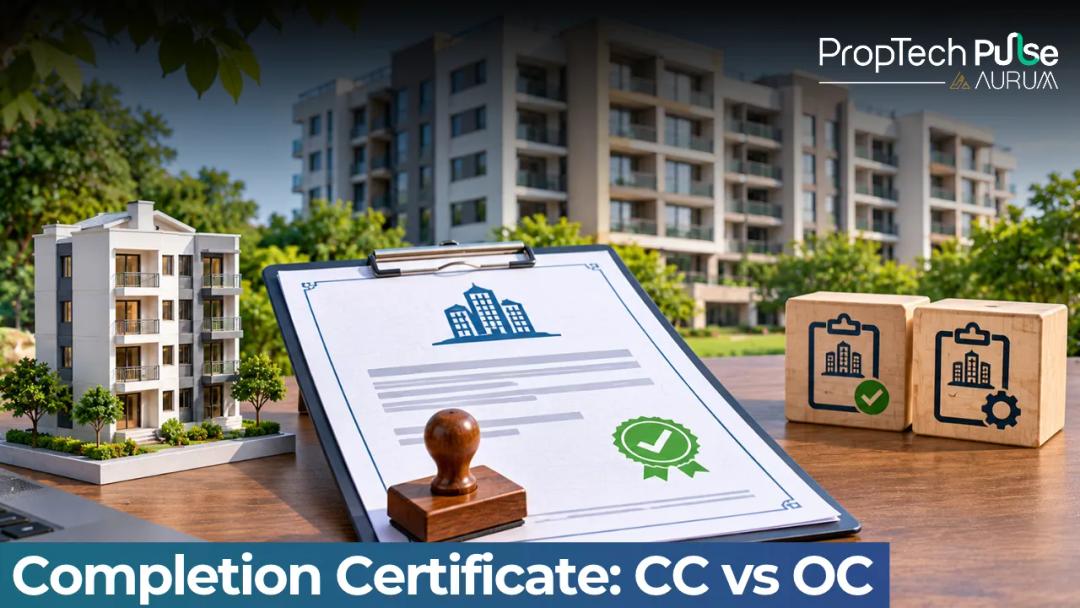
Completion Certificate India: Meaning, Verification & Guide
You are ready to hand over the final balance for your flat, and the builder hands you a folder labelled "Completion Certificate". But what does it actually prove, and why does everyone keep saying you also need an Occupancy Certificate? A completion certificate confirms the builder followed the approved drawings down to the last beam and setback. It does not mean the building is habitable, safe, or legally allowed to be occupied. Buyers often ask what happens next after the builder claims the flat is ready. This guide breaks down the format, the step-by-step verification process, and how these certificates interact with the final handover. In this guide What Exactly Is a Completion Certificate for Flat Buyers? Completion Certificate vs Occupancy Certificate: The Critical Difference Understanding the Completion Certificate Format and Required Signatures Special Scenarios: Partial Certificates and State Variations How to Verify a Completion Certificate Before Payment or Possession What to Do If the Builder Delays or Refuses to Issue the Certificate When to Accept the Handover Documents Frequently asked questions What Exactly Is a Completion Certificate for Flat Buyers? Quick answer A completion certificate proves the builder finished construction exactly as per the approved sanctioned plan and municipal bylaws. It confirms structural compliance but does not grant legal permission to occupy or connect permanent utilities. That requires a separate Occupancy Certificate. RERA defines this document under Section 2(m) of the Real Estate (Regulation and Development) Act, 2016. The municipal authority issues the certificate only after the promoter finishes the project. Builders must construct every unit exactly according to the sanctioned plan and meet all technical specs. Put simply, the local authority confirms the physical build matches the approved paperwork. Footprints, floor counts, height limits, and setbacks all align with the original blueprints. For homebuyers, this paper closes the construction chapter. Builders lose the legal right to demand extra cash past the agreed sale price, unless RERA registers a mutual amendment. The developer also updates the project status to Completed on rera.gov.in before handing over keys. Completion Certificate vs Occupancy Certificate: The Critical Difference Can You Legally Occupy With Only a CC? These two documents cover separate stages of the building lifecycle. Confusing them is one of the most common reasons buyers take possession before they legally can, which later triggers penalty charges or utility disconnections. Key differences between a completion certificate and an occupancy certificate Aspect Completion Certificate (CC) Occupancy Certificate (OC) What it confirms Construction matches the approved plan, height, setbacks, and structural specs The building is structurally sound, fire-safe, and ready for regular residential habitation Issued by Municipal corporation or local town planning authority Same authority, usually after inspections of water, sewerage, fire safety, and electricity loads Sequence First step: arrives when physical construction finishes Second step: follows CC once civic checks clear Utility impact Does not guarantee connection to permanent water lines or high-load electricity meters Required to convert temporary construction supply lines into permanent domestic connections Buyer takeaway Tells you the builder finished what they promised Tells you the flat is legal and safe to live in right now Can you live in a flat with only a CC? Municipal offices sometimes grant temporary permission while minor drainage work finishes. Practically, moving into an unapproved tower creates immediate headaches. Banks hold final loan payments until you show proof of occupancy. Water boards usually reject residential tariffs, pushing you onto expensive commercial rates. Skipped OCs often hide missing fire NOCs or incomplete sewage plants. For a deeper breakdown on how an occupancy certificate differs from a completion certificate, check our targeted guide. Understanding the Completion Certificate Format and Required Signatures Every municipality designs its own form, but valid certificates for registered projects contain four core sections. Checking the layout stops builders from slipping you a preliminary printout. That standard format includes technical checks designed to protect your deposit. Spot the mismatch: Builders sometimes submit a photocopy of the architectural drawing alongside their application. The final certificate must carry the authority's handwritten notes, rubber stamps, and the supervising engineer's wet signature. The standard document starts with a header containing the municipal seal and reference file numbers. Right below that sits the project identification block: plot numbers, scope of work, registered developer name, and the corresponding approved drawing sheet numbers. If the project spans multiple phases, look for the specific tower designation here. The third section holds the technical certifications. This is where the registered architect and structural engineer formally declare that no unauthorized variations were made during construction. If the site team altered a floor plate width or raised the terrace height, the professional certs should show non-conformity rather than a clean sign-off. Finally, the authority's concluding order provides the issue date, the commissioner's signature, and conditions of sanction. Any missing stamp means the certificate is still in motion. Special Scenarios: Partial Certificates and State Variations Phased High-Rises and Partial Completion Certificates Large township developers stagger handovers to manage cash flow. Local authorities usually issue partial certificates when projects exceed fifty units. Buyers in finished towers can begin registration early. Community amenities like parks and sewage plants stay tagged incomplete until every phase clears inspection. Combined CC-cum-OC in Major Municipalities Several city corporations, including areas under the Delhi Municipal Corporation and Mumbai's local bodies, have moved away from issuing two separate files. They now treat the combined CC-cum-OC certificate as the single proof of both structural compliance and habitation readiness. If your state operates under this combined system, the inspection requirements are simply heavier because they bundle fire safety, parking norms, and waste management standards into one final visit. Provisional Certificate Meaning in Hindi Context Sometimes construction hits a snag near the finish line, like the storm drain trench being paved over or the fire lane grading left rough. Instead of waiting months for the contractor to come back, the authority issues a provisional completion certificate. The term tatkalin roughly captures the intent here. It essentially grants temporary permission to occupy while the builder clears minor outstanding items. These provisional approvals almost always carry a six-month validity cap. Once that window closes, the temporary status lapses into a formal violation unless the developer secures the full certificate. Treat a provisional stamp as a firm deadline. Demand action from the sales office before the clock runs out. How to Verify a Completion Certificate Before Payment or Possession A piece of paper alone does not save you from a bad deal. Running through an essential property due diligence checklist is vital before you sign the possession acceptance letter. Step 1: Pull your original approved drawings Locate the architectural plan stamped by the municipal town-planning department when you signed the agreement. Measure the carpet area listed on the drawing. Compare it with the super built-up area mentioned in the brochure. The certificate validates the structural footprint, but carpet discrepancies belong to RERA's measurement guidelines. Step 2: Inspect the setbacks and height limits Walk the perimeter of the building block. If the approved plan shows a three-metre side setback to allow light and air between blocks, check whether a wall has been shoved into that space. Even a small creep makes the structure unapproved. Look at the roofline too. Unauthorized extra floors will appear here. Step 3: Check the settlement fee receipts Municipalities charge additional fees whenever the built-up area deviates slightly from the sanctioned plan. Ask the builder to show the official receipt for any extra taxes paid on variances. A certificate issued without clearing these dues carries hidden liability. Step 4: Confirm the fire and development sanctions While the certificate focuses on structure, legitimate handovers require parallel no-objection certificates from the fire department and the water board. Permanent meter activation depends entirely on those civic NOCs. To understand how each stage ties together and impacts your final payments, reviewing a complete guide to occupancy certificates will clarify why the builder's timeline often stretches longer than expected. You can also check how an occupancy certificate differs from a completion certificate to resolve any lingering doubts about statutory handover prerequisites. What to Do If the Builder Delays or Refuses to Issue the Certificate Stalls occur regularly. Concrete pours face monsoon breaks, steel prices spike, or municipal inspectors queue behind other projects. But a prolonged delay points to something deeper. When construction misses its promised handover date, you are entitled to penalties under Section 14 of the RERA Act. The statute mandates interest on delayed possession if the builder fails to deliver without a force majeure event defined in the contract. Before filing a complaint, gather evidence. Photograph visible discrepancies from the exterior, request the updated project status from the state RERA dashboard, and communicate in writing demanding pending certificate copies. Most state portals, such as [up-rera.in](https://www.up-rera.in) or equivalent state bodies, provide dedicated grievance cells for housing departments and urban local bodies to escalate unfinished civic infrastructure. When to Accept the Handover Documents Handover day is exciting, but do not let excitement override the paperwork. Your acceptance signature triggers maintenance billing, so treat it like a contractual close. Verify the certificate explicitly lists your block number. Generic site-wide clearance requires a supplementary schedule naming your specific units first. Compare the council-approved carpet area against your booking details. RERA allows a 3% variance; anything higher demands immediate compensation before you accept keys. Finally, demand the combined occupancy clearance or separate utility NOCs. Permanent domestic tariffs on water and power are mandatory, or your monthly bills will jump sharply. Frequently asked questions What exactly is a completion certificate in real estate? It is an official document issued by the local municipal authority or development agency confirming that the builder has finished construction exactly as per the sanctioned building plan. The certificate verifies that structural dimensions, floor heights, setbacks, and technical specifications align with what was legally approved during the initial town-planning stage. Is a completion certificate mandatory before taking possession? Yes, absolutely. Building codes and the RERA mandate require the completion certificate to prove physical construction is done before handover occurs. Moving in without one means entering an unapproved structure. That voids standard home insurance. It also exposes you to sudden eviction orders if officials flag structural violations later. How do I verify a completion certificate against my approved plan? First, locate the stamped architectural drawings you received with your booking documents. Walk the perimeter of the building block and measure the actual side setbacks against the approved distances on paper. Next, compare the registered architect's sign-off on the certificate to the original blueprints to ensure no unauthorized extra floors or sunken terraces were added during the build. What happens if the builder delays issuing the certificate? Under Section 14 of the RERA Act, buyers are legally entitled to receive compensation interest for every month of delay caused solely by the builder. If the stall stems from uncompleted civic infrastructure like roads or sewers, you should log a formal grievance on the respective state RERA portal, providing photos of the stalled site and a copy of your original sale agreement. What is a provisional completion certificate and its validity? A provisional certificate grants temporary occupancy permission while the developer finishes minor outstanding work, such as paving communal pathways or correcting boundary walls. It always carries a strict six-month validity cap. Once that window expires, the temporary license vanishes unless the builder secures the full certificate, making it a firm deadline to hold the sales team accountable. Sources RERA Act 2016 (Act 5 of 2016): Statutory definitions and Section 2(m) framework (accessed November 2026) Uttar Pradesh RERA (up-rera.in): Guidelines on builder obligations and grievance redressal mechanisms (accessed November 2026) Enjoyed this blog article? Visit PropTech Pulse for more interesting blogs.
PropTech Pulse Editorial
26th November 2026

Uncategorized
Halasuru Metro Station Guide: Timings, Routes & Fares (2026)
You are standing near Ulsoor Lake and you want to reach MG Road or Whitefield without fighting peak hour traffic. The closest solution is the Halasuru Metro Station. Situated right off Swamy Vivekananda Road, this overhead Purple Line stop serves both locals and IT professionals commuting across the city. You might see it listed as Ulsoor Metro Station on older maps, but it operates under the same station code HLRU on the Namma Metro network. Most commuter guides simply dump long lists of station names and leave you guessing about exit gates or actual ticket costs. This guide cuts straight to the practical details: real travel times to key workplaces, exact fare breakdowns, and the Monday morning timetable quirk that catches early risers off guard. In this guide Halasuru Metro Station (Ulsoor Metro) Quick Facts Halasuru Metro Station Timings: First & Last Trains Planning Your Trip: Halasuru Metro Station Route Directions Halasuru Metro Station Journey Planner: Times & Fares Entering the Station: Exit Gates, Parking & Accessibility Changing Lines & Bus Connectivity from Halasuru Metro Frequently asked questions Halasuru Metro Station (Ulsoor Metro) Quick Facts Quick answer Halasuru Metro Station (station code HLRU) is an upper-level Purple Line stop situated off Swamy Vivekananda Road. It connects central Bengaluru destinations like MG Road and Majestic with eastern hubs such as Whitefield and Baiyappanahalli. Core operating data for Halasuru Metro Station Detail Information Station Code HLRU Operator Bangalore Metro Rail Corporation Ltd (BMRCL) Line / Corridor Purple Line (East-West Corridor) Type Above-ground Location Swamy Vivekananda Road, adjacent to Ulsoor Lake Halasuru Metro Station Timings: First & Last Trains Schedule logic depends on the calendar date. Terminal trains typically leave at 05:00 AM. Monday morning passengers must adjust their clocks. Extended weekday maintenance pushes the initial run forward by forty-five minutes. First Train (Mon): 04:15 AM.Last Train (Sun/Mon–Sat): 23:05 PM from terminals. This window difference matters if you are pulling an overnight shift or working late hours. Never rely on memory for these timings, as BMRCL occasionally adjusts the final departure during festivals or special track work. Download the Namma Metro app to receive push notifications about temporary changes. Texting your destination station name to the official number also works for live updates. Many regulars use that extra head start to grab breakfast without rushing. Students near MS Ramaiah Medical College often board the 04:30 AM train to secure seats before the platform fills. Miss that very first train and the next one arrives within eight minutes. Waiting thirty minutes is unnecessary unless a technical delay shows on the platform board. Monday Morning Alert If your office requires you to clock in before 09:00 AM, factor in the 04:15 AM start. Waiting for the 05:00 AM train could force you into unnecessary rush hour traffic once you reach the ground level. Planning Your Trip: Halasuru Metro Station Route Directions Halasuru functions as an east-west corridor anchor. Choose your platform based on whether you are heading toward the tech parks in the east or the administrative core in the west. The underground interpassage connects the platforms, so do not walk back to street level just because you picked the wrong side initially. Follow the directional signage overhead to reach the correct stairwell. Platform 1: Halasuru Metro Station Route towards Whitefield (Kadugodi) Head eastbound through Indiranagar, Central Park, and Baiyappanahalli. From there, the line stretches through Hennur, Marathahalli, Bellandur, Kadugodi, and finally terminates at Whitefield. This direction feeds directly into corridors used by IT employees stationed along the Eastern Peripheral Road belt. Expect heavier loads leaving Indiranagar, where office foot traffic surges between nine and ten in the morning. The ride past Devarachikkanahalli offers a clear view of sprawling SEZ developments. Travelers heading to Outer Ring Road offices typically alight at Silk Institute or Hennur Main before switching to feeder buses. Keep your smart card ready before reaching the end of the line, as boarding queues form quickly near Kadugodi during evening shifts. Halasuru Metro Station Route towards Challaghatta Westbound services push through Trinity, Shivajinagar, and Vidhana Soudha before hitting the major interchange point at Majestic. After crossing Krantivira Sangolli Rayanna station, the line continues toward Vijayanagar and ends at Challaghatta. This route handles the bulk of midday corporate footfall. Trinity stop pulls in shoppers and lunch-break travelers from Cubbon Park visitors. Shivajinagar acts as a vital transport junction linking state buses and suburban rails. Commuters bound for the Government Secretariat or high courts frequently transfer here. The platform gets noticeably crowded between noon and two PM. Hold your grip bar firmly during these windows. Halasuru Metro Station Journey Planner: Times & Fares Rather than scrolling through thirty-seven stops to estimate your travel window, use this matrix for destinations most relevant to Bengaluru professionals. The token fares reflect the current Namma Metro pricing model, though monthly smart cards offer slight reductions during off-peak hours. Estimated travel duration and token fare from Halasuru Metro Station to key destinations Destination Approx Travel Time Token Fare (One Way) MG Road 10 minutes ₹20 Indiranagar 5 minutes ₹15 Baiyappanahalli 15 minutes ₹30 Majestic / Vidhana Soudha 20 minutes ₹40 Kadugodi 30 minutes ₹60 Whitefield 35 minutes ₹70 Zone boundaries control your fare. Crossing multiple zones triggers automatic tier jumps. Students get a fifty percent discount on smart cards until they turn eighteen. Seniors ride free before eleven in the morning. Monthly passes lock you into specific zones and block cross-network hopping during restricted hours. For those tracking long-term value, knowing how proximity to a metro station affects apartment pricing explains why rental yields spike within a kilometre radius of these stops. Properties here command a premium for the commute savings alone. If you are looking at housing options further east, checking the Baiyappanahalli Metro Station commute guide gives you context on how transit nodes shift neighbourhood demand. Entering the Station: Exit Gates, Parking & Accessibility Stepping off the train drops you onto a concrete footbridge overlooking the main road. There are three primary exit points, and choosing the wrong one means walking half a kilometre back through cross-traffic. Exit near Ramakrishna Mutt leads toward Gate A and Gate B. These exits drop you closest to the Ulsoor Lake perimeter and the residential pockets of the area. You can find the exact Bangalore Halasuru pin code mapped out in our area guide if you are coordinating a drop-off. Street vendors cluster near this gate, offering quick snacks before you continue your journey home. Gate C opens toward Jogupalya. This side faces the newer commercial clusters and smaller offices that have popped up along the arterial roads. Parking is strictly bicycle-only at the base. Motor vehicles cannot park directly inside the station premises, so relying on an app-based cab for the final stretch is the only option. Passengers requiring wheelchair assistance should locate the vertical lift nearest the main staircase attendants. Staff members operate the lift upon request. Tactile flooring guides visually impaired commuters from the turnstile to the train doors. Footbridges span heavily trafficked intersections, so always use the designated pedestrian ramps rather than cutting across lanes. Traffic wardens frequently issue fines for unsafe crossings outside these infrastructure points. Changing Lines & Bus Connectivity from Halasuru Metro Halasuru sits entirely on the Purple Line. To access the Blue Line heading toward Yeshwantpur, or the Green Line bound for Chikkabettabetta, you must travel six stops west. The Nadaprabhu Kempegowda station at Majestic acts as the primary hub for almost all inter-corridor transfers in the downtown zone. Buses from BMTC operate regularly on the surface road below, but wait times at busy junctions often erase the time saved skipping the metro lines altogether. For cross-town commutes, staying seated on the rail network usually proves faster. Route 275C and 277H pass directly beneath the station entrance. Auto-rickshaws queue along Swamy Vivekananda Road when trains arrive. Negotiating fares upfront prevents disputes, especially during heavy rain. Food delivery riders use the rear service corridors during lunch rushes. Pedestrian safety remains a priority near the lakefront walkways. What makes this route worth taking today If your destination is anywhere between Shivajinagar and Marathahalli, the rail corridor bypasses the worst gridlock reliably. Stick to the platform that matches your direction, grab a coffee at the kiosk while waiting, and swipe your card before boarding. Avoid weekends unless you specifically want to visit the lake, as evening crowds thicken considerably. Frequently asked questions What is the last metro timing at Halasuru? Trains running back from the terminal end at Whitefield and Challaghatta typically pull into Halasuru by 23:05 PM. During Sundays, the last train also departs at the same slot, meaning you have roughly an hour of buffer space to catch a ride home after evening activities. How far is Ulsoor Lake from Halasuru metro station? The lake sits less than four hundred metres from Gate A. If you take the Ramakrishna Mutt exit, you can walk along the paved pathways to reach the waterfront promenade in about five minutes. Can I change lines at Halasuru metro station? No direct interchange exists here. Halasuru hosts only the Purple Line. You cannot catch the Blue Line toward Yeshwantpur or the Green Line bound for Chikkabettabetta from this stop. Travel westbound to the Nadaprabhu Kempegowda station at Majestic instead. It sits six stops away and handles all transfers. Where do I park my bike at Halasuru? Motor vehicle parking is not available within the station boundary. However, designated bicycle racks sit directly beneath the footbridge near the base of the staircase at both Gate A and Gate C exits. These spots fill up quickly before peak hours. Enjoyed this blog article? Visit PropTech Pulse for more interesting blogs.
PropTech Pulse Editorial
26th November 2026
Uncategorized
Plumbing Materials Name List India: Pipes, Fittings & Valves
Buying a flat means handing over lakhs, but a single cracked pipe can undo years of peace. If you're managing a renovation or verifying your contractor's bill, knowing the exact plumbing materials name list isn't just useful it's necessary. It stops a vendor from upsizing your fittings or a site supervisor from mixing up hot and cold lines. This guide breaks down every essential Indian plumbing fitting name, explains when to use which pipe, and shows you how to spot the mandatory quality marks before you spend money. If you recently moved into a property, this knowledge pairs directly with our guide on checking plumbing quality. In this guide The Ultimate Plumbing Materials Name List for Indians Pipe Sizing Standards for Indian Homes Average Plumbing Material Prices in India (2026 Market Rates) How to Verify Quality Before Buying Pipes and Fittings (BIS Marks) Pressure Testing Your New Lines Final Checklist Before You Pay Your Plumber Frequently asked questions The Ultimate Plumbing Materials Name List for Indians Quick answer The main plumbing materials name list covers CPVC pipes for hot and cold supply. UPVC handles drainage while PVC manages waste. Fittings include P-traps, ball valves, and flexi hoses. Pick only BIS-certified pipes rated for your specific pressure needs. When contractors talk about pipes, they usually mix up three distinct material types. Knowing the difference prevents leaks and bursts later. For general plumbing fittings names, focus on how the water flows rather than just grabbing whatever is cheapest at the hardware store. CPVC Pipes and Fittings (Hot & Cold Water Supply) Chlorinated Polyvinyl Chloride is the modern standard for internal water lines. It handles both hot and cold water safely. Unlike older metallic options, CPVC does not rust or corrode over time. These pipes are typically cream or off-white. They connect using a special solvent cement. Every bathroom and kitchen main line should use this grade. The pipes withstand higher temperatures without warping. When shopping for these plumbing items name, look for the specific "CPVC" marking on the sleeve. Do not buy cleaner water variants for your geyser connections by mistake. The National Building Code of India strongly recommends CPVC for indoor plumbing facilities [1]. UPVC Pipes and Fittings (Drainage and Clean Water Lines) Unplasticized Polyvinyl Chloride is rigid and thick-walled. It is built for long-term durability. However, it has one major weakness. UPVC cannot handle sustained heat. Use it for toilet drainage, sink overflow lines, and underground clean water mains. Never route a hot water geyser line through a UPVC joint. While CPVC handles high-temp solvents easily, UPVC glue remains brittle under constant heating. Builders often use UPVC for external soil stacks. The plastic resists harsh weather and ground moisture far better than traditional GI pipes. Check out our glossary on the step-by-step process for Y trap plumbing compliance to understand how these waste pipes connect properly. Drainage Fittings and Traps (Waste Management) A working plumbing system needs more than just straight pipes. Specific geometry stops sewage gases from entering your rooms. P-Trap: Located under sinks and washbasins. A curved pipe holds water that blocks foul sewer smells. S-Trap: Common in older South Asian homes and floor-level drains. Shaped like an 'S' to prevent gas backflow. Watch out for suction issues if water flow is too fast. Flexi Hose: Flexible braided stainless steel connectors. Used between the wall tap and washing machines or bidets. They absorb vibration and accommodate alignment gaps during installation. Elbow and Tee: Standard 90-degree bends and T-junctions used to change direction or merge waste streams. Essential Valves and Stop-Cocks (Flow Control) You will want to shut off water to a specific tap. Doing so avoids closing the main municipal valve. The following valves are non-negotiable for modern Indian households. Stop-Cock: The master shut-off valve installed before your meter or after the overhead tank inlet. Ball Valve: A quarter-turn valve highly resistant to mineral build-up. Ideal for daily use on washing machines and geysers. Check Valve (Non-Return Valve): Installed on the main inlet line. Ensures municipal water does not drain backward into the public street. Float Valve: Mounted inside the terrace sump or overhead tank. Automatically cuts off the inlet when the tank reaches full capacity. Toilet and Sanitary Ware Connections If you are auditing a builder's quote, comparing different plumber all fitting name options is critical. Cheap plastic flanges crack within a year. Toilet Flange: The mounting bracket fixed to the floor. Anchors your pan securely and seals the connection to the underground stack. Closet Connector (Angle Valve): Usually brass or chrome-plated metal. Connects your wall outlet to the soft flexi hose feeding the toilet cistern. Wax Ring / Rubber Gasket: The flexible seal placed between the toilet base and the floor flange. Contains wastewater and blocks gas leaks around the ceramic. Water-Saving Fittings and Mixers Modern plumbing goes beyond basic supply lines. Installing efficient fixtures reduces monthly utility bills and protects the city water grid. Mixer Valve: Blends hot and cold water at the basin or shower head. Lets you dial in the exact temperature without adjusting two separate knobs. Aerator: A small screen screwed onto faucet outlets. Mixes air with water to maintain spray pressure while cutting consumption by forty percent. Dual Flush Kit: Attached to the toilet cistern button plate. Offers a half-volume flush for liquids and a full-volume flush for solids. Shower Column: Multi-jet vertical bars mounted on the bathroom wall. Combine overhead rain showers, massage jets, and hand sprayers in a single unit. Pro Tip: Always ask your supplier for solvent cement specifically matched to the pipe brand you bought. Mixing different chemical formulas often causes the glue to dry cloudy or fail under pressure. Pipe Sizing Standards for Indian Homes Vendors will try to sell you larger diameter pipes than you actually need. Proper sizing ensures steady water pressure throughout the house without wasting budget. The main incoming line from the municipal corporation or your basement pump should be a 1-inch (25mm) pipe. All bathroom branch lines splitting off the main should remain 1-inch. Individual taps, however, only require a 0.5-inch (15mm) line. Using oversized pipes increases cost without improving flow. Oversized pipes also take longer to fill with hot water, wasting energy from your geyser. Always confirm the bore size printed on the outer sleeve before purchasing. A proper sizing plan saves thousands on unused plastic and guarantees reliable pressure at the second-floor terrace tank. Average Plumbing Material Prices in India (2026 Market Rates) Prices shift depending on whether you buy retail or wholesale. GST currently sits at 18% for most imported and premium local brands. The ranges below reflect average bulk purchase costs across major metros in 2026. Average bulk pricing for standard 1-inch (25mm) piping per 3-meter length in India, 2026 Pipe Material Average Price Range (₹) Best Suited Use Case UPVC Class IV Pipe ₹450 – ₹750 Cold water mains, underground drainage CPVC Heavy Duty Pipe ₹850 – ₹1,400 Hot and cold mixed water supply PVC Soil/Waste Pipe (4-inch) ₹600 – ₹1,000 Toilet and floor waste outlets Braided Flexi Hose (6-inch) ₹120 – ₹250 Appliance connections, shower mixer Note: Metal copper pipes (Grade II hard drawn) remain a niche luxury for exposed architectural designs. They cost roughly ₹1,850 per 3 meters and require specialized soldering skills to install. How to Verify Quality Before Buying Pipes and Fittings (BIS Marks) Never hand over cash for piping without checking for the Bureau of Indian Standards (BIS) mark embossed directly on the pipe wall. The plumbing industry is rife with manufacturers who use recycled plastic and fillers. These cheap pipes become brittle after two monsoon seasons. By law, potable water products must meet specific quality codes. IS 4984: The mandatory BIS standard for unplasticized polyvinyl chloride pipes intended for water distribution. IS 13812: The official specification for chlorinated polyvinyl chloride pipes designed for pressurised hot and cold water systems. If a salesman offers you unbranded "white pipes" at a deep discount, reject them immediately. Cheap plastic releases micro-particulates into your drinking water. It also cracks when the sun hits the terrace tank inlet. Look up our checklist on how to tell if a builder used good quality materials to cross-reference their hidden work. Pressure Testing Your New Lines Once your plumber finishes the layout, do not close the walls yet. Demand a pressure test before plastering begins. This simple check catches weak joints that would otherwise flood your living room months later. Ask the worker to attach a manual pump to the main inlet. Pump the system up to 8 kg/cm², which is double the standard municipal supply pressure. Hold this pressure for at least two hours. Watch the gauge closely. If the needle drops even slightly, there is a leak somewhere. The plumber must cut open the faulty joint, redo the solvent welding, and test again until the gauge holds steady. Never pay the final labor installment until this test passes visibly. Final Checklist Before You Pay Your Plumber Before settling the final labor bill, walk through your wet areas and confirm four simple things: All hot and cold lines are clearly marked with red and blue stress points or paint dots. The overhead tank float valve moves freely and shuts off exactly at the top. Every P-trap has standing water and there is zero smell coming from the bathroom floor drain. Both main stop-cocks are accessible and turn smoothly, without leaking around the stem. For anyone buying a new home and worried about hidden defects, reading our FAQ on how to check the plumbing in a new apartment provides a systematic walkthrough of exactly what to look for. The Bottom Line on Choosing Right Materials Your walls can be painted perfectly and your furniture sourced from Italy. Poor piping turns any renovation into a nightmare of flooded ceilings and cracked tiles. Invest in certified CPVC for interior lines and solid UPVC for drainage. The small premium you pay upfront saves thousands in breaking open plaster later. Frequently asked questions What are the different types of plumbing pipes used in houses? Indian homes primarily use three types of plastic pipes for internal plumbing. CPVC (Chlorinated Polyvinyl Chloride) handles both hot and cold water supply lines. UPVC (Unplasticized Polyvinyl Chloride) is reserved for cold water mains and internal drainage stacks. PVC pipes are strictly used for heavy waste disposal and toilet soil lines. Older homes may still contain exposed Galvanised Iron pipes, though these are gradually being phased out due to rust issues. Which pipe is best for hot water in India? CPVC is the absolute standard for hot water lines in Indian bathrooms and kitchens. Because geysers push water at high temperatures, standard UPVC pipes will soften, warp, and eventually leak at the glued joints. CPVC is engineered to withstand thermal expansion without cracking. Always verify that your CPVC pipes carry the IS 13812 BIS certification mark before purchase, as substandard alternatives melt rapidly when connected directly to electric geysers. How much does CPVC pipe cost per meter in 2026? In 2026, a standard 3-meter length of 1-inch heavy-duty CPVC pipe typically costs between ₹850 and ₹1,400 depending on the brand and local GST rates. When divided across the length, that translates to roughly ₹280 to ₹470 per meter. Smaller half-inch lines run cheaper, generally sitting between ₹150 and ₹300 per meter. Wholesale markets offer slightly better margins if you are purchasing for a full-floor renovation project. What is the difference between CPVC and UPVC pipes? The key difference lies in temperature resistance and rigidity. UPVC is rigid, thick-walled, and excellent for drainage and cold water, but it becomes brittle and fails under sustained heat. CPVC is chemically modified to handle boiling water from geysers and remains flexible enough to absorb minor vibrations. Builders sometimes mix them up incorrectly; always use CPVC for any line fed directly by a hot water source. How can I identify quality plumbing materials before buying? Legitimate plumbing materials sold in India must display an embossed Bureau of Indian Standards (BIS) mark running along the outer surface of the pipe. For potable water lines, you should specifically look for IS 4984 on UPVC pipes and IS 13812 on CPVC pipes. Reputable brands also print their manufacturing dates and production batch numbers directly on the casing, making it nearly impossible for counterfeit sellers to alter the expiration timeline. Enjoyed this blog article? Visit PropTech Pulse for more interesting blogs.
PropTech Pulse Editorial
26th November 2026
Uncategorized
Completion Certificate India: Meaning, Verification & Guide
You are ready to hand over the final balance for your flat, and the builder hands you a folder labelled "Completion Certificate". But what does it actually prove, and why does everyone keep saying you also need an Occupancy Certificate? A completion certificate confirms the builder followed the approved drawings down to the last beam and setback. It does not mean the building is habitable, safe, or legally allowed to be occupied. Buyers often ask what happens next after the builder claims the flat is ready. This guide breaks down the format, the step-by-step verification process, and how these certificates interact with the final handover. In this guide What Exactly Is a Completion Certificate for Flat Buyers? Completion Certificate vs Occupancy Certificate: The Critical Difference Understanding the Completion Certificate Format and Required Signatures Special Scenarios: Partial Certificates and State Variations How to Verify a Completion Certificate Before Payment or Possession What to Do If the Builder Delays or Refuses to Issue the Certificate When to Accept the Handover Documents Frequently asked questions What Exactly Is a Completion Certificate for Flat Buyers? Quick answer A completion certificate proves the builder finished construction exactly as per the approved sanctioned plan and municipal bylaws. It confirms structural compliance but does not grant legal permission to occupy or connect permanent utilities. That requires a separate Occupancy Certificate. RERA defines this document under Section 2(m) of the Real Estate (Regulation and Development) Act, 2016. The municipal authority issues the certificate only after the promoter finishes the project. Builders must construct every unit exactly according to the sanctioned plan and meet all technical specs. Put simply, the local authority confirms the physical build matches the approved paperwork. Footprints, floor counts, height limits, and setbacks all align with the original blueprints. For homebuyers, this paper closes the construction chapter. Builders lose the legal right to demand extra cash past the agreed sale price, unless RERA registers a mutual amendment. The developer also updates the project status to Completed on rera.gov.in before handing over keys. Completion Certificate vs Occupancy Certificate: The Critical Difference Can You Legally Occupy With Only a CC? These two documents cover separate stages of the building lifecycle. Confusing them is one of the most common reasons buyers take possession before they legally can, which later triggers penalty charges or utility disconnections. Key differences between a completion certificate and an occupancy certificate Aspect Completion Certificate (CC) Occupancy Certificate (OC) What it confirms Construction matches the approved plan, height, setbacks, and structural specs The building is structurally sound, fire-safe, and ready for regular residential habitation Issued by Municipal corporation or local town planning authority Same authority, usually after inspections of water, sewerage, fire safety, and electricity loads Sequence First step: arrives when physical construction finishes Second step: follows CC once civic checks clear Utility impact Does not guarantee connection to permanent water lines or high-load electricity meters Required to convert temporary construction supply lines into permanent domestic connections Buyer takeaway Tells you the builder finished what they promised Tells you the flat is legal and safe to live in right now Can you live in a flat with only a CC? Municipal offices sometimes grant temporary permission while minor drainage work finishes. Practically, moving into an unapproved tower creates immediate headaches. Banks hold final loan payments until you show proof of occupancy. Water boards usually reject residential tariffs, pushing you onto expensive commercial rates. Skipped OCs often hide missing fire NOCs or incomplete sewage plants. For a deeper breakdown on how an occupancy certificate differs from a completion certificate, check our targeted guide. Understanding the Completion Certificate Format and Required Signatures Every municipality designs its own form, but valid certificates for registered projects contain four core sections. Checking the layout stops builders from slipping you a preliminary printout. That standard format includes technical checks designed to protect your deposit. Spot the mismatch: Builders sometimes submit a photocopy of the architectural drawing alongside their application. The final certificate must carry the authority's handwritten notes, rubber stamps, and the supervising engineer's wet signature. The standard document starts with a header containing the municipal seal and reference file numbers. Right below that sits the project identification block: plot numbers, scope of work, registered developer name, and the corresponding approved drawing sheet numbers. If the project spans multiple phases, look for the specific tower designation here. The third section holds the technical certifications. This is where the registered architect and structural engineer formally declare that no unauthorized variations were made during construction. If the site team altered a floor plate width or raised the terrace height, the professional certs should show non-conformity rather than a clean sign-off. Finally, the authority's concluding order provides the issue date, the commissioner's signature, and conditions of sanction. Any missing stamp means the certificate is still in motion. Special Scenarios: Partial Certificates and State Variations Phased High-Rises and Partial Completion Certificates Large township developers stagger handovers to manage cash flow. Local authorities usually issue partial certificates when projects exceed fifty units. Buyers in finished towers can begin registration early. Community amenities like parks and sewage plants stay tagged incomplete until every phase clears inspection. Combined CC-cum-OC in Major Municipalities Several city corporations, including areas under the Delhi Municipal Corporation and Mumbai's local bodies, have moved away from issuing two separate files. They now treat the combined CC-cum-OC certificate as the single proof of both structural compliance and habitation readiness. If your state operates under this combined system, the inspection requirements are simply heavier because they bundle fire safety, parking norms, and waste management standards into one final visit. Provisional Certificate Meaning in Hindi Context Sometimes construction hits a snag near the finish line, like the storm drain trench being paved over or the fire lane grading left rough. Instead of waiting months for the contractor to come back, the authority issues a provisional completion certificate. The term tatkalin roughly captures the intent here. It essentially grants temporary permission to occupy while the builder clears minor outstanding items. These provisional approvals almost always carry a six-month validity cap. Once that window closes, the temporary status lapses into a formal violation unless the developer secures the full certificate. Treat a provisional stamp as a firm deadline. Demand action from the sales office before the clock runs out. How to Verify a Completion Certificate Before Payment or Possession A piece of paper alone does not save you from a bad deal. Running through an essential property due diligence checklist is vital before you sign the possession acceptance letter. Step 1: Pull your original approved drawings Locate the architectural plan stamped by the municipal town-planning department when you signed the agreement. Measure the carpet area listed on the drawing. Compare it with the super built-up area mentioned in the brochure. The certificate validates the structural footprint, but carpet discrepancies belong to RERA's measurement guidelines. Step 2: Inspect the setbacks and height limits Walk the perimeter of the building block. If the approved plan shows a three-metre side setback to allow light and air between blocks, check whether a wall has been shoved into that space. Even a small creep makes the structure unapproved. Look at the roofline too. Unauthorized extra floors will appear here. Step 3: Check the settlement fee receipts Municipalities charge additional fees whenever the built-up area deviates slightly from the sanctioned plan. Ask the builder to show the official receipt for any extra taxes paid on variances. A certificate issued without clearing these dues carries hidden liability. Step 4: Confirm the fire and development sanctions While the certificate focuses on structure, legitimate handovers require parallel no-objection certificates from the fire department and the water board. Permanent meter activation depends entirely on those civic NOCs. To understand how each stage ties together and impacts your final payments, reviewing a complete guide to occupancy certificates will clarify why the builder's timeline often stretches longer than expected. You can also check how an occupancy certificate differs from a completion certificate to resolve any lingering doubts about statutory handover prerequisites. What to Do If the Builder Delays or Refuses to Issue the Certificate Stalls occur regularly. Concrete pours face monsoon breaks, steel prices spike, or municipal inspectors queue behind other projects. But a prolonged delay points to something deeper. When construction misses its promised handover date, you are entitled to penalties under Section 14 of the RERA Act. The statute mandates interest on delayed possession if the builder fails to deliver without a force majeure event defined in the contract. Before filing a complaint, gather evidence. Photograph visible discrepancies from the exterior, request the updated project status from the state RERA dashboard, and communicate in writing demanding pending certificate copies. Most state portals, such as [up-rera.in](https://www.up-rera.in) or equivalent state bodies, provide dedicated grievance cells for housing departments and urban local bodies to escalate unfinished civic infrastructure. When to Accept the Handover Documents Handover day is exciting, but do not let excitement override the paperwork. Your acceptance signature triggers maintenance billing, so treat it like a contractual close. Verify the certificate explicitly lists your block number. Generic site-wide clearance requires a supplementary schedule naming your specific units first. Compare the council-approved carpet area against your booking details. RERA allows a 3% variance; anything higher demands immediate compensation before you accept keys. Finally, demand the combined occupancy clearance or separate utility NOCs. Permanent domestic tariffs on water and power are mandatory, or your monthly bills will jump sharply. Frequently asked questions What exactly is a completion certificate in real estate? It is an official document issued by the local municipal authority or development agency confirming that the builder has finished construction exactly as per the sanctioned building plan. The certificate verifies that structural dimensions, floor heights, setbacks, and technical specifications align with what was legally approved during the initial town-planning stage. Is a completion certificate mandatory before taking possession? Yes, absolutely. Building codes and the RERA mandate require the completion certificate to prove physical construction is done before handover occurs. Moving in without one means entering an unapproved structure. That voids standard home insurance. It also exposes you to sudden eviction orders if officials flag structural violations later. How do I verify a completion certificate against my approved plan? First, locate the stamped architectural drawings you received with your booking documents. Walk the perimeter of the building block and measure the actual side setbacks against the approved distances on paper. Next, compare the registered architect's sign-off on the certificate to the original blueprints to ensure no unauthorized extra floors or sunken terraces were added during the build. What happens if the builder delays issuing the certificate? Under Section 14 of the RERA Act, buyers are legally entitled to receive compensation interest for every month of delay caused solely by the builder. If the stall stems from uncompleted civic infrastructure like roads or sewers, you should log a formal grievance on the respective state RERA portal, providing photos of the stalled site and a copy of your original sale agreement. What is a provisional completion certificate and its validity? A provisional certificate grants temporary occupancy permission while the developer finishes minor outstanding work, such as paving communal pathways or correcting boundary walls. It always carries a strict six-month validity cap. Once that window expires, the temporary license vanishes unless the builder secures the full certificate, making it a firm deadline to hold the sales team accountable. Sources RERA Act 2016 (Act 5 of 2016): Statutory definitions and Section 2(m) framework (accessed November 2026) Uttar Pradesh RERA (up-rera.in): Guidelines on builder obligations and grievance redressal mechanisms (accessed November 2026) Enjoyed this blog article? Visit PropTech Pulse for more interesting blogs.
PropTech Pulse Editorial
26th November 2026

Ask Pulse Ai anything about real estate

Unlock the Latest in Real Estate
News, Infographics, Blogs & More! Delivered to your inbox.

