New Launch - India Real Estate Report 2026.

Services
Knowledge Hub
Resources
Tools

Ask Pulse Ai
©PropTech Pulse 2025, All rights reserved.


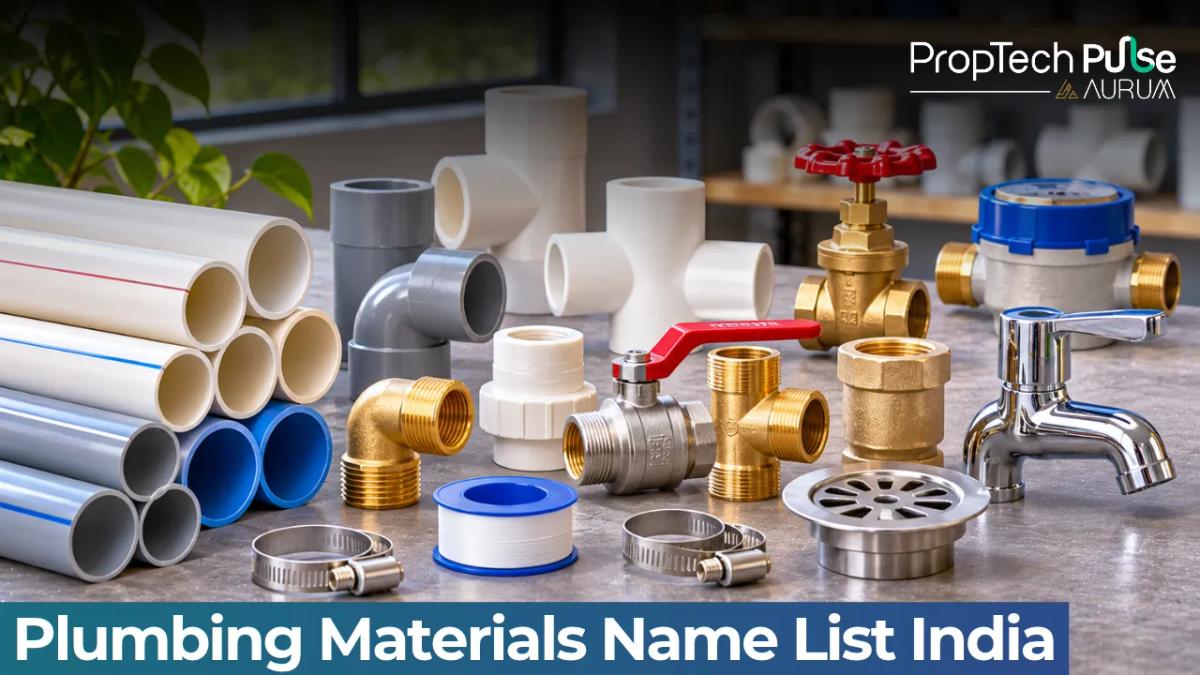
Buying a flat means handing over lakhs, but a single cracked pipe can undo years of peace. If you're managing a renovation or verifying your contractor's bill, knowing the exact plumbing materials name list isn't just useful it's necessary.
It stops a vendor from upsizing your fittings or a site supervisor from mixing up hot and cold lines.
This guide breaks down every essential Indian plumbing fitting name, explains when to use which pipe, and shows you how to spot the mandatory quality marks before you spend money.
If you recently moved into a property, this knowledge pairs directly with our guide on checking plumbing quality.
The Ultimate Plumbing Materials Name List for Indians
Quick answer
The main plumbing materials name list covers CPVC pipes for hot and cold supply. UPVC handles drainage while PVC manages waste. Fittings include P-traps, ball valves, and flexi hoses. Pick only BIS-certified pipes rated for your specific pressure needs.
When contractors talk about pipes, they usually mix up three distinct material types. Knowing the difference prevents leaks and bursts later. For general plumbing fittings names, focus on how the water flows rather than just grabbing whatever is cheapest at the hardware store.
CPVC Pipes and Fittings (Hot & Cold Water Supply)
Chlorinated Polyvinyl Chloride is the modern standard for internal water lines. It handles both hot and cold water safely.
Unlike older metallic options, CPVC does not rust or corrode over time. These pipes are typically cream or off-white.
They connect using a special solvent cement. Every bathroom and kitchen main line should use this grade.
The pipes withstand higher temperatures without warping. When shopping for these plumbing items name, look for the specific "CPVC" marking on the sleeve.
Do not buy cleaner water variants for your geyser connections by mistake. The National Building Code of India strongly recommends CPVC for indoor plumbing facilities [1].
UPVC Pipes and Fittings (Drainage and Clean Water Lines)
Unplasticized Polyvinyl Chloride is rigid and thick-walled. It is built for long-term durability.
However, it has one major weakness. UPVC cannot handle sustained heat.
Use it for toilet drainage, sink overflow lines, and underground clean water mains.
Never route a hot water geyser line through a UPVC joint.
While CPVC handles high-temp solvents easily, UPVC glue remains brittle under constant heating.
Builders often use UPVC for external soil stacks. The plastic resists harsh weather and ground moisture far better than traditional GI pipes.
Check out our glossary on the step-by-step process for Y trap plumbing compliance to understand how these waste pipes connect properly.
Drainage Fittings and Traps (Waste Management)
A working plumbing system needs more than just straight pipes. Specific geometry stops sewage gases from entering your rooms.
- P-Trap: Located under sinks and washbasins. A curved pipe holds water that blocks foul sewer smells.
- S-Trap: Common in older South Asian homes and floor-level drains. Shaped like an 'S' to prevent gas backflow. Watch out for suction issues if water flow is too fast.
- Flexi Hose: Flexible braided stainless steel connectors. Used between the wall tap and washing machines or bidets. They absorb vibration and accommodate alignment gaps during installation.
- Elbow and Tee: Standard 90-degree bends and T-junctions used to change direction or merge waste streams.
Essential Valves and Stop-Cocks (Flow Control)
You will want to shut off water to a specific tap. Doing so avoids closing the main municipal valve. The following valves are non-negotiable for modern Indian households.
- Stop-Cock: The master shut-off valve installed before your meter or after the overhead tank inlet.
- Ball Valve: A quarter-turn valve highly resistant to mineral build-up. Ideal for daily use on washing machines and geysers.
- Check Valve (Non-Return Valve): Installed on the main inlet line. Ensures municipal water does not drain backward into the public street.
- Float Valve: Mounted inside the terrace sump or overhead tank. Automatically cuts off the inlet when the tank reaches full capacity.
Toilet and Sanitary Ware Connections
If you are auditing a builder's quote, comparing different plumber all fitting name options is critical. Cheap plastic flanges crack within a year.
- Toilet Flange: The mounting bracket fixed to the floor. Anchors your pan securely and seals the connection to the underground stack.
- Closet Connector (Angle Valve): Usually brass or chrome-plated metal. Connects your wall outlet to the soft flexi hose feeding the toilet cistern.
- Wax Ring / Rubber Gasket: The flexible seal placed between the toilet base and the floor flange. Contains wastewater and blocks gas leaks around the ceramic.
Water-Saving Fittings and Mixers
Modern plumbing goes beyond basic supply lines. Installing efficient fixtures reduces monthly utility bills and protects the city water grid.
- Mixer Valve: Blends hot and cold water at the basin or shower head. Lets you dial in the exact temperature without adjusting two separate knobs.
- Aerator: A small screen screwed onto faucet outlets. Mixes air with water to maintain spray pressure while cutting consumption by forty percent.
- Dual Flush Kit: Attached to the toilet cistern button plate. Offers a half-volume flush for liquids and a full-volume flush for solids.
- Shower Column: Multi-jet vertical bars mounted on the bathroom wall. Combine overhead rain showers, massage jets, and hand sprayers in a single unit.
Pro Tip: Always ask your supplier for solvent cement specifically matched to the pipe brand you bought. Mixing different chemical formulas often causes the glue to dry cloudy or fail under pressure.
Pipe Sizing Standards for Indian Homes
Vendors will try to sell you larger diameter pipes than you actually need. Proper sizing ensures steady water pressure throughout the house without wasting budget.
The main incoming line from the municipal corporation or your basement pump should be a 1-inch (25mm) pipe.
All bathroom branch lines splitting off the main should remain 1-inch.
Individual taps, however, only require a 0.5-inch (15mm) line.
Using oversized pipes increases cost without improving flow.
Oversized pipes also take longer to fill with hot water, wasting energy from your geyser.
Always confirm the bore size printed on the outer sleeve before purchasing.
A proper sizing plan saves thousands on unused plastic and guarantees reliable pressure at the second-floor terrace tank.
Average Plumbing Material Prices in India (2026 Market Rates)
Prices shift depending on whether you buy retail or wholesale. GST currently sits at 18% for most imported and premium local brands. The ranges below reflect average bulk purchase costs across major metros in 2026.
| Pipe Material | Average Price Range (₹) | Best Suited Use Case |
|---|---|---|
| UPVC Class IV Pipe | ₹450 – ₹750 | Cold water mains, underground drainage |
| CPVC Heavy Duty Pipe | ₹850 – ₹1,400 | Hot and cold mixed water supply |
| PVC Soil/Waste Pipe (4-inch) | ₹600 – ₹1,000 | Toilet and floor waste outlets |
| Braided Flexi Hose (6-inch) | ₹120 – ₹250 | Appliance connections, shower mixer |
Note: Metal copper pipes (Grade II hard drawn) remain a niche luxury for exposed architectural designs. They cost roughly ₹1,850 per 3 meters and require specialized soldering skills to install.
How to Verify Quality Before Buying Pipes and Fittings (BIS Marks)
Never hand over cash for piping without checking for the Bureau of Indian Standards (BIS) mark embossed directly on the pipe wall. The plumbing industry is rife with manufacturers who use recycled plastic and fillers.
These cheap pipes become brittle after two monsoon seasons. By law, potable water products must meet specific quality codes.
IS 4984: The mandatory BIS standard for unplasticized polyvinyl chloride pipes intended for water distribution.
IS 13812: The official specification for chlorinated polyvinyl chloride pipes designed for pressurised hot and cold water systems.
If a salesman offers you unbranded "white pipes" at a deep discount, reject them immediately. Cheap plastic releases micro-particulates into your drinking water. It also cracks when the sun hits the terrace tank inlet. Look up our checklist on how to tell if a builder used good quality materials to cross-reference their hidden work.
Pressure Testing Your New Lines
Once your plumber finishes the layout, do not close the walls yet. Demand a pressure test before plastering begins. This simple check catches weak joints that would otherwise flood your living room months later.
Ask the worker to attach a manual pump to the main inlet.
Pump the system up to 8 kg/cm², which is double the standard municipal supply pressure.
Hold this pressure for at least two hours.
Watch the gauge closely.
If the needle drops even slightly, there is a leak somewhere.
The plumber must cut open the faulty joint, redo the solvent welding, and test again until the gauge holds steady.
Never pay the final labor installment until this test passes visibly.
Final Checklist Before You Pay Your Plumber
Before settling the final labor bill, walk through your wet areas and confirm four simple things:
- All hot and cold lines are clearly marked with red and blue stress points or paint dots.
- The overhead tank float valve moves freely and shuts off exactly at the top.
- Every P-trap has standing water and there is zero smell coming from the bathroom floor drain.
- Both main stop-cocks are accessible and turn smoothly, without leaking around the stem.
For anyone buying a new home and worried about hidden defects, reading our FAQ on how to check the plumbing in a new apartment provides a systematic walkthrough of exactly what to look for.
The Bottom Line on Choosing Right Materials
Your walls can be painted perfectly and your furniture sourced from Italy. Poor piping turns any renovation into a nightmare of flooded ceilings and cracked tiles. Invest in certified CPVC for interior lines and solid UPVC for drainage. The small premium you pay upfront saves thousands in breaking open plaster later.
Frequently asked questions
What are the different types of plumbing pipes used in houses?
Indian homes primarily use three types of plastic pipes for internal plumbing. CPVC (Chlorinated Polyvinyl Chloride) handles both hot and cold water supply lines. UPVC (Unplasticized Polyvinyl Chloride) is reserved for cold water mains and internal drainage stacks. PVC pipes are strictly used for heavy waste disposal and toilet soil lines. Older homes may still contain exposed Galvanised Iron pipes, though these are gradually being phased out due to rust issues.
Which pipe is best for hot water in India?
CPVC is the absolute standard for hot water lines in Indian bathrooms and kitchens. Because geysers push water at high temperatures, standard UPVC pipes will soften, warp, and eventually leak at the glued joints. CPVC is engineered to withstand thermal expansion without cracking. Always verify that your CPVC pipes carry the IS 13812 BIS certification mark before purchase, as substandard alternatives melt rapidly when connected directly to electric geysers.
How much does CPVC pipe cost per meter in 2026?
In 2026, a standard 3-meter length of 1-inch heavy-duty CPVC pipe typically costs between ₹850 and ₹1,400 depending on the brand and local GST rates. When divided across the length, that translates to roughly ₹280 to ₹470 per meter. Smaller half-inch lines run cheaper, generally sitting between ₹150 and ₹300 per meter. Wholesale markets offer slightly better margins if you are purchasing for a full-floor renovation project.
What is the difference between CPVC and UPVC pipes?
The key difference lies in temperature resistance and rigidity. UPVC is rigid, thick-walled, and excellent for drainage and cold water, but it becomes brittle and fails under sustained heat. CPVC is chemically modified to handle boiling water from geysers and remains flexible enough to absorb minor vibrations. Builders sometimes mix them up incorrectly; always use CPVC for any line fed directly by a hot water source.
How can I identify quality plumbing materials before buying?
Legitimate plumbing materials sold in India must display an embossed Bureau of Indian Standards (BIS) mark running along the outer surface of the pipe. For potable water lines, you should specifically look for IS 4984 on UPVC pipes and IS 13812 on CPVC pipes. Reputable brands also print their manufacturing dates and production batch numbers directly on the casing, making it nearly impossible for counterfeit sellers to alter the expiration timeline.
Enjoyed this blog article? Visit PropTech Pulse for more interesting blogs.


Ask Pulse Ai anything about real estate

Unlock the Latest in Real Estate
News, Infographics, Blogs & More! Delivered to your inbox.

