New Launch - India Real Estate Report 2026.

Services
Knowledge Hub
Resources
Tools

Ask Pulse Ai
©PropTech Pulse 2025, All rights reserved.


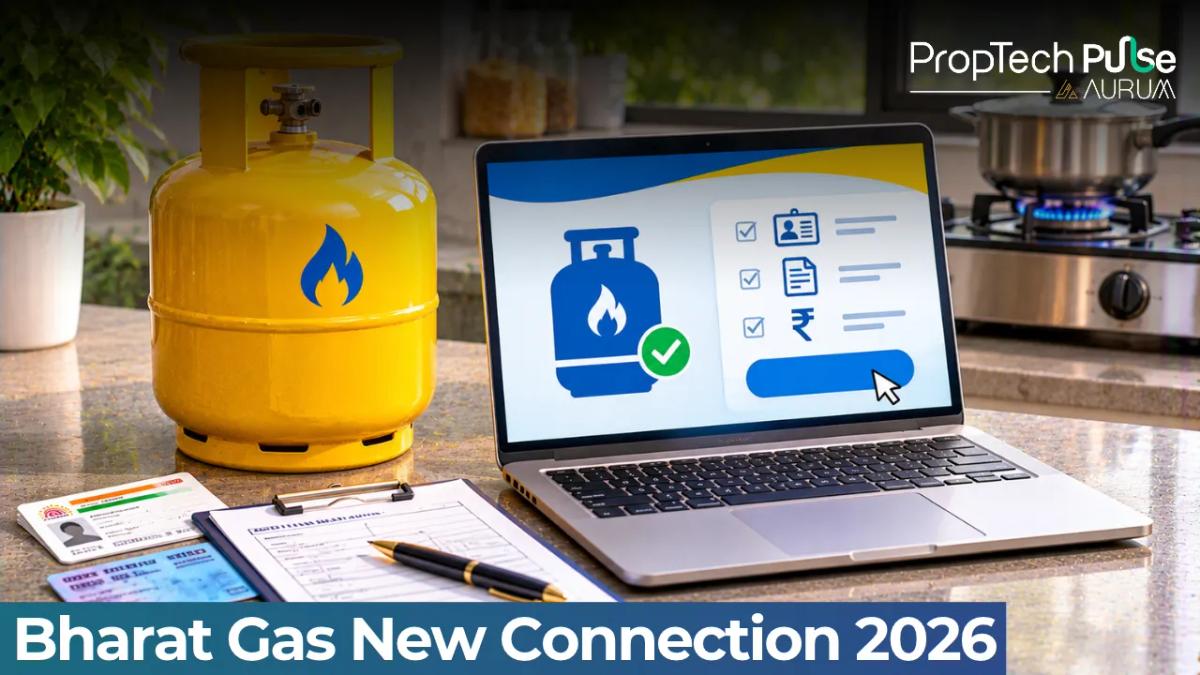
Setting up a bharat gas new connection often trips people up because the upfront costs look vague and the digital forms demand precise data. Buying a flat takes months, but getting utilities ready usually happens in days.
The real friction is rarely the sticker price. It is figuring out which fees go to the local distributor, which stay fixed, and how many days an inspector actually waits in queue.
We break down the exact bharat gas connection price, list the mandatory paperwork, and walk you through the official web portal. By the end of this read, you will know exactly what to budget and expect before you even upload a single scan.
Understanding the Cost Breakdown
Quick answer
The upfront cost for a regular domestic connection typically ranges between ₹2,000 and ₹2,500. This amount covers the cylinder security deposit, a one-time pressure regulator fee, and administrative charges. Exact prices vary slightly because the cylinder deposit is set by your local district distributor rather than the company headquarters.
Most aggregator sites paste a single lump sum figure, but your actual out-of-pocket expense splits cleanly between fixed manufacturer rates and variable distributor margins.
The cylinder deposit is refundable when you eventually return the equipment, whereas the regulator fee is non-refundable.
| Fee Component | Estimated Amount |
|---|---|
| Cylinder Security Deposit | ₹2,000 – ₹2,200 (varies by state/district) |
| Domestic Pressure Regulator | ₹150 (fixed OMC rate) |
| Application Processing Charge | ₹0 – ₹50 (often waived digitally) |
| Safety Inspection & Handover Kit | Included in deposit or ₹100 max |
| Total Estimated Outlay | ₹2,250 – ₹2,450 |
Keep your handover form stamped. When the technician delivers the cylinder, insist on a signed acknowledgment listing the serial numbers. Without this paper trail, recovering your deposit becomes difficult if the cylinder goes missing years later.
If you are worried about getting utilities running quickly after taking possession, knowing these figures helps you budget correctly without surprise requests from local dealers asking for extra cash.
Bharat Gas New Connection Documents Checklist
The KYC requirements are standard across all major oil marketing companies, but applying for a bharat gas new connection requires strict matching between your uploaded scans and the OTP verification. Missing a digit or uploading a crumpled scan delays your appointment faster than anything else.
Proof of Identity, Address Proof, and Bank Details
- Aadhaar Card: Mandatory. Your registered mobile number must be linked for SMS OTPs during application and subsidy credit.
- PAN Card: Optional for standard domestic use, but recommended if you plan to claim tax deductions later.
- Passport-sized Photograph: Clear face shot, plain background, JPEG format under 2MB.
- Proof of Residence: Recent electricity bill, property tax receipt, or registered sale deed. If you are a tenant, attach your registered rent agreement and a copy of the landlord's identity proof.
- Active Savings Bank Account: Include account number and IFSC code. The Direct Benefit Transfer (DBT) for subsidies routes exclusively here. Joint accounts sometimes cause routing delays.
For anyone navigating securing a rental property independently, gathering the landlord's property documents early saves weeks of back-and-forth calls once you decide on a supplier.
How to Use the Bharat Gas Online Apply New Connection Portal
Digital applications bypass the local agent entirely. Applying online sends your data directly to the authorized distributor in your pin code. This cuts out middlemen, strips extra markups, and stops paperwork from vanishing.
Step-by-Step Registration, Document Upload Tips, and OTP Verification
- Navigate to the official distribution portal and select New Connection.
- Pick your state, then carefully choose your district distributor. Pick the wrong district and your application queues behind others unnecessarily.
- Select Regular Domestic. Enter your full name exactly as it appears on your Aadhaar. Mismatched spelling triggers automatic validation failures.
- Input your mobile number. An OTP arrives within thirty seconds. Verify it promptly; sessions timeout after four minutes.
- Fill in bank details. Double-check the IFSC code against your bank's official directory.
- Upload documents. Resize images to 1000×1200 pixels minimum, save as PNG or JPEG. PDFs work for signatures. Files over 2MB bounce back.
- Submit. You will receive an application reference number on SMS. Track status daily.
Once approved, a field inspector schedules a safety walkthrough. After the sign-off, the first cylinder arrives in roughly 48 hours. Most applicants finish this process between getting utilities running quickly after shifting into a new building.
Offline Application Process for Bharat Gas Registration
Physical branches remain a solid backup. If you lack a scanner, struggle with app navigation, or simply trust face-to-face verification more, local dealers handle everything.
Head to the nearest dealer office listed in the public locator. Grab Form A, fill it by hand, and bring originals for verification. Pay via UPI or card, then submit three photos at the counter.
Your dealer inputs your data into their backend terminal and hands you a printed acknowledgment with a tracker code. Expect the same 4 to 7 day turnaround once verified.
Offline processing works best in tier-two towns where internet connectivity can be unstable, though metro distributors push digital adoption hard to reduce manual errors.
Pradhan Mantri Ujjwala Yojana (PMUY) vs Regular Connections
PMUY offers a completely free starter kit: cylinder, stove, hose pipe, and regulator. It targets economically vulnerable households rather than general buyers. Understanding the difference prevents wasted effort on ineligible applications.
Eligibility Reality Check: PMUY relies heavily on the Socio-Economic Caste Census (SECC) 2011 database.
While rural coverage remains strong, the dataset is notoriously outdated for urban centers, gated communities, and rapidly shifting migrant populations.
If your family does not appear on the official beneficiary list, PMUY screening rejects you instantly. You cannot appeal a missing SECC entry mid-application.
Subsidy Mechanics for Regular Users: Non-PMUY consumers currently qualify for a ₹200 subsidy per cylinder under the DBT framework, capped annually based on household income thresholds.
Higher earners lose access to the monthly offset entirely. PMUY recipients also receive subsidized refills until they transition to market-priced cylinders once their financial profile improves.
If you are exploring broader support networks, familiarize yourself with applying for central government subsidy schemes alongside your gas application to manage multiple approvals at once.
Troubleshooting Rejections & Delays
Not every application clears on the first pass. Field inspectors reject connections frequently when basic safety norms aren't met, and portals freeze progress if KYC details don't align perfectly. Tracking your bharat gas new connection status daily prevents you from missing the inspector's scheduled visit.
- KYC Spelling Mismatches: Even a single letter difference between your Aadhaar and bank records halts DBT credits. Visit your bank branch immediately to correct the spelling. Do not try to force a workaround on the portal.
- Inspector Site Rejection: Safety checks fail if the gas point is inside a closed kitchen cupboard, lacks proper ventilation, or sits too close to electrical switchboards. Ensure the appliance sits above the counter level with at least one cross-ventilation window open.
- Distributor Bottlenecks: During peak summer months, cylinder logistics slow down. Your first delivery might take longer than the quoted timeline. Call your assigned distributor directly using the phone number on your acknowledgment slip rather than waiting for automated emails.
Before You Apply
Choose the digital route for speed and transparent tracking. Reserve offline processing only if you lack consistent internet or prefer handing physical papers directly to a licensed dealer.
Always verify your district distributor's address beforehand, because incorrect routing delays dispatch by days. Once connected, monitor your bank statements monthly to catch any missed subsidy credits before the quarter ends.
Frequently asked questions
How much does a new Bharat Gas connection cost in 2026?
You should budget approximately ₹2,250 to ₹2,450 for standard installation. This bundle covers a non-refundable regulator fee around ₹150 and a refundable cylinder deposit ranging from ₹2,000 to ₹2,200. The deposit amount floats according to your district distributor, meaning metro cities often charge slightly higher handling fees than tier-two towns. Admin charges remain minimal or zero when applied digitally.
What are the documents required for Bharat Gas new connection?
You need a valid Aadhaar card with a linked mobile number, a clear passport photo, proof of residence like an electricity bill or rent agreement, and active savings account details with the correct IFSC code. Tenants must provide the landlord's identity proof alongside their lease. Keep all scans under 2MB, save them as PNG or JPEG files, and ensure spelling exactly matches your government ID to avoid validation rejections.
Can I apply for Bharat Gas online?
Yes, the official web portal accepts full applications without visiting a shop. You select your state and district distributor, upload KYC scans, enter banking information, and receive an OTP for instant verification. The digital flow routes directly to the authorized agent handling your pin code, cutting paperwork delays and giving you a live tracking dashboard for inspector scheduling.
How long does it take to get a new LPG connection?
Expect roughly five to seven working days from submission to first delivery. Day one handles KYC validation and system approval. Days two through five schedule the field inspector who checks ventilation, pipe routing, and leak safety standards. Once they approve the site physically, the logistics team dispatches the initial cylinder and stove kit within forty-eight hours.
Is Bharat Gas available for apartments and rented flats?
Absolutely. Both freehold apartments and leased accommodations qualify for standard connections. Tenants must attach a copy of the registered rental agreement and the property owner's Aadhaar or utility bill since the gas account usually needs an address tied to legal occupancy. Many buildings also require written consent from the resident welfare association before safety inspectors permit the hookup.
Sources
- Pradhan Mantri Ujjwala Yojana Portal: Eligibility matrices, subsidy capping rules, and alternative inclusion criteria for vulnerable households (accessed November 2026)
Enjoyed this blog article? Visit PropTech Pulse for more interesting blogs.




Ask Pulse Ai anything about real estate

Unlock the Latest in Real Estate
News, Infographics, Blogs & More! Delivered to your inbox.

