New Launch - India Real Estate Report 2026.

Services
Knowledge Hub
Resources
Tools

Ask Pulse Ai
©PropTech Pulse 2025, All rights reserved.


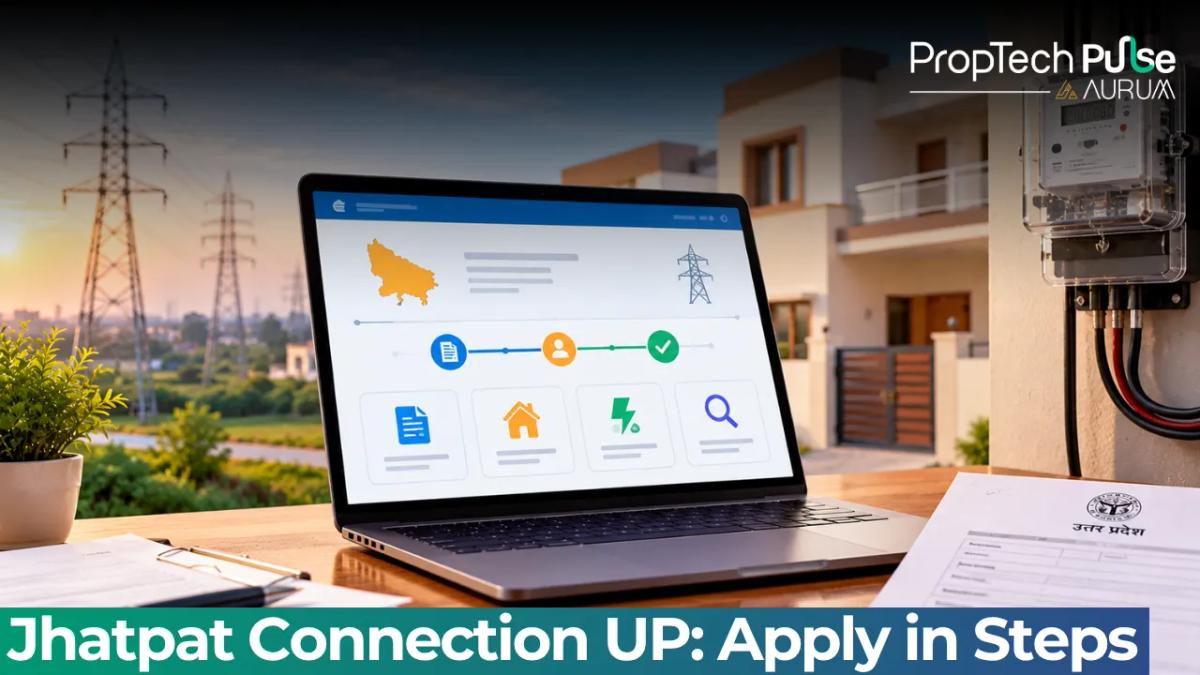
Buying a new home in Uttar Pradesh means one headache you don't need: waiting weeks just to switch on the lights.
The state has digitized this entire process. If you need a direct jhatpat connection, you want the fastest way to get power without standing in line at a subdivision office.
What is a jhatpat connection?
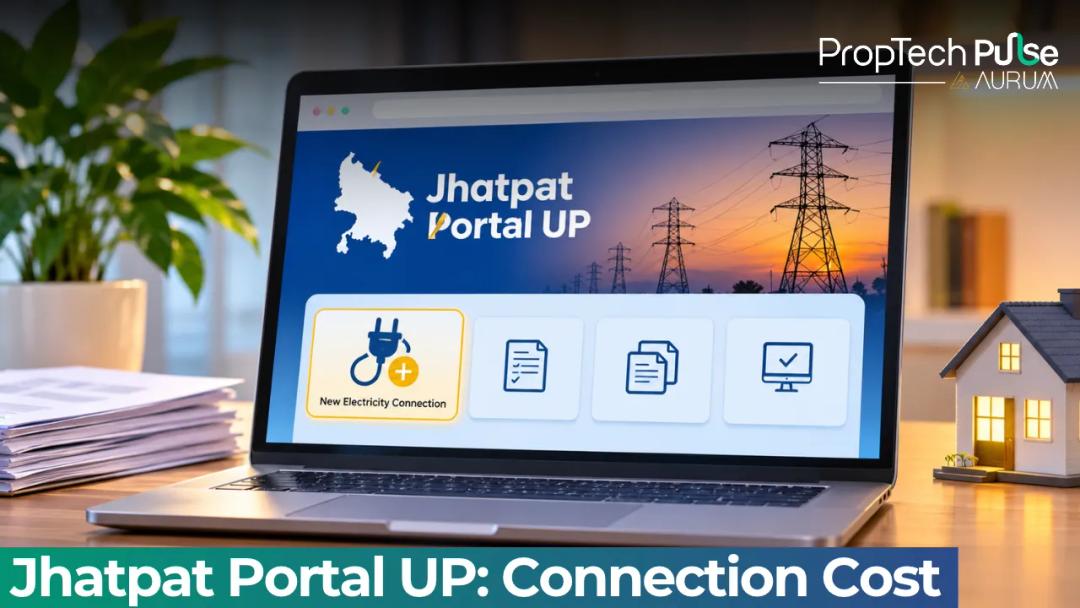
"Jhatpat" translates to instant. UPPCL uses it for their single-window online system. Logging into the jhatpat portal gives you immediate access. You simply upload papers and pay fees from home.
Quick answer
A jhatpat connection is the Uttar Pradesh government's online single-window system for applying for new bijli connection ranging from 1 to 1000 kW. You complete the entire process digitally without visiting physical offices. Once submitted, you can track your progress and pay fees directly through the official portal or the UPPCL mobile app.
The platform sits behind the National Services India gateway, meaning your data passes through standard government security protocols. You do not need an agent to push paperwork. The entire submission, payment, and tracking chain runs through verified channels. This setup keeps you away from unofficial brokers who charge extra for work the government provides for free.
Security note: UPPCL only sends official SMS from sender IDs starting with UPPCLA-S or UPPCLT-S. Ignore calls or texts claiming to be from the department using personal numbers. The department never asks for UPI transfers to individual accounts.
Who can apply for a new electricity connection up?
Any resident or business owner planning to construct a house, buy a plotted development site, or upgrade an existing line can apply. The system accepts applications across five main categories: domestic, commercial, industrial, institutional, and public lighting.
Service delivery depends on your chosen load bracket, not your trade. Upgrading to a jhatpat connection follows the exact same digital path regardless of whether you run a shop or live in a flat.
Load limits and eligible categories
You can request anywhere between 1 kW and 1000 kW. Most first-timers start with 3 kW or 5 kW. A 5 kW load easily covers a standard two-bedroom apartment, handling ACs and kitchen gear without tripping.
Anything higher triggers deeper scrutiny because local engineers must check feeder capacity before approval.
Discoms serving your area in up
UPPCL split operations into five distribution companies years ago. Your application feeds straight to the specific discom governing your district. Calling the wrong helpline wastes time, so confirm yours before you start.
| Distribution Company | Region Covered | Toll-Free Helpline |
|---|---|---|
| DVVNL | Western UP (Lucknow, Kanpur, Agra, Bareilly) | 1800-180-3023 |
| MVVNL | Eastern UP (Varanasi, Gorakhpur, Prayagraj) | 1800-1800-440 |
| PUVVL | Northern UP (Moradabad, Shahjahanpur, Rampur) | 1800-180-5025 |
| PVVNL | Southern UP (Aligarh, Mathura, Hathras) | 1800-180-3002 |
| KESCO | Central UP (Allahabad, Mirzapur, Sonbhadra) | 1800-180-1912 |
How to use the jhatpat portal effectively
The portal lives under the national services directory. Access it through desktop or the dedicated mobile app. Both interfaces feed the same backend database, so you lose nothing by switching devices mid-process.
Required documents checklist
Upload clear scans or legible photos. Blurry images get bounced back to incomplete status, delaying your installation date. Have these ready before you open the form:
- Filled application form (auto-populates in many fields from your Aadhaar)
- Aadhaar card of the applicant
- PAN card (mandatory for commercial and industrial connections above certain thresholds)
- Proof of ownership: registered sale deed, mutation extract, or registry agreement for vacant plots
- Utility proof: water bill, gas connection receipt, or previous electricity bill if connecting at an existing address
- Encumbrance certificate showing clear title on the property
- Site sketch indicating proposed meter placement and nearby landmark
Commercial applicants often need additional NOCs from the municipal corporation or fire department depending on the floor space. The portal flags these requirements during form entry, so read those red warnings carefully. Skipping them guarantees rejection on day one.
Government scheme tip: Eligible households can apply for PM Surya Ghar solar benefits directly through the UPPCL mobile app after creating the main connection request. The interface redirects you to the rooftop solar tracker without requiring a separate login.
Application workflow
Start by selecting your location and verifying the pin code routes you to the correct subdivision. Enter applicant details and match the UIDAI auto-fetch. Pick your load category next. The system instantly calculates estimates for deposits and wiring charges. Review the summary screen twice.
Errors in consumer codes force manual intervention later. Double-check every field before hitting submit.
Checking your jhatpat connection status
Status tracking happens through the same portal or app where you applied. Enter your reference number at the top dashboard menu. You will see stepwise progress markers:
- Received and acknowledged by the divisional office
- Under technical verification (feeder capacity check)
- Engineering approval granted with sanctioned load
- Pending field inspection
- Connection activated
The gap usually appears between steps two and three. Engineers manually verify local transformer capacity. Full transformers mean you join a waitlist for grid expansion. This delay drives most frustration.
Call the discom helpline listed earlier for updates. Periodic checks beat guessing your project timeline.
Changing ownership and transferring connections
When you sell a flat or plot in Lucknow or Kanpur, the electricity meter follows the property, not the person. Buyers frequently skip this step assuming the name updates automatically. It does not.
Legal responsibility for unpaid bills stays with the original holder until the transfer clears, and the new owner gets blocked from opening new schemes like subsidy-linked tariffs. Updating your jhatpat connection account name prevents lien pauses during handovers.
Both parties must sign the official name change form on the portal. Bring valid photo IDs, the latest paid bill, and the registered sale deed. Joint processing takes roughly thirty days. While sorting these documents, you should verify property legal documentation to ensure no outstanding liens pause utility clearance, while checking RERA registered projects in Uttar Pradesh confirms infrastructure clearances.
Recent tariff orders and security alerts
Uttar Pradesh revises electricity rates annually. The current billing slabs follow the Tariff Order FY 2026-27 published by the State Electricity Regulatory Commission. Domestic consumers drawing under 200 units enjoy lower cross-subsidized rates. Commercial slabs jump sharply past the 500-unit mark.
Grab the official PDF from the state energy department before locking in your budget. Third-party calculators often miss recent cess hikes. Always verify against primary rate sheets before committing to a builder quote.
Payment gateway alert: The portal and app only accept payments through verified banking partners BillDesk and PayU. Never share OTPs or scan QR codes sent to personal email addresses. The department does not link to external payment links via SMS.
Decide on your load requirement first
Before you log in, calculate your actual daily draw. Many applicants pick the lowest bracket to save deposits. They pay steep upgrade fees three months later when the inverter trips. Others jump straight to commercial brackets, inflating fixed monthly charges.
Match your peak-hour appliances to the nearest bracket up. Securing a jhatpat connection goes smoothly when you size demand correctly. Lock the right load first, and the rest of the digital process runs without friction.
Submit clean files, pick the right discom extension, and let the system run its course. The jhatpat process cuts wait times by days, locks payments into regulated escrow accounts, and creates a permanent audit trail you can pull whenever disputes surface.
Frequently asked questions
What documents do I need for a new bijli connection in UP?
Upload your Aadhaar card. For commercial requests, add your PAN card. Attach a registered sale deed, mutation extract, or registry agreement for property ownership. Prove your address with a water bill or a prior electricity statement. Include an encumbrance certificate showing clear titles. Add a simple site sketch marking the proposed meter spot. The system rejects pixelated uploads immediately, so keep scans sharp.
Can I apply for a commercial electricity connection online?
Yes. The portal accepts commercial requests across all five distribution companies. Select the appropriate load range above 5 kW. The backend flags municipal NOCs for your zone. Upload standard commercial tax receipts alongside identity proofs. Technical teams begin feeder analysis automatically upon submission.
How long does it take to get a new connection approved?
Initial administrative verification usually completes within seven to ten working days if files pass cleanly. Engineering approvals take another fortnight. Field officers must physically inspect transformer loads. Total timelines average four to six weeks. Rural grid expansions sometimes stretch this further. Check your reference number weekly instead of relying on verbal promises.
What should I do if my application gets rejected?
Rejections almost always trace back to mismatched load calculations. Expired identity documents cause issues too. Incomplete boundary sketches guarantee delays. Log in again and read the rejection remark carefully. Resubmit corrected files using the same reference code. Call the division helpline if the error remains unclear. Do not start a fresh application unless the engineer orders it.
Enjoyed this blog article? Visit PropTech Pulse for more interesting blogs.


Ask Pulse Ai anything about real estate

Unlock the Latest in Real Estate
News, Infographics, Blogs & More! Delivered to your inbox.

