New Launch - India Real Estate Report 2026.

Services
Knowledge Hub
Resources
Tools

Ask Pulse Ai
©PropTech Pulse 2025, All rights reserved.


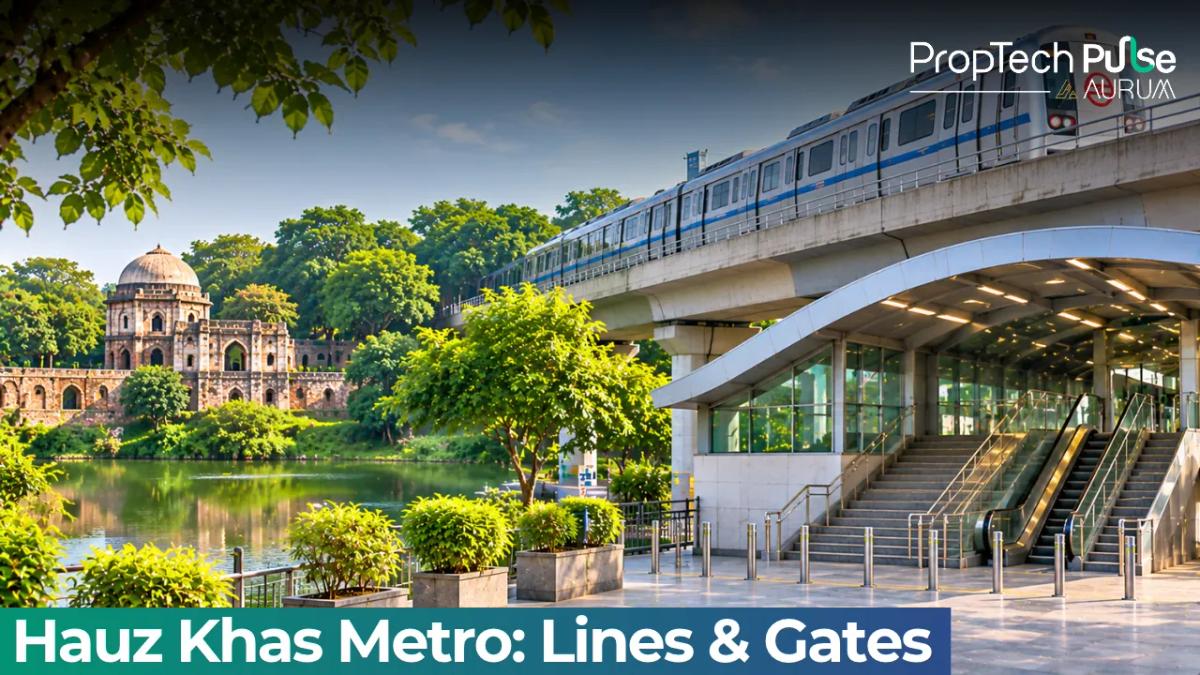
Sitting just metres from India's top technical institutes, this underground node funnels thousands of passengers past dense housing belts and heritage sites daily. You might be heading to Healing Touch Hospital, grabbing dinner at the main square, or transferring lines. Choosing the right exit cuts through backtracking and confusion. This guide breaks down every gate, walks you through the paid-zone transfer, and lays out accurate fares and timings.
Key Details at a Glance
Quick answer
Operating as a key interchange between the Yellow and Magenta lines, the station lies buried beneath Jia Sarai and Deer Park. Four public exits handle foot traffic, with Gate 1 offering lift access straight out to the Outer Ring Road and IIT Delhi campus. Getting to Hauz Khas Village centre requires a short trek along Jawaharlal Nehru Marg, roughly two kilometres away. Expect headways of five minutes during weekday rush hours, with evening services wrapping up just before midnight.
Location and Opening Date
Opened on 3 September 2010, the station occupies the subsurface beneath Jia Sarai and Block F of Deer Park, New Delhi. Its precise address aligns with Gamal Abdel Nasser Marg and places it within walking distance of the Archaeological Survey of India sites. The surrounding lanes feed into dense residential societies, government offices, and academic campuses.
Underground Depth and Structural Layout
At twenty-nine metres below ground level, this is the deepest operational station in the entire Delhi Metro system. The vertical shaft spans seven technical levels to accommodate ticketing, concourses, and dual platform decks stacked above each other. The sheer volume of underground space dictates why certain gates open onto specific streets. It also explains why transfer corridors feel longer than surface stations.
Lines, Platforms, and the Interchange
Yellow Line Platforms and Directions
The Yellow Line forms the eastern spine of the network. Platform 1 directs trains westward toward Millennium City Centre Gurugram. Platform 2 carries the line northeast toward Samaypur Badli, linking suburban industrial hubs and residential quarters along the Shahdara corridor.
Magenta Line Platforms and Directions
The Magenta Line cuts diagonally across the city. Platform 3 routes service northward to Botanical Garden, capturing commuters from Noida and Greater Noida. Platform 4 guides passengers southwest to Janakpuri West and Krishna Park Extension, providing critical access to West Delhi housing belts.
How to Transfer Between the Yellow and Magenta Lines
Changing lines here happens entirely inside the paid zone after initial entry. Once you tap your card through the entry barrier, follow the signage marked with interchange arrows down the escalator or lift bank. The platforms sit at different depths, creating a long horizontal walkway before you descend or ascend again. Exit barriers are only reached when leaving the station completely. Missing a train rarely causes lengthy waits because both lines maintain continuous service throughout the day.
Entry Gates, Step-Free Access, and Routing
Commuters often arrive confused because each gate exits onto a different street and caters to distinct destinations. Knowing which gate suits your goal removes unnecessary backtracking. The sub-surface design funnels foot traffic outward, making each exit clear once you know your destination.
| Gate | Street / Landmark | Primary Destination | Step-Free Access |
|---|---|---|---|
| Gate 1 | Outer Ring Road | IIT Delhi, Jamia Millia Islamia transport stops | Yes |
| Gate 2 | Laxman Public School | Southern residential colonies, student hostels | Information insufficient |
| Gate 3 | Shri Krishna Chaitanya Mahaprabhu Marg | Sarvapriya Vihar housing clusters | Yes |
| Gate 4 | Kalu Sarai Temple | Vijay Mandal Enclave, heritage ruins | Yes |
| Total Gates | Four main public exits | ||
Gate 1: Outer Ring Road and IIT Delhi
This exit faces the Outer Ring Road junction and leads straight toward the Indian Institute of Technology campus. Gate 1 also features verified step-free access via lift, making it the correct choice for elderly travellers, wheelchair users, or passengers carrying heavy luggage who cannot manage stairs.
Gate 2: Laxman Public School
Located closer to the southern side of the sub-surface structure, this gate opens toward Laxman Public School and adjacent residential colonies. It primarily serves students and residents living along the eastern stretch of the surrounding lanes. The approach follows narrow service roads rather than wide arterial stretches.
Gate 3: Shri Krishna Chaitanya Mahaprabhu Marg
This entrance sits beside Shri Krishna Chaitanya Mahaprabhu Marg and provides another route into the dense housing clusters of Sarvapriya Vihar. The gate includes functional lift availability, confirming step-free connectivity to the street level.
Gate 4: Kalu Sarai and Accessibility
Facing Kalu Sarai temple premises, this western exit connects directly to the heritage ruins and the newer apartment blocks lining Vijay Mandal Enclave. It too offers step-free access through its lift facility, meaning all four primary gates allow barrier-free travel from street to platform.
Tip: Use the lift at Gate 1 or Gate 4 if stairs are impractical. These gates sit farthest from the main congestion points and offer the clearest paths during evening rush hour.
Train Timings and Peak Hour Frequencies
First and Last Trains Weekdays
Service begins early morning across both lines. On the Yellow Line, the first train toward Gurugram departs just past six in the morning, with the final evening train heading out shortly before twelve at night. The Magenta Line follows a similar late schedule, though exact cut-off times shift slightly during maintenance windows. Check the DMRC journey planner for real-time updates before planning night commutes.
Peak and Off-Peak Headways
During weekday rush hours, frequency tightens to keep passenger load manageable. Yellow Line headways drop to under three minutes, while the Magenta Line maintains intervals around five to six minutes. Late-night or midday slots see longer gaps between arrivals, so building a buffer prevents missing your connection. Service pauses briefly on national holidays for track inspections.
Fares, Routes, and Travel Times
Fare calculation depends heavily on distance travelled, and a typical cross-city trip illustrates how the pricing works. A ride from Hauz Khas to Huda City Centre covers roughly eighteen kilometres and takes approximately twenty-four minutes. The normal fare for this journey sits around forty-three rupees, dropping to thirty-nine rupees for regular smart card users.
Stored-value cards hit a daily spending cap once you chain multiple journeys. Daily limits kick in for adults riding solo, pushing excess trips to cash windows or token desks. Discounted passes cover students and seniors who stamp their ID cards properly.
Understanding transit economics helps explain why apartments within eight hundred metres of this station carry a premium. Properties trading hands in this pocket usually account for both the upfront cost and the recurring savings on private transport. A dynamic explored further in our analysis of how metro connectivity impacts nearby home values.
Places Near the Station and Distances
The station functions as a gateway to several major nodes spread at varying walking distances. Healing Touch Hospital lies just one hundred eighty metres away through the lane network, easily reachable for medical visitors. Walking routes here demand caution as cars navigate unmarked service roads.
For academics and faculty, the Institute of Home Economics sits roughly two hundred eighty metres from the closest stairwell. Ancient history meets modern commuting here as well. The stone walls of the Jahanpanah Fort ruins extend about two hundred seventy to three hundred metres southeast of the structure. Commuters frequently pause at the site before continuing to the university quarter.
When planning weekend visits, locals often wonder about the Hauz Khas village nearest metro station connection. The station is the designated transit point, sitting two kilometres from the central bazaar. While auto-rickshaws and shared e-rickshaws abound along Jawaharlal Nehru Marg, a short hop from Gate 1 drops you closest to the edge of the old reservoir. It also puts you near the pub strip. For broader exploration of the neighbourhood boundaries, reviewing the local area layout clarifies which streets connect fastest to specific venues. Our Hauz Khas Village locality guide breaks down the exact walking routes from Gate 1 to the historic lakefront.
Before You Commute Here
Avoid the station exits immediately after college hours. Crowds spike sharply outside IIT gates and Jamia Millia Islamia transport stops, making navigation sluggish until mid-evening settles down. Factor transit reliability into property budgets, and stick to RERA verified builders to protect your capital. Review the RERA registered projects near the station list to filter out unregistered inventory.
Parking along Gamal Abdel Nasser Marg disappears fast when office workers arrive. Drop passengers near Gate 1 and follow signs toward wider collector roads for legal spots. Study the Outer Ring Road routes beforehand. Confirm that developers maintain strict Delhi RERA registration rules compliance before handing over deposits to new launches.
Frequently asked questions
Which gate is best for reaching IIT Delhi by foot?
Gate 1 sits directly adjacent to the Outer Ring Road junction and feeds straight into the pathways leading toward the institute campus. It offers step-free access through its lift facility, making it the simplest route for visitors carrying bags or dealing with limited mobility. Follow the signs pointing toward JNU and Jamia after exiting the barrier to stay on the shortest path.
How do I pay less than the full fare when commuting daily?
Smart cards reduce costs for everyone who travels regularly. A standard reloadable card lowers base fares compared to cash tokens. Students and seniors need registered discount cards to cut daily costs in half. Bring proof of age or enrolment along with passport photos to any authorised metro counter to sign up.
What happens if I miss my Yellow Line train after arriving on the Magenta Line?
Because both lines operate continuously, missing a train rarely causes lengthy delays. Simply wait at the appropriate platform sign. The interchange walkway remains active even if one deck undergoes routine cleaning, ensuring you can move freely between platforms without stepping outside the paid zone.
Is parking available if I drive to the station?
Space is extremely limited along Gamal Abdel Nasser Marg. Private vehicles struggle to find legal curb space during business hours. Most drivers drop passengers near Gate 1 and continue toward wider collector roads to locate formal parking facilities further down the Outer Ring Road.
Can I walk from the station directly to the Hauz Khas Village pubs?
You will need to take a short vehicle ride along Jawaharlal Nehru Marg. Two kilometres separates the station from the central entertainment zone. Auto-rickshaws queue consistently near Gate 1, offering quick transport to the lakeside dining strip. Walking the route exposes you to heavy commercial traffic on narrow lanes.
Sources
- delhimetrorail.com: Station schedule data, accessibility reference, and fare calculator tool (accessed November 2026).
Enjoyed this blog article? Visit PropTech Pulse for more interesting blogs.



Ask Pulse Ai anything about real estate

Unlock the Latest in Real Estate
News, Infographics, Blogs & More! Delivered to your inbox.

