New Launch - India Real Estate Report 2026.

Services
Knowledge Hub
Resources
Tools

Ask Pulse Ai
©PropTech Pulse 2025, All rights reserved.


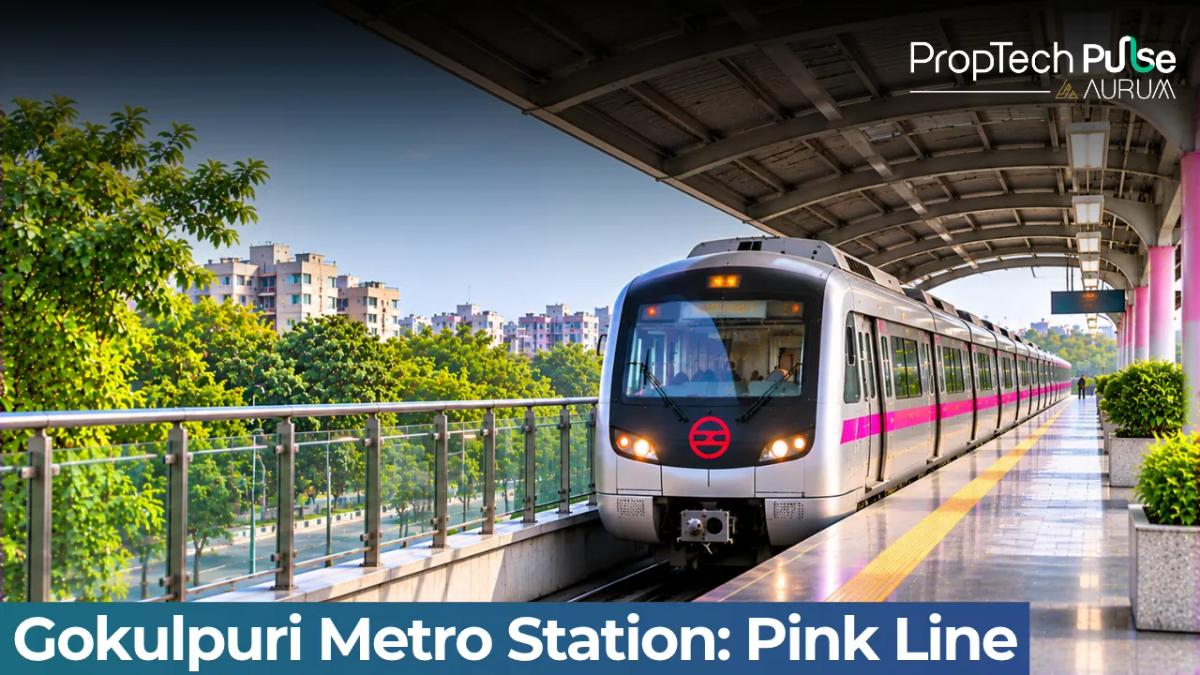
Gokulpuri Metro Station Route and Location
Quick answer
Gokulpuri metro station sits on the Delhi Pink Line spur between Shiv Vihar and Maujpur-Babarpur. It is an elevated station serving Gokalpur, Gokulpuri Chowk, and Ganga Vihar. Trains run from approximately 06:02 AM to midnight, with a minimum fare of ₹11 and a maximum of ₹64 under the post-August 2025 tariff rates.
Gokulpuri sits roughly 1.8 km southeast of Karkardooma, positioned exactly where the dense residential fabric of Northeast Delhi meets the arterial roads feeding into Central Delhi.
Most published maps merge the Pink Line spur into a single continuous ring, which masks a practical reality for daily riders: Gokulpuri functions as part of a short independent branch rather than the main loop. Boarding here means choosing between a northeast trajectory toward Shiv Vihar and a northwest push toward Maujpur-Babarpur.
Riders intending to join the wider Pink Line circuit must alight at Maujpur-Babarpur and switch trains. That transfer takes under five minutes, yet first-timers routinely miss their connection because platform direction boards display identical colour coding.
The spur itself carries a heavy operational load, designed specifically to relieve chronic gridlock on GTB Nagar Road and Ashram Chowk while threading East Delhi directly to employment clusters like Shastri Park, Swami Shraddhanand, and Anand Vihar Terminal. Bypassing Kashmere Gate reduces average commute time by nearly twenty-two minutes during weekday rush hours.
Transit access shifts the calculus for anyone evaluating properties in Gokalpur against legacy neighbourhoods further west. Direct rail connections to IT corridors, wholesale markets, and senior government offices create consistent rental demand year-round.
Vertical construction has accelerated steadily over the last half-decade, transforming low-rise layouts into registered mid-rise blocks. Footfall remains consistently high across both morning and evening peaks because the surrounding streets house a mix of central staff colonies, private rental complexes, and ground-floor retail strips that stay active until late evening.
Property buyers often confuse straight-line distance with actual walkability here. Pavement continuity drops sharply along Gokalpur Main Road, forcing pedestrians into vehicle lanes during off-peak hours.
Always map your daily route on foot before committing to a lease or purchase. For a deeper breakdown of how transit access shapes resale value and rental yields, read our analysis on how does proximity to a metro station affect apartment pricing.
The station opened in October 2018 under code GKPR and quickly absorbed overflow from adjacent stops experiencing saturation.
Platform architecture prioritises rapid boarding, though weekend crowd distribution differs noticeably from weekday patterns. Students from nearby colleges skew afternoon exit volume, while corporate employees drive heavier morning entries through Gate 1.
Understanding these rhythms helps commuters time their journeys, avoids unnecessary platform waits, and informs property location choices for families working fixed-hour shifts.
Gokulpuri Metro Station Timings
First and last departure windows fluctuate slightly according to daily passenger forecasts, track maintenance schedules, and seasonal adjustment protocols.
Weekday services routinely begin twelve minutes earlier than Sunday runs, reflecting the staggered start times of schools and government offices across the district.
Night operations stretch past midnight on Friday evenings when commercial districts and campus zones draw later crowds. Maintenance engineers typically conduct track inspections between 01:00 AM and 04:00 AM, which occasionally trims buffer capacity for late-shift workers heading home.
| Direction | Weekday first train | Weekend first train | Last train (general) | Peak frequency |
|---|---|---|---|---|
| Towards Shiv Vihar | 06:02 AM | 06:14 AM | ~12:22 AM | Every 3–4 minutes |
| Towards Maujpur-Babarpur | 06:04 AM | 06:16 AM | ~11:04 PM | Every 3–4 minutes |
Door deployment follows a consistent pattern on this spur segment. Heading northeast toward Shiv Viah opens doors on the left side of the train.
Traveling northwest toward Maujpur-Babarpur keeps doors opening on the left as well, because the track alignment preserves platform orientation throughout the branch.
Weekend intervals stretch marginally during mid-afternoon troughs, settling around five-minute gaps. System operations cease accepting new entries near 11:00 PM nationwide, though seated passengers remain aboard until final runs conclude around 12:20 AM.
During winter examination periods or extended holiday breaks, DMRC frequently adds extra coaches to loaded compartments and conducts light engine verification tests late at night.
Those routine checks can trigger brief signal delays at intersecting junctions. Commuters navigating unpredictable schedules should cross-reference live tracker tools or official social media handles ten minutes before departing, especially if monsoon drainage backups or road repairs slow surface access to the station plaza.
Fares and Ticketing at Gokulpuri Metro
Metro DC overhauled its tariff structure effective 25 August 2025. The previous simplified slab model disappeared entirely, replaced by a granular distance-based calculator integrated into automated ticketing machines.
Gokulpuri lands firmly inside the standard central-north corridor bracket, which means typical commutes settle into middle-tier slabs rather than touching extreme upper limits.
Understanding how distance calculation works prevents fare surprises and helps riders plan smarter payment methods.
| Journey distance | Monday to Saturday | Sunday and gazetted holidays |
|---|---|---|
| Up to 2 km | ₹11 | ₹11 |
| 2 to 7 km | ₹13 to ₹20 | ₁₃ to ₹19 |
| 7 to 12 km | ₹22 to ₹31 | ₹21 to ₹30 |
| 12 to 18 km | ₹33 to ₹41 | ₹32 to ₹39 |
| 18 to 24 km | ₹43 to ₹48 | ₹41 to ₹46 |
| 24 to 32 km | ₹50 to ₹61 | ₹48 to ₹59 |
| Above 32 km | ₹64 | ₹54 |
A routine trip from Connaught Place to Gokulpuri registers near 11 km. Under the older system, a magnetic card swipe charged a flat ₹20 regardless of actual travel distance.
The updated machinery now calculates roughly ₹24 on weekdays and ₹23 on Sundays, adjusting precisely for network routing. Monthly pass holders pay a premium rate that ignores distance variables, making those passes economically viable for riders travelling six days weekly.
Smart card top-ups process instantly at automated kiosks located on both concourse levels. Cash transactions remain available at manual counters, though change dispensers slow dramatically during 8:30 AM and 6:00 PM surges.
Women travel completely free across all lines provided they present valid photo identification at ticket barriers. Student and senior citizen concessions apply capped discount tiers that function uniformly across the network.
Fare inspectors patrol platforms during peak loading windows, so carrying properly validated tickets prevents unnecessary fines.
Navigating Exits and Platforms
Alighting requires selecting the correct staircase or lift immediately upon train arrival. Gokulpuri provides two ground-level exits, and picking the wrong gate wastes valuable time, particularly when managing luggage, shopping bags, or travelling alongside elderly family members.
Both exits connect directly to elevator banks, satisfying mandatory accessibility requirements for Divyang Friendly compliance. Choosing the right exit depends entirely on your final destination, since cross-lane footpaths lack dedicated pedestrian bridges.
| Exit / Gate | Ground-level destination | Primary access mode |
|---|---|---|
| Gate 1 | Ganga Vihar, Gokulpuri village, local market | Lift and staircase |
| Gate 2 | Ambedkar College, Dayalpur Police Station, DDA flats | Lift and staircase |
Platform numbering follows a straightforward layout. Platform 1 faces Shiv Viah to the northeast. Platform 2 targets Maujpur-Babarpur to the northwest. Overhead digital displays update continuously, but painted floor arrows deliver faster navigation during heavy ingress periods.
The station contains four lifts and four escalators distributed evenly across street level and the upper concourse. Escalator servicing occurs biweekly, usually between 3:00 AM and 6:00 AM, so lift queues rarely exceed three minutes even during surge events.
Monsoon waterlogging affects Gate 2’s immediate approach first due to slope gradients running down from Gokalpur, meaning umbrella carriers should favour Gate 1 during heavy rainfall.
Turnstile apertures clear wide strollers and mobility devices comfortably, though pushing through during 9:00 AM entry creates predictable bottlenecks near token counters.
Riders planning longer multi-line journeys might benefit from studying older interchanges that manage overflow differently; comparative route maps like the Jama Masjid metro station outline how century-old stations handle passenger redistribution compared to modern spur layouts.
Key Landmarks Near Gokulpuri Metro Station
The surrounding zone blends legacy government quarters with recent private developments, creating distinct footfall patterns that influence everything from auto-rickshaw availability to evening safety.
Walking distance calculations prove far more reliable than straight-line estimates here, because unconnected pavement segments force pedestrians onto busy carriageways during daytime hours.
- Ambedkar College stands roughly 400 metres from Gate 2. Daily student movement swells the evening exit queue between 4:15 PM and 5:30 PM, slowing pedestrian flow through the plaza.
- The Dayalpur Police Station abuts the college boundary. Traffic officers actively redirect auto-rickshaws away from the immediate gate perimeter during exam weeks and fee collection dates.
- Gokalpur Market and Gokulpuri Chowk form the commercial backbone. Two-wheeler traffic dominates afternoon movement between 2:00 PM and 5:00 PM, requiring pedestrians to wait for deliberate crossing gaps rather than relying on informal zebra markings.
- Government staff colonies and newer RERA-compliant mid-rise residential blocks cluster within a 600-metre radius. Marketing campaigns heavily promote transit proximity, yet actual walk times stretch beyond expected durations because interior lane connectivity remains fragmented.
Vehicle parking does not exist within station premises. Bicycle storage racks outside Gate 1 reach capacity shortly after 8:45 AM, discouraging carpool drop-offs during morning peaks.
Auto-rickshaw operators congregate primarily outside Gate 1, while prepaid taxi marshalling yards stack neatly near Gate 2. Street vending occasionally occupies designated pedestrian zones during evening hours, narrowing walkable width when shoppers navigate home.
Renters targeting units close to the station should consider negotiating ground-floor leases to bypass daily stair climbing, especially since elevator wait times spike predictably around 9:15 AM as office workers return home.
Recent municipal upgrades have widened select footpath segments along Gokalpur Main Road, but integration with the station forecourt still experiences timing gaps.
Cross-reference any construction timeline against Delhi RERA databases to verify promised possession dates align with broker promises. Transit reliability boosts long-term asset stability, but regulatory paperwork moves on its own schedule regardless of commute convenience.
Before You Commute or Buy
Stick with the Purple or Blue networks if your workplace already anchors west of the outer ring. Gokulpuri delivers a clean, uninterrupted path to East Delhi commercial hubs, airport terminals, and North Delhi academic centres without forcing dual transfers.
Commuters who prioritise schedule predictability over minimal fares should weigh monthly pass economics against weekly cash outflows.
Investors evaluating rental potential near the spur need to factor actual walkability, pavement quality, and market density into yield projections rather than assuming station codes guarantee premium returns. Verify project documentation through official state registers before signing deposit receipts.
Transit adjacency compounds property value gradually, but compliance delays disrupt even the smoothest rental plans. Plan your daily route on foot, test exit gates during peak hours, and confirm fare mechanisms before committing to a lease or purchase.
Sources
- Delhi Metro Rail Corporation (DMRC): Official timetable, fare structure, and station facility data (accessed November 2026)
Frequently asked questions
How to reach Gokulpuri metro station?
Take the Pink Line to Gokulpuri stop. Exit Gate 1 lands you in Ganga Vihar and the local village market. Exit Gate 2 drops you near Ambedkar College and the Dayalpur police checkpoint. Both routes share the same concourse level, so follow the painted floor arrows rather than chasing canopy signs.
What is the fare from Rajiv Chowk to Gokulpuri metro?
Expect to pay around ₹24 on weekdays and ₹23 on Sundays under the post-August 2025 distance-based tariffs. The journey covers roughly 11 km. Use a smart card to skip the cash-handling bottleneck at peak entry, and note that monthly passes bypass the per-ride calculation entirely.
Are there parking facilities at Gokulpuri metro station?
No designated vehicle parking exists at the station. Bicycle racks sit outside Gate 1 but fill by late morning. Auto-rickshaws queue near both exits, while prepaid taxis concentrate outside Gate 2. Commuters driving to the station typically leave vehicles in public streets or nearby paid lots further down Gokalpur lane.
Which lines pass through Gokulpuri metro station?
Only the Pink Line operates here, specifically on a short independent spur segment. Trains run between Shiv Viah and Maujpur-Babarpur without touching the wider ring circuit. Passengers wanting to join the full loop must alight at Maujpur-Babarpur and board a continuing Pink Line service.
Is Gokulpuri metro station accessible for differently-abled passengers?
Yes. The station meets Divyang Friendly standards with four lifts and four escalators serving both concourses. Each exit gate connects directly to wheelchair-accessible ramps. Staff presence varies by shift, but the infrastructure guarantees barrier-free entry and platform reach.
Enjoyed this blog article? Visit PropTech Pulse for more interesting blogs.



Ask Pulse Ai anything about real estate

Unlock the Latest in Real Estate
News, Infographics, Blogs & More! Delivered to your inbox.

