New Launch - India Real Estate Report 2026.

Services
Knowledge Hub
Resources
Tools

Ask Pulse Ai
©PropTech Pulse 2025, All rights reserved.


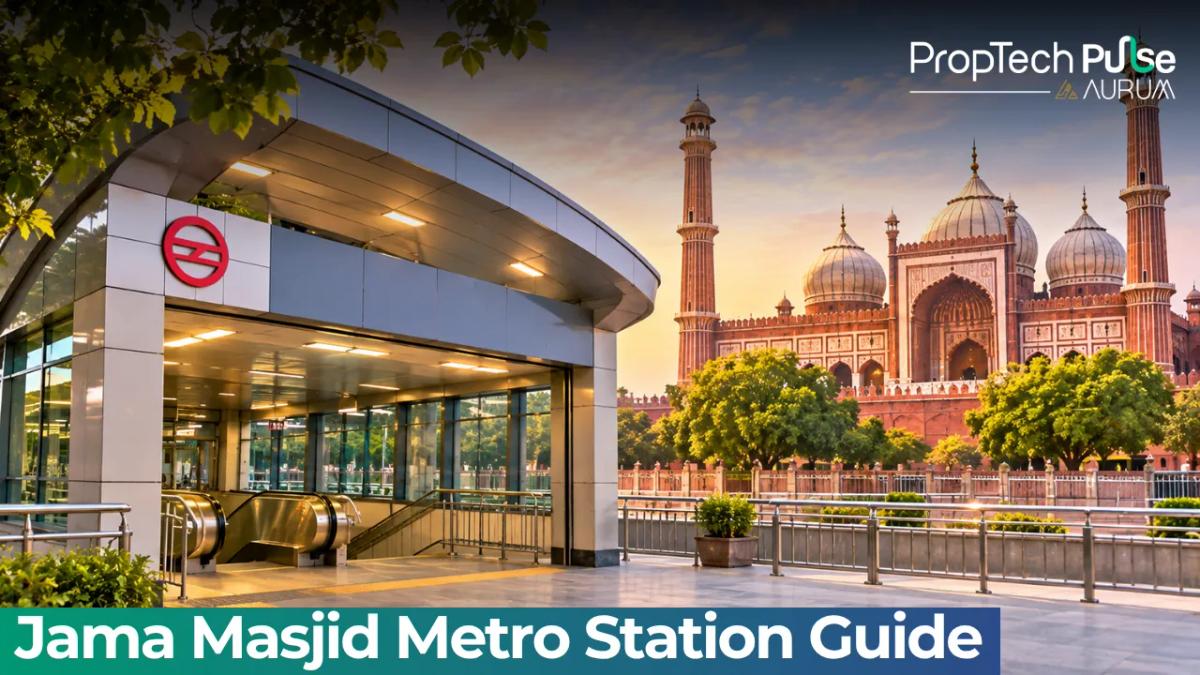
Navigating Old Delhi's transit web doesn't require guessing. If you are boarding the jama masjid metro to reach Chandni Chowk, visit Lal Qila, or switch lines, this guide maps exactly which platform you need.
It details which exit lands you closest to your destination and shows the current schedule for 2026. Stop relying on conflicting timetable snippets. Here are the verified platform numbers, gate destinations, and step-by-step line transfers.
Jama Masjid Metro Station: Quick Overview & Key Details
Quick answer
The jama masjid metro station sits on the Violet Line (Line 6) of the Delhi Metro. Operated by DMRC, the station code is JAMD. It has five public exits mapping directly to landmarks like Meena Bazaar, Red Fort, and Kasturba Hospital. Check out exploring the commercial hubs inside the walled city boundaries for more local context if you are exploring the wider neighbourhood.
| Field | Detail |
|---|---|
| Operator | Delhi Metro Rail Corporation (DMRC) |
| Station Code | JAMD |
| Line | Violet Line (Line 6) |
| Opening Date | 28 May 2017 |
| Address | Meena Bazar, Jama Masjid, Delhi 110006 |
Platform Mapping & Violet Line Train Directions
Commuters often waste time waiting on the wrong side of the island platform. Rush hour delays can easily cost you twenty extra minutes. The jama masjid violet line station uses a standard underground two-platform setup.
Platform 1 handles southbound traffic. Trains leave for Raja Nahar Singh via Ballabhgarh and Badarpur Border. Platform 2 serves northbound trains heading straight to Kashmere Gate.
Tap your card at the entry gate, then watch the digital boards above the escalators for live arrival updates.
First & Last Train Timings from Jama Masjid Delhi Metro
Start and end times shift based on the train's origin point. These windows show the earliest Line 6 departures stopping at JAMD.
| Direction | First Train | Last Train |
|---|---|---|
| Southbound (Platform 1) | 6:05 AM – 6:08 AM | 11:54 PM – 12:01 AM |
| Northbound (Platform 2) | 6:05 AM – 6:08 AM | 11:54 PM – 12:01 AM |
Peak vs Non-Peak Frequency
Morning and evening rush hours compress headways to roughly five minutes between arrivals.
Off-peak stretches usually drop to seven minutes. Sunday nights and holidays might push intervals past ten minutes for those final depot runs.
Jama Masjid Metro Station Gates & Exit Map
Finding the right ramp to street level saves time, especially with luggage. The station operates five distinct exit points, each opening onto a separate arterial road.
| Gate Number | Exit Leads To |
|---|---|
| Gate 1 | Kasturba Hospital, Darya Ganj, Urdu Bazar Road, Delhi Public Library |
| Gate 2 | Jama Masjid, Meena Bazaar |
| Gate 3 | Sunehri Masjid, Lal Qila (Red Fort), Shakti Sthal |
| Gate 4 | Parade Ground Parking area, Subhash Marg |
| Gate 5 | Firozshah Kotla Stadium |
Gate 2 drops passengers almost opposite the Jama Masjid entrance. A covered walkway keeps you clear of heavy traffic. Gate 3 offers the shortest paved path to Lal Qila's main arches, crossing near the historic Sunehri Masjid.
Use the wide ramp at Gate 4 if you are meeting people near Subhash Marg. Direct parking does not exist here because Old Delhi traffic rules ban lots next to the station. Grab a shared auto or rickshaw to finish the journey.
Reaching Major Old Delhi Landmarks (Walking Distances)
Transferring from the metro to these spots takes fifteen minutes or less on foot. That makes the jama masjid metro one of the fastest access routes in the Union Territory. Tracking how transit shapes values reveals why properties inside a ten-minute walk command premiums. Check the exact mechanics behind this valuation boost to see how transit proximity influences price brackets. For recent market shifts, browse our rates and trends tool.
| Landmark | Nearest Gate | Approximate Walk Time |
|---|---|---|
| Jama Masjid | Gate 2 | 3 to 5 minutes |
| Lal Qila (Red Fort) | Gate 3 | 8 to 10 minutes |
| Chandni Chowk | Gate 2 / Gate 3 | 5 to 7 minutes |
| Darya Ganj Book Market | Gate 1 | 12 to 15 minutes |
| Raj Ghat Memorial | Use Kashmere Gate interchange instead | N/A (take Yellow Line) |
How to Switch Lines at Jama Masjid Metro Interchanges
JAMD only services the Violet Line. Commuters targeting other corridors transfer at three designated stations. Reaching the Pink Line from Kashmere Gate requires careful planning due to half-kilometre platform distances and barrier changes.
- To the Yellow Line or Red Line: Stay on Platform 2 northbound. Alight at Kashmere Gate. Follow yellow signage toward the Yellow Line concourse. The corridor is air-conditioned and bright. Tap your card again to enter.
- To the Pink Line: Board the southbound train on Platform 1. Ride to Lajpat Nagar. This station connects the Blue Line platform to the Pink Line entrance via a direct foot-over-bridge.
- To the Magenta Line: Remain on Platform 1 heading southward. Your stop is Kalkaji Mandir. The interchange bridge connects straight to the Magenta Line fare gates without crossing roads.
Keep your Metro Card or QR ticket accessible during transfers. Re-entering the paid zone resets your fare calculation.
Passenger Amenities & Divyang Jan Accessibility Features
DMRC builds new infrastructure to strict inclusion standards. Smooth movement remains guaranteed for passengers with mobility or sensory constraints.
Divyang Jan ramps flank both circulation paths at Jama Masjid, removing reliance on steep stairs. Wheelchairs stand ready at the customer care desk near the booking counter.
Distinctive yellow tactile strips run continuously from platforms to elevators. Blind travellers follow these paths safely toward train doors.
Accessible toilets with emergency buttons sit on the ground-floor concourse near western stairwells.
Elevators serve every floor reliably, though occasional maintenance happens. Call the helpline at 155370 or 011-22561231 before off-hour travel to check elevator status.
ATMs from nationalized banks dot the mezzanine level. Food kiosks offering water and snacks sit right outside the ticket machines. Charging ports currently remain unavailable in general waiting zones.
Before you tap your entry card
Check the final destination on the platform board before stepping aboard. Late trains sometimes terminate early based on depot schedules.
Reading the end-of-route sign prevents unnecessary waits. Keep your return ticket valid for forty-eight hours if plans shift midday.
Frequently asked questions
Which Delhi Metro line is Jama Masjid station on?
Jama Masjid station serves the Violet Line (Line 6) of the Delhi Metro network. Run by the Delhi Metro Rail Corporation, it opened in late May 2017 and functions as a critical commuter node connecting the southern suburbs to central Delhi. Its official station identifier printed on tickets and digital displays reads JAMD.
How many gates does Jama Masjid metro station have?
The facility maintains five separate exit points distributed across the subterranean structure. Each gate corresponds to a specific surface-level arterial road and directs passengers toward targeted landmarks like Kasturba Hospital, the Firozshah Kotla stadium, and the historical Meena Bazaar. Following the overhead directional signage ensures you emerge at the correct ramp.
What is the last train timing from Jama Masjid Delhi Metro?
Departures toward the southern terminus and the northern junction share nearly identical window blocks, generally operating between 6:05 AM and midnight. The absolute final run typically leaves shortly after 11:54 PM. Because depot schedules occasionally truncate the terminal stops, verifying the exact cutoff time through the mobile application or station announcements remains the safest approach before boarding late-night services.
Can I park my vehicle near Jama Masjid metro station?
Direct dedicated car parking spaces do not exist immediately beside the station building. Traffic restrictions within Old Delhi leave no room for an attached lot. Travellers arriving by private vehicle should utilize public transport networks or secure long-term parking at external municipal compounds located further down Subhash Marg before walking the short remaining distance.
How far is Red Fort (Lal Qila) from Jama Masjid metro station?
The fort lies roughly eight to ten minutes away on foot if you exit through Gate 3. The paved pathway moves past the Sunehri Masjid, giving visitors uninterrupted sightlines to the red sandstone walls. Using Gate 2 puts you nearer to Jama Masjid and Chandni Chowk, requiring a longer cross-city traverse to reach Lal Qila.
Is Jama Masjid metro station accessible for wheelchair users?
Absolutely. DMRC built the entire underground complex to meet strict inclusion mandates. Wide, gently sloped ramps replace steep stairs wherever possible. Blind travellers rely on continuous tactile paving strips guiding them to elevator landings and platform edges. Customer care desks stock spare manual wheelchairs, and accessible washrooms featuring grab bars and alarm buttons sit conveniently on the ground concourse level.
Enjoyed this blog article? Visit PropTech Pulse for more interesting blogs.



Ask Pulse Ai anything about real estate

Unlock the Latest in Real Estate
News, Infographics, Blogs & More! Delivered to your inbox.

