
Ask Pulse Ai
Services
Knowledge Hub
Resources
Tools
Ask Pulse Ai
Services







©PropTech Pulse 2025, All rights reserved.

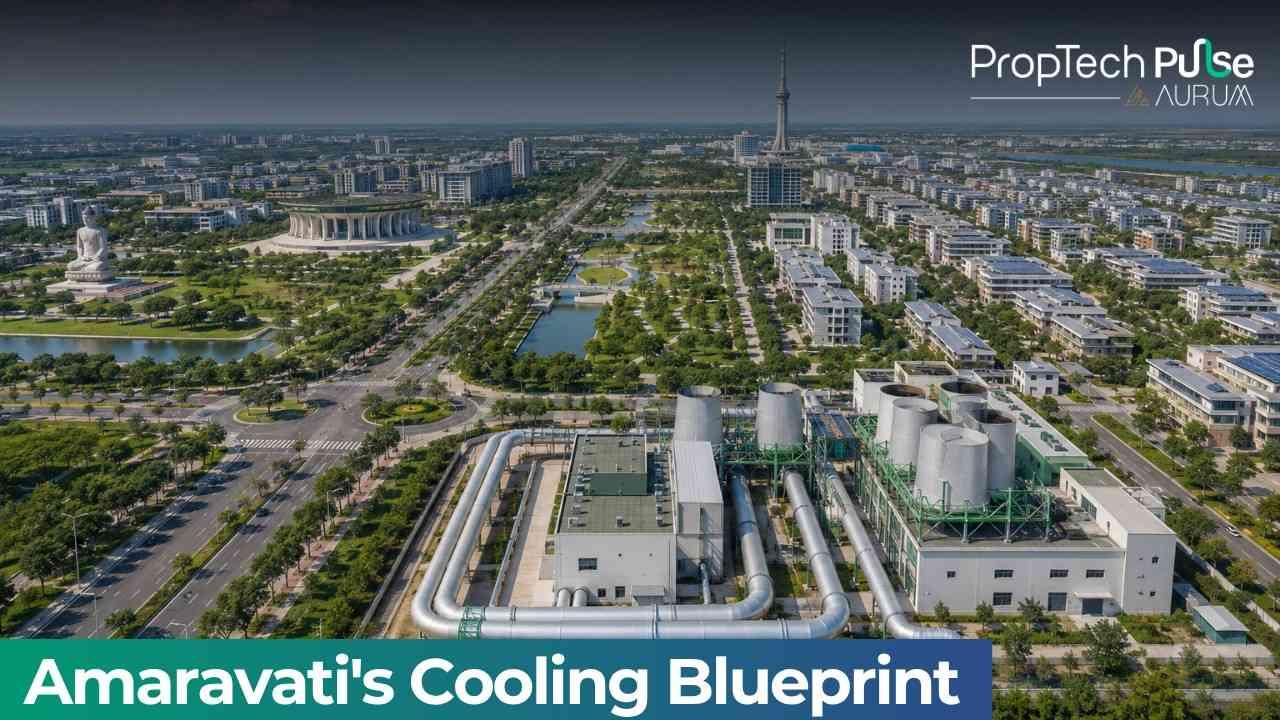
Cooling a city is expensive, energy-hungry work. Andhra Pradesh's greenfield capital wants to sort that out before most of the buildings even go up. That was the thinking behind a recent technical session on Amaravati district cooling, where planners and engineers worked through how centralised cooling could run across the capital from the start.
A full room, not a token workshop
The session was run by the Andhra Pradesh Capital Region Development Authority, or APCRDA, with the Indian Plumbing Association's Amaravati Chapter and the ISHRAE Vijayawada Chapter. It pulled in more than 150 people. Officials from APCRDA, Amaravati Development Corporation Limited and Amaravati Green Infrastructure Corporation Limited sat alongside consultants and contractors.
The agenda was technical and broad. Talks covered district cooling systems, HVAC integration, plumbing standards, wastewater management and sustainable building services, with the focus on how each one supports the city's planned growth.
The case for Amaravati district cooling
District cooling is not a luxury add-on. Done well, it cuts energy use and improves how a building actually runs day to day. The pitch was efficiency over the long run, not headline savings on day one. Experts at the session argued these systems can lift operational efficiency and reduce consumption across institutional, commercial and residential developments alike.
The expertise on show was specific:
- Dr. Anand Babu on district cooling concepts and HVAC systems
- Gaurav on international district cooling projects and case studies
- Bhaskar Katragadda and Suresh on advanced pumping and wastewater management
Representatives from IPA and ISHRAE pushed the same point, that technical standards and steady knowledge exchange matter as much as the hardware. The message was that innovation needs a shared rulebook to stick.
Design it in, do not bolt it on
APCRDA Commissioner V. Vijay Rama Raju, IAS, made the central argument. Building services and centralised utility planning belong at the design stage, not after construction starts. He tied Amaravati's ambition of being a smart, sustainable and future-ready capital to three things: coordinated planning, quality execution and proper maintenance of public infrastructure and utility networks.
Chief Architect Ar. Sandeep Dixit, who coordinated the session, leaned on collaboration. He argued that resilient, future-ready infrastructure needs government agencies, industry experts and technical institutions working together rather than in silos.
Why a blank slate helps
Amaravati has an advantage that most Indian cities do not. It is being built as a greenfield capital, with sustainability and technology-driven planning baked in rather than retrofitted. A new city can plan its utility networks as one system rather than a patchwork of separate fixes. That makes it easier to embed centralised cooling and shared utilities into the layout from the outset.
The workshop fits a wider APCRDA effort to weigh advanced utility solutions and global best practices against the city's own needs. The discussions also reflected a broader shift, with sustainable urban planning gaining ground across major Indian and global cities as a way to save energy and limit environmental impact. For a capital still taking shape, getting the cooling decisions right now is far cheaper than fixing them later.
Enjoyed this update? Visit PropTech Pulse for more real estate news and market insights.




Unlock the Latest in Real Estate
News, Infographics, Blogs & More! Delivered to your inbox.