New Launch - India Real Estate Report 2026.











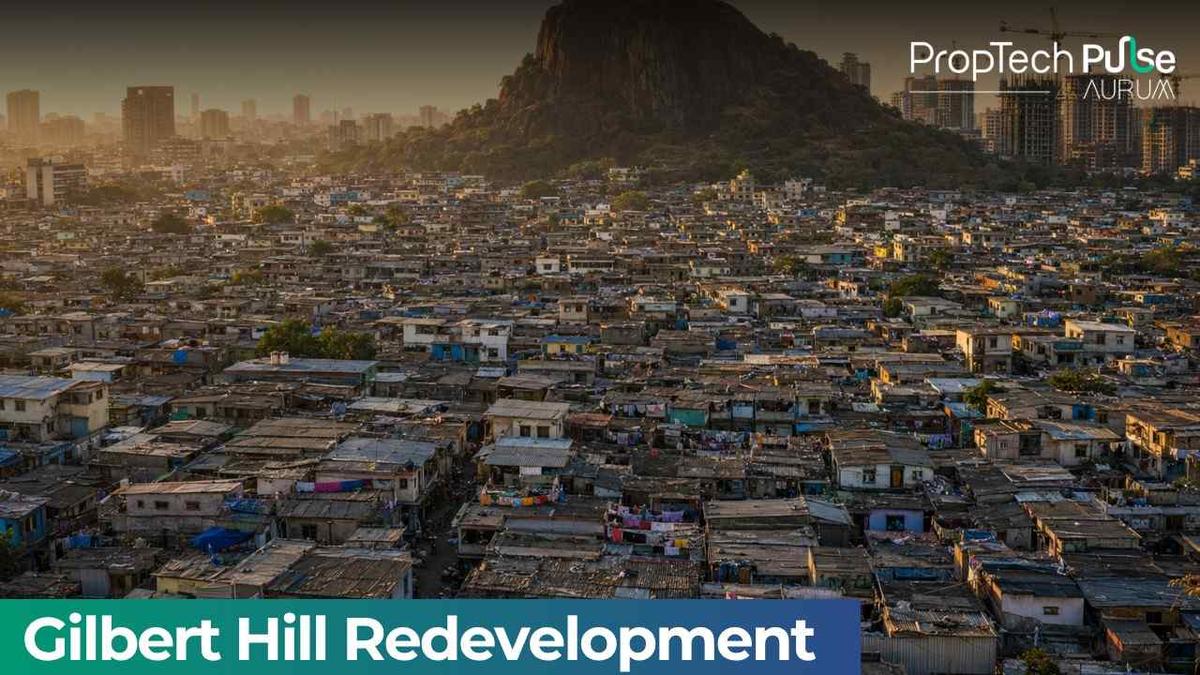
Andheri West is about to change shape. Mumbai has launched a 100-acre slum cluster redevelopment project around the Gilbert Hill area, and it ranks among the largest the city has ever taken on. This Mumbai slum redevelopment is the first to move ahead under Maharashtra's recently introduced cluster redevelopment policy, so the stakes reach well beyond a single suburb.
A 100-acre cluster, 14,000 hutments
The site is dense. It covers close to 14,000 hutments along with several existing residential buildings, all packed into one of the western suburbs' busiest pockets. Once the work is done, residents are meant to get formal housing, upgraded civic infrastructure and living conditions that finally address years of congestion and patchy urban services. The goal is a planned neighbourhood rather than the unmanaged sprawl that defines the area today.
Gilbert Hill matters here. Andheri West has seen heavy residential and commercial growth over the past decade, and that growth has piled pressure on roads, drainage and housing. A redevelopment on this scale is expected to support more organised urban growth and improve access to public amenities for people living nearby. The cluster also carries strategic weight given its location in one of Mumbai's key western suburbs, and improved connectivity is part of the brief.
Why this Mumbai slum redevelopment skips plot-by-plot
Most slum redevelopment in Mumbai happens plot by plot. This one does not. The cluster redevelopment approach stitches together several land parcels into a single scheme, which lets authorities plan at a scale that isolated plots never allow.
The cluster pulls in a mix of land:
- Slum pockets
- Non-slum areas
- Vacant land
- Older residential buildings
Officials expect the wider canvas to deliver wider roads, better drainage systems, more open space and stronger public infrastructure. Road networks and public amenities sit inside the same brief. The policy is also pointed squarely at the fragmented development that has stalled redevelopment across several parts of the city for years.
Who builds it, who signs off
The state has proposed a dedicated mechanism to run projects like this one. Delivery can come through government agencies, private developers or joint ventures, depending on what each project requires. A high-level committee is expected to handle approvals and monitor implementation, with faster execution held up as the main objective.
One project, nineteen watching
Andheri West is the opening act. It is the first major project among 19 large slum clusters identified across Mumbai for integrated redevelopment, which is why planners and developers are paying close attention to how it performs. Officials have framed it as a model for the cluster projects that follow.
The timing fits a bigger shift. With little vacant land left inside city limits, Mumbai is leaning on redevelopment to unlock land value and add housing stock. Several large schemes covering housing colonies, old residential layouts, and slum settlements are already planned or underway. Urban planners and industry stakeholders have argued that big cluster projects plan infrastructure more efficiently, improve traffic circulation and build more sustainable communities than piecemeal work ever could. If Gilbert Hill delivers, the other eighteen clusters have their template.
Enjoyed this update? Visit PropTech Pulse for more real estate news and market insights.