New Launch - India Real Estate Report 2026.











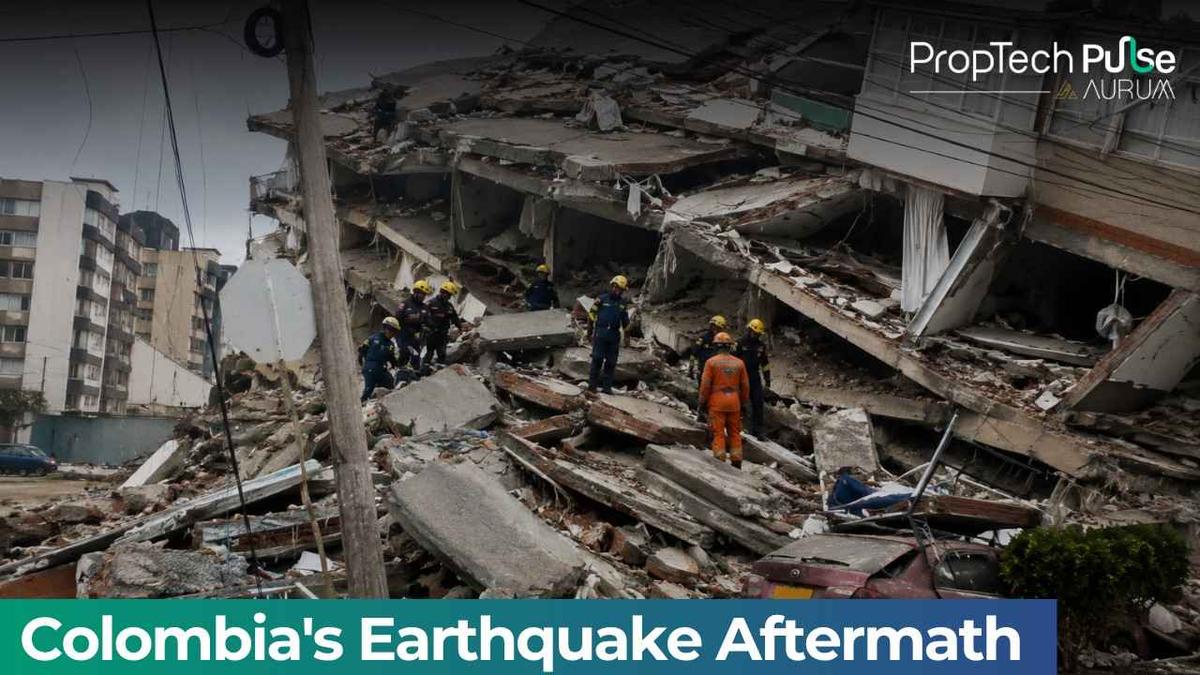
Before anything else, the human cost here is what matters most. A magnitude 7.4 earthquake struck western Colombia on August 10, and as rescue teams continue searching collapsed buildings, the confirmed death toll is still rising. What follows is about the property and infrastructure fallout, a real and significant story in its own right, but one that sits secondary to the loss of life still unfolding on the ground.
What actually happened
The earthquake struck near San José del Palmar in Chocó, on Colombia's Pacific side, at a depth of roughly 103 kilometres. At least 22 people had been confirmed dead by Monday afternoon, with Pereira accounting for 18 of those deaths and further fatalities recorded in Manizales and Buenaventura. Authorities expect the toll to rise as search operations continue.
Cali, Colombia's third-largest city, reported approximately 25 collapsed buildings. In Manizales, footage showed a church spire collapsed and deep fissures across a nearby building's façade. People remain trapped beneath rubble in multiple locations, prompting rescue teams to be deployed from other Colombian cities. The tremor was felt as far as Bogotá, where buildings were evacuated as a precaution, though the capital's mayor reported no serious damage to major infrastructure there so far.
The infrastructure damage extends beyond buildings
Airports serving Pereira, Manizales, Quibdó, Armenia, Cartago and Buenaventura all reported problems, with some terminals temporarily closed for structural inspection. That matters beyond the immediate disruption. Damaged regional airports complicate emergency response logistics precisely when rescue and relief operations need them most, and they add a distinct layer to the economic impact separate from the building collapses themselves.
What the insurance and property fallout will actually involve
The combination of structural collapse and transport disruption is expected to generate claims across several distinct insurance lines simultaneously. Property losses will likely span residential, commercial and public-sector buildings, and engineering assessments will be required to determine which structures still standing are actually safe to occupy, a process that takes considerably longer than the initial damage assessment itself.
Business interruption claims will likely emerge wherever confirmed physical damage forces companies to suspend operations, though how those claims are treated will depend heavily on individual policy wording, earthquake-specific coverage terms, waiting periods and deductibles. Disruption caused purely by access restrictions or utility failures, rather than direct damage at an insured location, is typically treated differently under most policies, a distinction that will matter considerably as claims get filed in the coming weeks.
The affected coffee-growing region adds another dimension. Agricultural, processing and export operations there may face delays even at facilities that escaped major structural damage, simply because supporting infrastructure, transport routes, ports, and regional logistics networks have been disrupted.
Why the damage assessment will take time
Loss adjusters face a genuinely difficult task distinguishing cosmetic cracking from damage that actually compromises a building's structural integrity, work that can't be rushed while rescue operations continue and authorities monitor ongoing aftershock risk. Access limitations in heavily affected areas like Chocó will likely slow inspections further. No reliable estimate of total economic or insured losses exists yet, and early building-collapse figures remain preliminary as municipalities work through full inspections.
Part of a wider pattern this year
This earthquake follows twin quakes in neighbouring Venezuela less than two months earlier that killed more than 6,100 people, a grim reminder that this region has faced a genuinely severe run of seismic events in a short span. For the built environment specifically, disasters of this scale tend to force a hard look at construction standards and enforcement in the affected areas once the immediate emergency response gives way to reconstruction planning, a process that historically takes years rather than months to meaningfully change how buildings get built.
Enjoyed this update? Visit PropTech Pulse for more real estate news and market insights.