New Launch - India Real Estate Report 2026.











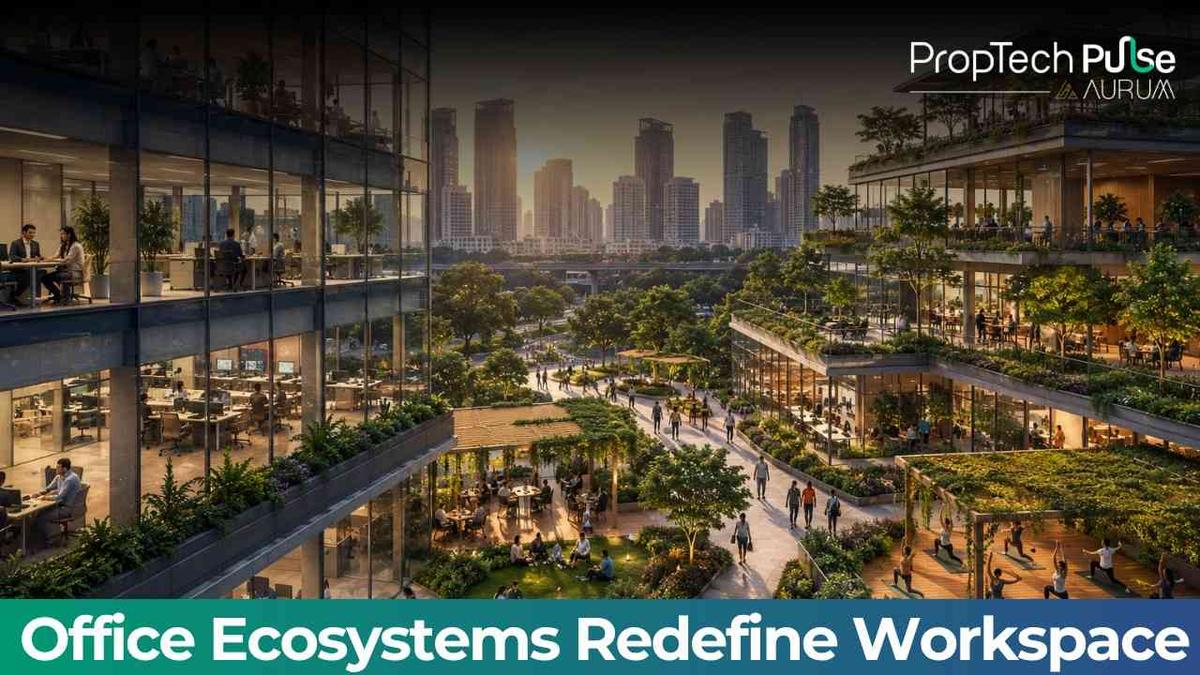
The global commercial real estate (CRE) sector is undergoing a fundamental structural transformation, moving away from the "just an office" model toward the creation of employee-centric ecosystems. As the 2026 fiscal cycle progresses, major corporate occupiers are no longer evaluating property solely based on square footage or central location. Instead, the value of a commercial asset is increasingly tied to its ability to function as a holistic environment that supports employee well-being, mental health, and seamless collaboration.
This shift is driven by the realisation that physical workspace plays a critical role in talent retention and operational productivity in a post-hybrid world. Developers and institutional landlords are responding by integrating diverse amenities that were previously reserved for luxury residential or hospitality sectors. The modern office is being redefined as a "destination" rather than a mandatory location, focusing on experiential value to draw workforces back into physical hubs.
Core Pillars of the Employee-Centric Ecosystem
To remain competitive in the 2026 market, commercial developments are being designed around specific experiential pillars that cater to the evolving needs of a diverse workforce. These ecosystems prioritise flexibility and human-centric design through several key implementations:
- Wellness Integration: Inclusion of on-site fitness centres, dedicated mental health zones, and biophilic design elements to reduce workplace stress.
- Collaborative Hubs: Transitioning from fixed cubicles to agile "neighbourhoods" and high-tech social spaces that facilitate spontaneous innovation.
- Hospitality-Grade Services: Deployment of concierge services, premium food and beverage outlets, and community management teams to enhance the daily user experience.
- Smart Infrastructure: Leveraging AI-native facility management to provide personalised climate control, lighting, and touchless navigation for occupants.
Economic Impact and Long-Term Asset Valuation
This evolution is significantly impacting how commercial assets are appraised and marketed to global investors. Assets that offer integrated ecosystems are commanding a premium in rental yields compared to traditional Grade-A office buildings that lack these value-added services. Institutional capital is increasingly flowing toward "future-ready" developments that demonstrate high ESG (Environmental, Social, and Governance) compliance alongside these employee-focused features.
Industry analysts suggest that the trend toward ecosystem-based real estate is a hedge against the volatility of remote work. By providing a superior environment that employees actually choose to inhabit, corporations can justify their real estate expenditures through improved engagement and cultural cohesion. As we look toward 2027, the line between commercial, retail, and hospitality will continue to blur, solidifying the ecosystem model as the definitive standard for the global workspace.
Enjoyed this update? Visit PropTech Pulse for more real estate news and market insights.