New Launch - India Real Estate Report 2026.









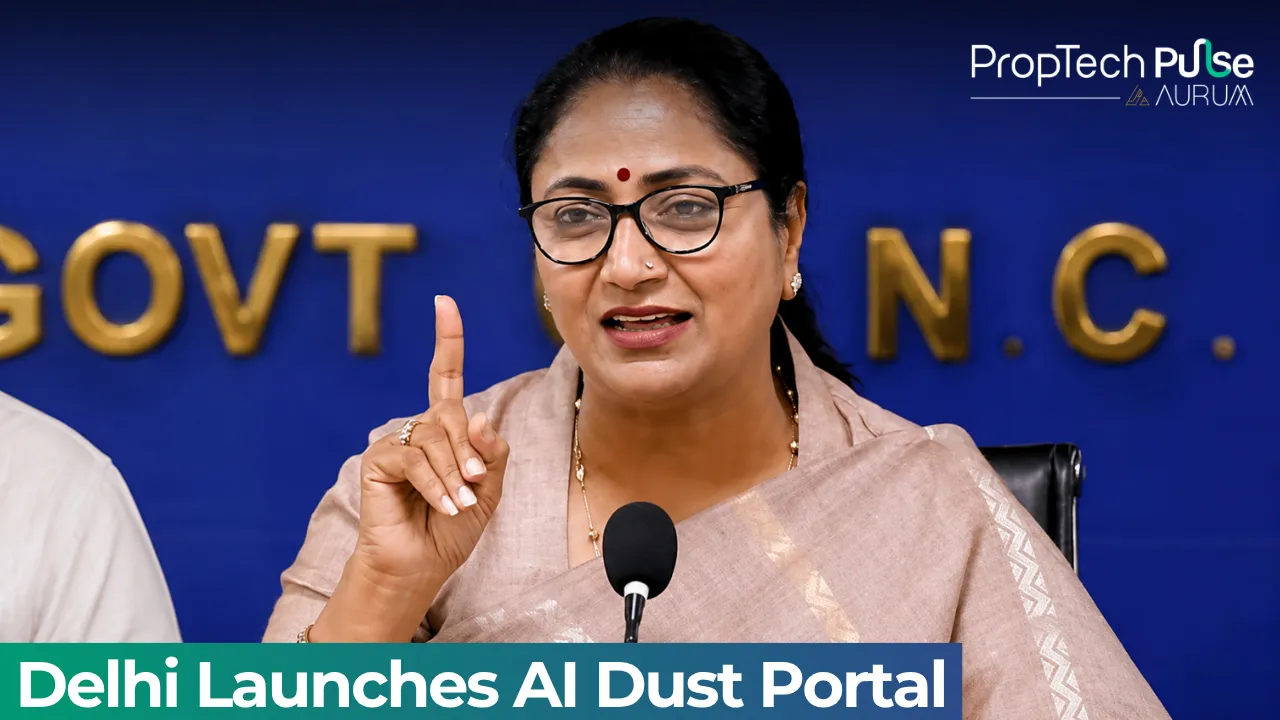
The Delhi government has launched the AI-enabled Dust Portal 2.0, an advanced digital platform designed to monitor construction and demolition sites in real time and strengthen efforts to control dust pollution across the capital. Developed by the Delhi Pollution Control Committee (DPCC), the upgraded portal integrates artificial intelligence, GIS mapping, live surveillance and environmental sensors to improve compliance, monitoring and enforcement. Chief Minister Rekha Gupta unveiled the platform, describing it as a major step towards technology-driven environmental governance.
Construction-related dust remains one of the largest contributors to Delhi's air pollution. The government expects the new platform to replace manual inspections with automated monitoring, enabling faster identification of violations and more effective enforcement of dust control norms. The portal is also available as a mobile application, allowing officials and project proponents to monitor compliance remotely.
Real-Time Monitoring Through AI and Smart Sensors
Dust Portal 2.0 combines AI-powered analytics with GIS mapping, 360-degree PTZ cameras and PM10 and PM2.5 sensors installed at construction sites. These technologies continuously monitor dust levels and construction activities while automatically transmitting data to the DPCC. The system analyses site conditions in real time and generates alerts whenever pollution exceeds permissible limits or dust mitigation measures are found to be inadequate.
Mandatory Coverage for Large Construction Sites
The upgraded monitoring system applies to construction and demolition projects measuring 500 square yards or more. According to the Delhi government, nearly 1,800 construction sites have been identified across the city, with around 800 to 900 currently active. Approximately 800 sites have already been equipped with 360-degree cameras linked directly to the portal, enabling continuous digital supervision instead of periodic manual inspections.
Automated Alerts and Digital Enforcement
The portal automatically issues colour-coded alerts based on pollution levels, helping authorities respond quickly to potential violations. It can generate compliance certificates, digital notices and enforcement actions without extensive paperwork, improving transparency and reducing delays. AI also detects inactive sensors or monitoring equipment, ensuring that construction sites maintain continuous environmental compliance.
Also Read: India and Indonesia Partner on Sabang Port Development
Supporting Delhi's Clean Air Mission
Delhi Environment Minister Manjinder Singh Sirsa said the platform forms part of the government's broader "Clean Air, Healthy Delhi" initiative. Dust generated from roads, soil and construction activities contributes approximately 27% of Delhi's air pollution during summer and around 15% during winter. It is also responsible for nearly 66% of PM10 emissions and about 38% of PM2.5 emissions, making construction dust control a key priority for improving air quality.
Technology-Driven Environmental Governance
Officials believe Dust Portal 2.0 will improve accountability by providing live information on construction activity, pollution levels and compliance status through a unified dashboard. The integration of AI, digital reporting and mobile access is expected to enable faster decision-making while reducing opportunities for manual errors. The initiative reflects Delhi's increasing reliance on smart technologies to strengthen environmental management and regulatory enforcement.
- Dust Portal 2.0 has been developed by the Delhi Pollution Control Committee.
- The platform uses AI, GIS mapping, 360-degree cameras and PM10/PM2.5 sensors.
- It covers construction sites measuring 500 square yards or more.
- About 800 construction sites are already connected to the system.
- The portal generates automated pollution alerts and digital enforcement notices.
- A mobile application enables remote compliance monitoring.
- The initiative supports Delhi's "Clean Air, Healthy Delhi" programme.
Digital Innovation to Improve Air Quality
The launch of AI-enabled Dust Portal 2.0 marks a significant shift in how Delhi monitors construction-related pollution. By combining artificial intelligence, live surveillance and automated enforcement, the government aims to improve compliance with environmental regulations while reducing one of the city's major sources of particulate pollution. As more construction sites integrate with the platform, the initiative is expected to strengthen Delhi's long-term air quality management strategy.