
Services
Knowledge Hub
Resources
Tools
Services







©PropTech Pulse 2025, All rights reserved.

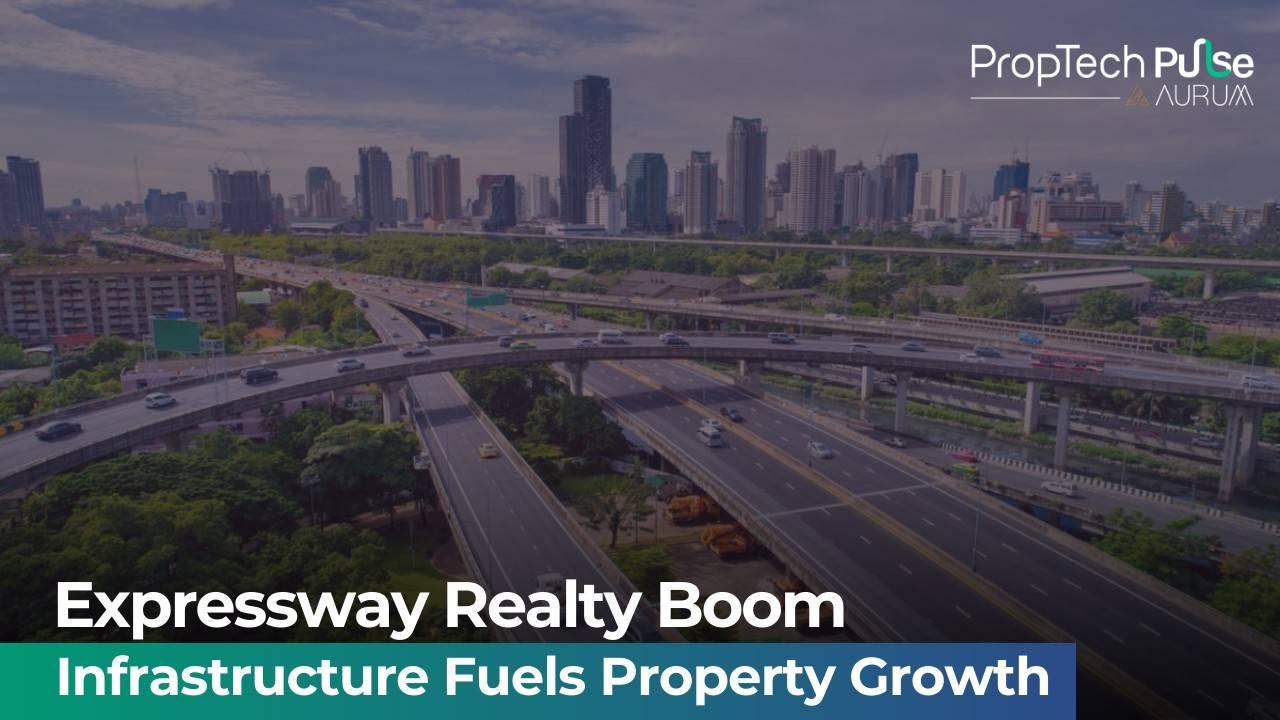
The Expressway Effect on Indian Real Estate
India’s expanding expressway network is rapidly altering the country’s real estate landscape. As large-scale infrastructure projects improve connectivity between cities, towns, and industrial clusters. Property markets along these corridors are witnessing renewed interest. Expressways are no longer just transport links; they are catalysts for real estate price appreciation, unlocking land value and accelerating urban expansion.
Why Expressways Drive Property Growth
High-speed road connectivity reduces travel time, improves logistics efficiency, and enhances access to employment hubs. These factors collectively boost demand for housing, commercial spaces, and warehousing. Developers and investors increasingly view expressway-linked real estate as a long-term opportunity supported by infrastructure certainty and government-backed development.
Key Expressway Corridors to Watch
- Delhi–Mumbai Expressway: One of India’s most ambitious infrastructure projects, driving growth in residential, logistics, and industrial assets across multiple states.
- Yamuna Expressway: Strengthening demand between Delhi and Agra, with rising interest in plotted developments and townships.
- Mumbai–Pune Expressway: Sustained residential demand fueled by improved commute and second-home buyers.
- Western Peripheral Expressway: Decongesting NCR and enhancing access to Gurugram-linked residential zones.
- Eastern Peripheral Expressway: Supporting satellite towns and easing freight movement around Delhi.
- Chennai Peripheral Ring Road: Enabling urban expansion corridors and new residential micro-markets.
- Purvanchal Expressway: Transforming connectivity in Uttar Pradesh and encouraging regional real estate growth.
- Ahmedabad–Vadodara Expressway: Boosting commercial development and industrial real estate.
- Nagpur–Mumbai Expressway: Creating logistics hubs and attracting infrastructure-led investments.
- Amritsar–Delhi–Kolkata Expressway: Strengthening trade routes and long-term property potential.
Impact on Residential and Commercial Markets
Expressway connectivity often leads to the development of new residential townships, integrated townships, and commercial clusters. Affordable and mid-segment housing typically gains traction first, followed by logistics parks, retail zones, and office spaces. Over time, this layered development contributes to sustained property value growth and improved livability in surrounding areas.
Investor and Developer Sentiment
With infrastructure execution improving and policy continuity supporting large projects, investor confidence in corridor-based development is strengthening. Developers are increasingly acquiring land parcels near expressways to plan future-ready projects aligned with India’s urbanisation trend. Long-term investors see these regions as relatively lower-risk entry points compared to saturated city cores.
Outlook Toward 2030
By 2030, expressways are expected to play a defining role in reshaping India’s real estate map. Regions connected by high-speed corridors are likely to witness structured growth, better infrastructure, and rising demand across asset classes. For buyers and investors alike, expressway-linked markets represent a strategic opportunity driven by infrastructure-led urban growth.
Enjoyed this update? Visit PropTech Pulse for more real estate news and market insights.




Unlock the Latest in Real Estate
News, Infographics, Blogs & More! Delivered to your inbox.