New Launch - India Real Estate Report 2026.










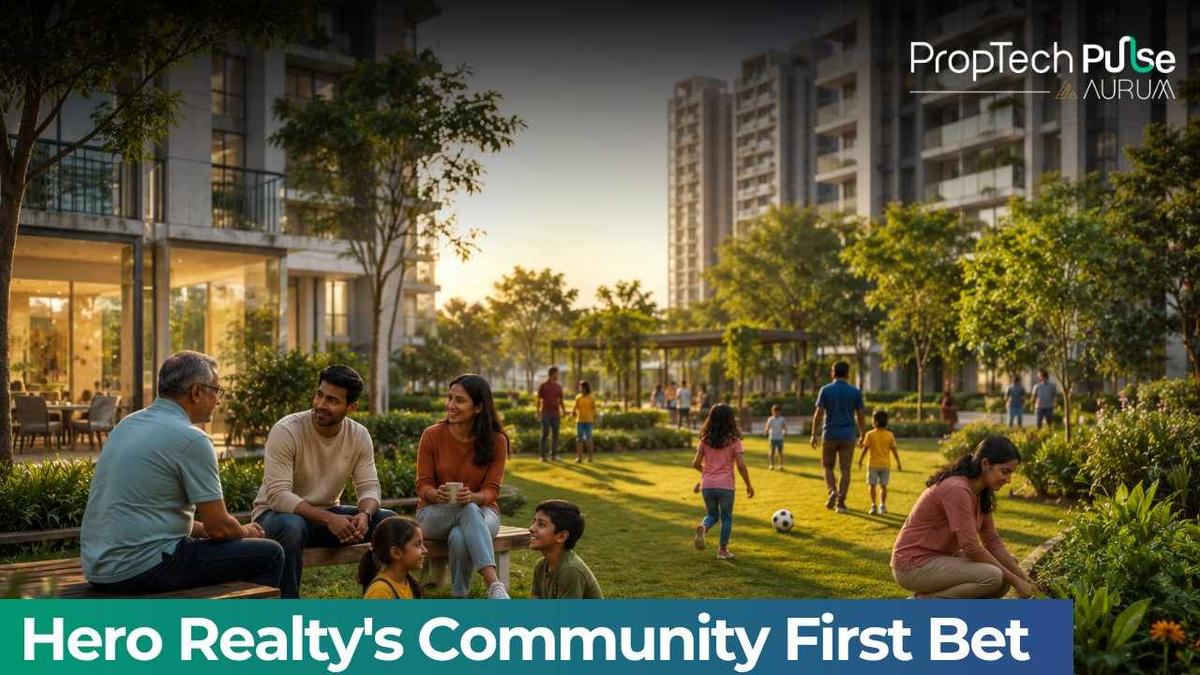
A quiet but telling repositioning is happening in India's residential real estate marketing. Hero Homes, the residential arm of Hero Realty Private Limited and part of the Hero Enterprise group, has launched a brand campaign titled Building What Matters, shifting its stated focus from the language of square footage and amenities toward something less tangible but arguably more durable: the quality of community that a housing project creates around its residents. The timing of the campaign reflects a broader conversation happening across the sector about what homebuyers, particularly post-pandemic ones, actually value once they move in.
What the campaign is saying and why it matters
The campaign's central argument is that a home's value lies in the relationships it enables, the sense of belonging it creates and the wellbeing it supports over time, rather than in the specification of the unit itself. Hero Homes CEO Rohit Kishore has described the company's intent as creating spaces where people feel they truly belong, and positioned the campaign as a natural evolution of the brand's philosophy rather than a departure from it. The creative execution spans digital, social and out-of-home channels, built around everyday moments of connection rather than the aspirational imagery that has dominated premium residential advertising for most of the last decade. The campaign runs across Hero Homes' projects in Gurugram, Mohali, Panipat, Lucknow and Nagpur.
The market signal behind the positioning
Brand campaigns from real estate developers are rarely just about awareness. They are also signals of how a developer reads the market and what it believes buyers are responding to. The shift from amenity-led to community-led positioning reflects what sales data and homebuyer surveys have been pointing to for several years: buyers in the mid-to-premium segment are increasingly asking not just what the flat contains, but what it feels like to live in the project. Shared spaces, resident programming, management quality and the social texture of a community are becoming purchase considerations alongside carpet area and price per sq ft. Hero Realty's campaign is an explicit acknowledgement of that shift.
Community living as a product, not just a promise
The more substantive question behind any such campaign is whether the community experience being marketed is designed into the product or added as a communication layer on top of conventional development. Hero Homes has indicated that the Building What Matters philosophy informs its design approach, with spaces planned to encourage interaction and a sense of neighbourhood rather than maximising sellable area alone. The company's footprint across five cities, spanning Gurugram's established residential market, Mohali's growing suburban belt, and mid-tier cities including Panipat, Lucknow, and Nagpur, positions it to make community-focused living accessible at a range of price points rather than only at the luxury end, where such positioning is more common.
What it means for how residential real estate is marketed
The broader implication of campaigns like this one is that the vocabulary of Indian residential real estate marketing is shifting. For most of the sector's modern history, the dominant language has been transactional: location, price, area, amenities, investment returns. The emergence of community, belonging and wellbeing as primary brand propositions reflects a maturing buyer base that has moved beyond the first purchase and is thinking about the lived experience of homeownership rather than just the financial one. Developers who can make that experience genuinely better, rather than simply claiming to, are likely to build the kind of resident loyalty and referral culture that reduces customer acquisition costs and sustains pricing power through market cycles.
Enjoyed this update? Visit PropTech Pulse for more real estate news and market insights.