New Launch - India Real Estate Report 2026.

Services
Knowledge Hub
Resources
Tools

Ask Pulse Ai
©PropTech Pulse 2025, All rights reserved.


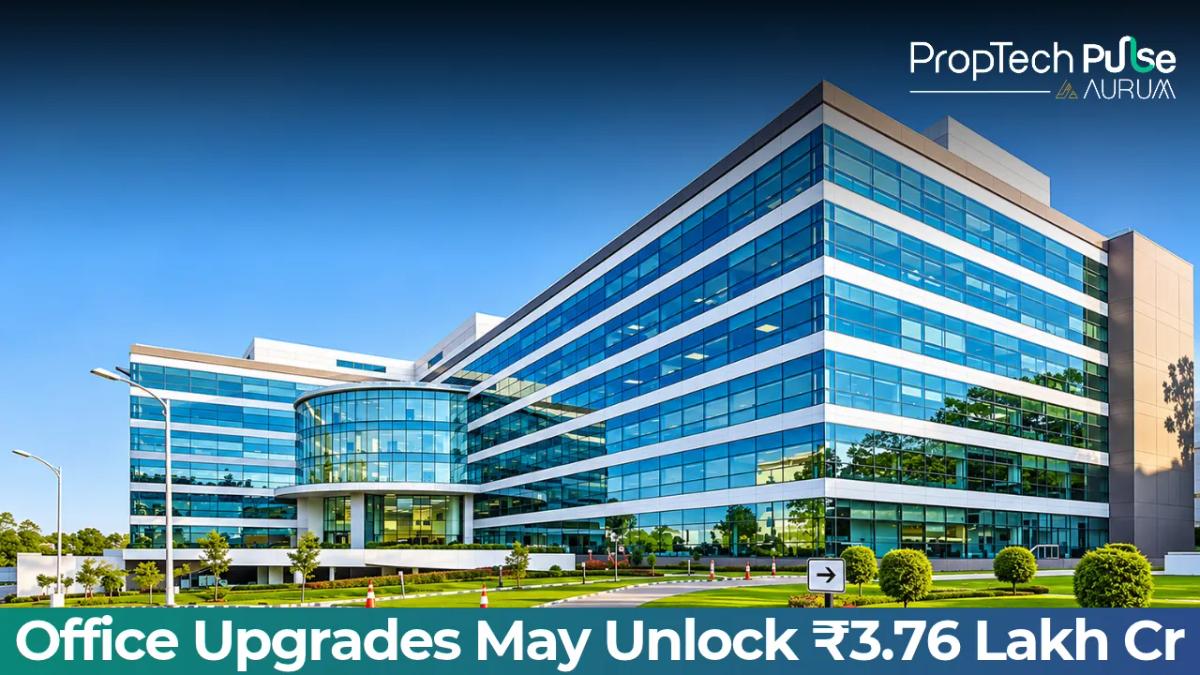
Retrofitting India's ageing office buildings could unlock an estimated ₹3.76 lakh crore in additional asset value, according to Knight Frank India's report, Age to Advantage: Retrofitting India's Office Stock.
The study identifies approximately 301 million sq ft of office space across the country's top eight cities as eligible for upgrades.
This represents around 28% of the combined office inventory of these markets.
The report estimates that the value of this eligible stock could increase from ₹4,957 billion to ₹8,716 billion after retrofitting, indicating a potential appreciation of 76%.
India has approximately 1,076 million sq ft of office stock, making it the world's fourth-largest office market by inventory. However, Grade A properties account for only 56% of the total, or around 603 million sq ft.
The report highlights the opportunity to improve the quality and competitiveness of existing commercial buildings rather than relying entirely on new construction.
Also Read: India Leads APAC Office Market with Record Commercial Growth
NCR Leads by Volume While Mumbai Offers Higher Value Appreciation
The National Capital Region (NCR) has the largest retrofitting opportunity by volume. Around 81 million sq ft of office space, representing 39% of its total inventory, is eligible for upgrades.
Its estimated asset value could rise from ₹1,308 billion to ₹2,376 billion, an increase of 82%.
The Mumbai Metropolitan Region (MMR) offers the highest potential value appreciation among the markets highlighted.
Its 68 million sq ft of eligible office stock could see its combined valuation increase from ₹1,855 billion to ₹3,630 billion, representing a potential 96% rise.
Other findings from the report include:
- Central Business Districts: Retrofitting could unlock ₹1,445 billion in incremental value across the eight cities, representing a 70% increase.
- Secondary Business Districts: Eligible assets could generate ₹2,313 billion in additional value, with a potential valuation increase of 80%.
- Ahmedabad: More than 60% of its office stock is classified as ageing and eligible for upgrades.
- Bengaluru: Only 12% of its office inventory is eligible, reflecting its comparatively lower share of ageing stock.
Within central business districts, NCR has the largest absolute value opportunity, with approximately ₹690 billion in potential incremental value.
MMR follows with ₹355 billion. In secondary business districts, MMR leads with an estimated ₹1,420 billion in additional value, followed by NCR at ₹379 billion.
Also Read: GCCs Now Drive 43% of India's Record Office Leasing
What Retrofitting Means for India's Commercial Real Estate Market
Retrofitting involves upgrading existing buildings with modern systems, technologies and materials to improve performance, safety, sustainability and occupier experience.
It offers an alternative to complete redevelopment, which can involve higher costs, carbon emissions and operational disruption.
Typical interventions include improvements to:
- Mechanical, electrical and plumbing (MEP) systems
- Building façades, elevators, lobbies and parking facilities
- Fire protection and life-safety infrastructure
- Digital infrastructure, security and building management systems
- Wellness facilities and accessibility features
Shishir Baijal, chairman and managing director of Knight Frank India, said retrofitting could become an important driver of the next phase of office real estate growth.
He pointed to rising demand for efficient, sustainable and technology-enabled workplaces, alongside the strategic locations of many legacy office buildings.
Deben Moza of Knight Frank India highlighted the importance of energy efficiency, digital infrastructure, safety and occupant experience.
As companies place greater emphasis on sustainability and environmental, social and governance commitments, upgrading existing office assets could help owners improve building performance and attract quality occupiers.
The report positions retrofitting as a significant value-creation opportunity for India's commercial property sector, particularly in established business districts where older buildings occupy desirable locations but require modernisation.
Enjoyed this update? Visit PropTech Pulse for more real estate news, investment insights and property market trends.


