New Launch - India Real Estate Report 2026.

Services
Knowledge Hub
Resources
Tools

Ask Pulse Ai
©PropTech Pulse 2025, All rights reserved.


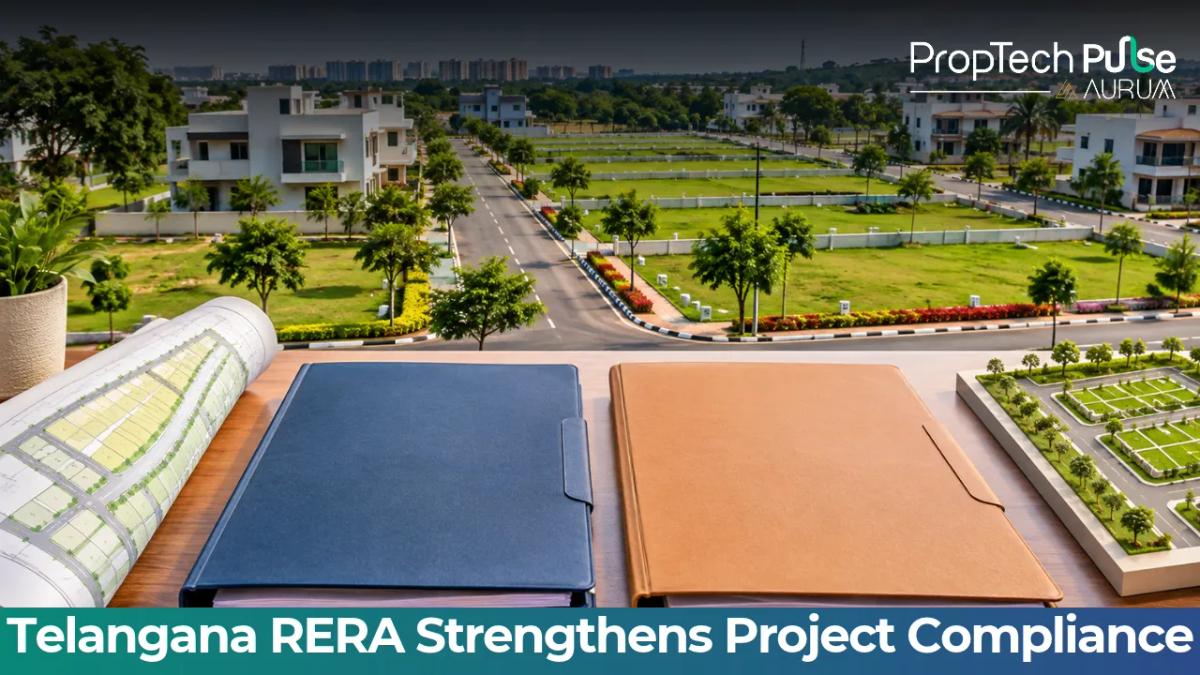
The Telangana Real Estate Regulatory Authority (TG RERA) has clarified that obtaining layout permission does not exempt a promoter from mandatory registration under the Real Estate (Regulation and Development) Act, 2016.
The authority imposed a ₹5.3 lakh penalty on Nelli Srinivas, promoter of Our Dream Project, for advertising, marketing and selling plots in the unregistered Sri Nilaya Homes project.
The project is located at Indaram gram panchayat in Jayapur mandal of Mancherial district.
In its order dated November 10, 2026, the authority rejected the promoter's argument that planning permissions and a pending application for final layout approval established compliance with the law.
The case followed a petition by Mohd Naheem Pasha, who alleged that the promoter had marketed and sold plots without TG RERA registration despite obtaining permissions from the gram panchayat and the Directorate of Town and Country Planning (DTCP).
Also Read: Telangana to Return House Title Deeds to 7 Lakh Families
Promoter Admits Violation; Authority Orders ₹5.3 Lakh Penalty
In his response submitted on March 30, 2026, Srinivas referred to tentative layout permission obtained from DTCP in 2022.
He also stated that plots mortgaged to the gram panchayat had been released after completion of development works, while his application for final layout approval remained pending.
The promoter admitted that the project did not have the required RERA registration, pleaded ignorance of the law and submitted an apology. During hearings on April 21, June 30 and August 19, he assured the authority that the violation would not happen again.
He also stated that all plots had been sold and that advertising and marketing activities had stopped.
However, the authority held that planning permission and RERA registration are separate statutory requirements.
Neither the layout approval nor the pending application for final approval could establish compliance with Section 3(1) of the RERA Act.
The authority also stated that an apology and assurance of future compliance could not remove liability for a statutory violation that had already occurred.
The registration requirement is intended to promote transparency, accountability and protection of prospective buyers.
Under Section 59 of the Act, the authority directed the promoter to deposit the ₹5.3 lakh penalty into the TG RERA Fund within 30 days of the order.
Payment must be made through a demand draft or online transfer. Failure to pay could invite further penal action under Section 63.
Also Read: Telangana RERA Protects Homebuyers: Aura Velimala Case
What the Ruling Means for Plot Buyers and Developers
The order reinforces the distinction between planning approval and regulatory registration.
Layout permission from a local authority or DTCP addresses planning-related requirements, while RERA registration is a separate obligation applicable to projects covered by the Act.
Under the registration requirement, promoters must obtain the necessary TG RERA registration before undertaking activities such as:
- Advertising or marketing a real estate project
- Inviting buyers to purchase plots or other units
- Booking or offering plots for sale
- Selling plots in a project where registration is mandatory
TG RERA's guidance also states that promoters must register applicable projects before beginning advertising, marketing, booking or sales activities.
Buyers can check a project's registration details through the authority's official website rather than relying only on layout permissions or other planning documents.
The Sri Nilaya Homes case highlights the importance of checking each statutory requirement independently before investing in a plotted development.
For developers, the ruling makes clear that obtaining planning approvals does not remove the separate obligation to secure RERA registration before marketing or selling a project.
Enjoyed this update? Visit PropTech Pulse for more real estate news, investment insights and property market trends.


