
Ask Pulse Ai
Services
Knowledge Hub
Resources
Tools
Ask Pulse Ai
Services







©PropTech Pulse 2025, All rights reserved.

Five Decades of Transformation
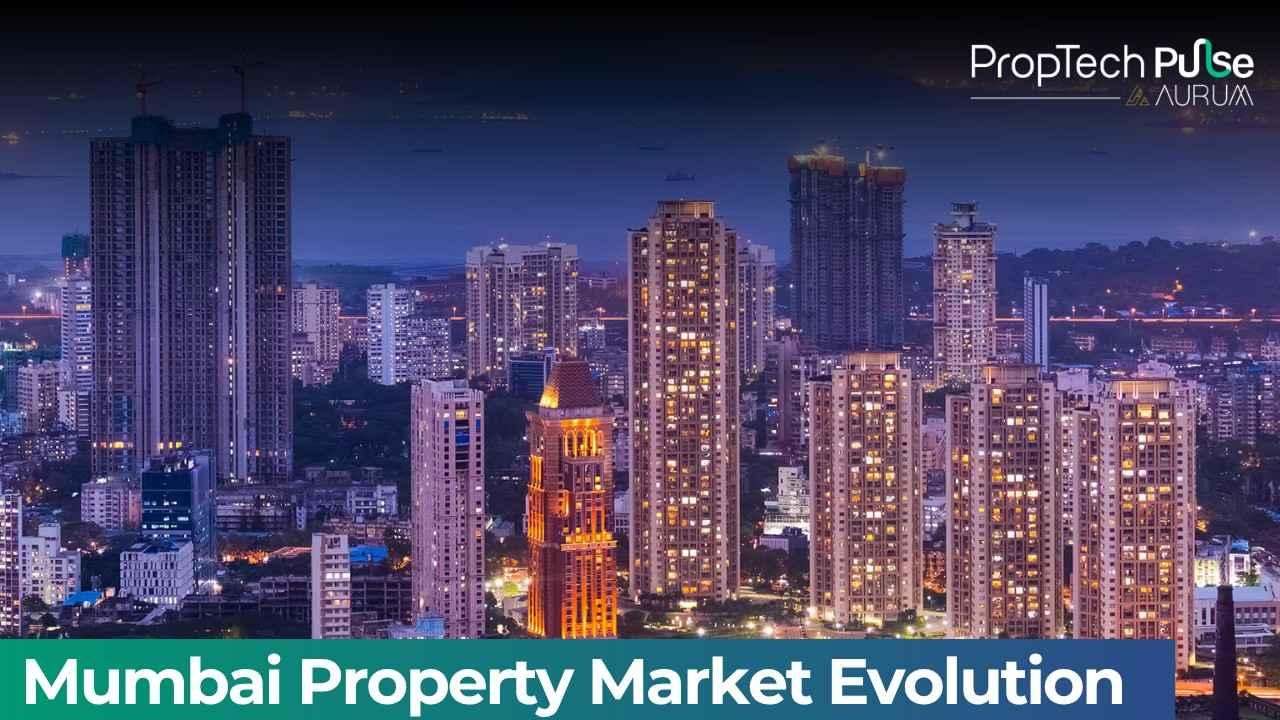
Mumbai’s real estate market has evolved dramatically over the past 50 years, shaped by rapid urbanisation, population growth, and severe land constraints. What was once a city of low-rise buildings has transformed into a skyline dominated by high-rise developments.
This evolution reflects broader economic and demographic changes that have redefined how real estate is developed and consumed in the city.
1970s–1990s: Horizontal Growth and Land Availability
In the earlier decades, Mumbai still had relatively more land available for development, particularly in suburban areas. Housing primarily consisted of low-rise buildings, and expansion was more horizontal in nature.
During this period, the city began expanding northwards, laying the foundation for suburban growth.
2000s: Shift Toward Vertical Development
As land availability declined and population density increased, developers began shifting toward vertical construction. High-rise residential towers became more common, especially in central and suburban locations.
This period also saw increased participation from organised developers and the emergence of premium housing projects.
2010s: Rise of Redevelopment and Premium Housing
With limited land supply, redevelopment emerged as a key strategy for creating new housing. Older buildings were replaced with modern high-rise structures, particularly in South Mumbai and established suburbs.
The luxury housing segment also gained momentum, driven by rising incomes and demand from high-net-worth individuals.
2020s: Infrastructure-Led Growth and Market Maturity
Recent years have seen infrastructure projects such as metro lines, coastal roads, and expressways reshaping the real estate landscape. These developments have improved connectivity and opened up new growth corridors.
The market has also become more transparent and regulated, with increased institutional participation.
Key Data Points: What Defines Mumbai Today
- Among the highest property prices in India
- Extremely high population density
- Strong demand across residential and commercial segments
- Limited land supply driving redevelopment and vertical growth
These factors continue to influence pricing and development patterns.
Strategic Implication: A Land-Constrained, High-Value Market
Mumbai’s real estate market is defined by scarcity and premium pricing. Developers must optimise land use through vertical construction and redevelopment, while buyers face high entry costs but strong long-term value.
The city’s unique dynamics make it one of the most resilient real estate markets in India.
Conclusion: A Market Shaped by Constraints and Innovation
Over the past 50 years, Mumbai’s real estate market has transformed from horizontal expansion to vertical, high-density development. This evolution has been driven by land scarcity, economic growth, and infrastructure expansion.
As the city continues to grow, innovation in development and planning will remain key to its real estate future.
Enjoyed this update? Visit PropTech Pulse for more real estate news and market insights.




Unlock the Latest in Real Estate
News, Infographics, Blogs & More! Delivered to your inbox.