New Launch - India Real Estate Report 2026.

Services
Knowledge Hub
Resources
Tools

Ask Pulse Ai
Services
FOR BUYERS & RENTERS
FOR REAL ESTATE DEVELOPERS








Refer other Connectors &
Multiply IncomeRefer other Connectors
& Multiply Income
Refer KuberX & earn
commission on every
loan they get
disbursed.


Scan & Download
©PropTech Pulse 2025, All rights reserved.


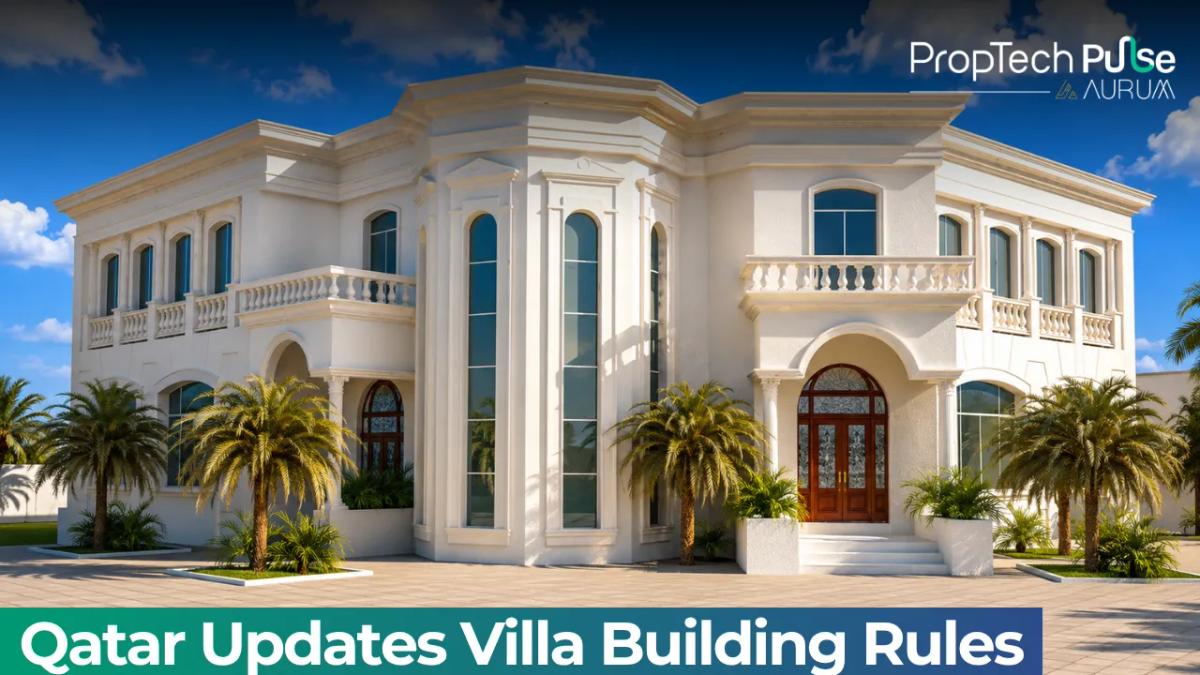
Qatar's Ministry of Municipality has announced one of the most significant updates to residential construction regulations in recent years, introducing more than 20 amendments to the architectural and planning requirements governing villas and palaces across the country. The reforms are designed to provide greater flexibility for homeowners while addressing the evolving needs of Qatari families and supporting sustainable urban development.
The amendments update provisions of Ministerial Decision No. 7 of 1989 and are intended to help citizens make better use of residential plots, accommodate larger families, and improve overall housing quality while maintaining privacy and Qatar's architectural identity.
Higher Building Limits and More Flexible Designs
Among the most notable changes is the increase in permissible building heights. Under the revised rules, residential villas can now reach heights of up to 16 metres, while palaces may range between 17 and 25 metres, depending on plot size and approved architectural elements. The move gives homeowners greater freedom to create larger and more sophisticated residential properties.
For the first time, property owners will also be allowed to construct an internal mezzanine floor within villas and palaces. This addition is expected to help families maximize usable space without significantly increasing building footprints.
New Family Suites and Expansion Opportunities
The updated regulations specifically address the changing needs of modern families. Homeowners can now create a dedicated internal family wing, providing additional private accommodation for family members within the same property. The changes are aimed at enhancing family stability while offering flexible housing solutions for multi-generational households.
- Ground-floor villa extensions may be built closer to neighbouring boundaries under specific controls.
- First-floor expansions are now permitted above external majlis areas and annexes.
- Dedicated family suites can be incorporated into residential designs.
- Internal service staircases for domestic workers and maintenance access are now allowed.
These measures are intended to provide greater flexibility for future home expansions without requiring families to relocate.
Changes to Majlis and Annex Structures
The regulations also introduce significant updates for traditional majlis and annex buildings. External majlis structures can now reach heights of between 7.5 and 10 metres and may include a mezzanine floor, subject to planning controls. External annexes can also accommodate an additional first floor, provided the total height does not exceed 7.5 metres.
In addition, certain setback requirements have been reduced, allowing homeowners to make more efficient use of available land. Decorative architectural projections are also permitted, giving architects and homeowners greater design flexibility.
Supporting Qatar's Urban Development Goals
The Ministry of Municipality stated that the amendments were developed following extensive studies of citizens' housing needs and construction challenges. Industry experts and the Qatar Society of Engineers have welcomed the changes, describing them as a major step toward modernizing residential urban planning while supporting the objectives of Qatar National Vision 2030.
- More than 20 regulatory amendments introduced.
- Villa height limit increased to 16 metres.
- Palace height limit increased to 17–25 metres.
- Mezzanine floors now permitted.
- Dedicated family wings allowed.
- Expanded majlis and annex construction options introduced.
The updated regulations represent a significant shift in Qatar's residential planning framework, giving homeowners greater freedom to design, expand and customize their properties while maintaining planning standards and improving quality of life for future generations.
Enjoyed this update? Visit PropTech Pulse for more real estate news, investment insights, and property market trends.


