
Ask Pulse Ai
Services
Knowledge Hub
Resources
Tools
Ask Pulse Ai
Services







©PropTech Pulse 2025, All rights reserved.

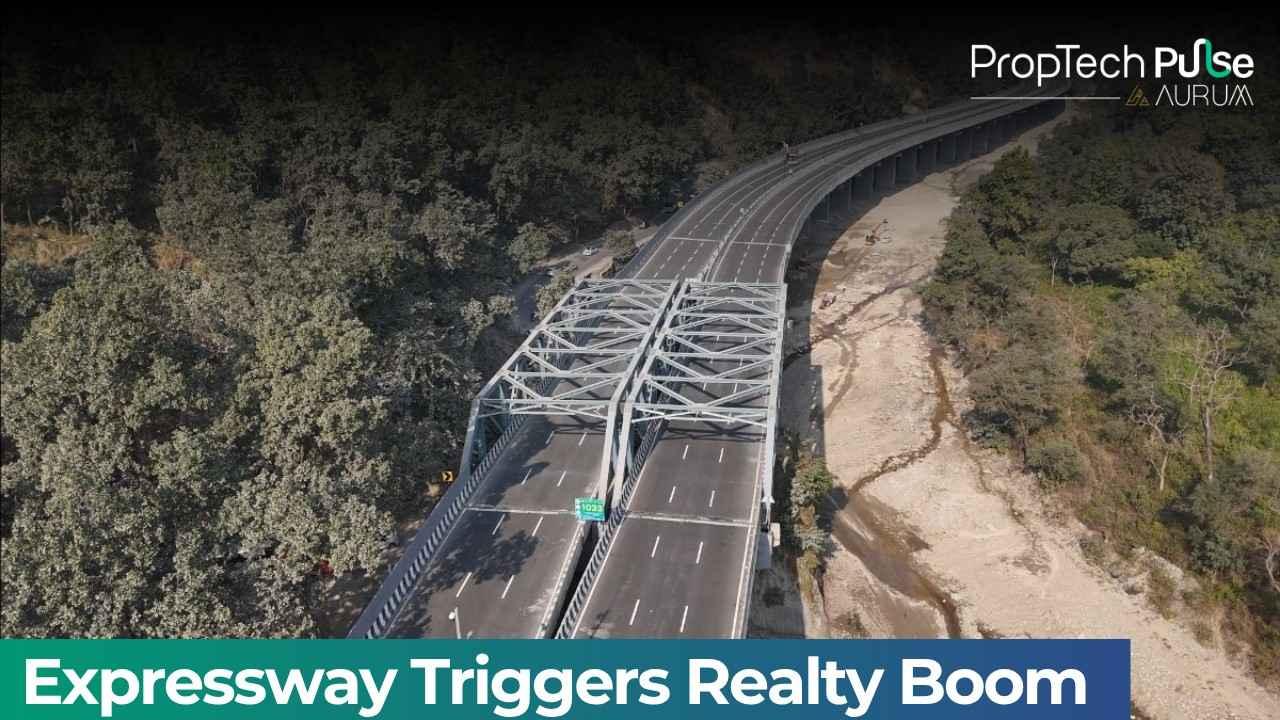
The formal inauguration of the 210-km Delhi-Dehradun Expressway on April 14, 2026, by Prime Minister Narendra Modi marks a transformative era for North India’s infrastructure. Built at an estimated cost of ₹12,000 crore, this six-lane access-controlled corridor has effectively slashed travel time between the national capital and the Uttarakhand capital from six hours to just 2.5 hours. Beyond mobility, the project is serving as a massive catalyst for land value appreciation and urban expansion across three major states.
Why Infrastructure is Driving a 25% Realty Surge
The "why" behind the sudden real estate heating lies in the dramatic reduction of logistics costs and the expansion of the NCR influence zone. Real estate experts anticipate a 15-25% rise in property prices over the next 18-24 months, with some early-mover pockets like Baghpat already witnessing a 30% jump in 2024-25. This surge is primarily powered by investor confidence in long-term capital gains, as the corridor unlocks previously inaccessible land parcels for residential, commercial, and industrial development.
Where the Growth is Concentrated: Emerging Micro-Markets
Geographically, the impact is most visible in Western Uttar Pradesh and the foothills of Uttarakhand. Micro-markets such as Loni, Tronica City, Shamli, and Saharanpur are emerging as new industrial and residential hubs. In Dehradun, the demand is shifting toward the Mussoorie foothills and Rajpur Road, where luxury villas and second-home communities are being developed to cater to the weekend tourism surge from Delhi. Additionally, industrial demand is expected to trigger 1-2 million sq. ft. of Grade A warehousing supply along the Saharanpur-Haridwar spur.
Importance of Ecological and Economic Balance
The importance of this expressway is also defined by its record-breaking 12-km elevated wildlife corridor, the longest in Asia, ensuring that infrastructure growth does not compromise Rajaji National Park’s biodiversity. Economically, the corridor is vital for the "silver economy" and tourism, providing seamless access to Rishikesh and Haridwar. This balance of conservation and commerce is attracting institutional investors who prioritize ESG-compliant infrastructure projects.
Key Project Data and Investment Metrics
- Total project length stands at 210 km with a design speed of 120 kmph.
- Estimated travel time reduction: ~60% (from 6 hours to 2.5 hours).
- Institutional Grade A warehousing supply infusion: 1-2 million sq. ft..
- Typical investment range for plots: ₹12,000 to ₹20,000 per sq yd in emerging zones.
Conclusion: Setting the Stage for Corridor-Led Development
The Delhi-Dehradun Expressway is more than a road; it is a blueprint for the future of corridor-led development in India. By integrating high-speed travel with environmental safeguards, the project has successfully de-risked the regional real estate market for both end-users and long-term investors. As the micro-markets along the stretch continue to mature, the corridor is expected to remain the most promising growth belt in North India for the current decade.
Enjoyed this update? Visit PropTech Pulse for more real estate news and market insights.




Unlock the Latest in Real Estate
News, Infographics, Blogs & More! Delivered to your inbox.