New Launch - India Real Estate Report 2026.











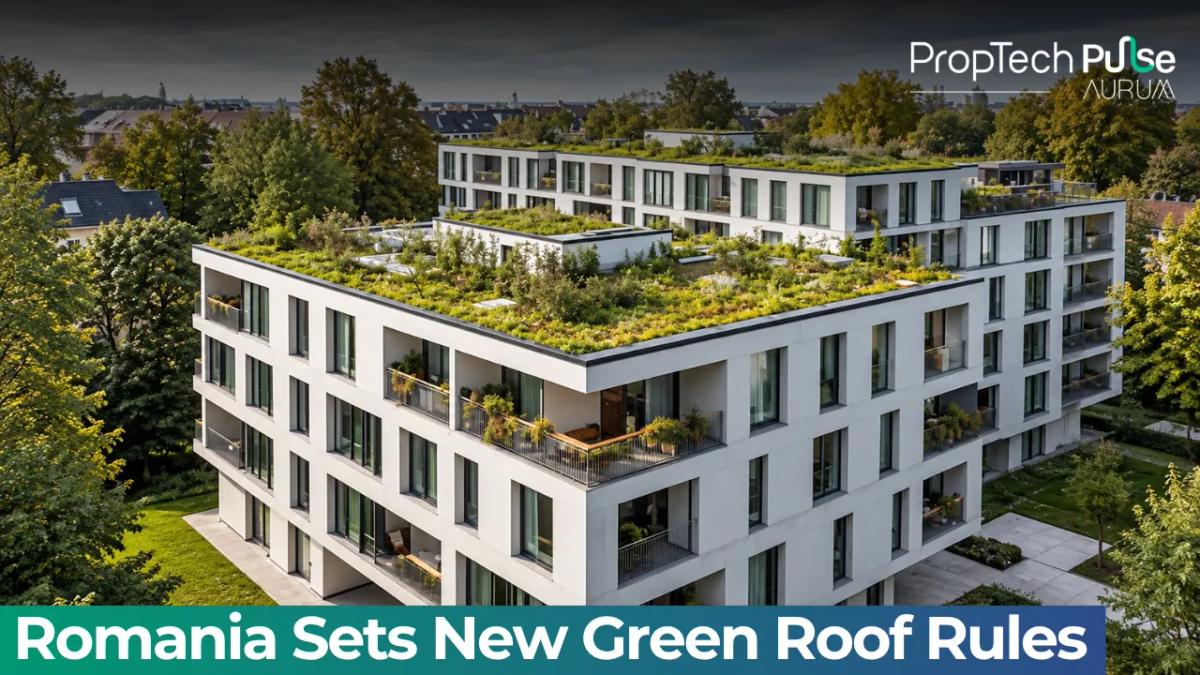
Romania's Urban Planning Code will introduce new green roof requirements from 1 January 2027.
Office, commercial, industrial and storage buildings, including covered car parks, with a built area exceeding 1,000 sqm will need authorisation only if green roofs adapted to local climatic conditions cover at least half of the roof surface.
Industry association Converde has welcomed the requirement and said green roofs could turn existing rooftop surfaces into infrastructure supporting urban climate adaptation.
Green Roofs Could Help Manage Rainwater
Converde argues that conventional rooftops can accumulate heat and quickly discharge rainwater into drainage systems.
Green roofs can instead retain and manage part of the rainfall while also providing a cooling layer during periods of high temperatures.
Zoltan Kolcsar, president of Converde, said a green roof can function as a sponge during heavy rainfall and as a natural cooling layer during heatwaves.
According to Kolcsar, green roofs can manage roughly half of rainwater.
They can also reduce roof surface temperatures by 30 to 40 degrees compared with standard waterproofing and potentially extend the service life of waterproofing layers by up to double.
Rules Need Clear Exemption Criteria
Converde has raised concerns about the exemption clause in the law.
The provision allows the obligation to be waived when the requirements cannot be met under technically and economically acceptable conditions.
The association says unclear interpretation could result in different approaches between authorities. It argues that technical and economic impossibility should be supported by verifiable documents and assessments.
Converde also says that a higher initial cost alone should not be sufficient grounds for granting an exemption.
Standards Needed for Green Roofs
The association is calling for technical regulations that define what qualifies as a functional and effective green roof.
It also wants clear conditions for exemptions and minimum standards covering design, construction and maintenance.
Converde argues that economic assessments should consider the full lifespan of a building, long-term savings and public benefits rather than focusing only on initial investment costs.
Also Read: TBI Bank Raises Hexagon Financing to €15M
Green Roofs Could Support Urban Biodiversity
When deployed coherently and connected with other green spaces, vegetated rooftops could form biodiversity corridors rather than remaining isolated green areas.
Converde says it is prepared to work with ministries, local authorities, professional organisations and academic institutions to develop regulations supporting consistent implementation of the law.
Also Read: Paltim Enters Final Development Stage in Timisoara
Focus on Implementation From 2027
Converde said the new legislation could significantly change Romania's urban environment and support growth in the green roof industry.
The association is calling for clear standards, quality monitoring and consistent application of exemptions so that the new requirements can deliver their intended environmental and urban benefits.
Enjoyed this update? Visit PropTech Pulse for more real estate news, investment insights and property market trends.


