New Launch - India Real Estate Report 2026.









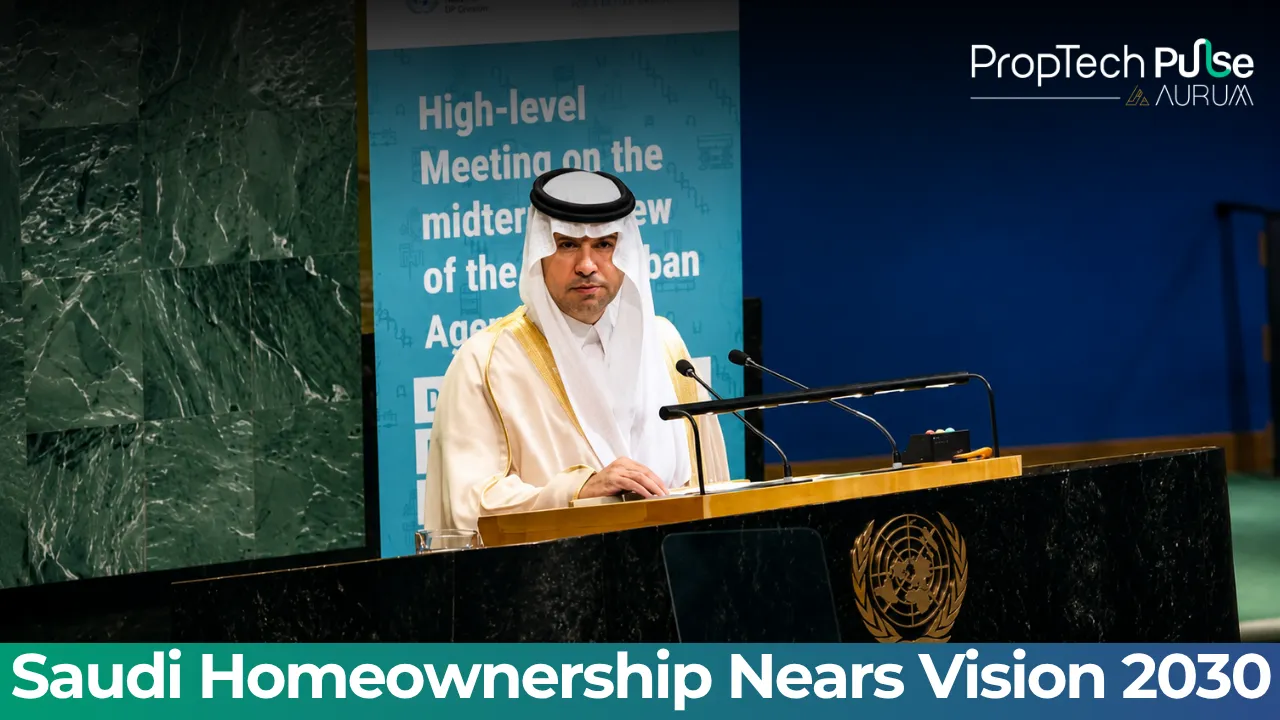
Saudi Arabia's homeownership rate increased from 47% in 2016 to 66.24% by the end of 2025, bringing the Kingdom closer to its Vision 2030 target of 70%. Minister of Municipalities and Housing Majed Al-Hogail announced the milestone during Saudi Arabia's address at the United Nations General Assembly High-Level Meeting on the Urban Agenda in New York, highlighting the country's progress in building sustainable, inclusive and resilient cities through measurable urban transformation.
Al-Hogail said Saudi Arabia has transitioned from urban planning and policy development to large-scale implementation, with the updated 2026 National Report submitted to UN-Habitat documenting the Kingdom's achievements in housing, infrastructure, mobility and municipal governance. More than 25% of Saudi families benefited from housing support programmes between 2018 and 2025, reflecting the government's continued investment in expanding homeownership opportunities.
Housing Program Moves Closer to Vision 2030 Target
The Kingdom's Housing Program has played a central role in increasing residential ownership through financing support, housing initiatives and partnerships with the private sector. The latest figures place Saudi Arabia within reach of its 70% homeownership target by 2030, one of the flagship objectives under Vision 2030 aimed at improving quality of life and housing affordability.
Urban Infrastructure Records Significant Growth
Saudi Arabia also reported substantial improvements in urban development indicators. Public space availability increased from 5.2 square metres per capita to 6.9 square metres, while the Bahja programme added more than 12 million square metres of community spaces. The Riyadh Metro transported over 100 million passengers during its first nine months of operation, while urban bus services carried more than 96.8 million passengers in 2025.
Social Development Supports Urban Transformation
Alongside housing progress, the Kingdom reported strong gains in social inclusion. Women's labour force participation increased from 22.8% to 36%, employment among people with disabilities more than doubled, and the number of nonprofit organisations exceeded 7,200, demonstrating broader community participation in national development.
Green Initiatives Strengthen Sustainable Cities
Saudi Arabia continues to integrate sustainability into urban planning through the Saudi Green Initiative and the National Renewable Energy Program. Municipal authorities are incorporating climate risk assessments, expanding urban data integration and strengthening financial autonomy to improve long-term city resilience and environmental performance.
Also Read: Al-Hogail Launches $445mln Municipal Housing in Al-Baha
Public-Private Partnerships Accelerate Development
The Kingdom has signed more than 56 public-private partnership agreements supporting municipal services and infrastructure. It has also strengthened international cooperation through agreements with UN-Habitat and the United Nations Development Programme while expanding green financing through $9.1 billion in green bonds and sustainable sukuk issued in 2024.
Saudi Arabia Reinforces Global Urban Leadership
By combining housing expansion, infrastructure investment, sustainability initiatives and social development, Saudi Arabia continues to position itself as a leading example of integrated urban transformation. The Kingdom's latest progress demonstrates its commitment to creating inclusive cities while advancing the long-term objectives of Vision 2030.
- Saudi homeownership reached 66.24% by the end of 2025.
- The Kingdom is approaching its Vision 2030 target of 70% homeownership.
- More than 25% of families benefited from housing support programmes.
- Riyadh Metro served over 100 million passengers in its first nine months.
- More than 56 public-private partnerships support urban infrastructure.
- Saudi Arabia continues expanding sustainable urban development initiatives.
Vision 2030 Housing Goals Continue to Advance
Saudi Arabia's latest homeownership milestone reflects the success of its integrated housing and urban development strategy. With continued investment in infrastructure, sustainability and affordable housing, the Kingdom remains on track to achieve its Vision 2030 objectives while creating more resilient, connected and inclusive cities for future generations.
Enjoyed this update? Visit PropTech Pulse for more real estate news, investment insights, and property market trends.