
Ask Pulse Ai
Services
Knowledge Hub
Resources
Tools
Ask Pulse Ai
Services







©PropTech Pulse 2025, All rights reserved.

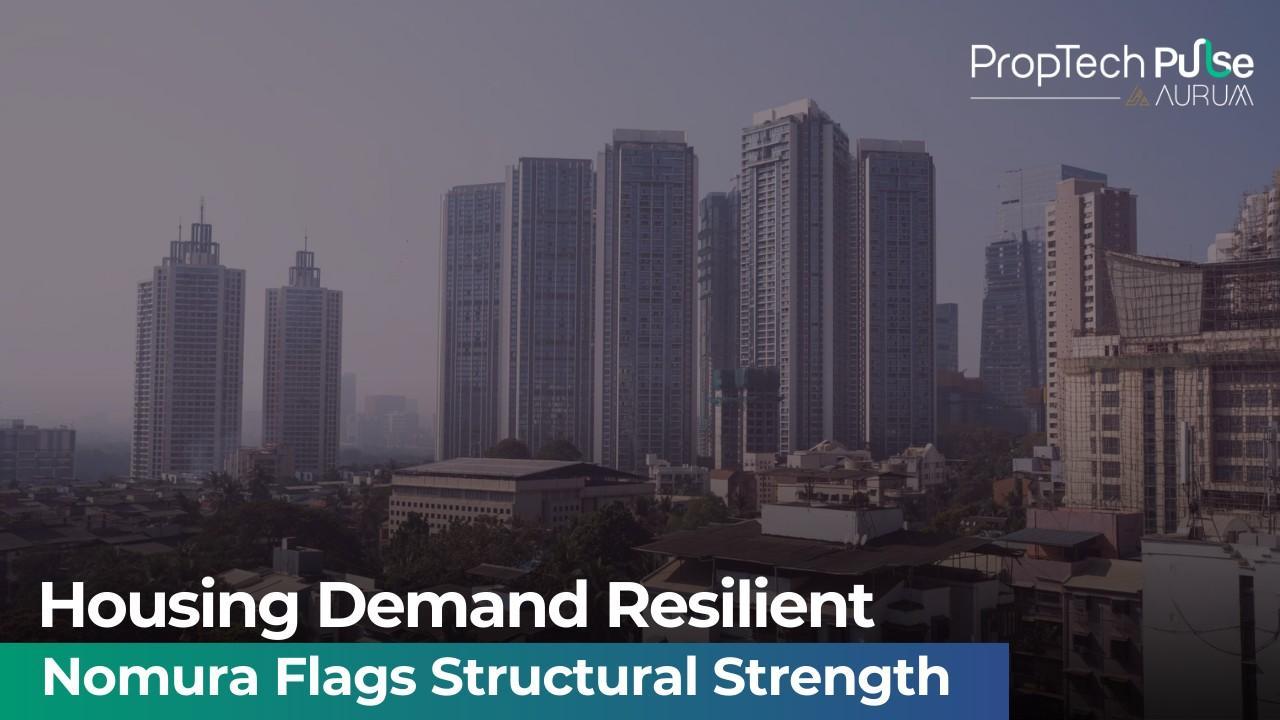
India’s Housing Market Defies Market Volatility
India’s housing sector is demonstrating remarkable resilience at a time when broader real estate stocks are facing volatility in equity markets. A recent report by Nomura highlights that underlying housing demand across key Indian cities remains firm, underscoring the sector’s structural strength despite short-term financial market fluctuations.
Why Housing Demand Remains Strong
While real estate equities have been impacted by global macroeconomic uncertainties, rising interest rates, and cautious investor sentiment, the on-ground housing market tells a different story. Nomura points out that end-user demand, rather than speculative buying, continues to anchor residential sales. This shift has created a more stable and sustainable growth cycle for developers and homebuyers alike.
Urbanisation and Demographic Tailwinds
One of the most powerful drivers supporting housing demand is rapid urbanisation. As more people migrate to cities for employment and education opportunities, the need for quality housing continues to rise. This trend is further amplified by India’s demographic advantage, with a large working-age population entering prime homebuying years.
Rise of the Middle Class and Lifestyle Changes
Nomura also highlights the expanding middle-income population as a critical demand catalyst. Improved income visibility, greater job formalisation, and evolving lifestyle aspirations are pushing buyers towards home ownership. Preferences have shifted towards larger homes, better amenities, and integrated townships, especially after the pandemic reshaped living and working habits.
Policy Support and Affordable Housing Push
Supportive government policies continue to play a stabilising role in the housing market. Initiatives focused on affordable housing, infrastructure development, and regulatory transparency have strengthened buyer confidence. Schemes aimed at improving credit access and project execution timelines have also reduced risk perception among homebuyers.
Developers Focus on Execution and Balance Sheets
Unlike previous cycles, developers today are operating with healthier balance sheets and sharper execution focus. Leading players are prioritising project delivery, reducing debt, and aligning supply with real demand. This disciplined approach has helped the sector weather equity market pressures while maintaining steady sales momentum.
What This Means for Investors and Buyers
For investors, the divergence between stock performance and housing demand highlights the importance of distinguishing between financial market sentiment and real estate fundamentals. For homebuyers, sustained demand indicates continued confidence in residential real estate as a long-term asset class, especially in well-connected urban and suburban markets.
Conclusion
Nomura’s assessment reinforces the view that India’s housing market is driven by strong structural factors rather than short-term market cycles. With urbanisation, demographic growth, and policy support working in tandem, housing demand is expected to remain robust in the coming years. Even amid equity market volatility, residential real estate continues to stand out as a resilient pillar of India’s economic growth story.
Enjoyed this update? Visit PropTech Pulse for more real estate news and market insights.




Unlock the Latest in Real Estate
News, Infographics, Blogs & More! Delivered to your inbox.