New Launch - India Real Estate Report 2026.

Services
Knowledge Hub
Resources
Tools

Ask Pulse Ai
©PropTech Pulse 2025, All rights reserved.


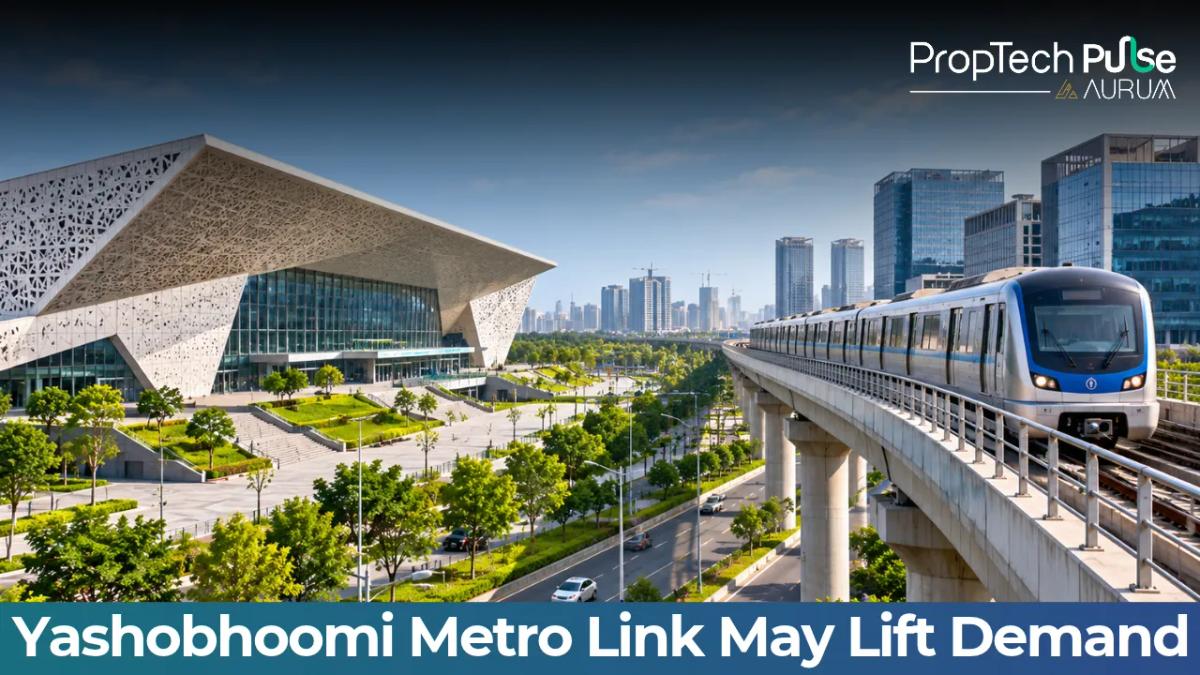
A proposed Metro corridor connecting Yashobhoomi in Dwarka Sector 25 with Rajiv Chowk in Gurugram could improve connectivity between the two major urban markets.
The route is among eight corridors submitted to the government for approval under Delhi Metro's Phase V(B) expansion, according to an RTI reply cited in a PTI report dated November 18.
The proposed link could bring residential neighbourhoods, employment centres, convention infrastructure and commercial districts within easier reach.
The corridor is expected to strengthen travel connections between Dwarka and Gurugram, which have faced commuting challenges despite their geographical proximity.
Yashobhoomi, also known as the India International Convention and Expo Centre (IICC), is being developed across 221 acres at an estimated cost of ₹25,000 crore.
Its first phase includes two exhibition halls, a convention centre with capacity for 11,000 people and underground parking for more than 3,000 cars.
The second phase envisages additional exhibition halls, a multipurpose arena, eight hotels, nine Grade A office buildings, three retail spaces and a serviced apartment facility.
Also Read: Bengaluru Pink Line: Real Estate Along 7.5-km Metro Route
Potential Impact on Residential and Commercial Real Estate
Real estate experts cited by Hindustan Times believe the proposed corridor could support property demand along Dwarka and the Dwarka Expressway.
Better public transport connectivity may make residential locations more accessible to professionals working in Gurugram and Delhi.
According to Anarock Group vice-chairman Santosh Kumar, the corridor could help the Dwarka-Gurugram belt function as a more connected market and encourage commercial and mixed-use developments.
Residential demand may strengthen around proposed stations, although the impact is likely to vary depending on station access and existing social infrastructure.
The article reports that residential prices along Dwarka Expressway have more than doubled from 2021 levels to approximately ₹14,180 per sq ft in Q2 2026, according to Kumar.
Potential commercial real estate implications include:
- Office leasing opportunities through improved access to employment hubs such as Cyber City and Udyog Vihar.
- Hospitality demand from exhibitors, business travellers and convention visitors.
- Retail opportunities around Yashobhoomi and adjoining commercial locations.
- Greater interest in mixed-use developments combining offices, retail and hospitality.
Also Read: Bengaluru Blue Line Metro Trials Begin on Phase 2A
Hotels, Retail and Future Development Around Yashobhoomi
The proposed connectivity could also support development around Yashobhoomi and nearby commercial locations.
A separate 50-acre private mixed-use development near the convention centre is expected to include a sports stadium, five-star hotels and 7–8 lakh sq ft of retail space.
Colliers India executive director Arvind Rai said the proposed corridor may pass through established commercial hubs, including Udyog Vihar, Cyber City and IFFCO Chowk.
He expects the impact to be concentrated around Yashobhoomi and adjoining areas. Aerocity could also receive indirect benefits from improved connectivity.
However, the Metro corridor remains at the proposal stage and is awaiting government approval.
Its final alignment, station locations and execution timeline will influence the extent of its impact on property demand and development activity.
The proposed link therefore represents a potential connectivity advantage for residential, office, hospitality and retail markets. The expected benefits will depend on the project's approval and timely implementation.
Enjoyed this update? Visit PropTech Pulse for more real estate news, investment insights and property market trends.


