New Launch - India Real Estate Report 2026.

Services
Knowledge Hub
Resources
Tools

Ask Pulse Ai
©PropTech Pulse 2025, All rights reserved.


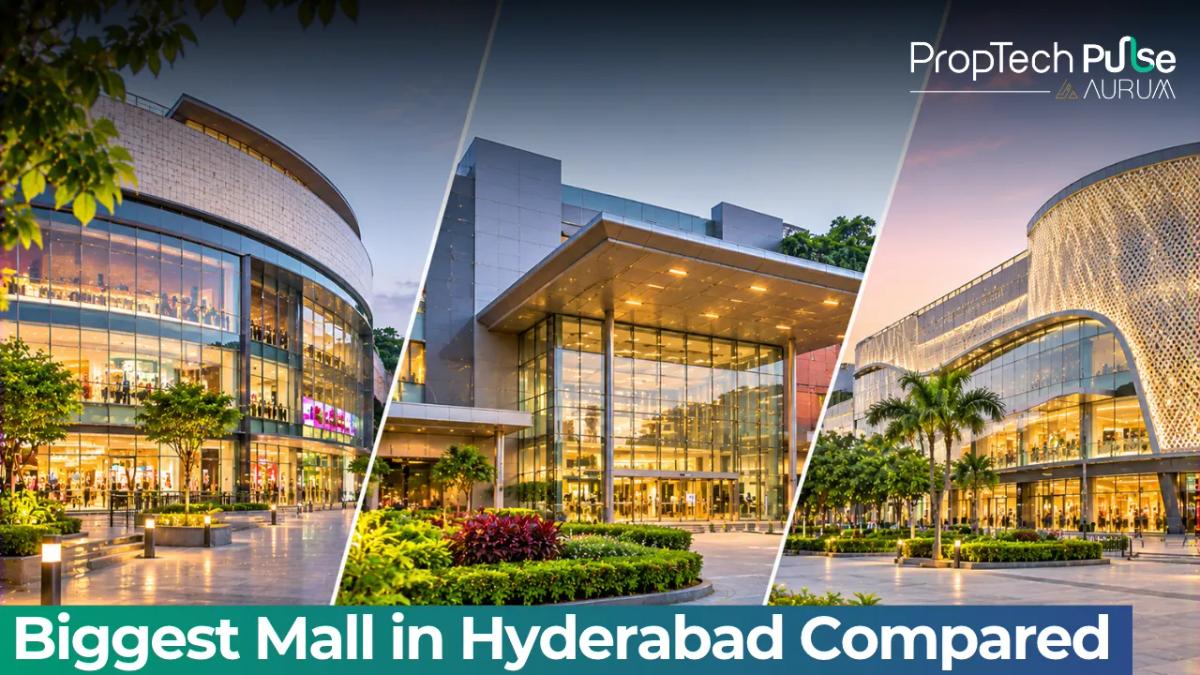
The biggest mall in Hyderabad depends entirely on which measurement you trust. By total built-up footprint, Sarath City Capital Mall in Jubilee Hills holds the crown at roughly 2.3 million square feet of covered area.
Look strictly at net leasable retail space. That is the actual floor where shops stand. By that metric, GVK Mall usually tops the lists with over 1.2 million square feet available for tenants.
Most consumer articles mix these two numbers. You see different winners depending on who you ask.
This breakdown clarifies the metrics, ranks the top five complexes by location and scale, and maps the massive pipeline coming online through 2028.
How big is too big? measuring the biggest mall in hyderabad
Quick answer
Sarath City Capital Mall holds the largest total built-up footprint in Hyderabad at approximately 2.3 million square feet. For actual sellable retail space, GVK Mall takes the lead with over 1.2 million square feet. The difference exists because one count includes walls, service areas, and car parks, while the other tracks purely leasable shop space.
The ranking flips because of two different measurements. One measures gross building area. The other measures leasable area.
Municipal approvals quote the gross figure. It counts everything inside the outer walls: double-height lobbies, food court kitchens, mechanical rooms, and parking ramps.
Tenants and brokers track the leasable number. It strips out the concrete and glass that shoppers never walk across to reach the exact floor they rent.
Competitor posts rarely make this distinction. They paste one number from a press release and call it the total size.
A 2 million square foot project might only have 1.3 million square feet of leasable area after deducting structural columns and common areas.
Both figures are technically correct, but they serve completely different buyers.
Retailers looking for floor space need the leasable number. Homebuyers searching for convenience just want to know how dense the anchor tenants are and whether the place handles footfall without collapsing under its own weight.
Top established malls in hyderabad compared
| Mall Name | Total Built-up (sq ft) | Net Leasable Area (sq ft) | Primary Micro-market | Key Anchor Stores |
|---|---|---|---|---|
| Sarath City Capital Mall | ~2,300,000 | ~1,400,000 | Jubilee Hills / Banjara Hills | Cinépolis, Reliance Trends, Croma |
| GVK Mall | ~1,200,000 | ~1,200,000+ | Madhapur / Hitech City | Sarovar Cinema, Decathlon, Westside |
| Inorbit Mall | ~800,000 | ~600,000 | Madhapur / KBR Park | Vero Salons, Max Fashion, Food Republic |
| Prestige High Street | ~1,100,000 | ~850,000 | Jubilee Hills / RGIA Road | Reliance Smart Point, Cinepolis, Starbucks Reserve |
| GMR Manoj | ~600,000 | ~450,000 | Miyapur / Outer Ring Road | Cinépolis, D-Market, PVR Cinemas |
| Average Leasable Density | Nationally, commercial retail achieves about 65% leasable density against built-up area. | |||
The spatial spread of these complexes highlights a clear geographical divide.
Traditional high streets like Banjara Hills handled dry goods and family jewellery, but today's shoppers expect air-conditioned entertainment zones attached directly to residential towers.
Modern malls reflect this shift by clustering multiplexes, gaming arcades, and fine dining within walking distance of corporate offices.
Square footage alone does not dictate success. Location and access shape daily reality even when contenders vie for the biggest title. A central venue suffers from legacy traffic and limited parking.
Suburban developments capture overflow traffic instead. They offer reliable metro connectivity. Developers site these projects deliberately to avoid competing with city centre footfall during peak hours.
Where the new supply is heading
Hyderabad's retail geography is expanding aggressively outward. The current pipeline reflects intense capital allocation aiming to service the growing population in developing eastern and western corridors.
When scouts evaluate a hyderabad new mall, they focus heavily on land conversion certificates and zoning clearances before verifying brand rosters.
National players control most of the new inventory. Lulu Group finalized groundwork for a hyper-regional center in a prime northern suburb.
It is designed to capture bulk trade alongside premium fashion anchors.
International grocery chains typically draw heavy Saturday morning queues. That ensures steady base revenue from day one.
Mumbai-based Forum Malls races to fill lease capacity for early adopters in the western tech belt. They leverage their multiplex experience to guarantee immediate footfall generation.
Regional developers contribute differently. Vishnu Constructions announced a larger-format upgrade intended to compete directly with national brands, focusing instead on affordable dining concepts and regional entertainment.
Their strategy targets households preferring shorter drives over metropolitan gridlock. These mid-scale upgrades fill gaps left by ultra-premium complexes, balancing the broader ecosystem.
This influx of stock changes market baselines entirely. When dozens of millions of square feet open simultaneously, absorption rates dominate headlines.
A new mall succeeds based on the quality of its first fifty leases, beyond mere square footage. Tenants monitor opening ceremonies closely because day one sales figures validate the entire district's commercial viability.
Market reality check Avoid committing capital based solely on a single mega-mall announcement. Always verify anchoring brands, completed phases, and traffic management plans before paying booking amounts. Unfinished promises depress surrounding land values permanently.
Best shopping malls in hyderabad for residential investors
Proximity to organized retail drives measurable secondary market premiums, particularly for younger professionals stationed in IT corridors.
Buyers in areas adjacent to functioning malls report faster rental turnover compared to neighbourhoods relying exclusively on independent roadside outlets.
The consistency of daily footfall stabilises rental income streams across economic cycles.
Market data shows significant movement in districts bordering mature hubs like Hitech City and Gachibowli. Investors targeting these zones benefit from observing pre-leasing announcements prior to construction topping out.
Early movers capture higher capital appreciation once the retail component locks in flagship brands. Knowing what qualifies as the biggest mall in hyderabad helps investors weigh accessibility versus luxury finishes.
To dig deeper on rental dynamics in emerging corridors, refer to our analysis on shopping mall investment up to 20 rental appreciation in top cities. Structural positioning relative to major anchors determines customer retention significantly across all asset classes. Residential portfolios gain resilience when balanced against commercial retail health indices.
Investors targeting northern extensions frequently overlook transit links when chasing new development claims. Miyapur continues absorbing residential inventory due to its direct Outer Ring Road access and long-standing commercial infrastructure.
Properties here appreciate steadily because the retail ecosystem functions independently of seasonal corporate hiring fluctuations. Read the complete locality breakdown in our miyapur hyderabad property rates flats investment guide.
Western subscribers consistently favour gated communities wrapping around integrated leisure destinations. Combining entertainment zones within residential towers removes reliance on external transport networks and keeps residents captive for routine consumption.
This lifestyle transition explains sustained valuation growth in those specific pockets. Review the gachibowli living guide 2026 rates rentals commute to observe how everyday amenities reshape daily mobility choices.
Eastern suburbs remain fundamentally underpriced despite rapid demographic expansion. Isnapur evolved from a quiet village into an active transit hub thanks to strategic metro connectivity and newly engineered arterial routes.
Residential plots here offer lower entry thresholds alongside substantial upside potential as retail infrastructure inevitably follows population density. Explore the investing in isnapur hyderabad in 2026 property rates plots and metro plans to assess long-term value trajectories.
Which size really matters for your next purchase
Square footage looks compelling on brochures, but operational functionality decides practical convenience.
A moderately sized mall managing peak-hour crowds efficiently delivers far greater utility than an immense empty shell struggling with basic maintenance protocols. Prioritise locations backed by documented anchor tenants and frictionless transport intersections.
Portfolio managers should align purchasing budgets with the maturity level of the surrounding retail zone.
Established city corridors offer predictable cashflows but display capped appreciation ceilings.
Emerging suburban clusters promise exponential growth but carry heavier execution risks. Maintain exposure to both environments to buffer against broader market volatility.
If you assess commercial leasing structures for ground-floor units, understanding tenant influence dictates long-term profitability. Consult our detailed breakdown on how do anchor tenants influence a shopping mall s overall footfall. Strategic spatial arrangement relative to primary draws shapes visitor retention curves substantially.
City layouts evolve continually, yet core principles remain constant. Inspect premises personally during evening hours to gauge genuine crowd intensity.
Speak with operating merchants about off-season dips versus festive surges. Written projections occasionally misrepresent ground realities; direct human observation exposes underlying demand patterns accurately.
Whether you're evaluating the biggest mall in hyderabad for a commercial lease or a nearby apartment, the principles hold true.
Frequently asked questions
What is the exact square footage of Sarath City Capital Mall?
The total built-up area of Sarath City Capital Mall sits at approximately 2.3 million square feet according to developer disclosures. However, the actual leasable retail floor space drops closer to 1.4 million square feet once you remove structural elements and parking facilities. Both figures appear in different publications depending on the audience.
Does GVK Mall have more usable shop space than Sarath City?
Yes, GVK Mall generally offers superior usable space per unit of built area. Because its design prioritizes wide corridors and minimal structural pillars across nine floors, nearly every square foot serves active commerce. You pay less for shared circulation areas compared to mega-complexes that waste volume on grand atriums.
Which areas in Hyderabad are getting new malls by 2027?
Major developers plan several new retail centers along the outer ring road and eastern expressway corridors by late 2027. Lulu Group pushes forward in northern suburbs while Forum Malls expands its western presence. Existing high-density residential zones lacking adequate cooling will absorb this new inventory rapidly over the next thirty-six months.
How does having a mall nearby affect my flat resale value?
Properties situated within walking distance of functional organized retail hubs consistently command ten to fifteen percent higher rental premiums than isolated locations. Daily footfall guarantees consistent commercial activity for ground-floor shops and boosts overall neighbourhood appeal for young professionals seeking convenience over quiet suburban isolation.
Are hybrid mixed-use malls safer investments than standalone centers?
Hybrid complexes attaching residential towers directly above retail podiums minimize commute distances drastically. Residents access shops instantly regardless of weather conditions. However, strict fire safety audits are essential since mixing residential living quarters with high-volume commercial operations requires rigorous separation protocols mandated by state building codes.
What happens to mall property taxes in Telangana?
Commercial properties attract higher municipal tax assessments than standard residential plots. Telangana urban local bodies calculate levies based on plinth area and location index ratings annually. Property owners must submit updated usage declarations whenever converting vacant spaces into operational restaurants or entertainment venues to avoid penalty notices.
Sources
- RBI: Monetary policy statements impacting commercial lending (accessed October 2026)
Enjoyed this blog article? Visit PropTech Pulse for more interesting blogs.

Ask Pulse Ai anything about real estate

Unlock the Latest in Real Estate
News, Infographics, Blogs & More! Delivered to your inbox.