New Launch - India Real Estate Report 2026.

Services
Knowledge Hub
Resources
Tools

Ask Pulse Ai
©PropTech Pulse 2025, All rights reserved.


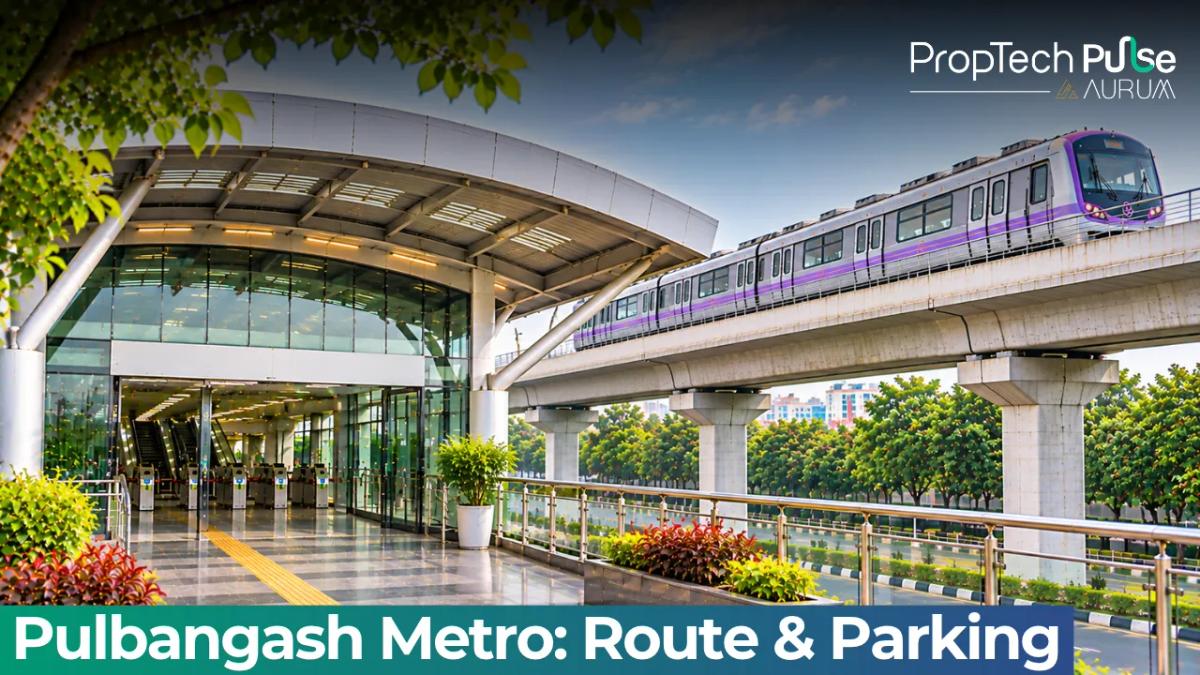
Standing outside Aram Ganj with samosas and a connecting train to catch at Kishan Ganj, old-Delhi commuters know exactly where to turn.
Pulbangash metro station sits right at the corner of Sabzi Mandi and Roshanara Road on the Red Line. Step outside, take a left, and you hit Gate No. 1. Platform 1 for Rithala or Platform 2 for Shaheed Sthal takes less than five minutes to reach.
What works today includes verified platform directions, daily timings via the DMRC journey planner, and how to move through the single-gate layout without confusion. Nearby hubs like Azad Market and Sadar Bazar link directly to this transit corridor.
The rest of this page breaks down pulbangash metro station parking availability and shows how Magenta Line extensions shift rental dynamics for nearby residents.
Pulbangash Metro Station Timings
Quick answer
The first train from Pulbangash Metro Station usually departs around 05:40 AM, and the last train leaves shortly before 11:00 PM. Peak-hour frequency runs every 2 to 3 minutes, while off-peak trains arrive every 5 to 8 minutes. Since seasonal shifts and engineering maintenance alter these windows, always double-check the live schedule via the DMRC journey planner.
Aggregator websites and travel blogs often publish static timetable PDFs that sit unchanged for months.
Commuters quickly learn that relying on those numbers leads to missed trains. First train windows slide later during winter daylight adjustments, and last train departures pull back when track maintenance crews enter the Red Line tunnel network.
Opening the Delhi Metro Rail Corporation journey planner proves far safer.
Enter Pulbangash as your start and end point to check departure bands, or plug in your exact terminal. The planner handles real-time travel time, fare calculations, and connection counts. Expect a 2-minute headway during weekday peaks.
Miss a train, and don't wait past ten minutes at the platform edge. A replacement service usually arrives shortly from the opposite direction or a loop siding.
| Time Band | Frequency (minutes) | Notes |
|---|---|---|
| Early Morning (Before 07:00 AM) | 8–10 | Gradual ramp-up before rush hour |
| Morning Peak (07:00 AM – 10:30 AM) | 2–3 | Maximum crowd density; trains packed tight |
| Off-Peak (10:30 AM – 05:00 PM) | 5–8 | Comfortable boarding possible |
| Evening Peak (05:00 PM – 09:30 PM) | 2–4 | High demand returning commuters |
| Late Night (After 09:30 PM) | 10–15 | Service winds down; frequent track checks |
| Typical Last Departure | ~23:00 | Depends on operational day status |
If you're working shifts or heading back late from Azad Market, skip the standard timetable. Weekend services often start later and wind down earlier than usual because of unplanned track inspections.
The DMRC app or official X handle usually drop a notification an hour before these changes take effect.
Pro tip: Download the DMRC Rail Connect app. Set up a saved route from Pulbangash to your nearest station. You will get push alerts if a train is delayed or rerouted because of flooding or technical faults.
Pulbangash Metro Station Route and Platform Directions
Knowing which side of the platform you need saves you from boarding a southbound train when your office is north of the Yamuna.
Pulbangash Metro Station Route splits cleanly into two lines running perpendicular to each other underground.
Platform 1 (Rithala Side): Head to the northern tracks. Trains on this platform leave towards Rajendra Place, Kashmere Gate, Chandni Chowk, and eventually Rithala.
If you are heading to Connaught Place, Patel Chowk, or anywhere west of Central Delhi, this is your platform.
Trains bound for Shakti Nagar, Vivek Vihar, NSIT, and terminating at Shaheed Sthal depart from the southern tracks on Platform 2.
Head there for a direct run into the East Delhi residential belt, connecting smoothly at Shahdara toward the outer rings.
Fares hinge on how many zones you cross. Pulbangash sits firmly in Zone 1, keeping most short rides cheap. A trip to Kashmere Gate runs ₹20 on regular smart cards.
Stretch it out to Tis Hazari or Dhaula Kuan, and you'll cross into the ₹40–₹50 range. Check the DMRC fare calculator whenever your destination jumps a zone boundary.
Navigating Gate No. 1 and Facilities
Old Delhi stations rarely offer multiple gates, and Pulbangash follows that pattern strictly. There is only one functional entry and exit point: Gate No. 1.
Located directly off Roshanara Road, it serves passengers moving between the metro concourse and the local market corridor.
The descent relies on concrete stairs flanked by sturdy railings. Grip the handhold during rush hour, particularly if you're trudging back from Sadar Bazar with groceries. Wheelchair lifts sit right near the ticket counter wall for accessibility.
Two escalators run between the ground floor and the mezzanine. Summer heat sometimes trips the circuits though, forcing staff to lock them down and sending everyone up the stairs.
| Facility Type | Location | Availability |
|---|---|---|
| Ticket Counters | Mezzanine Level | 06:00 AM to 10:30 PM |
| Pulse Card Machines | Mezzanine Level | 24 hours |
| Public Toilets | Concourse Level | 06:00 AM to 10:30 PM |
| ATMs | Near Gate Exit | Mostly functional overnight |
| Lifts (Elevators) | Side Staircase Wall | Operational daytime hours |
| Total Lifts / Escalators | — | 3 Lifts / 2 Escalators |
Renting near a busy interchange often comes with a premium price tag. Understanding how proximity to a metro station affects apartment pricing helps you budget accurately.
Pulbangash commands higher rents compared to stations further down the Red Line branches because locals value the direct access to wholesale markets and railway interchanges.
Parking at Pulbangash Metro Station
Motorists seeking pulbangash metro station parking face tighter constraints than drivers at suburban termini.
There is no expansive surface lot attached to the station immediately visible from the main road. The footprint of the station sits sandwiched between dense commercial plots.
Two-wheeler parking works reasonably well. The space adjacent to Gate No. 1 offers marked slots for bikes and scooters.
During festival weeks or wedding seasons, these fill up by mid-afternoon, forcing visitors to queue for metered spots on the wider stretch of Roshanara Road.
Four-wheeler parking requires walking two blocks away. You can drop passengers at the gate and parallel park legally at designated zones along the main carriageway, though traffic police patrol these lanes actively.
Commercial garages operating out of converted ground-floor rooms in the market lane charge hourly rates. If you drive to Azad Market, plan for 15 minutes of circling before finding a legal slot.
Key Local Landmarks Near Pulbangash Metro
The station acts as a pivot point for several heavy-footfall zones. Walking distances from the gate are manageable, but crowd density spikes dramatically between 10 AM and 4 PM.
Kishan Ganj Railway Station: Approximately 0.4 km east of Gate No. 1.
Walk straight down Roshanara Road, turn left into the narrow connector lane past the textile shops, and the railway entrance appears.
It takes roughly 8 minutes to walk. Trains on the Outer Ring line and Delhi Suburban Railway halt here, providing an alternate route if the metro undergoes sudden disruption.
Azad Market & Sadar Bazar: The wholesale clothing and hardware hubs lie directly behind the station exit. You step out of the metro and land in a labyrinth of lanes stocking everything from fabric bolts to plumbing fittings.
Renting in these pockets appeals to traders who prioritize inventory handling over quiet streets. For newcomers unfamiliar with crowded city cores, reading up on what is a train station led development clarifies why businesses cluster around rail and metro nodes.
Mutiny Memorial: Situated about 1.2 km west. History enthusiasts and casual walkers prefer the evening stroll here, away from the morning market rush.
New residents often overlook the noise and congestion trade-offs that come with living next to wholesale corridors. A practical checklist helps filter noise risks before signing a lease. Exploring home renting for rookies surviving your first flat hunt outlines how to inspect ventilation, water pressure, and actual bedroom sizes versus brochure claims.
Upcoming Transit Changes: The Magenta Line Connection
Delhi Metro Phase III introduced the Magenta Line, bridging Dwarka Sector 21 in the southwest to Botanical Garden in Noida.
While Pulbangash does not sit directly on the Magenta Line, the extension reaches Ghanta Ghar and Sadar Bazar stations, cutting through the heart of the district.
This geometry alters commuting flows. Residents living near Pulbangash can now cycle or auto across Roshanara Road to reach Sadar Bazar Magenta Station.
The transfer grants instant access to South Extension, Defence Colony, and Greater Kailash without crossing the heavily congested Central Delhi intersections.
Properties within a half-kilometre radius of both the Red Line exit and the new Magenta access points tend to appreciate faster, driven by dual-line convenience.
Before You Commute or Move Here
Use the DMRC planner for real-time arrival data instead of third-party timetables. Factor in walking time to Azad Market or Kishan Ganj Railway if you rely on multi-modal transfers.
Verify two-wheeler parking limits during peak trading days if you drive in from outside Old Delhi. Match the rental budget against Roshanara Road noise levels before committing to upper floors.
Frequently asked questions
Which market is near Pulbangash metro station?
Azad Market and Sadar Bazar are the closest wholesale hubs, located just outside Gate No. 1. You can walk to the textile and hardware lanes in under three minutes. These districts operate through the night, drawing traders and shoppers who need fast access to Red Line trains for bulk transport.
Where is the nearest bus stop from Pulbangash metro?
DTC bus routes stop directly along Roshanara Road, right across from the metro gate. You do not need to navigate through narrow market alleys to catch a bus. Several routes branch off here toward Karol Bagh and Civil Lines, making it a straightforward multimodal swap.
Is there parking at Pulbangash metro station?
Space for two-wheelers exists immediately beside Gate No. 1. Four-wheeler options require driving two blocks away to designated commercial lots or parallel parking legally on wider stretches of Roshanara Road, though traffic wardens monitor those zones strictly.
When does the first metro leave Pulbangash?
Morning services generally commence around 05:40 AM on standard working days. The window shifts slightly later during winter or on public holidays. Always verify the exact departure via the DMRC journey planner to account for unplanned track maintenance.
How far is Pulbangash metro from Kishan Ganj station?
Kishan Ganj Railway Station sits approximately 0.4 km east of the metro gate. Walking takes about eight minutes down Roshanara Road before turning left into the connector lane. The walk stays flat and paved, avoiding the steepest gradients found elsewhere in old Delhi.
Sources
- Delhi Metro Rail Corporation (DMRC): General station infrastructure details, platform assignments, facility counts, and journey planner functionality (accessed November 2026)
- DMRC Official App & Operations Dashboard: Real-time service alerts, weekend schedule deviations, and peak interval standards (accessed November 2026)
Enjoyed this blog article? Visit PropTech Pulse for more interesting blogs.




Ask Pulse Ai anything about real estate

Unlock the Latest in Real Estate
News, Infographics, Blogs & More! Delivered to your inbox.

