New Launch - India Real Estate Report 2026.

Services
Knowledge Hub
Resources
Tools

Ask Pulse Ai
©PropTech Pulse 2025, All rights reserved.


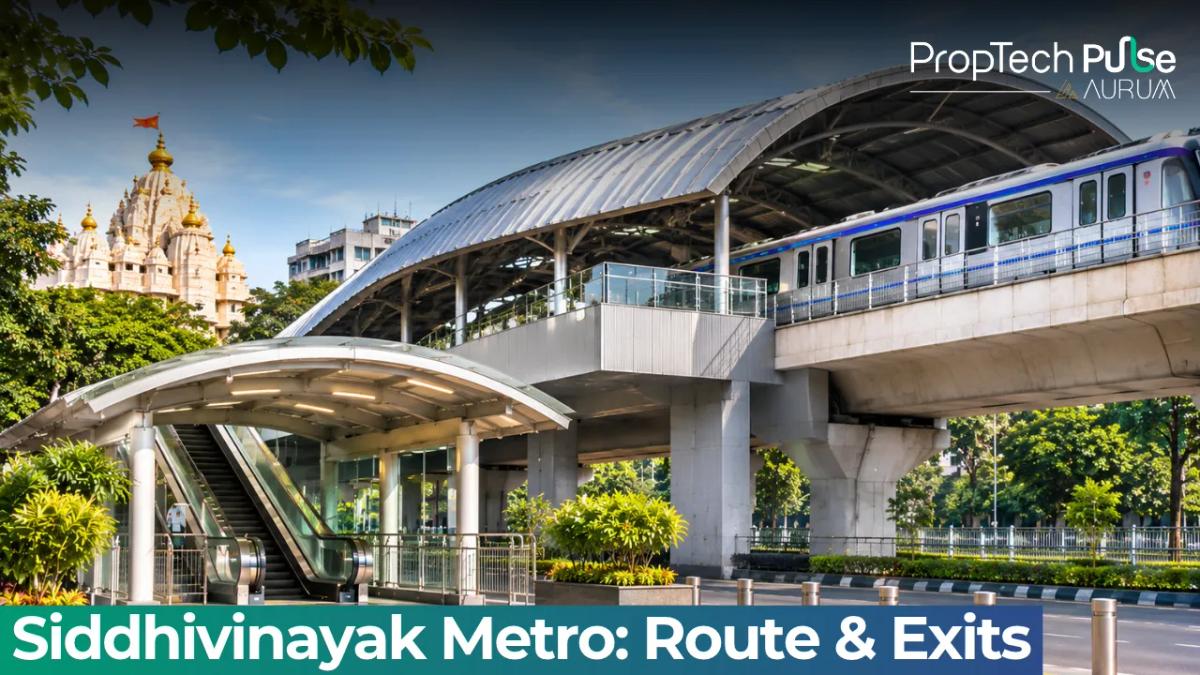
If you commute between Prabhadevi and Bandra-Kurla Complex daily, the Siddhivinayak metro station has already rewritten your schedule. Opened in May 2025, this underground stop sits beneath the BMC Civic Centre.
You can walk to the Siddhivinayak Temple gates in three minutes. Eastern suburb residents and IT employees heading south use it to cut monsoon road commutes that used to take over an hour.
Renters in Parel and Wadala are adjusting their budgets to this new connectivity. Buyers are weighing whether current premiums justify long-term gains.
Siddhivinayak metro station route and connectivity
Quick answer
The Siddhivinayak metro station (SIDV) opened on 10 May 2025 as an underground hub on Line 3 (Aqua Line). It sits beneath the BMC Civic Centre in Prabhadevi, providing direct access to the Siddhivinayak Temple via Exit A1 and the municipal bus terminus via Exit B2. Commuters reach BKC in roughly eighteen minutes and connect to Western Line trains at Dadar within twelve hundred metres.
Structural engineers built the station ninety-eight metres below ground level to avoid disrupting legacy utility networks.
Trench shields held back sewage lines and high-voltage cables during excavation. Underground layouts mean fewer surface disruptions for pedestrians above.
Moving through the exits does require a bit of care. Staff posted near the turnstiles can point you toward the correct path on your first attempt. The station code is SIDV. It bridges two distinct areas.
On one side lies the older textile mill belt along Mahatma Gandhi Road. On the other stand the heritage bungalows of Prabhadevi. The station physically anchors both micro-markets into a single transit node.
Trains head east towards Ghatkopar and Aarey. They cut through the financial spine before terminating at Cuffe Parade.
Commuters reach BKC in roughly eighteen minutes. That beats the twenty-five minute average drive during weekday rush hours.
Heading west toward Nepean Sea Road, you hit Marine Drive and Colaba within thirty minutes of crossing Dadar interchange.
The siddhivinayak metro remains one of the fastest public transit links between Mumbai's eastern industrial belts and southern business districts.
Exact Siddhivinayak metro station timings and peak frequency
Service starts early enough for shift workers and dawn temple visitors. The first train towards Cuffe Parade departs at 06:40 AM. The initial northbound train leaves for Aarey at 06:50 AM.
Last departures run at 10:40 PM and 10:50 PM respectively. Trains arrive at four-minute intervals during the six to nine AM weekday slot. Frequency expands to eight minutes between ten and eleven PM.
Parking lots fill quickly during Ganesh Chaturthi week. Sunday services skip the late-night extra runs. Plan your return journey accordingly.
The platform uses a single underground island layout. Both directions share the concourse level.
This design keeps transfer times tight when footfall spikes. Festival schedules trigger special crowd control measures.
Police cordons redirect pilgrims away from the ticketing hall during peak darshan hours. Daily commuters should follow staff instructions near the fare collection machines to keep queues moving efficiently.
Fare chart and smart card discounts
Mumbai Metro charges distance-based pricing instead of fixed zones. Rides under three kilometres cost just ₹10. Fares scale up gradually until long journeys across forty-two kilometres hit the ₹80 ceiling.
Smart Card holders get steady discounts from five to fifteen percent based on monthly usage tiers.
Monthly commuting becomes noticeably cheaper for office-goers. Qualified students enjoy off-peak concessions during valid study periods.
These discount windows stay tightly defined against weekday rush hours.
Digital wallets handle transactions smoothly at automated counters. Physical cards still scan faster during morning boarding peaks. Hold onto receipts for fare disputes.
You must lodge complaints at the station supervisor desk within four hours of travel.
| Expense Type | Monthly Cost (Approx.) |
|---|---|
| Metro Smart Card Pass (Unlimited) | ₹2,200 |
| Daily Single Ticket Round Trip (Avg) | ₹2,900 |
| Private Auto Cab Daily Commute | ₹7,500 |
| Petrol + Parking for Car | ₹11,000+ |
| Total Estimated Metro Savings | ₹5,000 - ₹8,000 |
Exit map: temple, bus stand and corporate offices
Getting your bearings in a deep underground facility demands knowing which gate aligns with your destination.
Misdirected exits waste precious minutes. The station marks seven exits labelled A1 through A5 and B1 through B2.
Gate A1 puts you directly at the Shree Siddhivinayak Temple main courtyard. Road crossings are completely bypassed. Worshippers dodging heavy MG Road traffic save considerable time.
Catch a BEST bus? Walk straight to Exit B2. The municipal terminus feeds straight into Mahatma Gandhi Road.
Target BMC ward offices or nearby tech parks? Use Exit A3. It opens onto the pedestrian footpath beside the municipal library.
The civic complex ground floor hosts a dedicated customer care counter. You can collect printed timetables or request tactile guidance cards for visually impaired travellers right there. Skip the escalators if you haul heavy goods.
They often shut down for maintenance during evening peak loads. Carry an offline exit map since mobile data drops in deep tunnels.
Exit Tip: If rain traps you inside during October to November, aim for Exit A2 over A1. It connects directly to a covered arcade leading to the shopping arcades along MG Road.
Connecting to Western Line trains and city buses
The Aqua Line operates independently from Indian Railways. Bridging the gap for suburban trains happens outside on foot.
Dadar railway station sits roughly twelve hundred metres away. An auto ride covers that stretch faster if you carry luggage.
Western Line switchers usually alight at Parel station one kilometre west. The siddhivinayak metro route serves direct office travel better than rail hopping. City buses integrate smoothly at the terminus.
Routes fifty-two and seventy-four feed straight into lower Parel and Sion. Night service buses depart the stop shortly after the last metro pulls away.
Stand at the designated waiting zone marked by blue poles.
Do not loiter near the main vehicle intake lane. BRC auto stands operate on a digital queue system now.
Download the app ahead of time to secure a seat when the metro closes. Weekend crowds sometimes bypass the queue system, so booking early prevents long waits.
Rental yields and property values near Line 3
Agents report more enquiries from young professionals refusing to sit in traffic. Flats within five hundred metres of the civic centre command premium listings now. Pre-2025 valuations seem low by comparison.
Two-bedroom apartments in converted mill buildings see stronger occupancy. Effective rental yields push toward four percent in select pockets.
Resale buyers check exit proximity closely before offering. Upper floors lose that street-level visibility anyway.
A fresh wave of co-working spaces has taken over vacant mill sheds in Parel. Corporate leases drive bulk rental demand for nearby studio units.
Single occupiers pay a small premium for proximity to Line 3 entrances. Landlords who renovated old structures recently capture the highest rates.
Calculate exact metro-driven return boosts using a rental yield calculator. MahaRERA projects near this corridor enforce stricter completion adherence. Check our guide on how proximity to a metro station affects apartment pricing for broader mechanics.
Before you commit to a flat near Line 3
Metro upgrades fix connectivity problems instantly. They do not magically resolve poor building quality or overcrowded neighbourhood infrastructure.
Verify the society's water supply resilience and drain capacity before signing agreements.
Sudden surges in resident density strain aging municipal pipes. Run the numbers on actual commute savings versus buying outright using a rent vs buy comparison, and always confirm the builder's possession timeline using the RERA website.
If the math holds and the location suits your lifestyle, the station provides a durable advantage.
Properties in this corridor will likely appreciate alongside transport improvements for decades. Lock in your choice while early movers set the baseline rates.
Frequently asked questions
Is there paid parking available for private vehicles at the station?
Yes. Designated two-wheeler and four-wheeler slots sit adjacent to the ground-level BMC civic complex entrance. Capacity fills quickly between seven and nine AM when office crowds surge, so car owners often switch to shared autos after dropping passengers off. Motorcycle parking remains plentiful until mid-morning hours, keeping motorbike commuters unaffected by peak bottlenecks.
What are the exact departure times for early morning shifts?
Service begins at 06:40 AM bound for Cuffe Parade, giving factory and hospital staff enough buffer for handovers. Trains heading north towards Aarey initiate operations five minutes later at 06:50 AM. You can catch connecting rides every four minutes once the core network fully activates by 08:00 AM, eliminating the need to wait outside in Mumbai humidity.
How long does it take to walk to the famous temple from the concourse?
Pilgrims exiting through Gate A1 reach the main prayer hall within a three-minute walk, completely avoiding busy road intersections. The path stays shaded throughout the day thanks to existing arcade structures, making it comfortable for elderly devotees and families carrying offerings. Evening darshan visits benefit from dedicated crowd control barriers installed by local police during festivals.
Can I switch directly to the Western Line suburban trains here?
No direct indoor tunnel exists yet. You must walk roughly twelve hundred metres or hire an auto to reach Dadar Junction for Eastern Line transfers. Parel railway station sits slightly closer at one kilometre west, serving Western Line passengers comfortably. Factor in an extra ten minutes for these manual switches if your office is located near Khar or Andheri suburbs.
Sources
- BMRCL Official Portal: Station metadata, structural depth and exit numbering verification (accessed October 2026)
- Maharashtra Metro Rail Corporation: Fare structure guidelines, Smart Card discount tiers and passenger flow data (accessed October 2026)
- Maharashtra RERA: Project completion timelines and builder compliance tracking near Line 3 corridors (accessed October 2026)
Enjoyed this blog article? Visit PropTech Pulse for more interesting blogs.

Ask Pulse Ai anything about real estate

Unlock the Latest in Real Estate
News, Infographics, Blogs & More! Delivered to your inbox.

