

©PropTech Pulse 2025, All rights reserved.

What is a train station-led development?
A train station-led development is a project that builds offices, shops, hotels, or homes around or above a railway station, using the land and the footfall of the station, and in India, the railways are redeveloping many stations with commercial space, as part of station modernisation programmes.
What It Is
- Station redevelopment plans add modern concourses, retail, and sometimes offices and hotels, on railway land, often through public-private partnerships or leases, and some are linked to metro and bus interchanges, so the station becomes a hub, while developers get access to high-footfall sites, on long leases, and the railways earn revenue.
- Delays have been common.
How It Works
- Benefits include better stations, a mix of uses, and boosts to nearby property, while challenges include land and approval issues, long timelines, funding, disruption during construction, and the need to keep the station running, and the effect on neighbouring property depends on the quality of delivery, and on the access.
- Check the status of each project.
What to Check
- Check the official status of the station project, the lease terms and timelines, the design and approvals, the effect on traffic, and the access, and, if buying nearby, check the property's own approvals, recent prices, and the real delivery progress, and avoid paying a premium for announcements.
- Verify with the railway authority.
Check delivery, so check the official status of the station project, lease terms and timelines, and the property's own approvals, and avoid paying a premium for announcements.
Recent Glossary
What is the yield gap between offices and warehouses?
What is the YEIDA Sector 22D plot scheme?
What is Yamuna Expressway industrial city?
What is the yield spread over G-Secs for REITs?
What is the year-over-year vacancy trend in coworking?
View More...
Recent FAQs
What are the red flags to watch for in a new project brochure?
What are the processing fees and other charges on a home loan?
Can I earn while learning through Pulse University and how is it tracked?
How does age affect the eligibility result in a home loan calculator?
How does the learn and earn model at Pulse University work?
View More...
Insight Pulse
Uncategorized
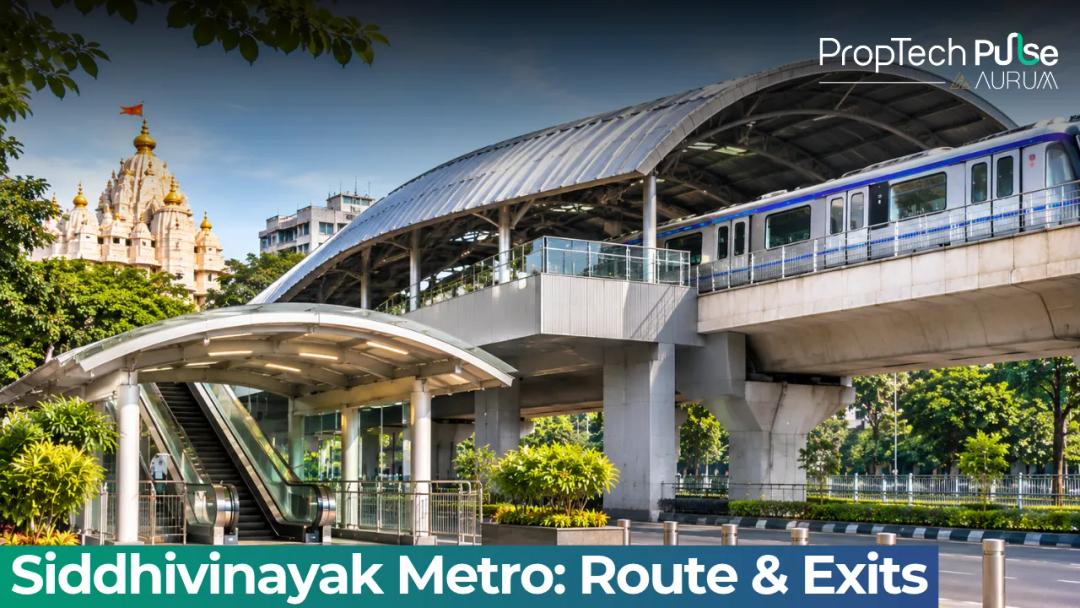
Siddhivinayak Metro Station: Route, Timings, Fares & Exits
If you commute between Prabhadevi and Bandra-Kurla Complex daily, the Siddhivinayak metro station has already rewritten your schedule. Opened in May 2025, this underground stop sits beneath the BMC Civic Centre. You can walk to the Siddhivinayak Temple gates in three minutes. Eastern suburb residents and IT employees heading south use it to cut monsoon road commutes that used to take over an hour. Renters in Parel and Wadala are adjusting their budgets to this new connectivity. Buyers are weighing whether current premiums justify long-term gains. In this guide Siddhivinayak metro station route and connectivity Exact Siddhivinayak metro station timings and peak frequency Fare chart and smart card discounts Exit map: temple, bus stand and corporate offices Connecting to Western Line trains and city buses Rental yields and property values near Line 3 Frequently asked questions Siddhivinayak metro station route and connectivity Quick answer The Siddhivinayak metro station (SIDV) opened on 10 May 2025 as an underground hub on Line 3 (Aqua Line). It sits beneath the BMC Civic Centre in Prabhadevi, providing direct access to the Siddhivinayak Temple via Exit A1 and the municipal bus terminus via Exit B2. Commuters reach BKC in roughly eighteen minutes and connect to Western Line trains at Dadar within twelve hundred metres. Structural engineers built the station ninety-eight metres below ground level to avoid disrupting legacy utility networks. Trench shields held back sewage lines and high-voltage cables during excavation. Underground layouts mean fewer surface disruptions for pedestrians above. Moving through the exits does require a bit of care. Staff posted near the turnstiles can point you toward the correct path on your first attempt. The station code is SIDV. It bridges two distinct areas. On one side lies the older textile mill belt along Mahatma Gandhi Road. On the other stand the heritage bungalows of Prabhadevi. The station physically anchors both micro-markets into a single transit node. Trains head east towards Ghatkopar and Aarey. They cut through the financial spine before terminating at Cuffe Parade. Commuters reach BKC in roughly eighteen minutes. That beats the twenty-five minute average drive during weekday rush hours. Heading west toward Nepean Sea Road, you hit Marine Drive and Colaba within thirty minutes of crossing Dadar interchange. The siddhivinayak metro remains one of the fastest public transit links between Mumbai's eastern industrial belts and southern business districts. Exact Siddhivinayak metro station timings and peak frequency Service starts early enough for shift workers and dawn temple visitors. The first train towards Cuffe Parade departs at 06:40 AM. The initial northbound train leaves for Aarey at 06:50 AM. Last departures run at 10:40 PM and 10:50 PM respectively. Trains arrive at four-minute intervals during the six to nine AM weekday slot. Frequency expands to eight minutes between ten and eleven PM. Parking lots fill quickly during Ganesh Chaturthi week. Sunday services skip the late-night extra runs. Plan your return journey accordingly. The platform uses a single underground island layout. Both directions share the concourse level. This design keeps transfer times tight when footfall spikes. Festival schedules trigger special crowd control measures. Police cordons redirect pilgrims away from the ticketing hall during peak darshan hours. Daily commuters should follow staff instructions near the fare collection machines to keep queues moving efficiently. Fare chart and smart card discounts Mumbai Metro charges distance-based pricing instead of fixed zones. Rides under three kilometres cost just ₹10. Fares scale up gradually until long journeys across forty-two kilometres hit the ₹80 ceiling. Smart Card holders get steady discounts from five to fifteen percent based on monthly usage tiers. Monthly commuting becomes noticeably cheaper for office-goers. Qualified students enjoy off-peak concessions during valid study periods. These discount windows stay tightly defined against weekday rush hours. Digital wallets handle transactions smoothly at automated counters. Physical cards still scan faster during morning boarding peaks. Hold onto receipts for fare disputes. You must lodge complaints at the station supervisor desk within four hours of travel. Average monthly transport budget comparison for Line 3 commuters versus road drivers Expense Type Monthly Cost (Approx.) Metro Smart Card Pass (Unlimited) ₹2,200 Daily Single Ticket Round Trip (Avg) ₹2,900 Private Auto Cab Daily Commute ₹7,500 Petrol + Parking for Car ₹11,000+ Total Estimated Metro Savings ₹5,000 - ₹8,000 Exit map: temple, bus stand and corporate offices Getting your bearings in a deep underground facility demands knowing which gate aligns with your destination. Misdirected exits waste precious minutes. The station marks seven exits labelled A1 through A5 and B1 through B2. Gate A1 puts you directly at the Shree Siddhivinayak Temple main courtyard. Road crossings are completely bypassed. Worshippers dodging heavy MG Road traffic save considerable time. Catch a BEST bus? Walk straight to Exit B2. The municipal terminus feeds straight into Mahatma Gandhi Road. Target BMC ward offices or nearby tech parks? Use Exit A3. It opens onto the pedestrian footpath beside the municipal library. The civic complex ground floor hosts a dedicated customer care counter. You can collect printed timetables or request tactile guidance cards for visually impaired travellers right there. Skip the escalators if you haul heavy goods. They often shut down for maintenance during evening peak loads. Carry an offline exit map since mobile data drops in deep tunnels. Exit Tip: If rain traps you inside during October to November, aim for Exit A2 over A1. It connects directly to a covered arcade leading to the shopping arcades along MG Road. Connecting to Western Line trains and city buses The Aqua Line operates independently from Indian Railways. Bridging the gap for suburban trains happens outside on foot. Dadar railway station sits roughly twelve hundred metres away. An auto ride covers that stretch faster if you carry luggage. Western Line switchers usually alight at Parel station one kilometre west. The siddhivinayak metro route serves direct office travel better than rail hopping. City buses integrate smoothly at the terminus. Routes fifty-two and seventy-four feed straight into lower Parel and Sion. Night service buses depart the stop shortly after the last metro pulls away. Stand at the designated waiting zone marked by blue poles. Do not loiter near the main vehicle intake lane. BRC auto stands operate on a digital queue system now. Download the app ahead of time to secure a seat when the metro closes. Weekend crowds sometimes bypass the queue system, so booking early prevents long waits. Rental yields and property values near Line 3 Agents report more enquiries from young professionals refusing to sit in traffic. Flats within five hundred metres of the civic centre command premium listings now. Pre-2025 valuations seem low by comparison. Two-bedroom apartments in converted mill buildings see stronger occupancy. Effective rental yields push toward four percent in select pockets. Resale buyers check exit proximity closely before offering. Upper floors lose that street-level visibility anyway. A fresh wave of co-working spaces has taken over vacant mill sheds in Parel. Corporate leases drive bulk rental demand for nearby studio units. Single occupiers pay a small premium for proximity to Line 3 entrances. Landlords who renovated old structures recently capture the highest rates. Calculate exact metro-driven return boosts using a rental yield calculator. MahaRERA projects near this corridor enforce stricter completion adherence. Check our guide on how proximity to a metro station affects apartment pricing for broader mechanics. Before you commit to a flat near Line 3 Metro upgrades fix connectivity problems instantly. They do not magically resolve poor building quality or overcrowded neighbourhood infrastructure. Verify the society's water supply resilience and drain capacity before signing agreements. Sudden surges in resident density strain aging municipal pipes. Run the numbers on actual commute savings versus buying outright using a rent vs buy comparison, and always confirm the builder's possession timeline using the RERA website. If the math holds and the location suits your lifestyle, the station provides a durable advantage. Properties in this corridor will likely appreciate alongside transport improvements for decades. Lock in your choice while early movers set the baseline rates. Frequently asked questions Is there paid parking available for private vehicles at the station? Yes. Designated two-wheeler and four-wheeler slots sit adjacent to the ground-level BMC civic complex entrance. Capacity fills quickly between seven and nine AM when office crowds surge, so car owners often switch to shared autos after dropping passengers off. Motorcycle parking remains plentiful until mid-morning hours, keeping motorbike commuters unaffected by peak bottlenecks. What are the exact departure times for early morning shifts? Service begins at 06:40 AM bound for Cuffe Parade, giving factory and hospital staff enough buffer for handovers. Trains heading north towards Aarey initiate operations five minutes later at 06:50 AM. You can catch connecting rides every four minutes once the core network fully activates by 08:00 AM, eliminating the need to wait outside in Mumbai humidity. How long does it take to walk to the famous temple from the concourse? Pilgrims exiting through Gate A1 reach the main prayer hall within a three-minute walk, completely avoiding busy road intersections. The path stays shaded throughout the day thanks to existing arcade structures, making it comfortable for elderly devotees and families carrying offerings. Evening darshan visits benefit from dedicated crowd control barriers installed by local police during festivals. Can I switch directly to the Western Line suburban trains here? No direct indoor tunnel exists yet. You must walk roughly twelve hundred metres or hire an auto to reach Dadar Junction for Eastern Line transfers. Parel railway station sits slightly closer at one kilometre west, serving Western Line passengers comfortably. Factor in an extra ten minutes for these manual switches if your office is located near Khar or Andheri suburbs. Sources BMRCL Official Portal: Station metadata, structural depth and exit numbering verification (accessed October 2026) Maharashtra Metro Rail Corporation: Fare structure guidelines, Smart Card discount tiers and passenger flow data (accessed October 2026) Maharashtra RERA: Project completion timelines and builder compliance tracking near Line 3 corridors (accessed October 2026) Enjoyed this blog article? Visit PropTech Pulse for more interesting blogs.

PropTech Pulse Editorial
16th November 2026
Uncategorized
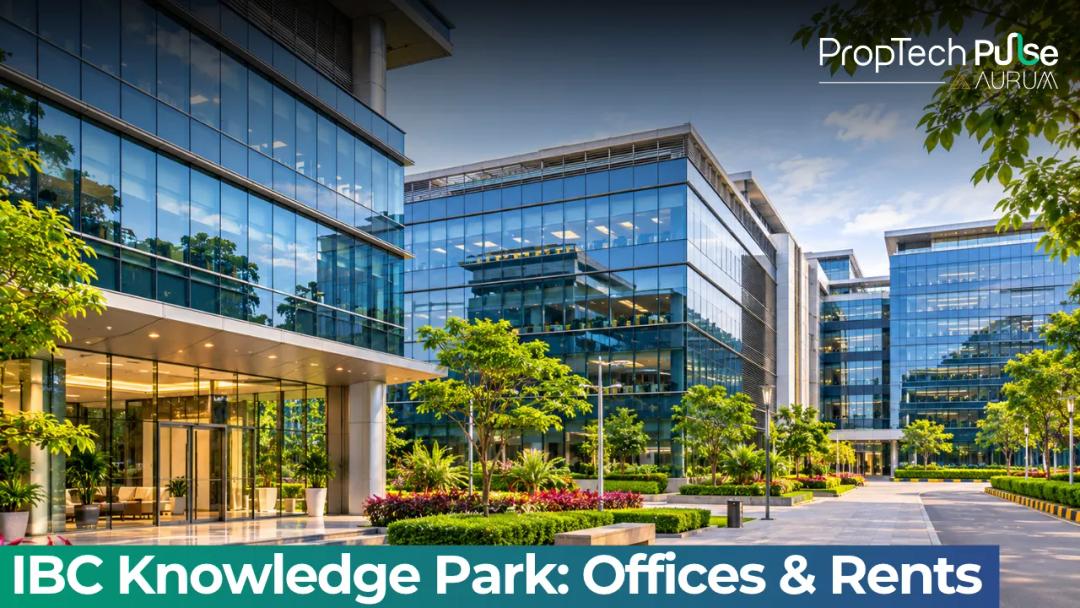
IBC Knowledge Park Bangalore: Offices, Rents & Tenant List
South Bangalore’s commercial centre has shifted steadily towards Dairy Circle and Bannerghatta Main Road. For corporate real estate managers and facility heads looking for Grade-A offices that balance premium branding with practical infrastructure, IBC Knowledge Park remains the benchmark. Spanning 16 acres, this campus attracts multinationals, large-scale technology teams, and financial services desks that require contiguous floor space and reliable transit links. In this guide IBC Knowledge Park Bannerghatta: Location and Campus Overview Tower-by-Tower Floor Plans and Design Choices The IBC Knowledge Park Companies List Connectivity and Micro-Market Access Near Knowledge Park Bangalore Amenity Standards and Current Rental Trends Should Your Enterprise Lease Here? Frequently asked questions IBC Knowledge Park Bannerghatta: Location and Campus Overview Quick answer IBC Knowledge Park is a 16-acre commercial real estate development located on Bannerghatta Main Road near Dairy Circle, Bengaluru. India Builders Corporation Ltd developed the campus in the early 2000s. It houses four distinct Grade-A office towers providing roughly 2.5 million square feet of rentable space. Enterprise clients across IT, finance, and consulting occupy the majority of these decks. The campus sits precisely at the junction where Bannerghatta Road meets Hosur Road, placing it within immediate reach of the city’s southern logistics arteries. India Builders Corporation Ltd incorporated the developer entity in 2002. They later commissioned architect Hafeez Contractor. His layout prioritises natural light, wide corridors, and modular column spacing specifically engineered for modern corporate workflows. Key campus specifications for IBC Knowledge Park near Dairy Circle Feature Detail Total Land Area 16 acres Total Rentable Space ~2.5 million sq ft Developer India Builders Corporation Ltd (IBC) Architect Hafeez Contractor Location Address 4/1, Bannerghatta Main Road, Bhavani Nagar, S.G. Palya, Bengaluru 560029 Completion Period Towers A and B (2004–2005); Towers C and D (2005–2006) Status Fully occupied Grade-A campus Landowners and developers in Karnataka must navigate municipal zoning approvals managed by the Bruhat Bengaluru Mahanagara Palike. The Bannerghatta corridor retains its designated commercial classification, allowing uninterrupted expansion of high-density office towers. Tower-by-Tower Floor Plans and Design Choices Unlike many sprawling campuses built after 2015, IBC Knowledge Park was designed during an era that valued structural solidity over glass-heavy facades. The four towers offer distinct floor plate sizes, making them attractive to businesses that size their offices based on employee density rather than arbitrary marketing metrics. Tower C delivers a compact single floor of roughly 33,241 sq ft. This footprint works exceptionally well for regional headquarters, shared service centres, or boutique consulting firms that do not need expansive decks. The lift lobby configuration supports steady vertical transit without creating bottlenecks during peak shift changes. Tower D stands apart with a massive 67,176 sq ft per floor. Large enterprises typically reserve entire levels here when expanding headcount beyond 1,200 seats. The wider column grid reduces obstructions, simplifying fit-out work for open-plan seating arrangements. Power distribution hubs on each floor mean that critical IT infrastructure runs without crossing common corridors. Parking capacity across the campus reaches approximately 5,000 vehicles. This ratio beats typical Bangalore office parks. Organisations relying on shuttle services find the logistics much easier. A dedicated helipad serves CXOs and visiting executives who prefer bypassing surface traffic, while multi-level food courts and retail concourses keep daily operations self-sufficient. Parking logistics often dictate daily operations more than office floor layouts. The campus allocates dedicated slots for EV charging stations to accommodate growing fleet electrification. Shuttle pick-up and drop-off zones operate on staggered timings to prevent bottlenecks near the main entrance. Security personnel manage two separate vehicle gates, separating executive access from general staff entry. This segregation cuts average wait times during peak morning hours significantly. Tower Orientation and Environmental Buffers Each tower faces a different cardinal direction, which impacts internal temperature loads and solar gain throughout the day. Engineers fitted external louvres and high-performance glazing to reduce HVAC dependency. Landscaped buffer zones between Towers B and C absorb sound pollution while directing prevailing south-west winds through open atrium spaces. Employees working ground-floor units report quieter indoor environments compared to glass-fronted competitors facing direct highway noise. Fire safety protocols adhere strictly to National Building Code mandates for high-rise commercial complexes. Smoke detectors and automatic sprinkler systems are tested quarterly by certified agencies. The campus maintains two independent stairwells with pressurised air supply to clear smoke during emergencies. Evacuation drills occur twice annually, coordinated with local fire brigade response teams. Tenants cannot alter structural load-bearing walls without prior engineering approval and written clearance from the administration office. Before committing capital to any new facility, corporate teams usually review the legal framework governing commercial leasing agreements to ensure exit clauses, escalation caps, and lock-in periods align with project lifecycles. The IBC Knowledge Park Companies List Maintaining a diverse tenant base prevents mass vacancy shocks when sector-specific downturns occur. The tenant rights and responsibilities in India framework heavily influences how landlords manage mixed-use commercial campuses, balancing regulatory compliance with market demand. IBC Knowledge Park curates its occupiers across four primary clusters. Global Information Technology: IBM, Accenture, Nokia, and Samsung R&D operate substantial engineering and product development teams here. These desks benefit from the campus quietness compared to the noise-heavy Whitefield stretch. Financial Services and Banking: Morgan Stanley, Goldman Sachs, and Deutsche Bank anchor the financial floor. Back-office analytics and risk modelling units prefer this location due to stable fibre connectivity and secure perimeter fencing. Consulting and Advisory: KPMG and Deloitte maintain regional advisory desks. Boardrooms and client meeting suites occupy prime ground-floor zones, leveraging the professional ambience expected by C-suite visitors. Consumer Technology and Startups: BYJU’S and Ather Energy established footholds at various points, demonstrating that hyper-growth entities still value Grade-A credibility alongside traditional conglomerates. Note that corporate relocation cycles shift rapidly. Facilities managers should confirm live occupancy counts through the building administration before initiating lease discussions. Rosters advertised on third-party portals often lag behind actual availability. Connectivity and Micro-Market Access Near Knowledge Park Bangalore Dairy Circle functions as a critical routing node for anyone traversing south Bangalore. The junction connects Bannerghatta Road to Hosur Road, Kumaraswamy Layout, and Electronic City. Commuters using two-wheelers or sedans face predictable surge congestion between 8.30 am and 10.00 am. Evening returns to Kempegowda Airport generally clear faster thanks to alternative cut-through roads. Proximity to luxury hospitality assets, including JW Marriott, Le Meridien, and The Park Hotels, reduces logistical friction for international delegates. Driving distance to Kempegowda International Airport averages 45 to 50 minutes without major highway diversions. The upcoming North-West to South-East Red Line extension of the Bengaluru East West Rail Link will place a station roughly 300 meters from the northwest corner. Workers currently rely on BMTC feeder buses. Metro integration will soon cut commute times significantly. Telecom providers have established multiple redundant trunk lines entering the campus basement. Airtel, Jio, and Tata Communications all maintain local distribution cabinets here. Network redundancy means server downtime rarely stems from provider failures, only from physical cable damage during nearby construction. Real estate investors evaluating mixed portfolios often study the fundamental differences between residential and commercial real estate to allocate capital efficiently, since commercial yields respond differently to transit upgrades than apartment markets do. Amenity Standards and Current Rental Trends Bangalore’s commercial real estate cycle fluctuates based on global tech hiring freezes and domestic credit costs. Periodic sector downturns force quick pivot strategies, and tenants now demand faster handovers alongside flexible lease terms. Landlords respond by stepping up fit-out contribution packages to secure occupiers. Grade-A buildings maintain stricter baselines regardless of market cooling. Uninterrupted DG backup remains mandatory. Redundant fibre entry and biometric security linked to central monitoring rooms are non-negotiable. Building management enforces strict visitor logging and perimeter checks to keep tenants safe. Yields match market expectations for mature campuses. Prime towers still command higher rates due to superior lobbies and elevator configurations. Sustainability certifications like IGBC or GRIHA weigh heavily during procurement. Multinational buyers track these ESG metrics closely. Rainwater harvesting and solar-ready terraces already satisfy basic compliance while keeping overheads down. Maintenance and Common Area Maintenance (CAM) charges typically range between ₹22 and ₹28 per square foot monthly. These fees cover lift servicing, generator fuel reserves, waste management contracts, and hourly security patrols. Most leases include an annual escalation clause capped between 4% and 5%. Tenants budgeting for five-year tenures should negotiate a step-up agreement matching predicted market yields, avoiding flat inflation hikes. Leasing Tip: Always request the electrical load allowance in kW per square metre. Older towers sometimes restrict heavy server rack deployment without costly transformer upgrades. Should Your Enterprise Lease Here? Whether IBC Knowledge Park fits your organisation depends on scale and commuter habits. Large technology vendors, financial desks, and multinationals needing contiguous floors above 30,000 sq ft will find strong value here. The campus brand carries real weight. Helipad access simplifies executive travel. Dairy Circle connectivity keeps long-term leasing stable. If your requirement spans under 10,000 sq ft, prefers fully furnished flex-space, or requires modern smart-building protocols out of the gate, newer campuses developing further south towards Sarjapur or North Electronic City may deliver better unit economics. Match your floor plate needs against genuine operational requirements before scheduling site visits. Frequently asked questions Who owns the IBC Knowledge Park Bangalore campus? India Builders Corporation Ltd owns and developed the campus. They commissioned architect Hafeez Contractor to design the original four-tower layout, which remains fully operational today. How many towers are available for leasing at IBC Knowledge Park? Four distinct Grade-A towers bear the letters A through D. Tower C offers smaller contiguous floors around 33,000 sq ft, while Tower D provides expansive decks exceeding 67,000 sq ft, catering to varying corporate footprints. Which metro station is closest to IBC Knowledge Park? A new station on the BWRL Phase II network sits about 300 metres away. BMTC feeder buses currently bridge the final commuter mile until the metro line becomes fully operational. What is the typical office rental rate at IBC Knowledge Park? Rental rates depend on floor elevation, visibility, and fit-out contribution terms. Corporate teams should request a formal quote from the building management committee, as rates fluctuate with global tech hiring cycles. Is IBC Knowledge Park approved by Karnataka RERA? Karnataka RERA regulates newly launched projects and residential units. Established commercial campuses primarily fall under commercial property regulations managed by the Bruhat Bengaluru Mahanagara Palike (BBMP) and the Department of Industrial Promotion. Sources Bengaluru Metro Rail Limited: BWRL Phase II route mapping and Dairy Circle station proximity details (accessed November 2026). Ministry of Housing and Urban Affairs: Guidelines for Grade-A commercial real estate developments in Smart Cities (accessed November 2026). Enjoyed this blog article? Visit PropTech Pulse for more interesting blogs.
PropTech Pulse Editorial
16th November 2026
Uncategorized
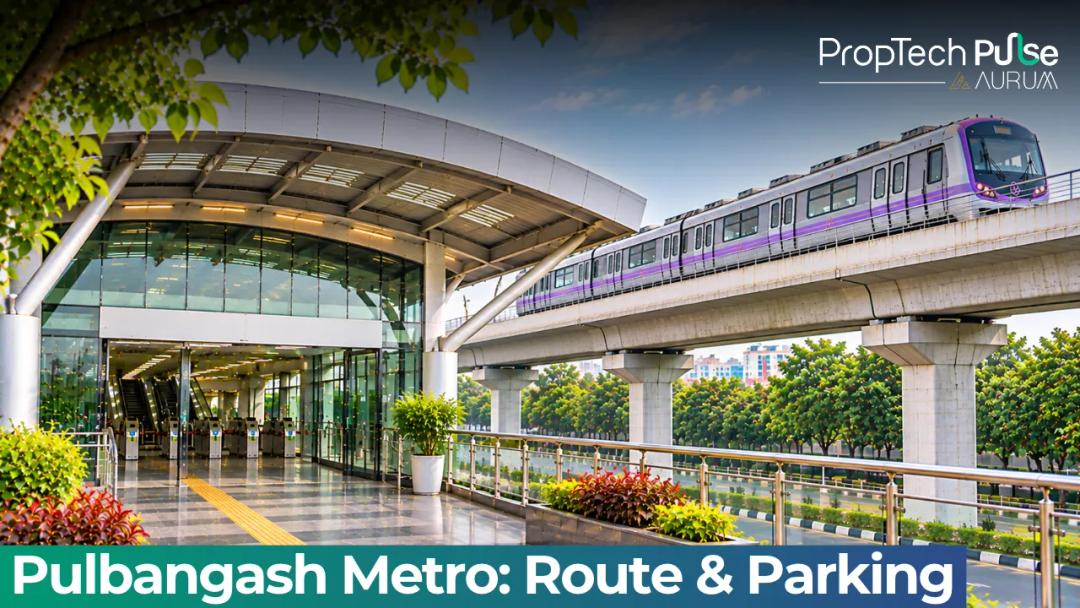
Pulbangash Metro Station: Timings, Route, Parking & More
Standing outside Aram Ganj with samosas and a connecting train to catch at Kishan Ganj, old-Delhi commuters know exactly where to turn. Pulbangash metro station sits right at the corner of Sabzi Mandi and Roshanara Road on the Red Line. Step outside, take a left, and you hit Gate No. 1. Platform 1 for Rithala or Platform 2 for Shaheed Sthal takes less than five minutes to reach. What works today includes verified platform directions, daily timings via the DMRC journey planner, and how to move through the single-gate layout without confusion. Nearby hubs like Azad Market and Sadar Bazar link directly to this transit corridor. The rest of this page breaks down pulbangash metro station parking availability and shows how Magenta Line extensions shift rental dynamics for nearby residents. In this guide Pulbangash Metro Station Timings Route and Platform Directions Navigating Gate No. 1 and Facilities Frequently asked questions Pulbangash Metro Station Timings Quick answer The first train from Pulbangash Metro Station usually departs around 05:40 AM, and the last train leaves shortly before 11:00 PM. Peak-hour frequency runs every 2 to 3 minutes, while off-peak trains arrive every 5 to 8 minutes. Since seasonal shifts and engineering maintenance alter these windows, always double-check the live schedule via the DMRC journey planner. Aggregator websites and travel blogs often publish static timetable PDFs that sit unchanged for months. Commuters quickly learn that relying on those numbers leads to missed trains. First train windows slide later during winter daylight adjustments, and last train departures pull back when track maintenance crews enter the Red Line tunnel network. Opening the Delhi Metro Rail Corporation journey planner proves far safer. Enter Pulbangash as your start and end point to check departure bands, or plug in your exact terminal. The planner handles real-time travel time, fare calculations, and connection counts. Expect a 2-minute headway during weekday peaks. Miss a train, and don't wait past ten minutes at the platform edge. A replacement service usually arrives shortly from the opposite direction or a loop siding. Pulbangash Metro Station typical weekday run intervals Time Band Frequency (minutes) Notes Early Morning (Before 07:00 AM) 8–10 Gradual ramp-up before rush hour Morning Peak (07:00 AM – 10:30 AM) 2–3 Maximum crowd density; trains packed tight Off-Peak (10:30 AM – 05:00 PM) 5–8 Comfortable boarding possible Evening Peak (05:00 PM – 09:30 PM) 2–4 High demand returning commuters Late Night (After 09:30 PM) 10–15 Service winds down; frequent track checks Typical Last Departure ~23:00 Depends on operational day status If you're working shifts or heading back late from Azad Market, skip the standard timetable. Weekend services often start later and wind down earlier than usual because of unplanned track inspections. The DMRC app or official X handle usually drop a notification an hour before these changes take effect. Pro tip: Download the DMRC Rail Connect app. Set up a saved route from Pulbangash to your nearest station. You will get push alerts if a train is delayed or rerouted because of flooding or technical faults. Pulbangash Metro Station Route and Platform Directions Knowing which side of the platform you need saves you from boarding a southbound train when your office is north of the Yamuna. Pulbangash Metro Station Route splits cleanly into two lines running perpendicular to each other underground. Platform 1 (Rithala Side): Head to the northern tracks. Trains on this platform leave towards Rajendra Place, Kashmere Gate, Chandni Chowk, and eventually Rithala. If you are heading to Connaught Place, Patel Chowk, or anywhere west of Central Delhi, this is your platform. Trains bound for Shakti Nagar, Vivek Vihar, NSIT, and terminating at Shaheed Sthal depart from the southern tracks on Platform 2. Head there for a direct run into the East Delhi residential belt, connecting smoothly at Shahdara toward the outer rings. Fares hinge on how many zones you cross. Pulbangash sits firmly in Zone 1, keeping most short rides cheap. A trip to Kashmere Gate runs ₹20 on regular smart cards. Stretch it out to Tis Hazari or Dhaula Kuan, and you'll cross into the ₹40–₹50 range. Check the DMRC fare calculator whenever your destination jumps a zone boundary. Navigating Gate No. 1 and Facilities Old Delhi stations rarely offer multiple gates, and Pulbangash follows that pattern strictly. There is only one functional entry and exit point: Gate No. 1. Located directly off Roshanara Road, it serves passengers moving between the metro concourse and the local market corridor. The descent relies on concrete stairs flanked by sturdy railings. Grip the handhold during rush hour, particularly if you're trudging back from Sadar Bazar with groceries. Wheelchair lifts sit right near the ticket counter wall for accessibility. Two escalators run between the ground floor and the mezzanine. Summer heat sometimes trips the circuits though, forcing staff to lock them down and sending everyone up the stairs. Station facilities available at Gate No. 1 Facility Type Location Availability Ticket Counters Mezzanine Level 06:00 AM to 10:30 PM Pulse Card Machines Mezzanine Level 24 hours Public Toilets Concourse Level 06:00 AM to 10:30 PM ATMs Near Gate Exit Mostly functional overnight Lifts (Elevators) Side Staircase Wall Operational daytime hours Total Lifts / Escalators — 3 Lifts / 2 Escalators Renting near a busy interchange often comes with a premium price tag. Understanding how proximity to a metro station affects apartment pricing helps you budget accurately. Pulbangash commands higher rents compared to stations further down the Red Line branches because locals value the direct access to wholesale markets and railway interchanges. Parking at Pulbangash Metro Station Motorists seeking pulbangash metro station parking face tighter constraints than drivers at suburban termini. There is no expansive surface lot attached to the station immediately visible from the main road. The footprint of the station sits sandwiched between dense commercial plots. Two-wheeler parking works reasonably well. The space adjacent to Gate No. 1 offers marked slots for bikes and scooters. During festival weeks or wedding seasons, these fill up by mid-afternoon, forcing visitors to queue for metered spots on the wider stretch of Roshanara Road. Four-wheeler parking requires walking two blocks away. You can drop passengers at the gate and parallel park legally at designated zones along the main carriageway, though traffic police patrol these lanes actively. Commercial garages operating out of converted ground-floor rooms in the market lane charge hourly rates. If you drive to Azad Market, plan for 15 minutes of circling before finding a legal slot. Key Local Landmarks Near Pulbangash Metro The station acts as a pivot point for several heavy-footfall zones. Walking distances from the gate are manageable, but crowd density spikes dramatically between 10 AM and 4 PM. Kishan Ganj Railway Station: Approximately 0.4 km east of Gate No. 1. Walk straight down Roshanara Road, turn left into the narrow connector lane past the textile shops, and the railway entrance appears. It takes roughly 8 minutes to walk. Trains on the Outer Ring line and Delhi Suburban Railway halt here, providing an alternate route if the metro undergoes sudden disruption. Azad Market & Sadar Bazar: The wholesale clothing and hardware hubs lie directly behind the station exit. You step out of the metro and land in a labyrinth of lanes stocking everything from fabric bolts to plumbing fittings. Renting in these pockets appeals to traders who prioritize inventory handling over quiet streets. For newcomers unfamiliar with crowded city cores, reading up on what is a train station led development clarifies why businesses cluster around rail and metro nodes. Mutiny Memorial: Situated about 1.2 km west. History enthusiasts and casual walkers prefer the evening stroll here, away from the morning market rush. New residents often overlook the noise and congestion trade-offs that come with living next to wholesale corridors. A practical checklist helps filter noise risks before signing a lease. Exploring home renting for rookies surviving your first flat hunt outlines how to inspect ventilation, water pressure, and actual bedroom sizes versus brochure claims. Upcoming Transit Changes: The Magenta Line Connection Delhi Metro Phase III introduced the Magenta Line, bridging Dwarka Sector 21 in the southwest to Botanical Garden in Noida. While Pulbangash does not sit directly on the Magenta Line, the extension reaches Ghanta Ghar and Sadar Bazar stations, cutting through the heart of the district. This geometry alters commuting flows. Residents living near Pulbangash can now cycle or auto across Roshanara Road to reach Sadar Bazar Magenta Station. The transfer grants instant access to South Extension, Defence Colony, and Greater Kailash without crossing the heavily congested Central Delhi intersections. Properties within a half-kilometre radius of both the Red Line exit and the new Magenta access points tend to appreciate faster, driven by dual-line convenience. Before You Commute or Move Here Use the DMRC planner for real-time arrival data instead of third-party timetables. Factor in walking time to Azad Market or Kishan Ganj Railway if you rely on multi-modal transfers. Verify two-wheeler parking limits during peak trading days if you drive in from outside Old Delhi. Match the rental budget against Roshanara Road noise levels before committing to upper floors. Frequently asked questions Which market is near Pulbangash metro station? Azad Market and Sadar Bazar are the closest wholesale hubs, located just outside Gate No. 1. You can walk to the textile and hardware lanes in under three minutes. These districts operate through the night, drawing traders and shoppers who need fast access to Red Line trains for bulk transport. Where is the nearest bus stop from Pulbangash metro? DTC bus routes stop directly along Roshanara Road, right across from the metro gate. You do not need to navigate through narrow market alleys to catch a bus. Several routes branch off here toward Karol Bagh and Civil Lines, making it a straightforward multimodal swap. Is there parking at Pulbangash metro station? Space for two-wheelers exists immediately beside Gate No. 1. Four-wheeler options require driving two blocks away to designated commercial lots or parallel parking legally on wider stretches of Roshanara Road, though traffic wardens monitor those zones strictly. When does the first metro leave Pulbangash? Morning services generally commence around 05:40 AM on standard working days. The window shifts slightly later during winter or on public holidays. Always verify the exact departure via the DMRC journey planner to account for unplanned track maintenance. How far is Pulbangash metro from Kishan Ganj station? Kishan Ganj Railway Station sits approximately 0.4 km east of the metro gate. Walking takes about eight minutes down Roshanara Road before turning left into the connector lane. The walk stays flat and paved, avoiding the steepest gradients found elsewhere in old Delhi. Sources Delhi Metro Rail Corporation (DMRC): General station infrastructure details, platform assignments, facility counts, and journey planner functionality (accessed November 2026) DMRC Official App & Operations Dashboard: Real-time service alerts, weekend schedule deviations, and peak interval standards (accessed November 2026) Enjoyed this blog article? Visit PropTech Pulse for more interesting blogs.
PropTech Pulse Editorial
16th November 2026
Uncategorized
Siddhivinayak Metro Station: Route, Timings, Fares & Exits
If you commute between Prabhadevi and Bandra-Kurla Complex daily, the Siddhivinayak metro station has already rewritten your schedule. Opened in May 2025, this underground stop sits beneath the BMC Civic Centre. You can walk to the Siddhivinayak Temple gates in three minutes. Eastern suburb residents and IT employees heading south use it to cut monsoon road commutes that used to take over an hour. Renters in Parel and Wadala are adjusting their budgets to this new connectivity. Buyers are weighing whether current premiums justify long-term gains. In this guide Siddhivinayak metro station route and connectivity Exact Siddhivinayak metro station timings and peak frequency Fare chart and smart card discounts Exit map: temple, bus stand and corporate offices Connecting to Western Line trains and city buses Rental yields and property values near Line 3 Frequently asked questions Siddhivinayak metro station route and connectivity Quick answer The Siddhivinayak metro station (SIDV) opened on 10 May 2025 as an underground hub on Line 3 (Aqua Line). It sits beneath the BMC Civic Centre in Prabhadevi, providing direct access to the Siddhivinayak Temple via Exit A1 and the municipal bus terminus via Exit B2. Commuters reach BKC in roughly eighteen minutes and connect to Western Line trains at Dadar within twelve hundred metres. Structural engineers built the station ninety-eight metres below ground level to avoid disrupting legacy utility networks. Trench shields held back sewage lines and high-voltage cables during excavation. Underground layouts mean fewer surface disruptions for pedestrians above. Moving through the exits does require a bit of care. Staff posted near the turnstiles can point you toward the correct path on your first attempt. The station code is SIDV. It bridges two distinct areas. On one side lies the older textile mill belt along Mahatma Gandhi Road. On the other stand the heritage bungalows of Prabhadevi. The station physically anchors both micro-markets into a single transit node. Trains head east towards Ghatkopar and Aarey. They cut through the financial spine before terminating at Cuffe Parade. Commuters reach BKC in roughly eighteen minutes. That beats the twenty-five minute average drive during weekday rush hours. Heading west toward Nepean Sea Road, you hit Marine Drive and Colaba within thirty minutes of crossing Dadar interchange. The siddhivinayak metro remains one of the fastest public transit links between Mumbai's eastern industrial belts and southern business districts. Exact Siddhivinayak metro station timings and peak frequency Service starts early enough for shift workers and dawn temple visitors. The first train towards Cuffe Parade departs at 06:40 AM. The initial northbound train leaves for Aarey at 06:50 AM. Last departures run at 10:40 PM and 10:50 PM respectively. Trains arrive at four-minute intervals during the six to nine AM weekday slot. Frequency expands to eight minutes between ten and eleven PM. Parking lots fill quickly during Ganesh Chaturthi week. Sunday services skip the late-night extra runs. Plan your return journey accordingly. The platform uses a single underground island layout. Both directions share the concourse level. This design keeps transfer times tight when footfall spikes. Festival schedules trigger special crowd control measures. Police cordons redirect pilgrims away from the ticketing hall during peak darshan hours. Daily commuters should follow staff instructions near the fare collection machines to keep queues moving efficiently. Fare chart and smart card discounts Mumbai Metro charges distance-based pricing instead of fixed zones. Rides under three kilometres cost just ₹10. Fares scale up gradually until long journeys across forty-two kilometres hit the ₹80 ceiling. Smart Card holders get steady discounts from five to fifteen percent based on monthly usage tiers. Monthly commuting becomes noticeably cheaper for office-goers. Qualified students enjoy off-peak concessions during valid study periods. These discount windows stay tightly defined against weekday rush hours. Digital wallets handle transactions smoothly at automated counters. Physical cards still scan faster during morning boarding peaks. Hold onto receipts for fare disputes. You must lodge complaints at the station supervisor desk within four hours of travel. Average monthly transport budget comparison for Line 3 commuters versus road drivers Expense Type Monthly Cost (Approx.) Metro Smart Card Pass (Unlimited) ₹2,200 Daily Single Ticket Round Trip (Avg) ₹2,900 Private Auto Cab Daily Commute ₹7,500 Petrol + Parking for Car ₹11,000+ Total Estimated Metro Savings ₹5,000 - ₹8,000 Exit map: temple, bus stand and corporate offices Getting your bearings in a deep underground facility demands knowing which gate aligns with your destination. Misdirected exits waste precious minutes. The station marks seven exits labelled A1 through A5 and B1 through B2. Gate A1 puts you directly at the Shree Siddhivinayak Temple main courtyard. Road crossings are completely bypassed. Worshippers dodging heavy MG Road traffic save considerable time. Catch a BEST bus? Walk straight to Exit B2. The municipal terminus feeds straight into Mahatma Gandhi Road. Target BMC ward offices or nearby tech parks? Use Exit A3. It opens onto the pedestrian footpath beside the municipal library. The civic complex ground floor hosts a dedicated customer care counter. You can collect printed timetables or request tactile guidance cards for visually impaired travellers right there. Skip the escalators if you haul heavy goods. They often shut down for maintenance during evening peak loads. Carry an offline exit map since mobile data drops in deep tunnels. Exit Tip: If rain traps you inside during October to November, aim for Exit A2 over A1. It connects directly to a covered arcade leading to the shopping arcades along MG Road. Connecting to Western Line trains and city buses The Aqua Line operates independently from Indian Railways. Bridging the gap for suburban trains happens outside on foot. Dadar railway station sits roughly twelve hundred metres away. An auto ride covers that stretch faster if you carry luggage. Western Line switchers usually alight at Parel station one kilometre west. The siddhivinayak metro route serves direct office travel better than rail hopping. City buses integrate smoothly at the terminus. Routes fifty-two and seventy-four feed straight into lower Parel and Sion. Night service buses depart the stop shortly after the last metro pulls away. Stand at the designated waiting zone marked by blue poles. Do not loiter near the main vehicle intake lane. BRC auto stands operate on a digital queue system now. Download the app ahead of time to secure a seat when the metro closes. Weekend crowds sometimes bypass the queue system, so booking early prevents long waits. Rental yields and property values near Line 3 Agents report more enquiries from young professionals refusing to sit in traffic. Flats within five hundred metres of the civic centre command premium listings now. Pre-2025 valuations seem low by comparison. Two-bedroom apartments in converted mill buildings see stronger occupancy. Effective rental yields push toward four percent in select pockets. Resale buyers check exit proximity closely before offering. Upper floors lose that street-level visibility anyway. A fresh wave of co-working spaces has taken over vacant mill sheds in Parel. Corporate leases drive bulk rental demand for nearby studio units. Single occupiers pay a small premium for proximity to Line 3 entrances. Landlords who renovated old structures recently capture the highest rates. Calculate exact metro-driven return boosts using a rental yield calculator. MahaRERA projects near this corridor enforce stricter completion adherence. Check our guide on how proximity to a metro station affects apartment pricing for broader mechanics. Before you commit to a flat near Line 3 Metro upgrades fix connectivity problems instantly. They do not magically resolve poor building quality or overcrowded neighbourhood infrastructure. Verify the society's water supply resilience and drain capacity before signing agreements. Sudden surges in resident density strain aging municipal pipes. Run the numbers on actual commute savings versus buying outright using a rent vs buy comparison, and always confirm the builder's possession timeline using the RERA website. If the math holds and the location suits your lifestyle, the station provides a durable advantage. Properties in this corridor will likely appreciate alongside transport improvements for decades. Lock in your choice while early movers set the baseline rates. Frequently asked questions Is there paid parking available for private vehicles at the station? Yes. Designated two-wheeler and four-wheeler slots sit adjacent to the ground-level BMC civic complex entrance. Capacity fills quickly between seven and nine AM when office crowds surge, so car owners often switch to shared autos after dropping passengers off. Motorcycle parking remains plentiful until mid-morning hours, keeping motorbike commuters unaffected by peak bottlenecks. What are the exact departure times for early morning shifts? Service begins at 06:40 AM bound for Cuffe Parade, giving factory and hospital staff enough buffer for handovers. Trains heading north towards Aarey initiate operations five minutes later at 06:50 AM. You can catch connecting rides every four minutes once the core network fully activates by 08:00 AM, eliminating the need to wait outside in Mumbai humidity. How long does it take to walk to the famous temple from the concourse? Pilgrims exiting through Gate A1 reach the main prayer hall within a three-minute walk, completely avoiding busy road intersections. The path stays shaded throughout the day thanks to existing arcade structures, making it comfortable for elderly devotees and families carrying offerings. Evening darshan visits benefit from dedicated crowd control barriers installed by local police during festivals. Can I switch directly to the Western Line suburban trains here? No direct indoor tunnel exists yet. You must walk roughly twelve hundred metres or hire an auto to reach Dadar Junction for Eastern Line transfers. Parel railway station sits slightly closer at one kilometre west, serving Western Line passengers comfortably. Factor in an extra ten minutes for these manual switches if your office is located near Khar or Andheri suburbs. Sources BMRCL Official Portal: Station metadata, structural depth and exit numbering verification (accessed October 2026) Maharashtra Metro Rail Corporation: Fare structure guidelines, Smart Card discount tiers and passenger flow data (accessed October 2026) Maharashtra RERA: Project completion timelines and builder compliance tracking near Line 3 corridors (accessed October 2026) Enjoyed this blog article? Visit PropTech Pulse for more interesting blogs.
PropTech Pulse Editorial
16th November 2026
Uncategorized
IBC Knowledge Park Bangalore: Offices, Rents & Tenant List
South Bangalore’s commercial centre has shifted steadily towards Dairy Circle and Bannerghatta Main Road. For corporate real estate managers and facility heads looking for Grade-A offices that balance premium branding with practical infrastructure, IBC Knowledge Park remains the benchmark. Spanning 16 acres, this campus attracts multinationals, large-scale technology teams, and financial services desks that require contiguous floor space and reliable transit links. In this guide IBC Knowledge Park Bannerghatta: Location and Campus Overview Tower-by-Tower Floor Plans and Design Choices The IBC Knowledge Park Companies List Connectivity and Micro-Market Access Near Knowledge Park Bangalore Amenity Standards and Current Rental Trends Should Your Enterprise Lease Here? Frequently asked questions IBC Knowledge Park Bannerghatta: Location and Campus Overview Quick answer IBC Knowledge Park is a 16-acre commercial real estate development located on Bannerghatta Main Road near Dairy Circle, Bengaluru. India Builders Corporation Ltd developed the campus in the early 2000s. It houses four distinct Grade-A office towers providing roughly 2.5 million square feet of rentable space. Enterprise clients across IT, finance, and consulting occupy the majority of these decks. The campus sits precisely at the junction where Bannerghatta Road meets Hosur Road, placing it within immediate reach of the city’s southern logistics arteries. India Builders Corporation Ltd incorporated the developer entity in 2002. They later commissioned architect Hafeez Contractor. His layout prioritises natural light, wide corridors, and modular column spacing specifically engineered for modern corporate workflows. Key campus specifications for IBC Knowledge Park near Dairy Circle Feature Detail Total Land Area 16 acres Total Rentable Space ~2.5 million sq ft Developer India Builders Corporation Ltd (IBC) Architect Hafeez Contractor Location Address 4/1, Bannerghatta Main Road, Bhavani Nagar, S.G. Palya, Bengaluru 560029 Completion Period Towers A and B (2004–2005); Towers C and D (2005–2006) Status Fully occupied Grade-A campus Landowners and developers in Karnataka must navigate municipal zoning approvals managed by the Bruhat Bengaluru Mahanagara Palike. The Bannerghatta corridor retains its designated commercial classification, allowing uninterrupted expansion of high-density office towers. Tower-by-Tower Floor Plans and Design Choices Unlike many sprawling campuses built after 2015, IBC Knowledge Park was designed during an era that valued structural solidity over glass-heavy facades. The four towers offer distinct floor plate sizes, making them attractive to businesses that size their offices based on employee density rather than arbitrary marketing metrics. Tower C delivers a compact single floor of roughly 33,241 sq ft. This footprint works exceptionally well for regional headquarters, shared service centres, or boutique consulting firms that do not need expansive decks. The lift lobby configuration supports steady vertical transit without creating bottlenecks during peak shift changes. Tower D stands apart with a massive 67,176 sq ft per floor. Large enterprises typically reserve entire levels here when expanding headcount beyond 1,200 seats. The wider column grid reduces obstructions, simplifying fit-out work for open-plan seating arrangements. Power distribution hubs on each floor mean that critical IT infrastructure runs without crossing common corridors. Parking capacity across the campus reaches approximately 5,000 vehicles. This ratio beats typical Bangalore office parks. Organisations relying on shuttle services find the logistics much easier. A dedicated helipad serves CXOs and visiting executives who prefer bypassing surface traffic, while multi-level food courts and retail concourses keep daily operations self-sufficient. Parking logistics often dictate daily operations more than office floor layouts. The campus allocates dedicated slots for EV charging stations to accommodate growing fleet electrification. Shuttle pick-up and drop-off zones operate on staggered timings to prevent bottlenecks near the main entrance. Security personnel manage two separate vehicle gates, separating executive access from general staff entry. This segregation cuts average wait times during peak morning hours significantly. Tower Orientation and Environmental Buffers Each tower faces a different cardinal direction, which impacts internal temperature loads and solar gain throughout the day. Engineers fitted external louvres and high-performance glazing to reduce HVAC dependency. Landscaped buffer zones between Towers B and C absorb sound pollution while directing prevailing south-west winds through open atrium spaces. Employees working ground-floor units report quieter indoor environments compared to glass-fronted competitors facing direct highway noise. Fire safety protocols adhere strictly to National Building Code mandates for high-rise commercial complexes. Smoke detectors and automatic sprinkler systems are tested quarterly by certified agencies. The campus maintains two independent stairwells with pressurised air supply to clear smoke during emergencies. Evacuation drills occur twice annually, coordinated with local fire brigade response teams. Tenants cannot alter structural load-bearing walls without prior engineering approval and written clearance from the administration office. Before committing capital to any new facility, corporate teams usually review the legal framework governing commercial leasing agreements to ensure exit clauses, escalation caps, and lock-in periods align with project lifecycles. The IBC Knowledge Park Companies List Maintaining a diverse tenant base prevents mass vacancy shocks when sector-specific downturns occur. The tenant rights and responsibilities in India framework heavily influences how landlords manage mixed-use commercial campuses, balancing regulatory compliance with market demand. IBC Knowledge Park curates its occupiers across four primary clusters. Global Information Technology: IBM, Accenture, Nokia, and Samsung R&D operate substantial engineering and product development teams here. These desks benefit from the campus quietness compared to the noise-heavy Whitefield stretch. Financial Services and Banking: Morgan Stanley, Goldman Sachs, and Deutsche Bank anchor the financial floor. Back-office analytics and risk modelling units prefer this location due to stable fibre connectivity and secure perimeter fencing. Consulting and Advisory: KPMG and Deloitte maintain regional advisory desks. Boardrooms and client meeting suites occupy prime ground-floor zones, leveraging the professional ambience expected by C-suite visitors. Consumer Technology and Startups: BYJU’S and Ather Energy established footholds at various points, demonstrating that hyper-growth entities still value Grade-A credibility alongside traditional conglomerates. Note that corporate relocation cycles shift rapidly. Facilities managers should confirm live occupancy counts through the building administration before initiating lease discussions. Rosters advertised on third-party portals often lag behind actual availability. Connectivity and Micro-Market Access Near Knowledge Park Bangalore Dairy Circle functions as a critical routing node for anyone traversing south Bangalore. The junction connects Bannerghatta Road to Hosur Road, Kumaraswamy Layout, and Electronic City. Commuters using two-wheelers or sedans face predictable surge congestion between 8.30 am and 10.00 am. Evening returns to Kempegowda Airport generally clear faster thanks to alternative cut-through roads. Proximity to luxury hospitality assets, including JW Marriott, Le Meridien, and The Park Hotels, reduces logistical friction for international delegates. Driving distance to Kempegowda International Airport averages 45 to 50 minutes without major highway diversions. The upcoming North-West to South-East Red Line extension of the Bengaluru East West Rail Link will place a station roughly 300 meters from the northwest corner. Workers currently rely on BMTC feeder buses. Metro integration will soon cut commute times significantly. Telecom providers have established multiple redundant trunk lines entering the campus basement. Airtel, Jio, and Tata Communications all maintain local distribution cabinets here. Network redundancy means server downtime rarely stems from provider failures, only from physical cable damage during nearby construction. Real estate investors evaluating mixed portfolios often study the fundamental differences between residential and commercial real estate to allocate capital efficiently, since commercial yields respond differently to transit upgrades than apartment markets do. Amenity Standards and Current Rental Trends Bangalore’s commercial real estate cycle fluctuates based on global tech hiring freezes and domestic credit costs. Periodic sector downturns force quick pivot strategies, and tenants now demand faster handovers alongside flexible lease terms. Landlords respond by stepping up fit-out contribution packages to secure occupiers. Grade-A buildings maintain stricter baselines regardless of market cooling. Uninterrupted DG backup remains mandatory. Redundant fibre entry and biometric security linked to central monitoring rooms are non-negotiable. Building management enforces strict visitor logging and perimeter checks to keep tenants safe. Yields match market expectations for mature campuses. Prime towers still command higher rates due to superior lobbies and elevator configurations. Sustainability certifications like IGBC or GRIHA weigh heavily during procurement. Multinational buyers track these ESG metrics closely. Rainwater harvesting and solar-ready terraces already satisfy basic compliance while keeping overheads down. Maintenance and Common Area Maintenance (CAM) charges typically range between ₹22 and ₹28 per square foot monthly. These fees cover lift servicing, generator fuel reserves, waste management contracts, and hourly security patrols. Most leases include an annual escalation clause capped between 4% and 5%. Tenants budgeting for five-year tenures should negotiate a step-up agreement matching predicted market yields, avoiding flat inflation hikes. Leasing Tip: Always request the electrical load allowance in kW per square metre. Older towers sometimes restrict heavy server rack deployment without costly transformer upgrades. Should Your Enterprise Lease Here? Whether IBC Knowledge Park fits your organisation depends on scale and commuter habits. Large technology vendors, financial desks, and multinationals needing contiguous floors above 30,000 sq ft will find strong value here. The campus brand carries real weight. Helipad access simplifies executive travel. Dairy Circle connectivity keeps long-term leasing stable. If your requirement spans under 10,000 sq ft, prefers fully furnished flex-space, or requires modern smart-building protocols out of the gate, newer campuses developing further south towards Sarjapur or North Electronic City may deliver better unit economics. Match your floor plate needs against genuine operational requirements before scheduling site visits. Frequently asked questions Who owns the IBC Knowledge Park Bangalore campus? India Builders Corporation Ltd owns and developed the campus. They commissioned architect Hafeez Contractor to design the original four-tower layout, which remains fully operational today. How many towers are available for leasing at IBC Knowledge Park? Four distinct Grade-A towers bear the letters A through D. Tower C offers smaller contiguous floors around 33,000 sq ft, while Tower D provides expansive decks exceeding 67,000 sq ft, catering to varying corporate footprints. Which metro station is closest to IBC Knowledge Park? A new station on the BWRL Phase II network sits about 300 metres away. BMTC feeder buses currently bridge the final commuter mile until the metro line becomes fully operational. What is the typical office rental rate at IBC Knowledge Park? Rental rates depend on floor elevation, visibility, and fit-out contribution terms. Corporate teams should request a formal quote from the building management committee, as rates fluctuate with global tech hiring cycles. Is IBC Knowledge Park approved by Karnataka RERA? Karnataka RERA regulates newly launched projects and residential units. Established commercial campuses primarily fall under commercial property regulations managed by the Bruhat Bengaluru Mahanagara Palike (BBMP) and the Department of Industrial Promotion. Sources Bengaluru Metro Rail Limited: BWRL Phase II route mapping and Dairy Circle station proximity details (accessed November 2026). Ministry of Housing and Urban Affairs: Guidelines for Grade-A commercial real estate developments in Smart Cities (accessed November 2026). Enjoyed this blog article? Visit PropTech Pulse for more interesting blogs.
PropTech Pulse Editorial
16th November 2026

Ask Pulse Ai anything about real estate

Unlock the Latest in Real Estate
News, Infographics, Blogs & More! Delivered to your inbox.

