New Launch - India Real Estate Report 2026.

Services
Knowledge Hub
Resources
Tools

Ask Pulse Ai
©PropTech Pulse 2025, All rights reserved.


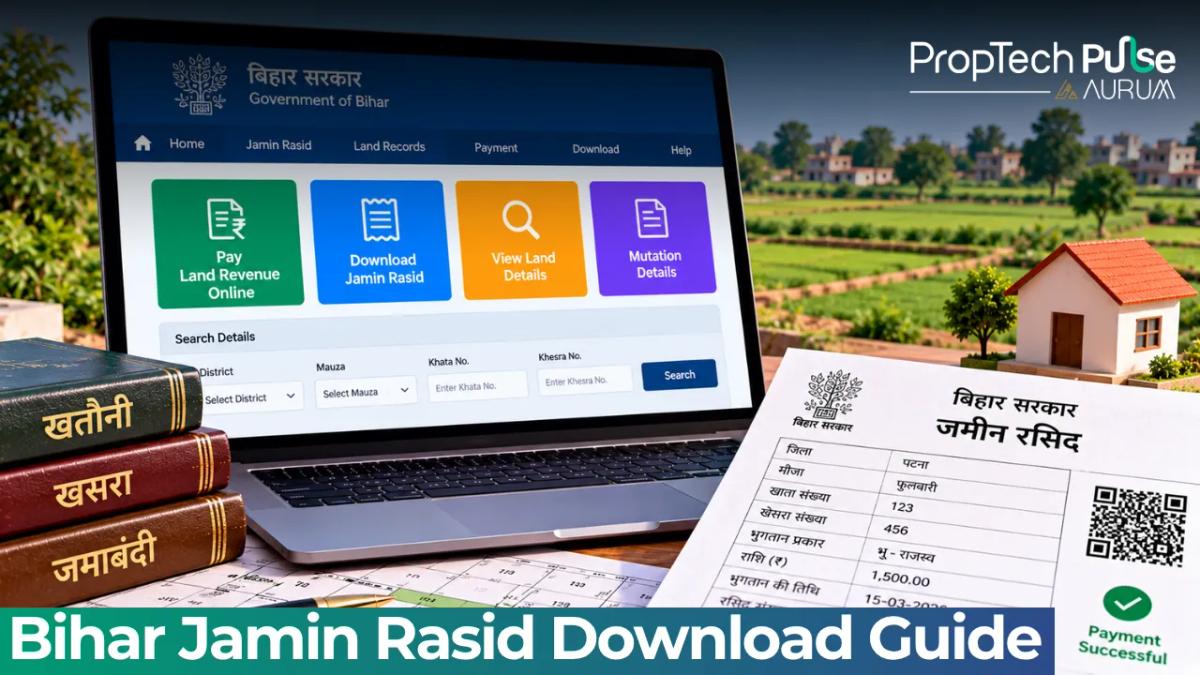
Paying land revenue tax in Bihar no longer requires standing in queues at the block office. It uses a strict digital workflow instead. If you own land here, your Jamin Rasid is the only valid proof of Bhulagan payment accepted by banks and registration offices today.
What is Bihar Jamin Rasid?
Quick answer
The Bihar Jamin Rasid is the official digital proof of your annual Bhulagan (land revenue) payment, generated solely through the Bihar Bhumi portal. It replaces outdated paper receipts and is legally required for property verification, bank loan applications, and ownership transfers.
A Jamin Rasid shields your asset value. Across Patna's developing suburbs or Gaya's agricultural belts, proving you have cleared annual dues is the very first step in any sale or mortgage application. Buyers and lenders demand this exact document because it ties your payment directly to your district-level land records.
The process runs through Bhumi Lagan Bihar, the state's centralized tracker for water rates and village boundary adjustments. Your payment checks out against the latest Jamabandi—the master book updated yearly for each village. Only after this sync completes does the system mark your payment final and allow the PDF download.
Important Notice: Offline Receipts Are Now Invalid
Landowners used to pay cash at local offices and carry home stamped paper slips. That period has ended. The Revenue Department now mandates that physical receipts hold zero weight once the latest Jamabandi updates online.
Banks and registration offices auto-reject any manual slip lacking a matching entry on the digital ledger.
This rule pushes everyone into the Bihar Bhumi ecosystem. The policy stops fake certificates and tracks every rupee hitting the treasury ledger live.
Old paper slips sitting in drawers do not count. Use the portal search tools precisely to generate a fresh, verified copy.
Legal requirement Treat every Jamin Rasid like a title deed snippet. Store the downloaded PDF securely alongside your khajana receipt, and verify the Jamabandi number matches your current land record before making any sale offer.
Documents Needed for Bihar Lagan Rasid
You cannot pull up your tax ledger by guessing the address. The portal asks for precise identifiers from your Jamabandi. If these fields do not match the government database, the search returns zero results even if your dues are cleared.
Picking the right dropdowns
Start inside the direct payment window. The interface demands a strict hierarchy of administrative zones:
- District: Select your primary jurisdiction (for example, Patna, Gaya, or Darbhanga).
- Circle: Drill down into the sub-district revenue office covering your village.
- Mauza: Enter the exact name of your mauza as printed on your last Khatauni extract.
Once the system accepts the location, it reveals the input fields for your ownership codes. Locate your Khata Number, followed by the Khasra and Khewat. Some blocks also ask for the current Jamabandi Number, which resets periodically. Cross-reference every number against your physical file; a single digit error breaks the search.
If you struggle to locate these details on an old document, start by reviewing our breakdown of land documentation standards. You can check what is encumbrance certificate india guide to understand how plot IDs link across different states, though Bihar uses its own Khatauni system.
You can also check property due diligence india checklist to spot red flags before paying taxes or moving funds.
How to Pay Bhumi Lagan Bihar Online
Filling the form is only half the battle. The payment gateway attached to the portal accepts several banking routes, but connectivity drops happen often. Here is the exact sequence to move money safely.
- Initiate Search: After entering the mauza and khasra details, click the fetch button. The page loads your outstanding balance, including principal tax, late fees, and any applicable surcharge.
- Select Payment Method: Choose UPI, debit card, credit card, or net banking. Most users prefer UPI for instant processing, though some older cards linked to state banks may timeout mid-transfer.
- Confirm Amount: Double-check the total. The system does not usually allow partial payments for the annual head; you must clear the full displayed amount.
- Transaction Step: Redirect to your bank's authentication page. Complete the OTP or PIN verification quickly; the session timer typically runs for four minutes before kicking you back to the start.
- Save Confirmation: Do not refresh the browser immediately after seeing a success message. Take a screenshot of the transaction ID before navigating away.
Gateway tip Use net banking with major state-run banks such as SBI or PNB. They process transactions faster than UPI during peak evening hours when the portal slows down.
How to Download Jamin Rasid Online
Once the money clears, the system issues the receipt immediately. You won't get an email; you must check the dashboard manually. Locate the Payment History tab, find the transaction marked Success, and click to expand it. The pop-up lists your full name, exact plot size, paid amount, deposit date, and the official Khajana challan ID.
Click the print icon to save a crisp PDF version. Relying on a browser screenshot causes problems later. A proper PDF download carries the digital signature bankers demand. Print two copies: one for your physical filing cabinet and another kept on your phone or cloud drive.
Handling Failed Payments or Pending Status
A declined transaction on the screen rarely means your money vanished. Banks deduct the amount temporarily while they ping the central aggregator to confirm settlement. This handshake sometimes hangs, leaving your portal status stuck on Pending.
If your balance does not update within twenty-four hours, do not hit pay again. Duplicate payments happen fast when users panic and retry. Instead, go to the Track Transaction module on the portal and paste the failed reference number. The system flags whether the funds are reversing to your source account.
Should the auto-refund not trigger after seventy-two hours, visit the nearest Block Development Office or contact the Bihar Bhumi helpdesk directly. Keep your bank SMS alert and portal screenshot handy when lodging the complaint. Filing a formal dispute early saves weeks of paperwork later.
For those calculating broader financing costs around such delays, reviewing a stamp duty calculator helps you estimate the total upfront cash required when tax issues stall a purchase timeline.
Before You Pay: Check Your Exact Dues and Verify Records
Never rush into the payment window without auditing your standing first. Errors in the Mauza selection or Khata Number push your payment toward a stranger's ledger, creating a messy reversal process down the line.
Start by pulling your latest Khatauni extract and matching the registered owner names. If you recently inherited land or completed a family transfer, ensure the mutation entry reflects the new name before attempting to pay. An outdated name mismatch guarantees rejection during future asset verification.
While this process focuses purely on local tax compliance, keeping tabs on broader regulatory checks remains vital for long-term asset security.
Staying updated on RERA state: bihar requirements ensures your land development plans never face unexpected halt notices from state regulators.
Paying Bhulagan on time prevents compounding penalties. Late fees accumulate monthly, so scheduling your payment during the initial window preserves both capital and peace of mind.
Your Next Move on Jamin Rasid Online
Treat your annual land tax clearance as a non-negotiable housekeeping task. Log in to the official portal thirty days before the cutoff. Verify every code against your oldest land file, then execute the payment via net banking for reliability. Immediately archive the signed PDF. A clean, digitally synced receipt shields your property value and removes friction whenever you decide to sell or borrow.
Frequently asked questions
Bihar lagan rasid kaise download kare?
Access the official Bihar Bhumi portal using your mobile device or desktop computer. Once logged in, locate the 'Payment History' or 'Jamin Rasid Download' tab on the main dashboard. Select your most recent successful transaction from the listed history. The system will display a detailed slip containing your khewat, khasra, and payment amount. Click the print icon to save the official PDF directly to your device.
Offline jamin rasid valid hai ya nahi?
Physical paper receipts issued manually at village offices are officially invalid. The Revenue Department mandates that only digital certificates generated through the centralized portal carry legal weight. This rule took effect to prevent forgery and ensure every payment matched the live Jamabandi records. If you possess an old hand-stamped slip, it will likely fail verification during bank loans or property transfers, forcing you to reprocess the payment digitally.
Kahan se Bihar ka jamabandi khareed sakte hain?
You cannot directly purchase a Jamabandi separately from your tax clearance process, as these functions operate within the same integrated framework. However, farmers seeking historical land data or boundary updates must visit their local Block Development Office. Officials there manage the master rolls and authorize revisions whenever plot divisions occur. Regular tax payments on the digital portal naturally update your standing within that same recordbook without extra steps.
How to track pending land tax payments?
Navigate to the transaction tracking module embedded on the portal homepage. Enter the reference number provided immediately after your payment attempt. The system cross-references your input against the central banking switch. If funds are missing, the interface marks the status clearly as pending. Wait seventy-two hours for automatic reversals before contacting helplines to avoid duplicate charges hitting your account during the settlement lag.
What documents are required for bihar land receipt?
You must provide precise location and ownership codes pulled from your original Khatauni extract. These include the district name, revenue circle, and exact mauza identifier. Follow this with your unique Khata number, followed by the specific Khasra plot number and group Khewat code. Entering any of these digits incorrectly triggers a zero-result error, meaning the system cannot locate your financial profile to issue the receipt.
Enjoyed this blog article? Visit PropTech Pulse for more interesting blogs.





Ask Pulse Ai anything about real estate

Unlock the Latest in Real Estate
News, Infographics, Blogs & More! Delivered to your inbox.

