New Launch - India Real Estate Report 2026.

Services
Knowledge Hub
Resources
Tools

Ask Pulse Ai
©PropTech Pulse 2025, All rights reserved.


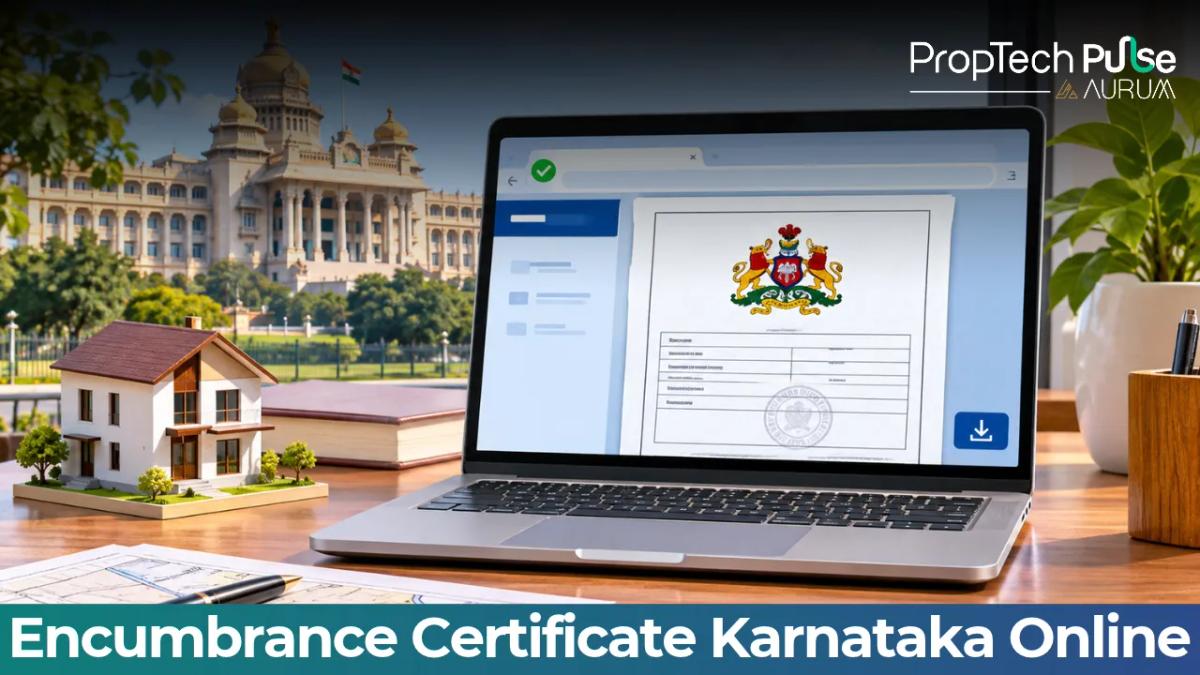
Buying a flat or plot in Karnataka requires more than just checking the seller's papers. You need an encumbrance certificate Karnataka to prove the land has no hidden claims.
Without this document, your sale deed is just paperwork waiting to be challenged. The certificate independently verifies whether a specific piece of land carries mortgages, past sales, or legal liabilities.
What is an Encumbrance Certificate in Karnataka?
Quick answer
An encumbrance certificate tracks every registered transaction linked to a specific property over a chosen period. In Karnataka, it is pulled from the Sub Registrar Book 1 via the Kaveri 2.0 portal. It proves whether the land carries mortgages, prior sales, or legal claims before you transfer money.
The document sits inside Book 1 of the Sub Registrar register. It records all deeds processed through stamp duty and registration. You can see who owned the land five, ten, or twenty years ago.
You also see what conditions were attached to any sale. Think of it as a title history log. You cannot safely sign a sale deed india guide without reviewing it first.
If a property shows no transfers in your chosen window, the system still issues a certificate. It uses a different form number instead. That distinction matters when banks evaluate your loan.
Understanding the baseline structure helps you read the data correctly rather than assuming a blank page means something is missing.
A detailed property legal verification steps always starts with this document. It anchors every other check: khata status, building permissions, and tax receipts. All of them point back to a legally recognized owner recorded in the registration department.
Understanding EC Forms: Form 15, Form 16 and Form 17
Karnataka issues three distinct formats for this request. The registrar selects the format based on your search criteria. Confusing them leads to rejected bank applications.
Matching the right form to your scenario keeps your purchase timeline intact.
| Form | When it appears | What it proves |
|---|---|---|
| Form 15 | You searched by survey number, site ID, or schedule and transactions exist | A chronological ledger of every registered sale, gift, mortgage, or release for the selected dates |
| Form 16 | You searched by property identifiers and zero transactions appear for the entered window | A nil report confirming no encumbrances were registered under those exact terms during the period |
| Form 17 | You searched using the name of the executant (person) rather than plot details | A person-based history showing all properties they have ever transacted on, regardless of location |
Decoding Form 15 vs Form 16 (Nil EC)
Buyers frequently ask why a clean title yields Form 16 instead of Form 15. The answer lies in what Book 1 actually captures. Registration officers only record deeds that passed through a Sub Registrar office.
These filings required proper stamps within the digital window starting around 2004 to 2005. Older transactions sit on paper microfilms. Form 16 simply signals that the digital registry returned empty for your query.
A Form 16 does not guarantee freedom from all historical disputes. It guarantees freedom from digitally registered charges for the dates you requested. Supporting documents remain necessary.
Original sale deeds, old khata extracts, and mutation records help bridge gaps before computerization.
Warning: Do not treat a Form 16 (nil EC) as absolute proof of clear ownership. Banks accept it for processing, but an experienced buyer always requests older revenue records alongside it to catch pre-digital claims.
When the System Issues Form 17
Form 17 shifts the search axis from geography to identity. Instead of typing a survey number, you enter the full name of a potential seller. The portal returns every parcel they transacted across Karnataka.
Precision remains the main drawback. Name searches in Karnataka often return multiple matches.
Common surnames and regional naming conventions overlap heavily. Always cross reference the returned plot survey numbers and registered dates with the actual property deed. Treat the output as conclusive only after that step.
How to Apply for an Encumbrance Certificate in Karnataka Online
The Department of Stamps and Registration moved all requests to the Kaveri 2.0 ecosystem. Offline counters at Sub Registrar offices still function for edge cases.
Nearly every homebuyer now uses the digital route for an ec download karnataka report. The portal splits applications into two buckets based on the computerization cutoff date of 1 April 2004.
For Properties Registered After 1 April 2004
Data entered after this date lives in the online registry. The system processes these queries automatically. You can usually download the PDF instantly or wait the standard delivery window.
You need the exact survey number or schedule description from the previous deed. You also need the Sub Registrar Office jurisdiction covering the land.
Handling Applications Before 1 April 2004
Districts computerized Book 1 at staggered speeds. Urban archives digitized earlier. Newer layouts lagged behind. Selecting pre 2004 dates pushes the request straight to the physical record room.
A clerical officer pulls the registers, scans the pages, and uploads the data manually. Expect longer wait times now.
You may need one physical visit to provide a specimen signature. The digital gateway sometimes requires this fallback step.
Karnataka enforces Aadhaar authentication for almost all certificate requests regardless of the era. The applicant or authorized representative must authenticate via OTP.
The same mobile number generates the downloadable PDF. This security layer replaced older thumbprint verification for most transactions.
Step-by-Step Navigation on the Kaveri 2.0 Portal
- Navigate to the official Kaveri portal (kaveri.karnataka.gov.in). Locate the Services menu and select Other Reports. Click Encumbrance Certificate.
- Choose New Application. Switch to the Advanced Search tab. Skip the quick form. Advanced mode exposes precise dropdown fields needed for accurate matching.
- Select your District, then the Taluk, and finally the Sub Registrar Office code. Verify the SRO boundary using the latest Karnataka Revenue Map if unsure.
- Paste the Survey Number or Site ID exactly as it appears on the property card. Developers often change numbering during layout conversion. Use the Schedule Description field instead. Type the boundary metes and notes showing North, South, East, and West extents.
- Enter the Starting Date and Ending Date for your search window. Most buyers request ten years backward. Some lenders insist on fifteen. Stick to the lender's requirement to avoid resubmission delays.
- Upload scanned copies of the ID proof, property card, and the previous deed if available. The portal accepts PDFs under 2MB.
- Click Proceed to Payment. The gateway opens to PayU or net banking. Complete the payment using the fee slabs listed below.
- After successful transaction, select Track Status. Download the generated document using your registered mobile number as the OTP anchor. Save the PDF immediately. Session timeouts happen frequently.
Encumbrance Certificate Cost and Government Timelines
Fees scale with the number of years you request. The Karnataka government applies a flat application fee upfront. They charge per year for deeper searches. These rates remain stable across districts.
Private developers sometimes pay handling charges not tracked by the state finance department.
| Component | Cost |
|---|---|
| Application Fee | ₹10 |
| Search Fee (Year 1) | ₹30 |
| Search Fee (Each additional year) | ₹10 per year |
Consider a concrete example. You need a thirteen year traceback for a resale flat in Whitefield. You pay ₹10 for the application fee. The first year costs ₹30. The remaining twelve years cost ₹10 each.
That adds ₹120. Your total government outlay comes to ₹160. Add GST at 18%. The final payable amount lands around ₹189. Bank valuation reports arriving later will not change this baseline cost for a Karnataka property.
Timelines differ sharply based on the digital cutoff. Post 2004 applications typically deliver within three working days. They follow Sakala enforced service level agreements.
Pre 2004 requests take ten working days for the first thirteen years. Add one extra day for every additional decade of history sought. Genuine urgency usually stems from loan sanction deadlines hitting before the system catches up.
What an Encumbrance Certificate Does Not Show
This section separates novices from seasoned buyers. An EC mirrors only what was formally stamped and registered. It does not scan court filings.
It ignores municipal complaint registers and village council decisions. Several major risks hide outside its frame.
- Pending litigations: A property can be locked by an injunction order, NCLT proceeding, or civil suit. These never touch Book 1. Court stay orders bind the land. They sit with the district courts instead of the registration department.
- Wills and probate: Heirs holding property under an unprobated Will often try to sell it. They might use a succession certificate. The EC will show the deceased ancestor as the last registered owner. This creates a false impression of marketable title.
- Unregistered Power of Attorney: Families handed over GPAs to channel partners or relatives decades ago. GPA sales lack stamp validation. They disappear from the digital ledger until litigation forces them into the open.
- Land tax arrears: Unpaid property tax or water dues never appear on an EC. They live with the Bruhat Bengaluru Mahanagara Palike ward office or the city corporation municipality. Settling these happens simultaneously. They track on completely separate ledgers. Consult our guide on land patta meaning types fees how to apply online for clarity.
Treat the EC as one pillar in a four part foundation. Combine it with title scrutiny. Run court stay checks. Secure municipal clearance before wiring funds.
Why Checking Ec Online Karnataka is Mandatory for New Flat Buyers
Resale purchases carry obvious individual risk. New construction introduces structural entanglements instead. Developers routinely mortgage the entire layout to secure construction funds from institutional lenders.
That mortgage registers first. It sits directly above every individual buyer's claim until the builder completes the project and formally discharges the charge.
RERA Karnataka enforced Section 4(2)(l)(B) of the central act. Builders must publicly disclose every active mortgage tied to their project. Disclosure statements on builder websites often lag behind actual registration dates. They might omit partial charges on unsold wings.
The only reliable verification method involves downloading a karnataka rera how to check projects and verify khata file alongside an ec download karnataka report covering your exact tower survey number.
If the EC shows a recent mortgage entry dated months after your booking, negotiate immediately. Secure a letter of consent from the charging bank.
Walk away if the lender refuses partial release. Lenders rarely relax their grip without builder indemnity.
Request the latest EC every quarter for ongoing projects. Construction timelines slip constantly. Banks occasionally renew charges without updating public boards.
Quarterly checks prevent end stage surprises when possession finally arrives. Tracking these changes across different taluks remains essential for any ec Karnataka search.
Before You Sign or Send Money
Match the name on the document strictly to the PAN and Aadhaar of whoever receives your payment. Even missing initials or maiden-versus-married name mismatches trip up the registration process.
Demand corrected KYC documents before authorizing any NEFT transfer.
Verbal promises about future regularization hold zero weight. Registration offices reject mismatched paperwork outright. Correcting names later forces fresh conveyance deeds and extra stamp duty.
Chasing those delays push possession back by months.
Secure clean alignment first. Then move toward property legal verification steps checkpoints for the final handover.
Frequently asked questions
How do I check an encumbrance certificate in Karnataka online?
Visit the official Kaveri 2.0 portal and select the Encumbrance Certificate option under Other Reports. You will need to enter the district, taluk, and Sub Registrar Office that governs the property. Input the exact survey number or schedule description, define your start and end dates, upload basic ID proofs, pay the government fee, and complete Aadhaar OTP authentication. The system usually returns a time-stamped PDF within three working days for post-2004 entries.
What is the difference between Form 15 and Form 16 encumbrance certificate?
Form 15 acts as a transactional ledger, listing every registered sale, gift, or mortgage discovered for the requested dates. Form 16 serves as a nil report, confirming that no transactions matched your entered property identifiers during that window. Both are legally valid outputs; Form 16 simply reflects an empty digital registry for your timeframe rather than an absence of all historical activity.
How much does it cost to get an EC in Karnataka?
You pay a flat application fee of ten rupees plus escalating search fees. The first year of tracking costs thirty rupees. Every additional year beyond that costs ten rupees. Add eighteen percent GST to calculate your final outgo. A typical thirteen-year traceback lands around one hundred eighty-nine rupees total before accounting for minor gateway handling charges.
Does an encumbrance certificate prove ownership of land?
It proves registered transactions, not ownership. Ownership rests on the Sale Deed and the corresponding mutation record or Patta held by the revenue department. An EC merely shows what deeds were officially stamped and logged in Book 1. A clean certificate guarantees freedom from documented liens, but it does not validate the underlying validity of the original conveyance or resolve unregistered family settlements.
What period should an encumbrance certificate cover when buying?
Most banks and housing financiers require a minimum ten-year trace back from the current date. Institutional lenders operating under RBI fair practice guidelines sometimes extend this to fifteen years to map legacy mortgages accurately. If you are purchasing an independent house built before computerization began in your district, requesting twenty years or more ensures you catch manual-era entries that automated systems might overlook.
Sources
- Kaveri 2.0 Portal: Official login gateway and certificate generation workflow (accessed November 2026)
- Up-RERA: Section 4(2)(l)(B) mortgage disclosure mandates applicable across RERA jurisdictions (accessed November 2026)
Enjoyed this blog article? Visit PropTech Pulse for more interesting blogs.




Ask Pulse Ai anything about real estate

Unlock the Latest in Real Estate
News, Infographics, Blogs & More! Delivered to your inbox.

